
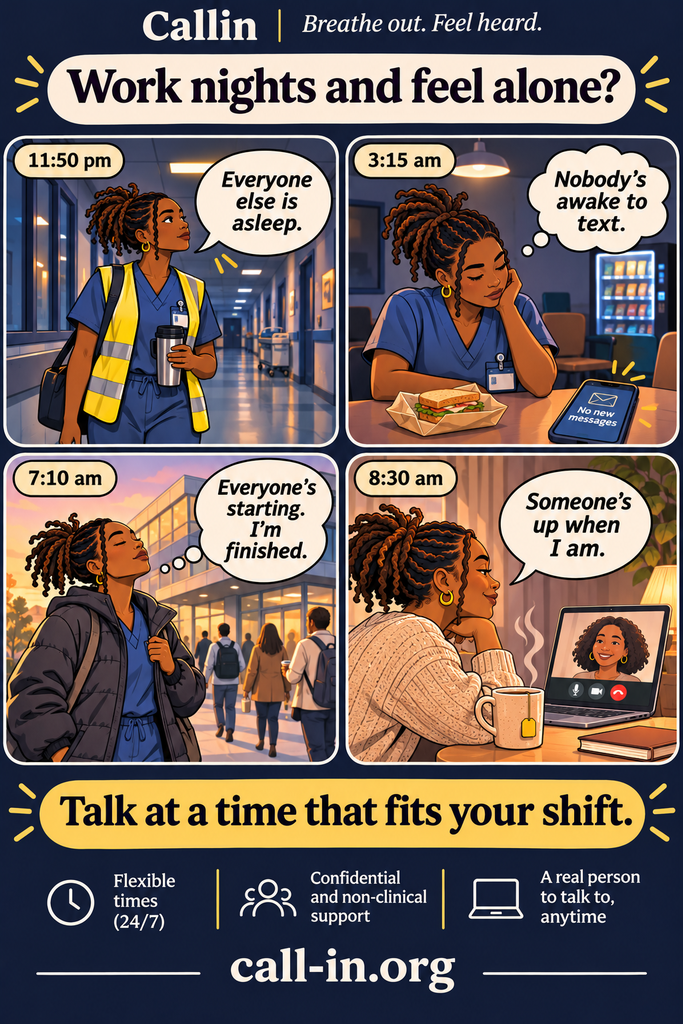
Your wellbeing programme might look complete on paper. But if the helpline closes at five, the workshops run at lunchtime and the HR team is offline on Sundays, a large part of your workforce may never be able to use it.
This guide is for HR and people leaders whose teams work nights, weekends, rotating shifts or across several time zones, and who want support that people can actually reach.
The short answer: Employers can support night, weekend and multi-time-zone staff by designing shift patterns that protect rest, making every wellbeing service reachable outside office hours, giving managers and peers time to connect across shifts, and adding a confidential, non-clinical place to talk that people can book at a time that fits their roster or location. Check access in practice, not just on paper, and review it with the people who work those hours.
Key definitions
- Shift work: Work organised in shifts outside, or as well as, a standard daytime schedule, including fixed nights, evenings and rotating patterns.
- Unsocial hours: Working time that falls when most people are resting or socialising, such as nights, early mornings, weekends and public holidays.
- Distributed or global team: A team whose members work in different countries or time zones, so their working days only partly overlap.
- Fatigue: A state of physical or mental tiredness, often linked to disrupted sleep, that can affect wellbeing, concentration and safety.
- Non-clinical emotional support: Confidential, human conversation with a trained listener that does not diagnose, treat, assess or replace therapy, occupational health or medical care.
A quick word on boundaries before we begin. Callin offers non-clinical emotional support, not therapy, counselling, occupational health, medical care or crisis support, and nothing in this article is clinical, legal or employment advice. If you, a colleague or anyone you are supporting may be in immediate danger or crisis, please contact local emergency services or find a free, confidential helpline in your country at findahelpline.com.
Key takeaways
- Working outside a standard day is common: the ILO reports that 21% of EU workers work shifts, and 19% of EU employees work at night at least once a month.
- A meta-analysis of longitudinal studies found shift work was associated with a 28% higher risk of adverse mental health outcomes, especially depressive symptoms.
- Shift and night work can disrupt sleep, family time and social contact, which can leave people feeling isolated.
- The first fix is the work itself: good rota design, predictable schedules and protected rest matter more than any single benefit.
- Every wellbeing service should be tested for access at 3am, on a Sunday and in your furthest time zone.
- A confidential, non-clinical place to talk that people can book at any hour fills a gap many daytime services leave open, alongside an EAP and occupational health.
- A defined three-month pilot with a clear group, privacy-safe measures and a review point is a low-risk way to test a new layer of support.
How many employees work outside a standard office day?
A large share in most economies. Nights, evenings, weekends and global hours are a normal part of work in logistics, hospitality, retail, manufacturing, transport, emergency services, care, technology and customer support.
The International Labour Organization’s report Working Time and Work-Life Balance Around the World brings together national data. It reports that 21% of workers in the EU work shifts, citing Eurofound’s 2017 survey, and that shift workers make up 32% of the workforce in the United States and 17% of employees in Australia.
On night and weekend work, the same report notes that 19% of EU employees work during the night at least once a month, with Malta and Ireland showing the highest levels at around one quarter of the working population. In New Zealand, 48% of workers work at least one hour on a Saturday or Sunday. Definitions vary by country, so treat each figure as a local snapshot.
Add global teams to that picture, and many organisations have a significant group of people whose working day never matches the hours their wellbeing services are open.
How does working nights, weekends or across time zones affect wellbeing?
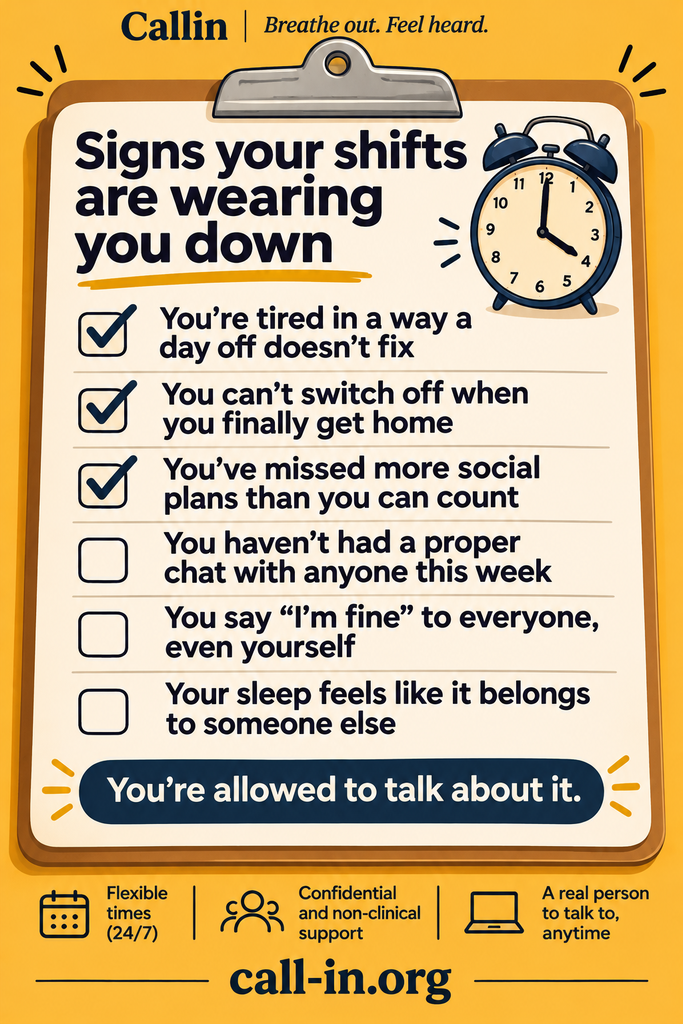
It can disrupt sleep, health, relationships and social life, and those effects build up over time. Many people choose these hours and like them, but the strain is real and worth planning for.
A peer-reviewed meta-analysis in the American Journal of Public Health pooled seven longitudinal studies with 28,431 participants. It found shift work was associated with a 28% higher risk of adverse mental health outcomes overall and a 33% higher risk of depressive symptoms, with female shift workers particularly affected. The authors conclude that “shift workers, particularly women, are at increased risk for poor mental health.”
The Canadian Centre for Occupational Health and Safety’s guide to rotational shiftwork explains that shift workers report more interference with family life, and that “the lack of regular social contact can lead to feelings of loneliness and isolation.” It also notes less supervision and co-worker support during non-daytime shifts.
For people in global teams, the challenge is often different: early calls, late meetings and a sense of always being on the edge of the main working day. If remote isolation is part of the picture, our article on coping with remote working loneliness is written for the individual.
Why do standard wellbeing programmes miss these employees?
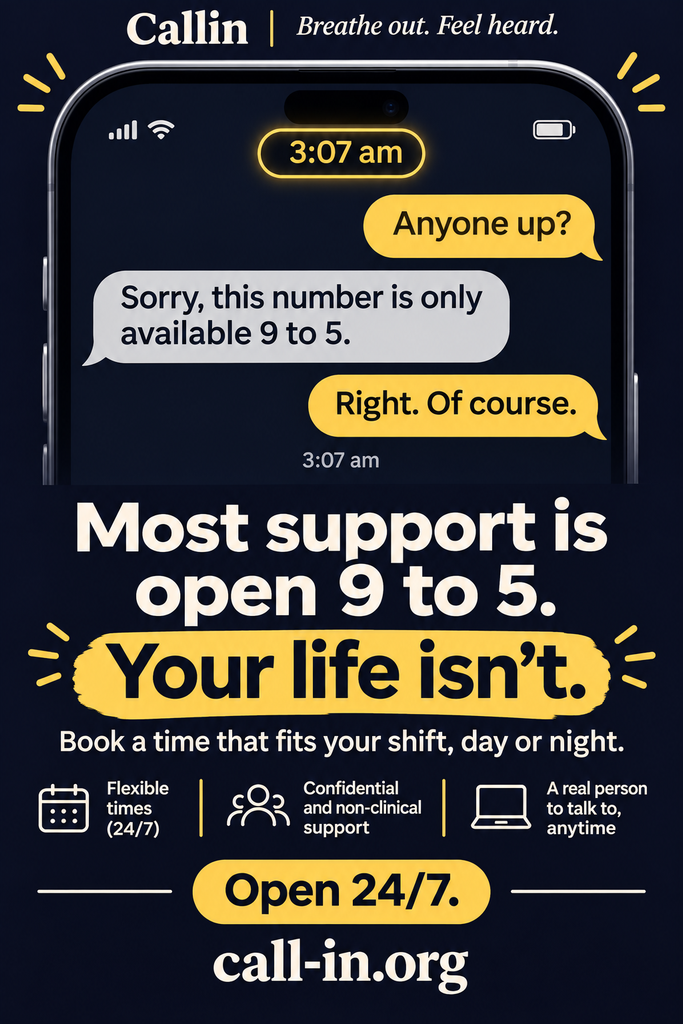
Because many are built around a daytime, office-based week. When support is designed for nine to five, people who work at other times are excluded by default, not by intent.
Common access gaps include:
- Opening hours: helplines, HR teams and occupational health that are only open in the working day of head office.
- Timing of events: workshops, webinars and wellbeing days scheduled when night workers are asleep.
- Time zones: “live” sessions that start at midnight for colleagues on another continent.
- Communication channels: updates sent by email to staff who work on the floor, on the road or without a work device.
- Manager availability: supervisors who work days, so night and weekend staff rarely see them.
- Continuity: support where you speak to someone new each time, which is harder when you can only call at odd hours.
Our guide to EAP vs therapy vs emotional support explains how different types of support work, which can help you check each one for out-of-hours access.
How can you design work to protect people’s wellbeing?
Start with the schedule itself. No benefit can make up for rotas that leave people exhausted, so good working-time design is the foundation of support.
Principles drawn from occupational safety guidance, including the CCOHS guide and the UK Health and Safety Executive’s Managing shift work, include:
- Predictable rotas: publish schedules well in advance so people can plan sleep, care and social life.
- Protected rest: build in enough time between shifts, and avoid long runs of consecutive nights where you can.
- Sensible start times: CCOHS advises avoiding shift start times as early as 5 or 6am where possible.
- Weekends off when possible: CCOHS recommends giving time off at “socially advantageous” times like weekends whenever possible.
- A voice in scheduling: involve staff in rota design, and allow swaps where safe.
- Meeting rotation for global teams: share the burden of early and late calls fairly, and record key meetings.
Our article on why workplace stress needs more than wellness programmes explains why work design and culture matter as much as any benefit.
How do you make wellbeing support reachable at any hour?
Test every service against the hours your people actually work. If someone finishing a night shift at 6am, or working on a Sunday in another time zone, cannot reach it, it is not truly available to them.
Practical steps:
- Run an access audit: list every wellbeing service and note when, how and in which languages it can be reached.
- Offer bookable and on-demand options: let people book sessions at a time that suits their roster, and make sure urgent routes are clear.
- Record and repeat: record workshops, and run live sessions at different times across the week.
- Use the right channels: reach staff through rota apps, noticeboards, team briefings and text messages, not only email.
- Brief night and weekend leads: make sure whoever is in charge out of hours knows how to signpost to support.
- Signpost crisis routes clearly: make sure everyone knows how to reach emergency services and local helplines at any hour.
If you are reviewing an assistance programme, our explainer on what an EAP is and how it works sets out what to check, and our guide to what non-clinical mental health support means explains where a listening service fits.
How can managers and peers support people on different hours?
Make connection deliberate. People on nights, weekends or distant time zones can easily miss the informal check-ins, recognition and team moments that day-shift colleagues take for granted.
Helpful steps for leaders:
- Overlap with every shift: managers occasionally working an early, late or weekend shift shows that those hours matter.
- Hold handover check-ins: a short, human question at the start or end of a shift can surface problems early.
- Recognise everyone: make sure awards, thanks and development opportunities reach people on every pattern.
- Build peer connection: create peer networks within night or weekend teams, and protect time for them.
- Share time-zone pain: rotate meeting times and avoid making the same people always join at unsociable hours.
- Watch for fatigue: treat persistent tiredness as a workload and scheduling question first, not a personal failing.
Our article on how peer connection helps prevent burnout explains why colleague support matters so much.
How does this work across different countries?
Keep the principles the same and adapt the detail locally. Rules on night work, rest periods, weekend working and health checks vary widely across the Nordics, Germany, the Netherlands, Russia, Malta, Cyprus, the UK and Ireland, North America, Australia, New Zealand and beyond.
Some examples, to show the range rather than to advise:
- European Union example: under the EU’s Working Time Directive, night workers have the right to free health assessments and, under certain circumstances, to transfer to day work.
- United Kingdom example: the Health and Safety Executive’s Managing shift work guidance outlines employers’ duties to assess the risks of shift work.
- Canadian example: CCOHS publishes practical guidance on shift design, sleep and family life for shift workers.
Check what applies in each country where you employ people, including works council or union consultation on rotas. Remember that public holidays, weekends and religious observances differ by country, so “out of hours” means different things in different places.
Where does Callin fit alongside your existing support?
Callin offers non-clinical emotional support: a confidential, human place to talk, alongside your EAP, occupational health and other wellbeing services. It is not therapy, counselling, occupational health, medical care or a crisis service, and it does not replace any of them.
Callin has offered this kind of support since June 2023. Callin Support Ltd is UK-registered and supports adults aged 18 and over worldwide through one-to-one online sessions in English.
Callin is available 24/7, with sessions booked in advance at a time that suits each person, at any hour, so someone finishing a night shift, working weekends or based in another time zone can book a time that fits. Listeners complete Johns Hopkins University Psychological First Aid training and use active listening, with clear safeguarding and signposting procedures.
Through Human Continuity™, Callin prioritises the same listener for ongoing support wherever operationally possible, so people on irregular hours do not have to start again with someone new each time. Callin does not create clinical records, and the content of an employee’s conversations is not shared with their employer. You can read more in our FAQ and privacy policy.
For a wider view of how the layers fit, see our guides to workplace mental health support for employees and how Callin complements EAPs. We do not publish outcome or savings figures for Callin, and we would encourage you to measure impact in your own organisation.
What would a three-month pilot for night, weekend or global staff look like?
A three-month pilot tests a new layer of support with a defined group, clear measures and a decision point at the end. Callin offers a defined three-month pilot for organisations through our workplace wellbeing support for organisations page.
A practical pilot plan might include:
- Before launch: choose a group, such as a night team, a weekend crew or one regional office in a distant time zone, agree privacy-safe reporting, and involve staff representatives.
- Month 1, awareness and trust: check through a short anonymous pulse whether staff know the support exists, believe it is confidential and know how to book.
- Month 2, access and reach: look at aggregate uptake by time of day and day of the week, with small numbers suppressed.
- Month 3, early signals: gather anonymous feedback on whether people felt heard and whether support was easy to fit around their hours.
- Review: decide with staff whether to stop, adjust or continue, and keep watching absence, fatigue reports and retention over a longer period.
Pair the pilot with honest attention to rotas and rest. Our guide to preventive emotional care explains the value of reaching people early, and our article on why you might feel mentally exhausted can be shared with staff who are running on empty.
Ready to support the people who keep you running around the clock?
Supporting night, weekend and global staff starts with humane schedules and a culture that sees every shift, and it is strengthened by support people can reach when they are actually awake and free. If you would like to understand what that feels like first, explore non-clinical mental health support with Callin or read what happens in a Callin first session.
When you are ready to talk about your organisation, enquire about a three-month employee support pilot and agree the measures that matter to you and your teams from day one.
Frequently asked questions
How can employers support employees who work night shifts?
Employers can design predictable rotas with protected rest, make wellbeing services reachable outside office hours, ensure managers connect with night teams, and offer confidential support that night workers can book at a time that suits them.
Does shift work affect mental health?
Research suggests it can. A peer-reviewed meta-analysis of longitudinal studies found shift work was associated with a 28% higher risk of adverse mental health outcomes, particularly depressive symptoms, with women especially affected.
How do you support employees in different time zones?
Rotate meeting times fairly, record key sessions, avoid always asking the same people to join at unsociable hours, and make sure every wellbeing service can be reached in each location’s working and waking hours.
How can we make our EAP and wellbeing services accessible to shift workers?
Run an access audit of every service, offer bookable and on-demand options, reach staff through the channels they actually use, and brief out-of-hours leads on how to signpost support.
Does Callin replace an EAP, occupational health or crisis support?
No. Callin works alongside EAPs, occupational health and crisis services, and signposts to them when needed. It is not therapy, occupational health or a crisis service.
Can staff on nights, weekends or in other time zones use Callin?
Yes. Callin is available 24/7, and sessions are booked in advance at a time that suits each person, at any hour. That makes it easier for people on any shift pattern or in any time zone to find a time to talk.
Will the employer see what staff talk about?
No. The content of an employee’s conversations is not shared with their employer, and Callin does not create clinical records. Callin follows safeguarding and signposting procedures where urgent safety concerns arise.
UN Sustainable Development Goals alignment
At Callin, we are aligning ourselves with the UN SDGs, and this article connects with two of them. This describes alignment only, not United Nations affiliation or endorsement; read more in our guide to mental health and the SDGs and our workplace wellbeing and the UN SDGs page.
- SDG 3: Good Health and Well-being. Making support reachable at any hour helps protect the wellbeing of people who work when others rest.
- SDG 8: Decent Work and Economic Growth. Humane schedules and accessible support are part of decent work for every shift.
Sources and further reading
- International Labour Organization (2022). Working Time and Work-Life Balance Around the World. Global, with national data including EU, US, Australia and New Zealand.
- Torquati, L. and colleagues (2019). Shift Work and Poor Mental Health: A Meta-Analysis of Longitudinal Studies, American Journal of Public Health, 109(11). Peer-reviewed, international.
- Canadian Centre for Occupational Health and Safety. Rotational Shiftwork. Canadian guidance.
- Health and Safety Executive. Managing shift work: Health and safety guidance (HSG256). United Kingdom example.
- European Commission. Working Time Directive. European Union example.
- World Health Organization and International Labour Organization (17 May 2021). Long working hours increasing deaths from heart disease and stroke. Global, further reading.
- United Nations. SDG 3 and SDG 8.
Leave a Reply