
There’s something profoundly healing about being truly heard. Not just having someone wait for their turn to speak, but experiencing the rare gift of another human being fully present with your story, holding space for your emotions without rushing to fix, judge, or minimize what you’re feeling.
This is the essence of active listening, and it’s the foundation of how we support every person who reaches out to Callin.
Whether you’re seeking support or hoping to become a better listener for the people in your life, understanding active listening can transform how you connect with others and how you experience being heard yourself.
What Is Active Listening? (And What It’s Not)
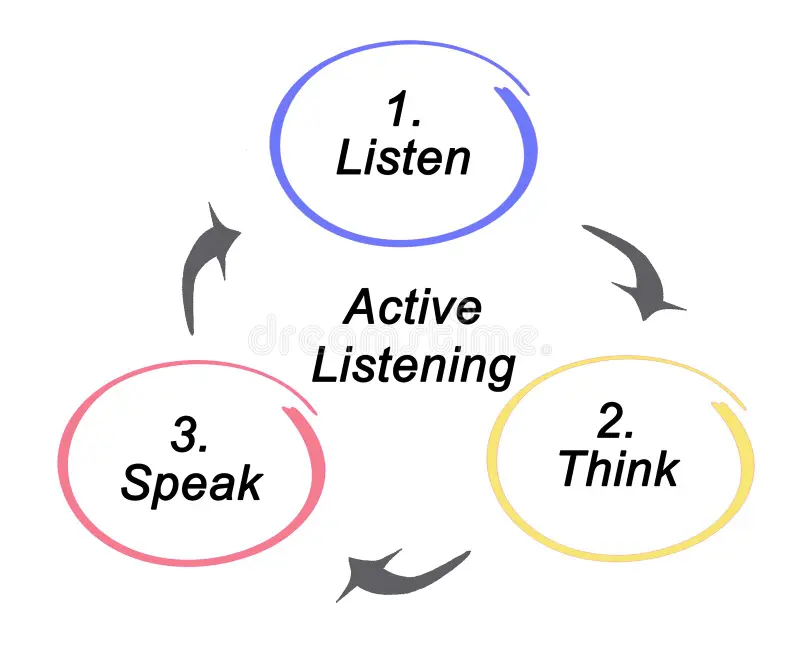
Active listening is the practice of being completely present in a conversation, not just hearing words, but absorbing meaning, reading context, and responding with genuine intention.
This form of effective emotinal support requires setting aside distractions, quieting your internal dialogue about what to say next, and focusing entirely on understanding the other person’s perspective.
Unlike passive hearing, which happens automatically, active listening is a deliberate choice that signals respect and opens the door to deeper connection.
Active listening is:
- Being fully present without planning your response
- Absorbing both the words and the emotions behind them
- Reflecting back what you’ve heard to ensure understanding
- Creating a judgment-free space for someone to express themselves
- Validating feelings even when you don’t agree with the perspective
Active listening is NOT:
- Waiting for your turn to talk
- Thinking about how to solve the problem while they’re speaking
- Judging whether their feelings are “valid” or “reasonable”
- Interrupting with your own similar story
- Offering unsolicited advice or trying to “fix” them
At Callin, we’ve built our entire approach around this distinction. Our trained listeners don’t rush to solve, diagnose, or redirect. We simply hold space, and that space itself becomes healing.
Why Active Listening Matters: The Research
The impact of truly being heard extends far beyond feeling good in the moment. Research consistently demonstrates that active listening creates measurable benefits for both mental health and relationship quality.
Active Listening Builds Trust and Psychological Safety
When people feel genuinely heard, they’re more likely to share openly, admit challenges, and take emotional risks. This psychological safety doesn’t just feel good, it creates the conditions where people can process difficult emotions, gain clarity, and move forward.
In healthcare settings, active listening is recognized as one of the most fundamental aspects of providing optimal care. When healthcare providers employ active listening, they can better identify patient concerns, build rapport, achieve better outcomes, and develop more accurate, individualized care plans.
The Cost of Not Being Heard
Conversely, when patients don’t feel heard in healthcare settings, they report worse outcomes due to damaged rapport and misunderstandings about their needs and concerns. This can even cause a certain form of loneliness. This principle extends to all relationships. When we don’t feel heard, trust erodes, connection weakens, and we often withdraw or shut down.
Active Listening Strengthens Relationships
Active listening promotes trust in relationships and helps develop critical thinking and communication skills. When caregivers model active listening, they demonstrate what healthy communication looks like and provide a reference for future interactions.
This is why active listening isn’t just a “soft skill”, it’s a fundamental human need and a powerful tool for connection.
The Four Stages of Active Listening
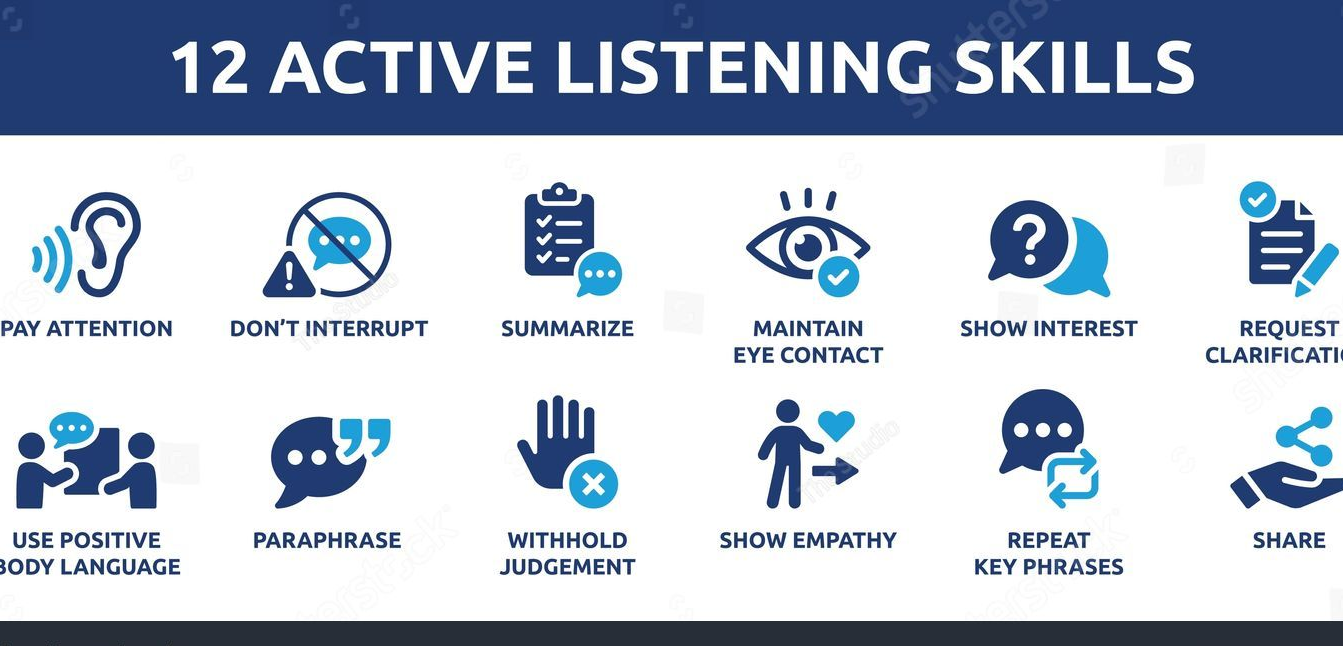
Active listening isn’t passive, it’s an intentional practice that unfolds in four distinct stages. Understanding these stages helps you become more conscious and effective in how you listen.
Stage 1: Contact
Connect with the speaker through eye contact, open body posture, and subtle nonverbal responses like nodding. This stage is about signaling: I’m here. I’m with you. You have my full attention.
What this looks like:
- Turning your body toward the speaker
- Maintaining gentle, natural eye contact
- Putting away your phone and closing your laptop
- Nodding occasionally to show you’re following
- Using small verbal acknowledgments like “mm-hmm” or “I hear you”
Most importantly: Do not interrupt. Listen first.
Stage 2: Absorb
Take in all aspects of what’s being said, both explicit and implicit. Pay attention to nonverbal cues, tone of voice, and what might be left unsaid.
This is the most difficult stage because it goes against our natural instincts. We generally analyze or evaluate what’s being said instead of simply listening.
What this requires:
- Do not judge or evaluate what you’re hearing
- Do not analyze while they’re speaking, it gets in the way of truly hearing
- Dismiss premature questions that pop into your head, they can wait
- Do not try to understand yet, just absorb
- Notice their body language, energy, and emotional tone
This stage asks you to simply receive without processing. It’s harder than it sounds, but it’s where the magic of active listening begins.
Stage 3: Reflect
Feed back what you heard using the speaker’s own words (including their specific language and even jargon), though not necessarily word-for-word. This includes both content (what they said) and context (how they said it).
This is when understanding comes in, you analyze while you reflect. Questions may arise now, and this is the appropriate time to ask them.
Reflection techniques include:
Paraphrasing: Expressing what the speaker said while preserving their original meaning or intention. For example: “So what I’m hearing is that you felt dismissed when your manager didn’t acknowledge your concerns. Is that right?”
Summarizing: Boiling down their words to the core message or essence, using their language but condensed. Be careful not to filter it through your own meaning or interpretation.
Synthesis: When someone is sharing multiple fragments or ideas, shape them into a coherent whole. This is especially helpful when emotions are running high and thoughts feel scattered.
Stage 4: Confirm
Receive confirmation from the speaker that you heard and understood their message accurately.
What this sounds like:
- “Did I get that right?”
- “Is that what you meant?”
- “Am I understanding you correctly?”
- “Is there anything I missed or got wrong?”
This final stage closes the loop and ensures genuine understanding. It also gives the speaker a chance to clarify, add nuance, or correct any misunderstanding.
When you actively listen and feed back what people say, they begin to hear what is really being said, often for the first time. This is where insight and clarity emerge.
The Essential Skills of Active Listening

Beyond the four stages, certain core skills make active listening effective and healing.
1. Be Fully Present and Attentive
Give the person speaking your complete attention. Minimize distractions, maintain eye contact, and focus on their words, tone of voice, and nonverbal cues. Being fully present demonstrates that you value the person’s feelings and perspective.
Practical steps:
- Silence your phone and put it out of sight
- Close unnecessary browser tabs if you’re on a video call
- Find a quiet space where you won’t be interrupted
- Take a few deep breaths before the conversation to center yourself
- Set an intention: “I’m here to understand, not to respond”
2. Use Positive Body Language, Nonverbal Cues, & Verbal Nods
Your body language and facial expressions play a significant role in active listening. Maintain an open posture, lean in slightly, and use encouraging nonverbal cues like nodding and smiling.
In virtual conversations:
- Look at the camera to create eye contact
- Keep your video on to show engagement
- Avoid multitasking or looking off-screen
- Use facial expressions to show you’re engaged
- Nod along while they’re sharing their thoughts
And if it’s a voice call, verbal nods are necessary. The person has to know that you’re listening. You say, “mh-hmm”, “yes, I’m with you”. Simple phrases makes it obvious you’re listening, even if they can’t see you.
When balanced with a healthy amount of silence, you can be sure you’re doing the right thing.
Silence is necessary, too. As some of us need time to process our thoughts.
3. Avoid Interrupting or Judging
Resist the urge to interrupt or rush to judgment. Allow them to express their thoughts and feelings without interjecting your own opinions or biases. Interrupting can lead to miscommunication and prevent the development of mutual understanding.
Listen to understand, not to respond. Even if you disagree, avoid forming opinions or making judgments until you’ve fully grasped their perspective.
4. Paraphrase and Reflect to Show Understanding
Paraphrasing involves restating the speaker’s main points in your own words to ensure you’ve understood them correctly. By reflecting on what has been said, you demonstrate that you’re actively listening and making a conscious effort to comprehend their message.
Example:
- They say: “I just feel like no matter how hard I work, it’s never enough. My boss keeps adding more to my plate and I’m drowning.”
- You reflect: “It sounds like you’re feeling overwhelmed because the workload keeps increasing without any recognition of what you’re already handling. Is that right?”
This simple act of reflection can be profoundly validating. It shows you’re not just hearing words, you’re understanding their experience.
5. Validate Their Emotions
Acknowledging someone’s feelings, even if you don’t agree with their viewpoint, helps them feel respected and heard. Phrases like “I can see why you’d feel that way” or “That sounds really tough” can make a significant difference in how they experience the conversation.
Validation is NOT:
- Agreeing with everything they say
- Condoning harmful behavior
- Pretending you share their perspective
Validation IS:
- Acknowledging that their feelings make sense given their experience
- Recognizing the validity of their emotional response
- Communicating: “Your feelings are real and they matter”
6. Practice Patience
Allow the person the time they need to express themselves. They may process their thoughts more slowly than they speak. Resist the urge to interrupt or finish their sentences. Your patience shows that their words are valued.
As mentioned earlier, silence is okay. Sometimes the most powerful moments in a conversation happen in the pauses, when someone is gathering their thoughts or sitting with their emotions.
7. Seek Clarification with Open-Ended Questions
If something is unclear, ask open-ended questions to gain better understanding. This shows genuine interest and helps prevent misunderstandings.
Instead of: “So you’re angry at your friend?”
Try: “Can you tell me more about what happened?” or “How did that make you feel?”
Open-ended questions invite deeper exploration rather than yes/no answers.
Common Barriers to Active Listening (And How to Overcome Them)
Even well-intentioned people struggle to listen effectively. Recognizing these barriers is the first step to overcoming them.
Environmental Distractions
Open laptops, buzzing phones, and cluttered workspaces all compete for attention.
The solution: Eliminate what you can control. Silence devices, close unnecessary tabs, and create an environment that supports focus.
Mental Drift
It’s easy to mentally rehearse your response while someone is still speaking, or let your mind wander to your next meeting. This internal noise drowns out what’s being said in real time.
The solution: Set a clear intention before conversations begin, commit to listening first, responding second. If you notice your mind wandering, gently bring your attention back to the speaker’s words.
Passive Participation
In group settings, especially virtual ones, it’s tempting to fade into the background. But when you disengage, it signals that the conversation isn’t worth your full attention.
The solution: Engage actively by asking clarifying questions, acknowledging key points, and demonstrating that every voice adds value.
Disruptive Habits
Interrupting, talking over others, or allowing side conversations undermines the trust that active listening builds. These behaviors, even when unintentional, communicate impatience.
The solution: Practice the discipline of waiting, listening fully, and responding thoughtfully rather than reactively.
The good news? Each of these barriers is within your control. By building awareness and implementing small, consistent practices, you can clear the path for deeper, more effective listening.
How Active Listening Creates Healing
When you practice active listening, or when you experience being actively listened to, something profound happens. The simple act of being fully heard, without judgment or the pressure to be different, creates space for healing and clarity.
It Reduces Isolation
So many of us carry our struggles alone, convinced that no one would understand or that we’re burdening others by sharing. Active listening breaks through that isolation by communicating: You’re not alone. What you’re experiencing matters. I’m here with you.
It Validates Your Experience
When someone reflects back what you’ve said and acknowledges your feelings, it validates your internal experience. This validation is especially powerful when you’ve been doubting yourself or minimizing your own emotions.
It Creates Clarity
Often, we don’t fully understand what we’re feeling or thinking until we speak it aloud to someone who’s truly listening. The act of being heard helps us organize our thoughts, identify patterns, and gain insight into our own experience.
It Builds Trust and Connection
Active listening creates psychological safety, the foundation of trust in any relationship. When you know someone will listen without judgment, you’re more likely to be vulnerable, honest, and authentic.
It Empowers Self-Discovery
Unlike advice-giving, which positions the listener as the expert, active listening empowers you to find your own answers. Most of the time, you already know what you need, you just need a supportive space to realize it.
This is the philosophy at the heart of Callin. We don’t fix, diagnose, or direct. We hold space and listen actively, trusting that you have the wisdom within you to navigate your own path.
What Active Listening Looks Like at Callin
At Callin, every listener is trained in the art and science of active listening. Here’s what that looks like in practice during a session:
Before the Session
Your listener prepares by:
- Creating a distraction-free environment
- Reviewing any notes from previous sessions (if you’re a returning member)
- Setting an intention to be fully present with you
- Centering themselves emotionally to hold space without bringing their own agenda
During the Session
Your listener:
- Gives you their complete, undivided attention
- Uses the four stages of active listening (Contact, Absorb, Reflect, Confirm)
- Reflects back what they hear to ensure understanding
- Validates your emotions without judgment
- Asks clarifying questions when appropriate
- Holds silence comfortably, allowing you space to think and feel
- Never rushes you or imposes their own timeline
- Optionally incorporates structured self-reflection tools if you request them
What Your Listener Does NOT Do
- Offer unsolicited advice or try to “fix” you
- Judge whether your feelings are valid or reasonable
- Share their own similar stories to compare experiences
- Diagnose or provide clinical treatment
- Rush you toward a particular conclusion or action
- Take notes that will be shared or stored (your privacy is absolute)
After the Session
- You leave feeling heard, validated, and clearer about your own thoughts
- If you’re a member, your listener remembers your journey for next time
- You have access to our broader ecosystem of support (podcast, blog, community)
- You can book follow-up sessions on your own timeline
This is what makes Callin different. You’re not starting over with a new person each time. You’re building a relationship with someone who knows your story and genuinely cares about your wellbeing.
Becoming a Better Listener: Practical Exercises
Active listening is a skill that improves with practice. Here are exercises you can use to develop your active listening abilities.
Exercise 1: The Five-Minute Listen
Ask a friend or family member to talk for five uninterrupted minutes about something on their mind. Your only job is to listen, no questions, no comments, no advice. Just listen.
After five minutes, reflect back what you heard: the main points, the emotions you noticed, and the overall message. Ask them: “Did I understand you correctly?”
This exercise builds your capacity to simply absorb without the urge to respond.
Exercise 2: Mindful Breathing Before Conversations
Before important conversations, take 2-3 minutes to focus on your breath. Observe the sensation of air moving in and out of your body. This centers you and reduces internal distractions, making it easier to be fully present.
Exercise 3: Notice Your Listening Patterns
For one week, pay attention to your listening habits:
- How often do you interrupt?
- Do you mentally plan your response while others are speaking?
- Do you offer advice when it wasn’t requested?
- Do you change the subject to your own experiences?
Simply noticing these patterns, without judgment, is the first step to changing them.
Exercise 4: Practice Reflection
In your next conversation, practice reflecting back what you hear before responding with your own thoughts. Use phrases like:
- “What I’m hearing is…”
- “It sounds like you’re feeling…”
- “So if I understand correctly…”
Notice how this changes the quality of the conversation.
Exercise 5: Role-Playing Scenarios
Practice active listening in simulated conversations with a friend. Take turns being the speaker and the listener. The speaker shares something meaningful, while the listener practices the four stages of active listening.
Afterward, discuss: How did it feel to be truly heard? What was challenging about listening without responding?
When to Seek Active Listening Support
You don’t need to be in crisis to benefit from active listening. In fact, active listening is most powerful as a regular practice, a space to process life’s ongoing challenges before they become overwhelming.
You Might Benefit from Active Listening Support If:
- You’re feeling overwhelmed by work stress or burnout
- You’re navigating a major life transition (career change, relationship shift, relocation)
- You’re experiencing loneliness or isolation
- You need to vent without worrying about burdening friends or family
- You’re processing grief or loss
- You’re feeling stuck and need clarity
- You want an objective perspective without clinical diagnosis
- You’re an overthinker who needs to externalize your thoughts
- You simply need someone to listen without trying to fix you
Active listening support fills the crucial gap between casual friendship and clinical therapy. It’s for the moments when you need more than a friend can offer, but you’re not seeking medical treatment.
The Callin Difference: Why Active Listening Works
At Callin, we’ve witnessed the transformative power of active listening thousands of times. Here’s what makes our approach uniquely effective:
Callin, Consistency, & Continuity
Unlike crisis hotlines or one-off support services, Callin allows you to return to the same listener over time. You don’t have to re-explain your story or rebuild trust with each conversation. Your listener remembers your journey, creating continuity that deepens the healing process.
Callin Offers a Non-Clinical, Human-Centered Approach
We’re not therapists, and we don’t pretend to be. We’re trained peer listeners who understand that sometimes you don’t need a diagnosis or treatment plan, you just need to be heard by another human being who cares.
Callin is a Judgment-Free Space
Our listeners are trained to hold space without judgment, agenda, or the urge to fix. You can arrive exactly as you are, messy, exhausted, confused, with no pressure to perform or explain.
Callin is Accessibility and Convenience
With 24/7 availability, worldwide reach, and sessions delivered via familiar platforms like Zoom or Google Meet, support is accessible when and where you need it. No waiting lists, no referrals, no complicated processes.
Callin Guarantees Privacy and Confidentiality
All sessions are strictly confidential and GDPR-compliant. No notes are shared. No data is sold. Your privacy isn’t optional, it’s foundational to everything we do.
Your Next Step: Experience the Power of Active Listening
Reading about active listening is valuable. Experiencing it is transformative.
Whether you’re seeking support for yourself or hoping to become a better listener for others, we invite you to go deeper with our comprehensive Active Listening Workbook and Guide.
Download Your Free Active Listening Workbook
This in-depth workbook includes:
For Those Seeking Support:
- Self-assessment tools to identify your listening needs
- Reflection prompts to prepare for meaningful conversations
- Guidance on what to expect from active listening sessions
- Tips for getting the most out of your time with a listener
For Those Wanting to Become Better Listeners:
- Detailed exercises to practice each stage of active listening
- Scripts and language templates for reflective listening
- Common pitfalls and how to avoid them
- Self-assessment tools to track your progress
- Advanced techniques for holding space without judgment
- Guidance on when to listen and when to refer to professional help
Bonus Resources:
- The Active Listening Checklist (printable reference guide)
- Conversation starters for difficult topics
- Boundary-setting guidance for listeners
- Integration practices to make active listening a daily habit
This workbook represents the same framework we use to train every Callin listener. It’s the practical, hands-on companion to this article, designed to help you either receive the support you need or provide it to others.
Conclusion: The Gift of Being Heard
In a world that constantly demands we speak up, stand out, and have all the answers, the simple act of being truly heard feels revolutionary.
Active listening isn’t passive. It’s not weak. It’s not just “being nice.”
Active listening is a powerful, intentional practice that creates space for healing, clarity, and genuine human connection. It’s the foundation of trust in relationships, the catalyst for self-discovery, and often the bridge between isolation and belonging.
At Callin, we’ve built our entire mission around this truth: Everyone deserves to be heard without judgment.
Whether you’re carrying the weight of professional burnout, navigating a difficult transition, processing grief, or simply feeling the quiet exhaustion of daily life, you don’t have to carry it alone.
Active listening creates the space where you can exhale, be seen, and remember that your experience matters.
You deserve this space. You deserve to be heard.
Book your free 20-minute session at Callin today, or download the Active Listening Workbook to begin your journey toward deeper connection, either as someone seeking support or as someone ready to hold space for others.
Your exhale is overdue. We’re here to listen.
Callin is a worldwide, non-clinical peer-to-peer emotional support platform. We provide trained active listening support 24/7 across all global timezones. All sessions are confidential, GDPR-compliant, and delivered via secure Google Meet or Zoom calls. If you are in crisis, please contact emergency services or a 24/7 crisis line: UK Samaritans 116 123 · US 988 Lifeline · AU Lifeline 13 11 14.

Leave a Reply