If you are wondering what happens in a Callin first session, it is free, carries no commitment, and can last 20 minutes or up to one hour depending on what you need in that moment.
You receive real support while exploring whether Callin fits you. If it does, onboarding follows. If it does not, we can signpost you toward something more appropriate.
You’re not “pathetic” for seeking support. You’d be surprised the number of people in this world that need help. And when they reach out to no one, it piles up and becomes something dangerous to their wellbeing.
Key Takeaways
- Your first Callin session is free, with no obligation to become a client afterward.
- You can book your first Callin session with this link.
- The first conversation can last 20 minutes or up to one hour, depending on the support you need in that moment.
- You are not expected to prove your pain, perform happiness, or arrive with a polished explanation.
- Your listener is there to listen without judgment. Advice is offered only if you ask for it and it remains within Callin’s non-clinical boundaries.
- If Callin fits, you can complete client onboarding. If it does not, we can signpost you toward support better equipped for your needs.
What Do You Do When You Are Struggling and No One Cares?
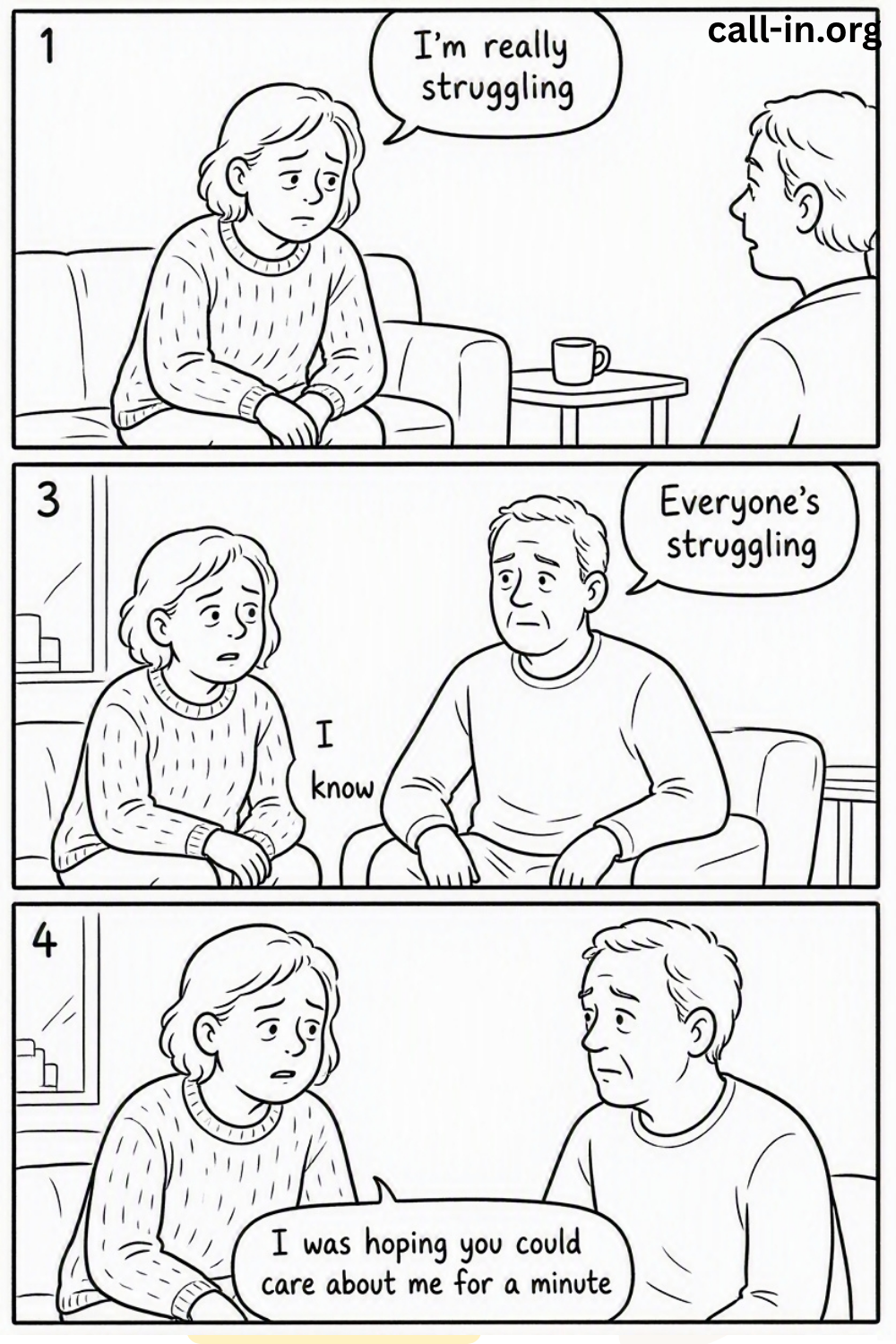
Sometimes the problem is not that you have suffered in silence. You have spoken. You have been open, direct, and painfully clear with the people closest to you, only to hear that you are being dramatic, everyone is struggling, or nothing can be done.
Perhaps someone immediately tells you to think positively. Perhaps they compare your pain with theirs until your conversation somehow becomes their conversation. Perhaps they hand you a cheerful sentence that sounds as though it escaped from a motivational mug.
You did not ask to be forced into happiness. You wanted someone to sit with you while the hurt was still hurt, before tidying it into a lesson. You wanted room to say what was true without being invalidated, infantilized, corrected, or rushed toward gratitude.
Being loud about pain does not guarantee being heard. Volume can solve silence. It cannot solve invalidation.
Why Being Dismissed Can Hurt So Deeply
Dismissal adds a second struggle to the first. You are still carrying the original loneliness, grief, stress, burnout, heartbreak, or fear. Now you are also carrying the message that your response is excessive or inconvenient.
If this resembles how people responded while you were growing up, the present conversation may touch an older wound. The ache is not only “they disagree with me.” It is “once again, my inner life is being explained by someone who is not living it.”
Research suggests that repeated emotional invalidation can shape emotional experience and perceived stress. An unhelpful response is not always malicious, but intent does not erase impact. Someone can love you and still be the wrong person to hold a particular conversation.
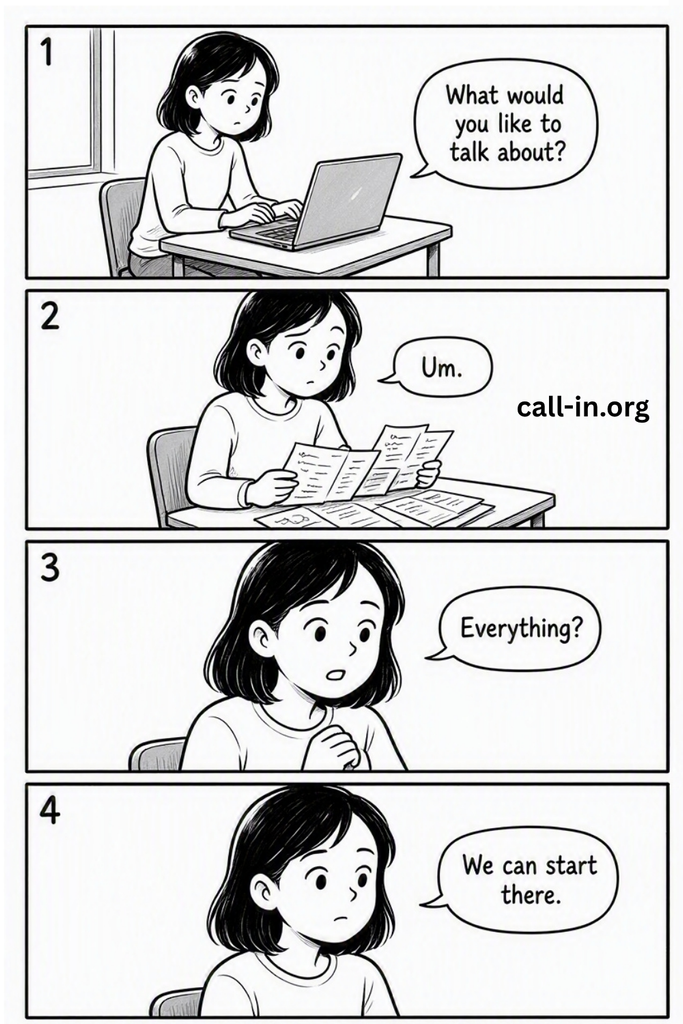
The Free First Call Is Real Support, Not a Sales Performance
Your first Callin session is completely free. There is no commitment to buy another session, become a client, or decide immediately that Callin belongs in your life. You can experience the support, ask questions, understand the boundaries, and decide whether the approach meets your needs.
The listener also considers whether Callin can support you responsibly. Fit is not only about whether you like the service. A fit conversation should protect the person seeking help, not become an audition for compassion or a sales call wearing a cardigan.
How Long Is the First Callin Session?
Your first session can last 20 minutes or up to one hour, depending on what you need in that moment. Some people want a brief introduction. Others arrive carrying something that cannot be squeezed respectfully into 20 minutes.
“Support that supports you” means the conversation responds to the person instead of forcing the person into a rigid introduction. Sometimes that is 20 gentle minutes. Sometimes it is the breathing room of an hour.
What Happens Before the First Session?
You choose an available time and receive the details for joining through Zoom or Google Meet. You will need a compatible device, a reliable connection, and a safe place where you can speak with reasonable privacy.
You may use a preferred name, although Callin may need limited information where necessary to provide support safely and lawfully. No clinical history, diagnostic assessment, or script is required. “Nobody seems to take me seriously” or “I do not know where to begin” is enough.
What Happens When the Conversation Begins?
Your listener will welcome you, explain Callin’s non-clinical scope, and describe confidentiality and its limits. They may ask what brought you and what kind of support would feel useful. Honest boundaries make the space safer.
You can discuss the situation itself or the exhausting experience of trying to make other people understand it. You may say, “I do not want advice. I need someone to hear me.” There is no correct opening sentence, and distress does not need to look respectable before it receives care.
What Your Callin Listener Will Do
A Callin listener is trained to give you full attention, follow your train of thought, and reflect what they hear. In research comparing different conversational responses, people who received active listening felt more understood than those who received simple acknowledgments or advice. This is why listening is not treated as the empty space before someone starts solving your life.
During the session, your listener may:
- Listen without interrupting or minimizing your experience.
- Reflect feelings, words, or patterns that seem important.
- Ask gentle questions that help you explore what you mean.
- Give you time to pause without treating silence as a problem.
- Help you separate several tangled concerns.
- Check what kind of response you want before offering ideas.
Active listening is responsive. It is not someone silently nodding while you wonder whether Zoom has frozen. If the role is unfamiliar, you can read more about online emotional support peer listeners.
We Are Not Here to Judge You
The conversation is not used to decide whether your feelings are cheerful enough or expressed in the correct tone. Your listener may not agree with every conclusion, but they should meet your experience with curiosity, dignity, and respect.
Validation recognizes that your experience is real and worth understanding. It does not declare every fear a fact. This is non-judgmental emotional support, not automatic agreement. Care can be honest without becoming cruel.
Advice Is Available Only If You Ask for It
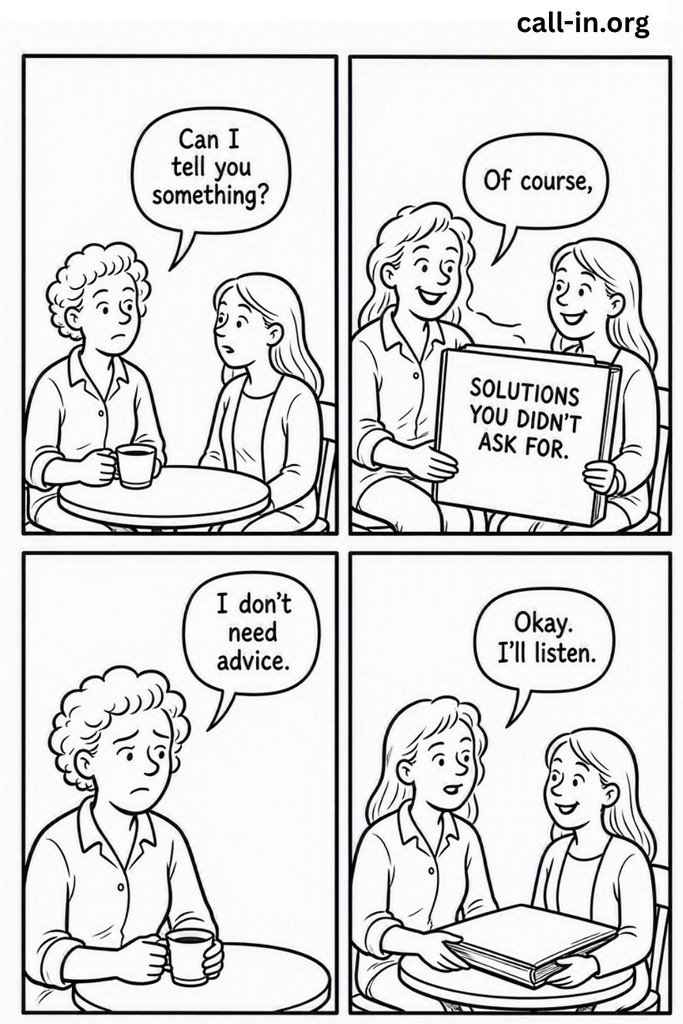
Callin does not begin with advice. Many people are tired of receiving solutions before anyone has understood the problem. If you want the listener to stay with the feeling, you can say so. If you later want ideas or help considering options, you can ask.
Any suggestions remain non-clinical and are not instructions. Listeners do not provide regulated professional advice, prescribe medication, create treatment plans, or make decisions for you. Advice by consent is support. Unsolicited fixing can become another way of not listening.
What Can You Talk About?
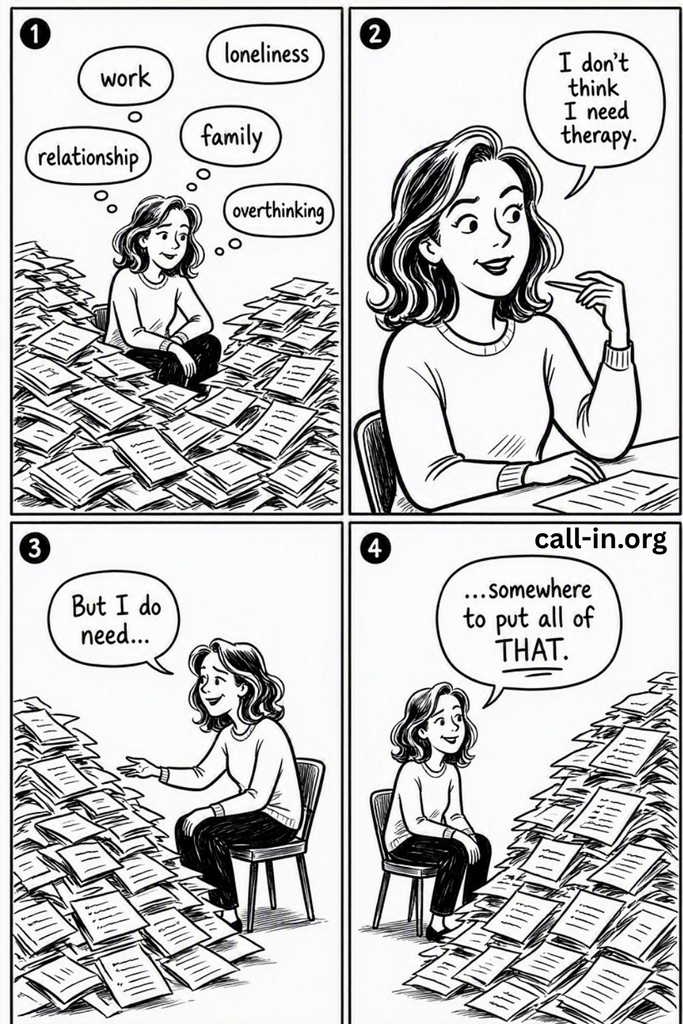
You can discuss loneliness, stress, burnout, grief, work, relationships, heartbreak, transitions, difficult decisions, overthinking, or feeling misunderstood. Sensitive experiences can also be discussed honestly. The topic does not need to qualify as a catastrophe.
The conduct boundary concerns behavior directed at the listener, including threats, harassment, sexual propositions, or attempts to move the relationship outside Callin. If speaking honestly makes you worry that you are inconsiderate, our guide to venting versus trauma dumping may help.
Is the First Call Confidential?
Callin treats the substance of your session as confidential and does not routinely share it with employers, relatives, or unrelated third parties. Access is limited to people who reasonably need information to operate, supervise, protect, or lawfully provide the service.
Confidentiality has limited safety and legal exceptions, including serious and immediate risk of harm or a legal requirement. Sessions are not routinely recorded. Read the full privacy, recording, and safeguarding boundaries in Callin’s Community Standards.
How Do We Decide Whether Callin Is a Fit?
The first session asks whether non-clinical active listening is the support you need. Callin may fit if you are 18 or older and want an objective person who can listen without diagnosing or treating you. It can also help when personal relationships cannot hold the conversation well.
Callin may not fit if you need psychotherapy, assessment, medical or psychiatric care, specialist safeguarding support, regulated advice, or crisis intervention. Our guide to non-clinical mental health support and therapy explains which space may better match your needs.
If Callin Fits, Client Onboarding Comes Next
If the session feels right and Callin is suitable, client onboarding comes next. You can review scheduling, available sessions, confidentiality, boundaries, and how ongoing support works.
Callin normally provides the same dedicated listener, so future conversations can continue instead of starting over. Onboarding happens after fit, leaving you free to make an informed choice without pressure.
If Callin Does Not Fit, We Can Signpost You
If Callin is not right, we can signpost you toward more appropriate support, such as a therapist, GP, specialist organization, community service, or crisis resource. Signposting is not rejection or proof that you are “too much.” It means your needs deserve a service equipped to meet them.
We will not pretend Callin can safely do everything simply because you reached us first. Sometimes support means showing you a clearer route to the right door.
No Commitment Means No Pressure
You do not owe a booking, purchase, or persuasive explanation after accepting a free session. You may take time to think, request another listener, choose different support, or decide one conversation was enough. The first call can be useful even if it is also the last.
Support should not create a debt of loyalty. Your freedom to leave is part of what makes the invitation honest.
What Happens at the End of the Session?
Near the end, your listener may let you know so the call does not stop abruptly. You can reflect on what stood out or what you need next, without manufacturing a happy ending.
You may feel lighter, tired, clearer, or much the same. The session succeeds through honest support and a clearer sense of what fits, not because every problem disappears.
Safeguarding and Urgent Support
Callin is not continuously monitored and cannot provide an urgent response. A listener may recommend professional, specialist, crisis, or emergency support, and may pause or end a conversation if the situation falls outside Callin’s non-clinical scope.
If you need urgent mental health help in the UK, use NHS 111 online or call 111 and select the mental health option. If you or someone else is in immediate danger or cannot stay safe, call 999 or go to A&E. Samaritans can be reached free at 116 123 if you need someone to talk to at any time.
Outside the UK, contact the emergency or crisis service for your current location. In an urgent moment, specialist crisis capability matters more than continuity with a familiar listener.
Frequently Asked Questions
Is the first Callin session really free?
Yes. It is completely free, with no commitment to buy another session or become a client. You can receive support and decide whether Callin genuinely fits.
Does the first session last 20 minutes or one hour?
It can last 20 minutes or up to one hour, depending on what you need. Some people want an introduction, while others need more room to talk.
Do I have to complete onboarding before the free call?
No. The first conversation comes before onboarding. If Callin suits you and you want to continue, onboarding happens afterward.
What happens if Callin is not right for me?
We can signpost you toward a more appropriate service or professional. This is not failure. It means another kind of support may match your needs better.
Will the listener give me advice?
Not unless you ask. If you request ideas, the listener may offer non-clinical suggestions within service boundaries. All personal decisions remain yours.
What if I do not know what to say?
You can begin with exactly that. Your listener can ask gentle questions about what happened, what keeps repeating in your mind, or why you needed someone to listen.
Will I have the same listener if I continue?
Normally, yes. Callin is designed around continuity, although a change may occasionally be necessary. You can also request another listener.
Book Your First Free Session
You have already tried explaining. You do not need another person to reduce your pain to a platitude, compare it with the suffering of the entire planet, or advise you into forced happiness.
You may simply need someone willing to stay with what is true long enough for you to breathe.
Book your first free Callin session. Take 20 minutes or up to one hour, depending on what you need. There is no commitment afterward. Just support that supports you.
Callin provides non-clinical emotional support for adults aged 18 and over. It is not therapy, medical care, crisis intervention, or an emergency service.
Sources
- Callin. Community Standards.
- NHS. Where to get urgent help for mental health.
- Weger, H., Castle Bell, G., Minei, E. M., & Robinson, M. C. (2014). The relative effectiveness of active listening in initial interactions. International Journal of Listening, 28(1), 13–31.
- Zielinski, M. J., Veilleux, J. C., Fradley, M. F., Skinner, K. D., & Baker, D. E. (2023). Perceived emotion invalidation predicts daily affect and stressors. Anxiety, Stress, & Coping, 36(2), 214–228.