
Feeling lonely around people is very painful, and it could be the worst kind of loneliness there is, because you are with people and you can’t explain why you can’t connect with them at all. It is more common than you realise, actually. It happens when your need for genuine connection goes unmet, even in a room full of others. You can be surrounded by colleagues, friends, or family, and still feel invisible. This kind of emotional isolation often signals a deeper disconnect: between who you are and how you feel seen. It is not a personal failing. It is a deeply human experience. And your feelings are valid. There’s nothing wrong with you when you feel lonely around people.

What Should I Know Right Now?
You are not broken.
Feeling lonely around people does not mean something is wrong with you. It does not mean you are antisocial, difficult, or unlovable. It means you are a person with a genuine need for real connection, and that need is going unmet right now. And it makes sense that you seek online emotional support.
This kind of loneliness has a name. Researchers call it social loneliness versus emotional loneliness. You can have a full social calendar and still experience deep emotional isolation. The two are not the same thing.
You are also far from alone in this. According to the Harvard Making Caring Common Project, 21% of adults in the US reported feeling lonely in a 2024 nationally representative survey. Globally, around one in three adults reports feeling lonely. The APA’s 2025 Stress in America survey found that nearly seven in ten adults said they needed more emotional support last year than they actually received.
The ache you feel is real. It matters. And it deserves attention.
Why Do I Feel Lonely Around People?
The short answer: being physically present with others is not the same as feeling emotionally connected to them.
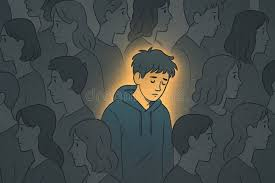
Loneliness is not about headcount. It is about the quality of connection, or the absence of it.
You can be at a party and feel completely unseen. You can be in a relationship and feel profoundly alone. You can be surrounded by people who care about you and still feel as though nobody truly knows you. This is one of the quietest, most disorienting forms of pain a person can carry.
So why does it happen? Why do you feel lonely around people? There are specific, understandable reasons. Understanding them is the first step toward something better.
What’s Happening Beneath the Surface? Why You Feel Lonely Around People
Emotional isolation is rarely simple.

It is layered. It builds slowly. And it is almost never about the people around you being bad people, or you being a bad person.
Most of the time, it comes down to a gap. A gap between the connection you are experiencing and the connection you are longing for. That gap can widen quietly over years. It can appear suddenly after a major life change. It can deepen in environments that feel safe on the surface but leave your emotional world completely untouched.
Your nervous system notices this gap, even when your mind tries to talk you out of it. That persistent, low-level feeling of not quite belonging, of performing a version of yourself while the real you waits quietly, is your inner world signalling that something important is missing.
This is not weakness. It is information.
The 5 Likely Real Reasons for Feeling Lonely Around People and Emotional Isolation
1. Your Social Environment Does Not Fit Who You Are
Sometimes the loneliness is situational. The people around you are simply not your people.

This is no one’s fault. But it is worth naming. If your daily environment, your workplace, your social group, your community, does not reflect your values, your sense of humour, your depth, or your way of seeing the world, belonging will feel perpetually out of reach.
Geographic moves, life transitions, becoming a parent, changing careers, all of these can leave a person in entirely the wrong room, surrounded by entirely the right number of people.
2. You Are Not Sharing Your Real Self
Many people spend their lives in connection at the surface level only. Conversations stay light. Topics stay safe. Emotions stay managed.

Over time, this becomes exhausting. You are present. You are engaged. But you are only showing a curated version of yourself. The real you, with your fears, your complexity, your genuine thoughts, never quite makes it into the room.
When nobody knows the real you, connection could feel hollow. This is one of the most common reasons people feel lonely around people, even in close relationships.
3. Your Emotional Needs Are Not Being Met
You might be surrounded by people who love you. But love alone does not always meet emotional needs.
Perhaps the people around you are not naturally expressive. Perhaps they minimise your feelings, not out of cruelty, but out of habit or their own discomfort. Perhaps you have learned to expect so little that you stopped voicing what you actually need.
Unmet emotional needs are silent. They accumulate quietly. And they create a very specific kind of loneliness, the loneliness of being cared for in theory but unseen in practice.
4. You Are Carrying Something You Have Not Said Out Loud
Grief. Shame. Anxiety. A secret. A struggle you do not know how to name.
When something significant is living inside you unexpressed, it creates distance. Not because other people do not care. But because there is a version of you, the one holding that thing, that nobody is reaching.
The heaviest things we carry tend to be the ones we carry silently. And silence is its own form of isolation, even in company.
5. You Have Disconnected from Yourself First
This one is often the last to be recognised.
Sometimes the distance you feel from others begins with distance from yourself. Busyness, stress, people-pleasing, and self-suppression can gradually erode your sense of your own interior life. When you no longer know clearly what you feel, what you need, or who you are in a given moment, genuine connection with others becomes structurally difficult.
You cannot be truly known by others if you are not known to yourself.
You do not have to carry this quietly. A 20-minute conversation, free, non-judgmental, and available now, can be a place to start. Email he***@*****in.org with the subject line “Book My Free 20-Minute Session” to claim your session.
What Might Help Right Now?
These are small, realistic steps. Not solutions. Just starting points.
• Name what you are feeling, precisely. Not “I feel bad.” Try: “I feel unseen,” or “I feel like I am performing.” Precision creates clarity.
• Write it down. Journaling the specifics of your loneliness, when it peaks, what triggers it, what it feels like in your body, can help it feel less overwhelming and more workable.
• Try one honest conversation. Not a full emotional disclosure. Just one moment of real honesty with someone you trust. See what happens.
• Reduce performed connection. Spend less time in social situations that cost more than they give. Give yourself permission to opt out of environments that consistently leave you feeling emptier.
• Ask yourself: when do I feel most like myself? Then move toward those conditions, people, and environments, even slightly.
• Sit with it for a moment. Loneliness does not always need to be fixed immediately. Sometimes naming it, without rushing past it, is its own form of care.
Who Can Help?
You have more options than it might feel like right now.

Friends and family, If there is someone in your life you trust with honesty, they are worth reaching toward. Even an imperfect conversation is more connecting than silence.
Support communities, Online forums, community groups, interest-based spaces, and local organisations offer low-pressure environments for gradual connection.
Warmlines, Free, non-crisis phone and chat lines staffed by trained listeners. Available in the US, UK, Australia, and many other countries.
Therapy and counselling, A skilled therapist can help you understand the roots of your emotional isolation and work through them over time. Waiting lists exist in many places, but the investment is often worthwhile.
Peer support, Sometimes what helps most is talking to another person who simply understands. Not someone with answers. Just someone who listens without agenda.
Frequently Asked Questions
Is it normal to feel lonely even when you’re around people?
Yes. This experience is far more common than it appears. Feeling lonely around people, sometimes called relational loneliness or emotional isolation, happens when your need for genuine connection is unmet, regardless of how many people are physically present. A 2025 APA study found that more than half of US adults reported feeling isolated. You are not unusual for feeling this way.
Why do I feel lonely even around my friends?
Feeling lonely around friends often signals a gap between surface-level connection and deeper emotional intimac
y. It may mean conversations rarely go below the surface. It may mean you do not feel safe showing your real self. It may also reflect a gradual drift in the relationship, both parties have changed, but the connection has not adapted. This is painful, and it is also recognisable and workable.
Can you be lonely in a relationship?
Absolutely. Loneliness within a relationship is one of the most confusing forms of emotional isolation because it comes with guilt, you feel you should not feel this way. But emotional loneliness in a relationship is common. It often arises when emotional needs go unvoiced or unmet, when communication stays functional rather than intimate, or when both partners are simply moving through life in parallel rather than genuinely together.
Is feeling lonely around people a mental health issue?
Persistent loneliness and emotional isolation can be connected to mental health experiences, but they are not themselves diagnoses. Many people feel lonely around others without any clinical mental health condition. That said, if your loneliness is severe, long-lasting, or significantly affecting your quality of life, speaking to a mental health professional is a worthwhile step. Emotional support, clinical or peer-based, can make a real difference.
Can talking to someone online really help with loneliness?
Yes. Research into peer support and emotional disclosure consistently shows that being heard, genuinely heard, reduces feelings of isolation and emotional distress. The format matters less than the quality of the listening. A real human conversation, even online, creates genuine neurological and emotional relief. It is not a replacement for all forms of support. But it is a real and meaningful place to start.
Sources
• American Psychological Association. (2025). Stress in America Survey. apa.org
• Harvard Making Caring Common Project. (2024). Loneliness in America. mcc.gse.harvard.edu
• Cigna U.S. Loneliness Index. cigna.com
• World Health Organization. (2025). Social Connection and Loneliness. who.int
• National Academies of Sciences, Engineering, and Medicine. (2020). Social Isolation and Loneliness in Older Adults.
• Gallup. (2024). Global Emotions Report. gallup.com
• Taylor, H.O. et al. (2023). The state of loneliness and social isolation research. BMC Public Health. PubMed Central.

Leave a Reply