If you feel like you cannot cope with life, do not try to solve your whole future right now. Reduce the task to the next ten minutes: move somewhere safer, slow your breathing, drink some water if you can, and contact one person who can stay with you or listen. Feeling overwhelmed means your distress has exceeded your current capacity, not that you are failing.
If you may harm yourself or cannot stay safe: In the UK, call 999 or go to A&E. For urgent mental health help that is not an emergency, call NHS 111 and select the mental health option. You can call Samaritans free on 116 123 or text SHOUT to 85258. In the US, call or text 988. Elsewhere, contact your local emergency service or crisis line. Do not stay alone with immediate danger.
Key Takeaways
- When you cannot cope, make the time horizon smaller. The next ten minutes matter more than solving the next ten years.
- Struggling to cope is often a load problem, not a character problem. Too many demands and too little support can overwhelm anyone.
- Regulating your body, reducing one demand, and telling one person the truth can create enough capacity for the next decision.
- Emotional, practical, clinical, and crisis support solve different problems. Choosing the right type matters.
- Persistent hopelessness, loss of function, self-neglect, or thoughts of harm require professional or urgent support.
- You can always reach out to call-in.org to get a safe space to talk. First session is on us.


Why Do I Feel Like I Cannot Cope With Life?
People rarely reach breaking point because of one spectacular disaster. More often, pressure has been accumulating quietly: poor sleep, money worries, caring responsibilities, loneliness, work stress, relationship tension, illness, grief, uncertainty, and the daily administrative theatre of being alive.
Then something small happens. An email arrives. The washing machine breaks. Someone asks an innocent question and you want to cry, scream, disappear, or become a woodland creature with no forwarding address.
The small event did not create the whole reaction. It landed on a system that was already carrying too much.
Coping is not a fixed quality that strong people possess and weak people lack. It changes according to your health, resources, safety, rest, past experiences, current demands, and whether anybody is helping you carry them.
The problem is not always that you are bad at coping. Sometimes life has been asking one nervous system to do the work of a whole village.
What Does Not Coping Look Like?
Not coping does not always look dramatic. Some people cry or panic. Others become efficient, numb, irritable, forgetful, withdrawn, or unable to make simple decisions.
You may stop replying, miss deadlines, struggle to eat or sleep, or feel detached from your life. You might keep working and caring for everyone while privately feeling one inconvenience away from collapse.
This is why “But you seem fine” is not a useful assessment. Functioning and coping are not identical. A person can still complete tasks while using every available part of themselves to do it.
If you are unsure how much you have been hiding, the “How I’m Fine Are You?” quiz can help you reflect on the gap between how you appear and how you actually feel.
What to Do When You Can’t Cope With Life Right Now
When everything feels urgent, the first task is not productivity. It is capacity. You need enough steadiness to decide what comes next.
Check Whether You Are Safe
Ask yourself directly: “Am I at risk of hurting myself, or am I afraid I might not stay safe?” If the answer is yes, maybe, or “I do not know,” treat that as urgent.
Move toward another person or a public, safer place. Put distance between yourself and anything that could harm you. Call emergency or crisis support and say plainly, “I do not feel safe alone right now.”
You do not need to explain your entire history before you deserve immediate help.
Shrink the Time Horizon
An overwhelmed mind tries to solve everything at once: the job, debt, relationship, family, health, future, and apparently the entire moral meaning of existence before dinner. That impossible assignment creates more panic.
Ask what would help you get through the next ten minutes. After that, consider the next hour. Today is allowed to be managed in pieces.
A temporary nervous system state should not be allowed to write permanent conclusions about your life.
Ground Yourself in the Present
Grounding does not erase the problem. It helps move some attention away from frightening thoughts and back toward the room, body, and moment you are actually in.
You might press your feet into the floor, relax your jaw, slow your exhale, name what you can see and hear, or hold something cool. The World Health Organization’s evidence-informed stress guide recommends grounding and “unhooking” from difficult thoughts as practical ways to stay engaged with the present during adversity. (World Health Organization)
The aim is not instant serenity. It is to become five percent steadier. Five percent is sometimes enough to send the message, make the call, or choose not to act on an intense impulse.
Remove One Demand
When capacity is low, subtraction can help more than another coping technique. Cancel what can be canceled. Delay the non-urgent reply. Order simple food. Let the laundry remain a developing nation with its own government.
This is not laziness. It is temporary triage.
Choose one thing that does not need to be carried today. Rest that must be earned often arrives too late.
Tell One Person the Unedited Truth
You need not tell everyone. Choose one safe person and be more specific than “I’m tired.”
You could say, “I am overwhelmed and I am not coping well today. I do not need you to fix everything, but can you stay on the phone with me?” Specific language gives the other person something they can understand and respond to.
If friends or family do not feel available, consider a GP, helpline, peer service, faith leader, student or workplace wellbeing service, support group, or one of these options when you need someone to talk to right now.
What If I Can’t Cope Anymore but I Am Not Suicidal?
You do not have to be suicidal to need support. You may be exhausted, burned out, isolated, grieving, frightened, or carrying too much responsibility.
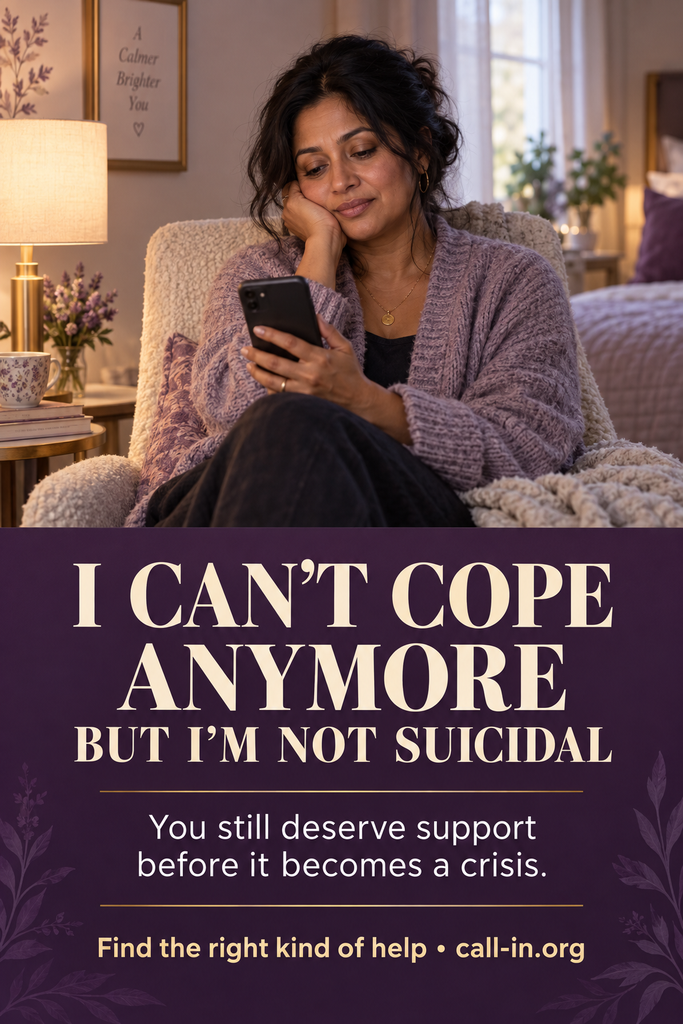
This middle ground matters. People often wait because they assume support is reserved for either minor self-care or immediate crisis, with nothing between scented candles and emergency services. Real life contains a very large middle.
Non-clinical support, peer groups, practical services, trusted relationships, and professional care can all belong in that space. This guide to knowing whether you need emotional support rather than therapy may help identify the right fit.
You do not need a diagnosis before you can say, “This is becoming too much.” Asking earlier is often easier than waiting until every reserve has disappeared. Read more about how to ask for help without a mental health diagnosis.
How Do I Cope When Too Many Things Go Wrong at Once?
When several problems collide, separate them by the kind of response they require.
Some problems need immediate action, such as safety, shelter, medication, food, or urgent deadlines. Some need another person, such as childcare, debt advice, medical assessment, workplace adjustments, or relationship support. Some are painful but cannot be solved today.
Write down only the problems that are actively demanding attention. Beside each one, mark it as “today,” “needs help,” or “not today.” This is not a complete life strategy. It is a way to stop every problem from presenting itself as an emergency simultaneously.
If modern life itself seems relentlessly demanding, you are not imagining the effect of constant availability, financial pressure, information overload, and shrinking recovery time. The article on why modern life feels emotionally overwhelming explores that wider context.
Sometimes the next helpful action is not emotional. It is practical. Coping skills cannot indefinitely compensate for an unsafe home, impossible workload, untreated illness, or financial emergency.
Why Can’t I Cope With Small Things Anymore?
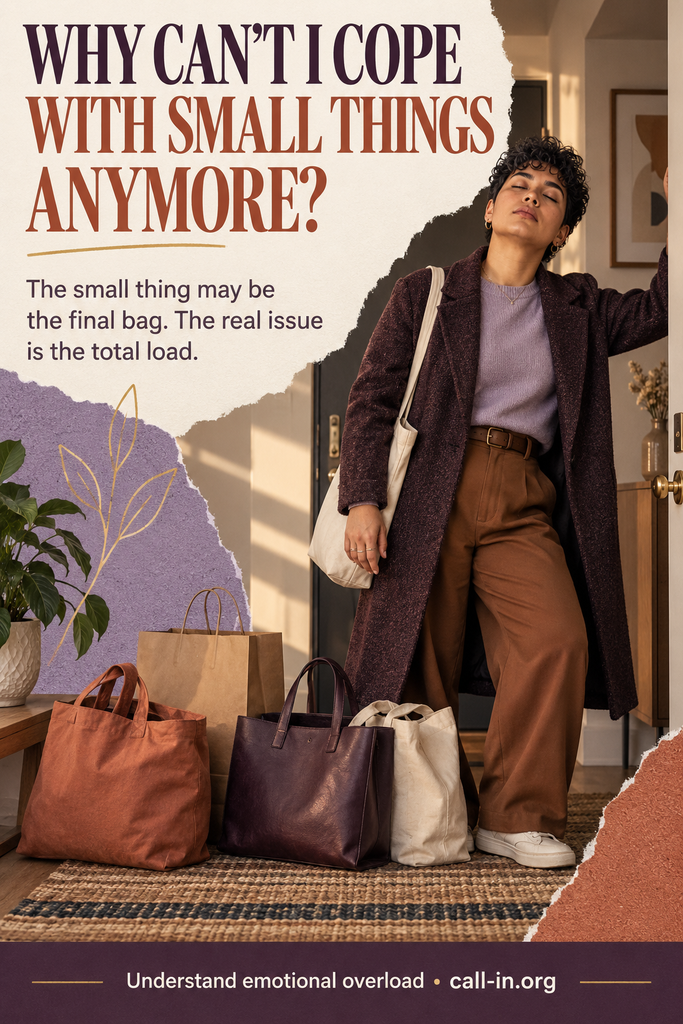
Your ability to cope with small problems usually shrinks when your system is depleted. Poor sleep, chronic stress, grief, burnout, anxiety, pain, hormonal changes, illness, loneliness, trauma reminders, and prolonged uncertainty can all reduce emotional capacity.
Imagine carrying ten bags. An eleventh bag may be light, but your hands are already full. The final bag receives the blame because it is visible. The real issue is the total load.
It may help to ask, “What else am I carrying?” The answer could reveal that the apparent problem is not the problem. Perhaps a minor work request feels unbearable because you have been suppressing resentment for months. Perhaps one canceled plan devastates you because it touches a much larger loneliness.
That does not make the reaction irrational. It makes it contextual.
What Should You Avoid When Life Feels Impossible?
Try not to make your entire life stand trial while you are exhausted. Decisions about quitting a job, ending a relationship, moving, or sending a furious message may feel urgently necessary, but intense distress can narrow perspective. If safety allows, create time between the feeling and an irreversible decision.
Alcohol, drugs, gambling, compulsive spending, and endless scrolling can reduce discomfort briefly while worsening tomorrow’s anxiety, shame, sleep, or practical problems. The NHS advises against using alcohol, cigarettes, gambling, or drugs to relieve low mood because they can contribute to poorer mental health. (NHS guidance on low mood)
Also avoid turning your struggle into evidence against your character. Shame consumes capacity without solving the source of the pressure.
You are allowed to take the situation seriously without making yourself the villain of it.
How Can I Make the Next 24 Hours More Manageable?
Choose one action from each of three areas: body, environment, and connection.
For your body, that might be eating something simple, drinking water, taking prescribed medication, showering, sleeping, or stepping outside. For your environment, it might be silencing notifications, clearing one safe place to sit, postponing one task, or asking for practical help.
For connection, send one honest message or arrange one conversation. If you need more ideas, seven things to do when everything feels too much offers a gentle place to continue.
Do not turn this into a 24-hour personal transformation challenge. The purpose is to reduce pressure and increase support, not to become the most organized overwhelmed person on the internet.
When Should I Seek Professional Help?
Contact a GP or qualified mental health professional if the feeling is persistent, worsening, returning frequently, or affecting your ability to eat, sleep, work, study, care for yourself, or maintain relationships. The NHS advises seeking medical help when low mood lasts more than two weeks, when you are struggling to cope, or when self-help is not working. (NHS guidance on low mood)
Seek help sooner for severe panic, self-neglect, psychosis, mania, substance dependence, abuse, major changes in functioning, or thoughts of harming yourself or someone else. You do not need to wait for a symptom to become unbearable before taking it seriously.
Professional care does not always mean long-term therapy. It may involve a medical check, medication review, short-term support, occupational help, guided self-help, or referral to a specialist service.
If you are in immediate danger, call 999 or go to A&E. If you need urgent mental health support in England but it is not an emergency, call NHS 111 and choose the mental health option. The NHS states that a mental health emergency should be treated as seriously as a physical emergency. (NHS urgent mental health help)
You May Not Need Fixing. You May Need Somewhere to Put It Down
There are moments when advice is useful. There are also moments when another list feels like someone handing you paperwork while you are drowning.
Talking can help you hear what is most urgent, separate one problem from another, and stop performing competence for a while. The Royal College of Psychiatrists notes that being listened to can help people clarify their thoughts and feel more hopeful when they are overwhelmed. (Royal College of Psychiatrists)
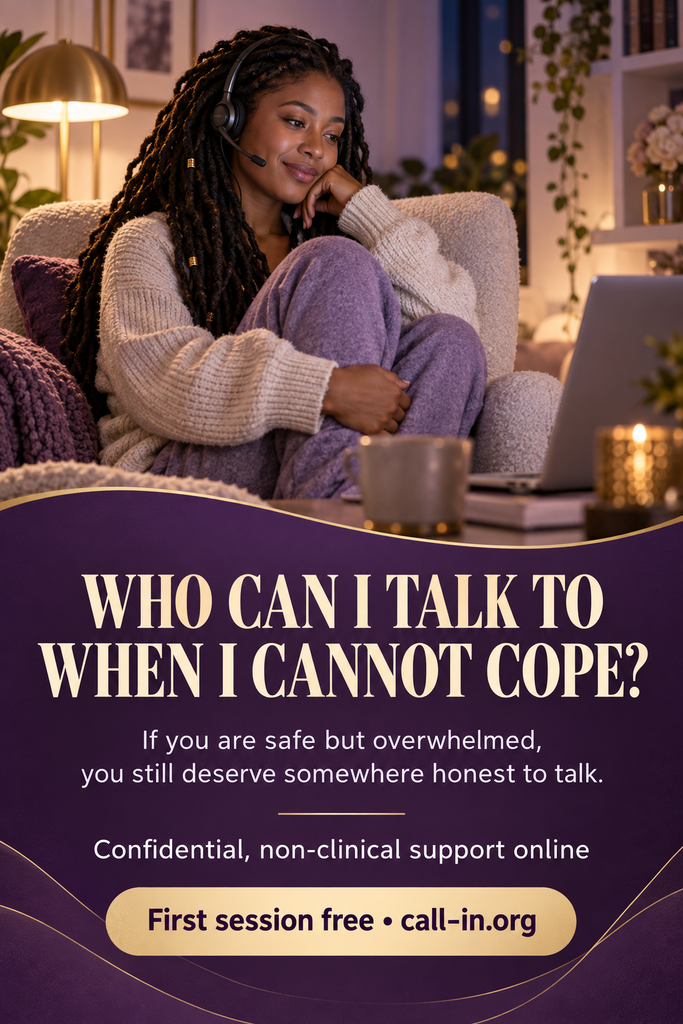
For people who are safe but overwhelmed and want a confidential, non-clinical space to talk, Callin offers one-to-one conversations with trained active listeners, including the option of returning to the same dedicated listener. It does not replace therapy, medical treatment, or crisis care, and the first session is free so you can discover whether being heard is what you need.
You do not have to solve your life before asking someone to sit beside you in it. Sometimes coping begins when the experience is no longer happening in complete emotional isolation.
Frequently Asked Questions
Is It Normal to Feel Like You Cannot Cope With Life?
It is a common response to intense or prolonged stress, grief, isolation, illness, burnout, and major life changes. Common does not mean insignificant. If the feeling persists, worsens, or affects daily functioning, speak with a GP or qualified mental health professional.
What Can I Do When Everything Feels Too Much?
Check your immediate safety, reduce your focus to the next ten minutes, ground yourself in the room, remove one non-essential demand, and contact one safe person. You do not need to solve every cause of the overwhelm before creating some immediate relief.
Why Do I Suddenly Feel Unable to Cope?
The trigger may be sudden, but the load may have been accumulating for a long time. Sleep loss, chronic stress, illness, conflict, grief, loneliness, and practical pressure can reduce capacity until a small event becomes the final demand.
How Do I Ask for Help When I Am Overwhelmed?
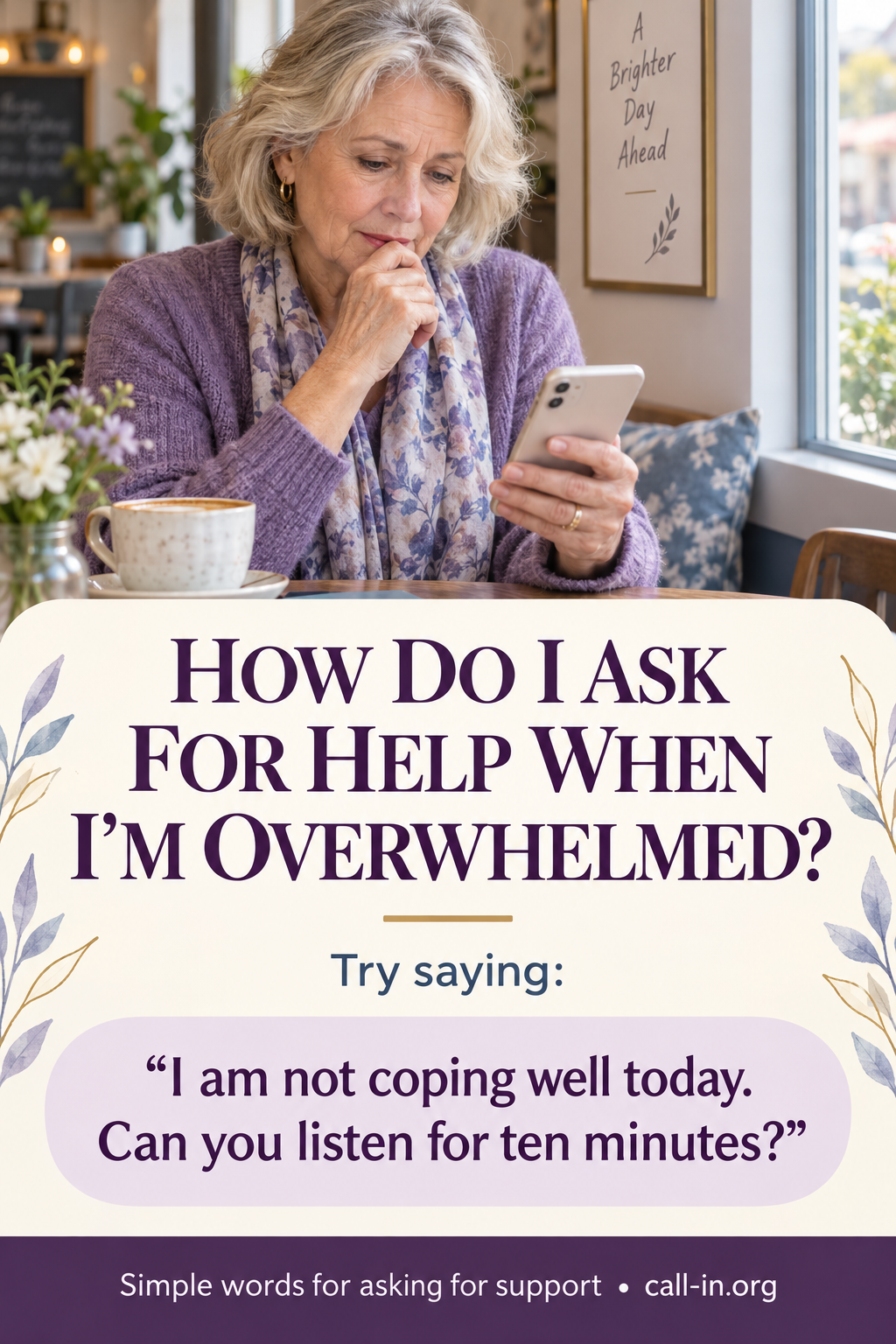
Use direct, specific language: “I am not coping well today. Can you listen for ten minutes?” You can also say whether you need company, practical help, professional guidance, or urgent support. People often respond better when they know what kind of help you are requesting.
Who Can I Talk to When I Cannot Cope?
You might contact a trusted person, GP, therapist, support group, faith leader, workplace or university wellbeing service, helpline, peer listener, or crisis service. If you want to talk without being judged or immediately given advice, consider a non-judgmental person to talk to online.
Is Not Coping a Sign of Depression?
It can be, but it can also relate to anxiety, burnout, grief, trauma, physical illness, sleep deprivation, unsafe circumstances, or temporary overload. Low mood lasting more than two weeks, loss of enjoyment, hopelessness, concentration problems, and major functional changes are reasons to seek an assessment.
Can I Learn to Cope With Life Again?
Yes. Capacity can return as pressure reduces, support increases, physical needs are addressed, and difficult experiences are processed. You do not need to feel confident about your entire future today. You only need to make the next safe, useful step possible.

Leave a Reply