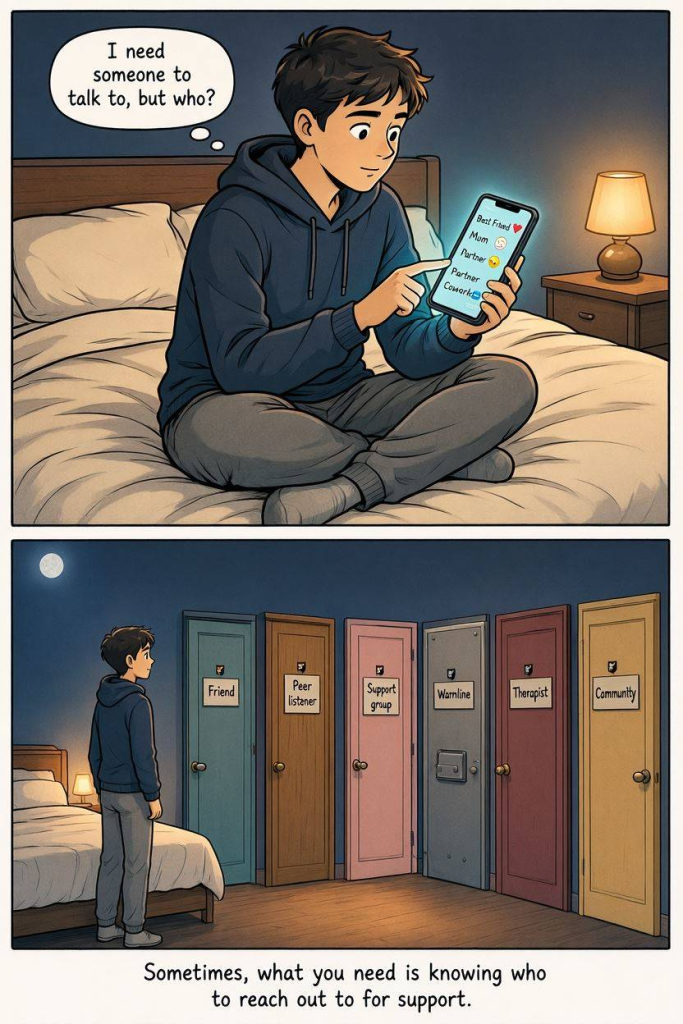
When you need someone to talk to and no name comes to mind, that does not mean you have run out of options. It usually means the obvious people, a best friend, a parent, a partner, do not feel like the right fit for what you are carrying today. There are at least nine real, accessible ways to have an honest conversation right now, and this guide walks through each one.
Key Takeaways
- Needing someone to talk to is a normal, common human experience, not a sign that something is wrong with you or your relationships.
- Crisis lines and warmlines exist for different reasons, and knowing the difference can help you choose the right one in the moment.
- Friends and family are valuable, but they are not the only sources of support, and leaning on other options does not mean those relationships have failed.
- Non-clinical peer support, support groups, and even AI chat tools each serve a different purpose, and none require a clinical diagnosis to use.
- Choosing who to talk to is less about finding the “correct” answer and more about matching the option to what you actually need right now.
Why It Feels So Hard to Find Someone to Talk To
Most people assume that needing to talk to someone should be simple. You feel something, you call a person, the person listens. In practice, it rarely works that way, because the moment you need support most is often the moment you feel least able to ask for it.
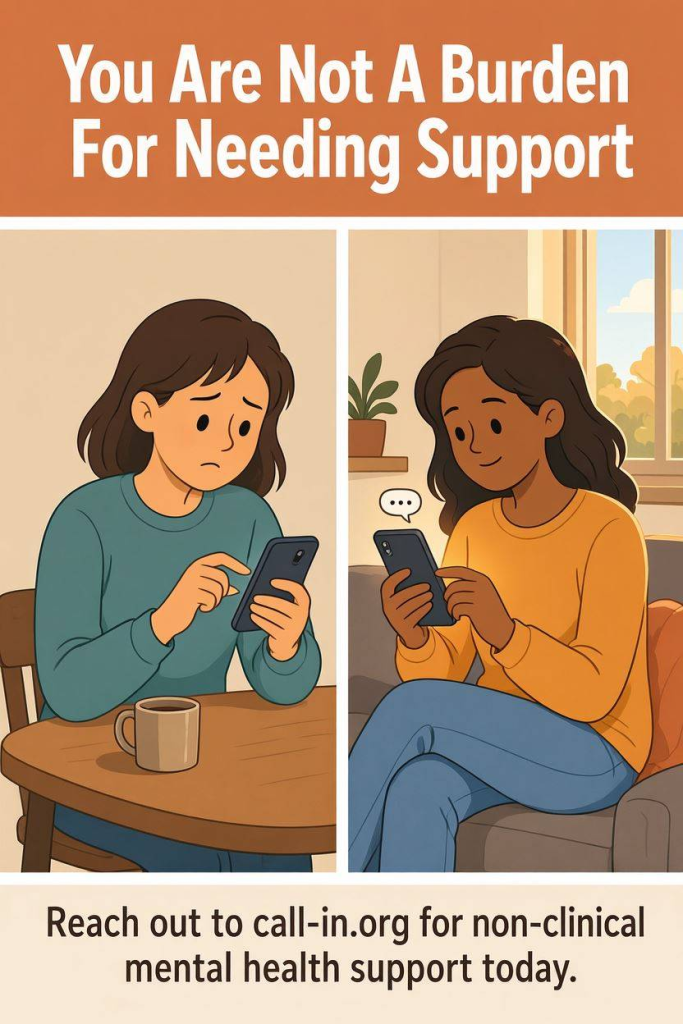
You might worry about being a burden, repeating yourself, or being told what to do instead of being heard.
This is not a personal failing. In 2023, the United States Surgeon General issued a public advisory describing loneliness and isolation as a widespread health concern, not a rare or unusual one.
Researchers who study social support have also found that a single conversation with someone who genuinely listens can lower stress in measurable ways, which is part of why the search for someone to talk to feels so urgent when it happens.
The problem is rarely that no help exists. The problem is that most people only know one or two ways to access it.
1. A Crisis Line or Warmline, When It Feels Urgent
If what you are feeling is intense, frightening, or centered on thoughts of harming yourself, a crisis line is the right place to start.
In the United States, the 988 Suicide and Crisis Lifeline is available by call or text at any hour, and it connects you with a trained counselor immediately. This option exists specifically for moments that feel too big to sit with alone.
A warmline serves a different, quieter purpose. It is built for people who are struggling but not in immediate danger, and who simply need to talk before things escalate.
Warmlines are typically staffed by people with lived experience of mental health challenges, and many operate in the evening and overnight hours when other support feels hardest to find. If you are unsure which kind of line fits your situation, this guide to what a warmline actually offers breaks down the difference clearly.
2. A Trusted Friend, Even When It Feels Like Too Much
A close friend often remains one of the most natural people to call, even when guilt tells you otherwise. Friendship, at its best, includes the ability to show up for each other during hard moments, not only the easy ones. The instinct to protect a friend from your problems usually comes from care, but it can also quietly keep you from getting support you need.
If the worry is really about being a burden, it helps to remember that most friendships survive honesty better than they survive distance. A friend who cares about you would rather know you are struggling than sense something is wrong and be kept at arm’s length. For a closer look at this specific worry, this piece on reaching out without feeling like a burden is worth reading before you decide to stay quiet.
3. A Family Member Who Has Earned Your Trust
Family relationships are complicated, and not every family member is the right person to call. But if there is one relative who has consistently shown up, listened without judgment, or simply been steady, that person can offer something a stranger cannot: history and context. They already understand where you have come from, which can make certain conversations easier to start.
This does not mean every family conversation needs to go deep. Sometimes the value is simply in being known, in not having to explain your whole life story before getting to the part that hurts. If that person exists in your life, they are worth considering even if you have not called them in a while.
4. A Non-Clinical Peer Support Platform
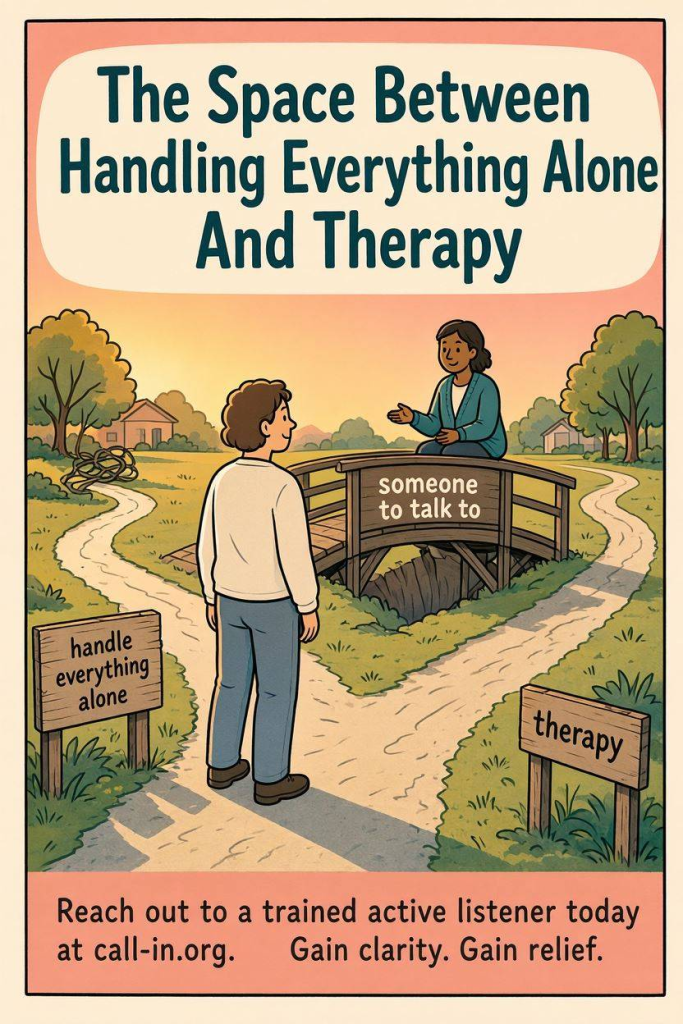
Somewhere between calling a friend and booking a therapy appointment sits a growing category of support: trained peer listeners who are available specifically to listen, not to diagnose or treat. These platforms exist for everyday struggles like stress, loneliness, overthinking, career pressure, and relationship strain, the kind of things that do not require a clinical label to be worth talking through.
The appeal is straightforward. You get a confidential, judgment-free conversation with someone whose only job is to be present with you, without the guilt of using up a friend’s evening or the cost and wait time of clinical care. Online peer listening services have grown for exactly this reason, giving people a space to process their thoughts out loud with an objective, caring listener.
5. A Support Group Built Around Shared Experience
There is a specific kind of relief that comes from talking to people who have lived through something similar to what you are facing, whether that is grief, divorce, addiction recovery, chronic illness, or a major life transition. Support groups, both in person and online, are built around that shared understanding. You do not have to explain the basics, because the people in the room already know them.
Groups also remove some of the pressure that one-on-one conversations can carry. You can listen as much as you speak, and you can return as often or as rarely as you need. Many communities, hospitals, and nonprofit organizations run free or low-cost groups, and a quick search for your specific situation plus “support group” is often enough to find one nearby or online.
6. A Therapist or Counselor, When What You Need Is Clinical Care
Some struggles genuinely call for clinical support, particularly when symptoms are persistent, are affecting daily functioning, or involve trauma, diagnosed mental health conditions, or thoughts of self-harm. A licensed therapist or counselor is trained to treat these issues directly, using approaches backed by decades of clinical research. This is not a step to delay out of guilt or a sense that your problem is not “serious enough.”
At the same time, therapy is not always accessible in the moment you need it. Waitlists, cost, and scheduling can all get in the way of same-day support. That gap is exactly why non-clinical options exist alongside therapy, not instead of it, giving people somewhere to go on the Tuesday night when their next appointment is two weeks away.
7. An AI Chat Companion, as a Stopgap and Not a Substitute
AI chatbots have become a common first stop for people who want to talk something through at 2 a.m. with no wait time and no fear of judgment. They can be useful for organizing thoughts, rehearsing a hard conversation, or simply feeling less alone in a quiet moment. For low-stakes venting, that can genuinely help.
The limitation is that an AI cannot offer real human presence, memory of your life, or the kind of attuned listening that comes from another person who is actually affected by what you share. Comparisons of this kind, including this look at AI versus human emotional support, consistently find that AI works best as a bridge to human connection, not a replacement for it.
8. A Mentor or Trusted Coworker
Not every conversation needs to be about your deepest feelings. Sometimes what helps most is talking to someone who understands a specific part of your life, like a mentor who has navigated a similar career decision, or a coworker who has been through the same team reorganization you are dealing with now.
These relationships can offer grounded, practical perspective precisely because they sit outside your inner circle.
There is also less emotional weight in these conversations, which can make them easier to start. You are not asking someone to carry your whole world, just to talk through one piece of it with you.
9. A Faith Leader or Community Figure
For many people, a religious or community leader remains one of the first people they think to call, and for good reason. These relationships often come with an existing foundation of trust, along with a framework for meaning-making that can be genuinely comforting during hard seasons. Many faith leaders are also trained in basic pastoral counseling and know when to refer someone to additional support.
Even outside formal religious settings, community figures like a coach, a teacher, or the organizer of a local group can serve a similar role. The common thread is a relationship built on more than convenience, one where you already feel somewhat known.
What to Do When You Still Don’t Know Who to Call
If you read through this list and still feel unsure, that is a normal response to a hard moment, not a sign you have failed to find the “right” option. Most people move between several of these depending on what is happening in their life. A crisis line one week, a coworker the next, a support group after that.
This is where a platform like Callin can help fill a specific gap. It offers confidential, non-clinical conversations with trained peer listeners for exactly the moments when you need to talk but are not sure a friend, a family member, or a clinical appointment is the right fit. It does not replace therapy or crisis care, but it gives you somewhere real to go in between.
Frequently Asked Questions
What is the difference between a warmline and a crisis line?
A crisis line, like the 988 Suicide and Crisis Lifeline, is built for emergencies, including thoughts of suicide or self-harm, and connects you with immediate, specialized support. A warmline is built for non-emergency support, offering someone to talk to before a situation becomes a crisis. Both are valuable, and knowing the difference helps you pick the right one when you need it.
Is it selfish to want someone to talk to who isn’t a therapist?
No. Not every emotional need requires clinical treatment, and wanting a conversation, rather than a diagnosis or a treatment plan, is a completely normal and healthy instinct. Non-clinical support exists precisely because everyday stress, loneliness, and overthinking deserve a space too, even when they do not meet the threshold for therapy.
Can talking to an AI chatbot actually help?
It can help with low-stakes venting, organizing your thoughts, or feeling less alone in a quiet moment, and many people use it as a first step. It cannot replicate genuine human presence or the kind of attuned listening another person can offer, so it works best as a bridge to human connection rather than a long-term substitute for it.
How do I find a non-clinical peer support platform?
Look for services that are explicit about being non-clinical, meaning they are staffed by trained listeners rather than licensed clinicians, and that describe their purpose as listening and emotional support rather than diagnosis or treatment. Confidentiality, availability outside standard business hours, and clear pricing are also good signs of a well-run platform.
What if I don’t want to burden my friends or family?
This worry is common, and it often says more about how much you care for the people around you than about the actual strength of those relationships. It can help to be honest with one trusted friend about needing to talk, while also using non-clinical support or a warmline for the moments when you would rather not lean on anyone you know personally.
Is peer support the same as therapy?
No. Peer support involves trained listeners who offer confidential conversation and emotional support, while therapy involves licensed clinicians who diagnose and treat mental health conditions using clinical methods. Peer support can sit alongside therapy or fill the gaps between appointments, but it is not designed to replace clinical treatment when that is what someone needs.
What should I do if I need to talk to someone right now?
If you are in crisis or having thoughts of harming yourself, contact the 988 Suicide and Crisis Lifeline immediately by calling or texting 988. If the need is real but not an emergency, a warmline, a trusted friend, a support group, or a non-clinical peer support platform like Callin can all offer a genuine conversation without a wait.

Leave a Reply