
When everything feels too much, the most important thing to know is this: what you’re feeling is real, it won’t last forever, and you don’t have to fix it tonight. Start small. Breathe. Put one hand on your chest. You don’t need to solve everything right now, you just need to get through the next few minutes. That is enough.
What to Know Right Now, at This Exact Moment
If you searched for this at 2 AM or any other time, you’re not weak. You’re not broken. You’re not “too much.”
You are a person who is carrying something heavy, and you haven’t put it down in a long time.
That takes a toll. That’s allowed to take a toll.
You don’t need to have the right words for what you’re feeling. You don’t need to explain it, justify it, or make it make sense to anyone tonight.
The only thing you need to do right now is keep reading.
Everything else can wait.
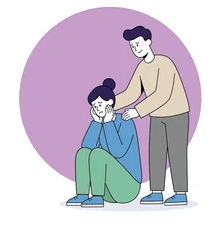
Why Everything Feels Too Much, and Why That Makes Complete Sense
There’s a moment that many people know.
It’s usually late. The house is quiet. And everything that felt manageable during the day suddenly feels absolutely enormous.
The worry you pushed aside. The conversation you’re dreading. The thing you said three years ago. The future that feels blurry and frightening. The loneliness you don’t know how to name.
It all arrives at once.
And it’s not because something is wrong with you.
It’s because the noise of the day has stopped, and now there’s nothing to drown it out.
This experience has no borders. People feel this in New York and Nairobi, in Tokyo and Tulsa, in a crowded house full of people and in a studio flat where you haven’t spoken to anyone in three days.
Overwhelm is one of the most human experiences there is.
Which means you are not alone in this, even if it feels that way completely.
What’s Happening Beneath the Surface When Everything Feels Too Much
Overwhelm isn’t a character flaw. It’s a nervous system response.
This is sometimes called emotional flooding.
It’s not a sign you can’t cope. It’s a sign you’ve been coping for too long without enough support.
Some of what can push a person here:
• Sustained stress with no real release
• Feeling unheard or unseen by the people around you
• Grief, including quiet, ambiguous grief for things not yet lost
• Isolation, even when surrounded by people
• A sense that you’re supposed to be managing better than you are
• Big life transitions, even ones that look positive from the outside
• The slow accumulation of small things no one else knows you’re carrying
None of these make you dramatic.
All of them make you human.
7 Things to Do When Everything Feels Too Much
These aren’t fixes. They’re footholds, small, real things that might help you get through the next few minutes or hours.
Start with whatever feels least impossible.
1. Put Something Cold or Warm in Your Hands
A glass of cold water. A hot cup of tea. Anything with a distinct physical temperature.
This isn’t a metaphor. Temperature activates your body’s sensory system and gives your nervous system something real to focus on, something outside the spiral.
Hold it. Feel it. Let it be the only thing for a moment.
2. Let the Feeling Be There Without Fighting It
This sounds counterintuitive. But resistance to overwhelm often makes it bigger.
Try saying, quietly or in your head: “This is overwhelming. That’s okay. I don’t have to fix it right now.”
You’re not giving up. You’re giving yourself permission to be where you are.
3. Write One Sentence About What’s Happening
Not an essay. Not a list. Just one sentence.
“I feel scared about the future.”
“I feel completely alone tonight.”
“I feel like I’m failing at everything.”
Writing it down moves it, even slightly, from inside you to outside you. That small distance can help.
4. Breathe Out Longer Than You Breathe In
Inhale for four counts. Exhale for six or eight.
A longer exhale activates your parasympathetic nervous system, the part of you that signals: you are safe, you can slow down.
Do this five times. Not as a cure. Just as a pause.
5. Put the Phone Down
Doom-scrolling when you’re overwhelmed almost always makes things worse. Social media in particular can create a painful contrast between your internal reality and everyone else’s curated surface.
Give yourself permission to close everything except what is actually helping you right now.
6. Name What You Actually Need Tonight
Not what you should need. Not what would solve everything. Just what you actually need, right now, tonight.
Rest? To cry without explanation? To talk to someone? To feel less alone?
You don’t have to act on it immediately. But naming it honestly, even to yourself, is a form of self-respect.
7. Talk to Someone Who Will Actually Listen
This one matters more than the others.
Carrying overwhelm alone, in silence, in the dark, it doesn’t make it go away. It just makes it heavier.
You don’t need advice tonight. You probably don’t need solutions.
You need to say what’s happening out loud, to someone who will receive it without judgment, without rushing you, without making it about themselves.
That kind of conversation exists. And it’s more accessible than you might think.
“Feeling overwhelmed is not a character flaw. It means you’re human.”
Who Can Help When Everything Feels Too Much
There are more options than the two most people think of (therapy or nothing). Here’s an honest overview:
Friends and family: If you have someone you trust who genuinely listens without fixing, reaching out to them, even with a simple “I’m not okay tonight,” can be powerful.
Warmlines: Many countries have warmlines: non-crisis phone lines specifically for emotional support conversations. They exist for exactly this feeling.
Support groups: Both online and in-person communities exist for people navigating overwhelm, grief, anxiety, loneliness, and life transitions. Many are free.
Therapy and counselling, For ongoing patterns, professional support is genuinely valuable. It isn’t always immediately accessible, but it’s worth pursuing.
Peer support platforms: These sit between friendship and therapy. They’re human, available, and designed for people who need to be heard without clinical framing.
No single option is right for everyone. The most important thing is finding one that feels reachable tonight.

Frequently Asked Questions
Is it normal to feel this overwhelmed for no obvious reason?
Completely. Overwhelm doesn’t always have a single cause you can point to. It often builds gradually, small pressures accumulating beneath the surface until they tip over. Not having a clear “reason” doesn’t make the feeling less valid. It often makes it more confusing, which is its own kind of difficult.
Why does everything feel so much worse at night?
During the day, tasks and noise and routine keep a lot of emotion at bay. At night, when those distractions fall away, what you’ve been holding tends to surface. This is very common and is not a sign that something is fundamentally wrong with you.
What if I don’t even know what I’m feeling, just that it’s too much?
That’s okay. You don’t need to have clear language for your emotions to deserve support. Many people find that just talking, even circularly, even messily, helps them eventually find the words. You don’t need to arrive anywhere before you reach out.
Is Callin available outside the US and UK?
Yes. Callin is a worldwide, 24/7 platform. People access peer support sessions from across the US, UK, Europe, Asia, Australia, and beyond. You don’t need to be in a specific country or time zone to access a session.
How is Callin different from therapy?
Callin is not therapy and does not provide clinical treatment. It offers peer-based emotional support, a space to be heard by a compassionate human listener. It’s not a replacement for professional care, but for many people it fills an important gap: accessible, immediate, non-clinical human connection.
What if I try the free session and it doesn’t help?
That’s a valid possibility, and it’s fine. The free session exists so you can see if Callin feels like a fit before making any commitment. There’s no pressure to continue. Some people find it genuinely helpful; others find they need something different. Both outcomes are okay.
Is it safe to talk about difficult things?
Yes. Callin’s sessions are confidential and judgment-free. Listeners are trained to hold space for difficult emotions without reacting with alarm or making you feel like too much. You can share as much or as little as you’re comfortable with.
What if I’m not sure I’m “overwhelmed enough” to reach out?
There’s no threshold you have to meet. You don’t need to be at a breaking point to deserve support. If you’re searching for help, that’s reason enough.
Sources
• American Psychological Association, Stress and the Body: apa.org
• NHS, Feeling Overwhelmed: Understanding Emotional Distress: nhs.uk
• Harvard Health Publishing, Relaxation Techniques: Breath Control Helps Quell Errant Stress Response: health.harvard.edu
• Mental Health Foundation (UK), How to Manage and Reduce Stress: mentalhealth.org.uk
• World Health Organization, Mental Health: Strengthening Our Response: who.int
• PLOS Medicine, Social Isolation and Mental Health Outcomes
• National Alliance on Mental Illness (NAMI), Emotional Overwhelm and Coping Strategies: nami.org
• Cigna Loneliness Index, The Loneliness Epidemic

Leave a Reply