
Quick Answer: You likely need emotional support if you want to feel heard, process a specific stress, or talk through something without a clinical framework. You likely need therapy if you are dealing with persistent symptoms, past trauma, or patterns that keep repeating despite your best efforts. Many people benefit from both at different points, and sometimes at the same time.
Key Takeaways
- Wanting to talk does not automatically mean you need therapy. It often means you need to be heard.
- Emotional support is built for everyday stress, loneliness, uncertainty, and situational struggle.
- Therapy is built for treatment, assessment, and structured psychological work, especially around trauma or long-standing patterns.
- The two are not competitors. Many people use both, at different times or even in the same season of life.
- Your needs can change. What fits you today may not fit you in six months, and that is normal.
Why This Question Comes Up So Often
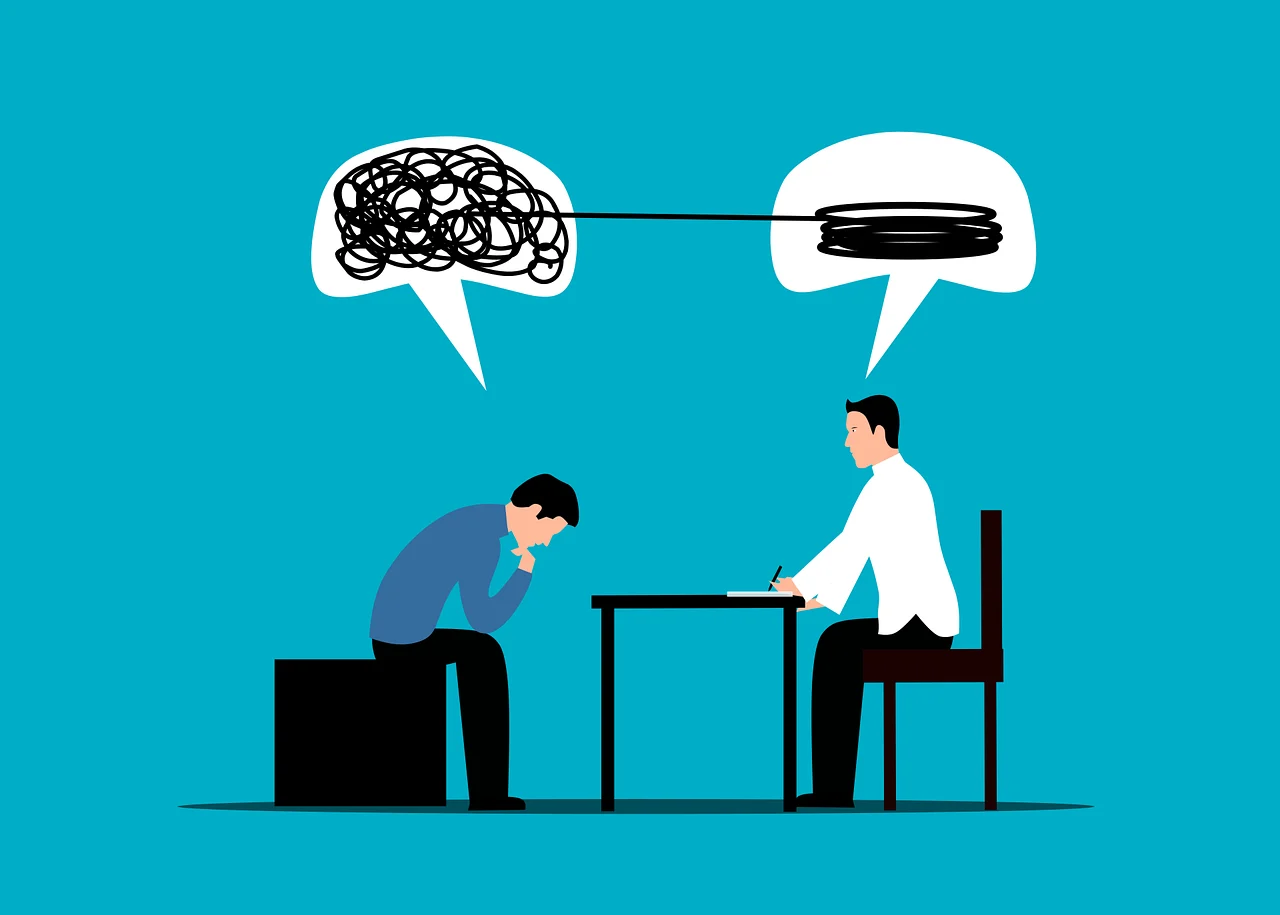
Almost every week, someone tells me a version of the same thing. “I don’t know if what I’m going through is serious enough for therapy.” I have heard this from people going through a divorce, people who just moved to a new city and feel invisible, and people whose only real problem is that work has been brutal for two months straight.
Here is what I have learned after three decades of these conversations. Most people are not actually unsure whether they are struggling. They are unsure whether their struggle qualifies for help.
There is a quiet belief many of us carry that only a crisis deserves professional attention, and anything less should be handled alone. That belief is not accurate, and it is not new.
People have always needed somewhere to put their feelings. What has changed is the number of options available, and the confusion about which one fits which moment.
Mental health conversations have become more public, which is good, but it has also blurred the line between everyday needs and clinical treatment. Both matter. They are just not the same thing.
What Emotional Support Actually Means
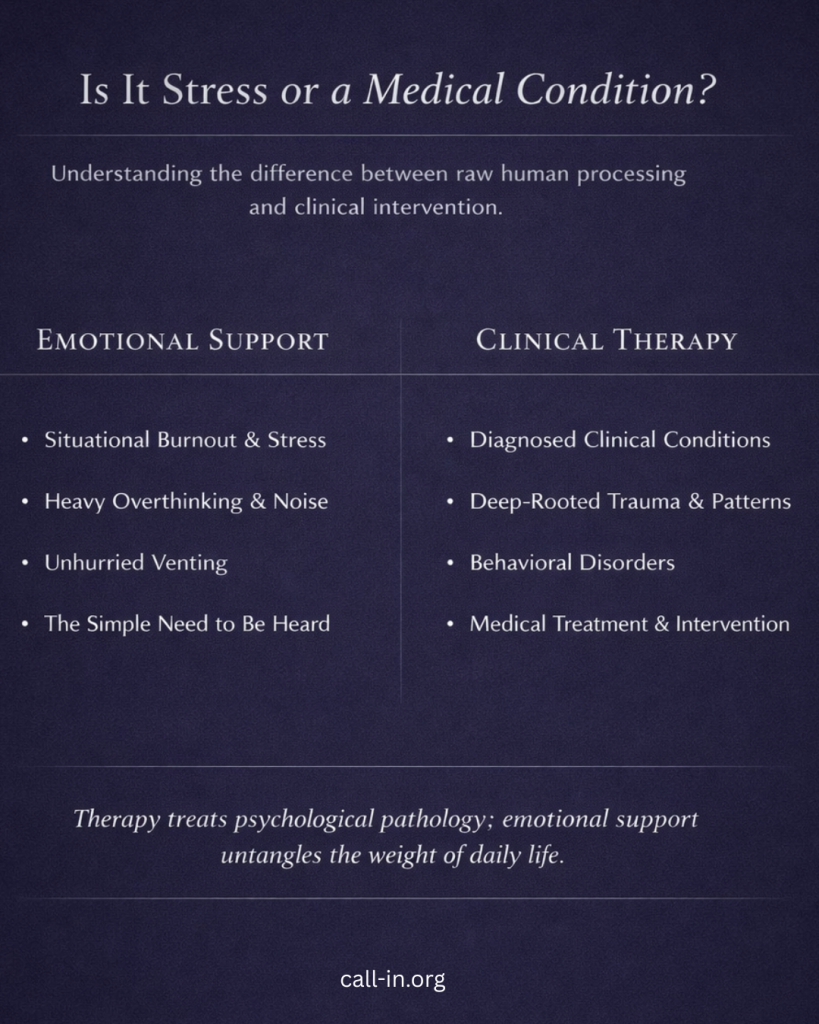
Emotional support is the experience of being heard without judgment, correction, or an agenda. It is not a diagnosis. It is not a treatment plan. It is a person, trained or not, who gives you their full attention while you process what is happening in your life.
Most of what brings people to emotional support falls into a few familiar categories:
- Situational stress. A hard week at work, a fight with a partner, a decision you cannot stop turning over in your head.
- Loneliness. The particular ache of having people around you but not feeling known by anyone.
- Burnout. The slow flattening that happens when you have been giving without refilling for too long.
- Relationship changes. A breakup, a friendship that faded, a family dynamic that shifted.
- Uncertainty. Big questions about direction, purpose, or what comes next, without a clear crisis attached.
None of these require a diagnosis to matter. Emotional processing, meaning the act of talking something through until it feels lighter or clearer, is a basic human need.
Active listening, where another person reflects back what you are saying so you feel truly heard, is often enough to help someone move through a hard stretch. If you have ever felt the specific relief of finally saying a worry out loud to someone who did not rush to fix it, you already know what I mean.
If any of this sounds familiar, you might recognize yourself in pieces I have written about what to do when you need to vent, but not therapy or feeling overwhelmed but not needing therapy.
What Therapy Is Designed to Help With
Therapy exists for a different purpose. It is a structured, ongoing process led by a licensed professional trained to assess, treat, and support people through psychological difficulty.
According to Psychology Today, psychotherapy is a form of treatment aimed at relieving emotional distress and mental health problems, and it involves examining life choices and difficulties with a trained provider over time.
Therapy tends to be the right setting when someone needs:
- Assessment. Understanding whether what they are experiencing meets criteria for a diagnosable condition.
- Treatment. Structured approaches, such as cognitive behavioral therapy, designed to address specific symptoms over time.
- Trauma work. Careful, guided processing of past events that continue to affect present functioning.
- Ongoing mental health care. Support for conditions like clinical depression, anxiety disorders, or other persistent diagnoses.
- Structured psychological intervention. A clear treatment plan built around measurable goals.
I want to be careful here, because this is not my place to diagnose anyone, and it is not the place of any peer listener. If you notice sadness, anxiety, or irritability that shows up most days rather than occasionally, that pattern is worth bringing to a licensed professional.
The same is true if you find yourself relying on substances to cope, or if relationship patterns keep repeating despite honest conversation. Therapy is built for that depth of work.
How to Tell Which Kind of Support Fits What You Are Experiencing
There is no single rule that applies to every person, but there are patterns I have noticed over the years.
Everyday overwhelm, like a stretch of long workdays or a stressful move, often responds well to simply being heard. Talking through the stress, even without a clinical framework, tends to bring real relief on its own.
Work stress and professional burnout sit in a gray area. Sometimes a consistent space to vent is enough to keep you steady. Other times, if the exhaustion has settled into numbness or hopelessness, that shift is worth naming to a professional.
Grief is its own category. Grief is not a disorder, and most people move through it without clinical treatment. But grief that has stopped moving at all, that feels frozen rather than painful, sometimes benefits from professional support to help it unstick.
Life transitions, whether a breakup, a career change, or an empty house after kids move out, usually call for someone to talk to who can hold space while you find your footing. Anxiety about the future often fits here too, especially when it is tied to a specific situation rather than a constant, free floating dread.
Persistent emotional distress is the clearest signal to consider therapy. If a low mood or a pattern of anxiety has lasted for weeks or months and does not lift even after good conversations and rest, that persistence matters. It is not proof that something is wrong with you. It is information pointing toward a different kind of help.
Many people use both at once. Someone might see a therapist twice a month for deeper work while also reaching out to a peer listener on ordinary hard days in between. There is nothing contradictory about that.
Questions to Ask Yourself Before Deciding
When someone comes to me unsure of what they need, I usually walk through a few quiet questions with them. You can ask yourself the same ones.
- Am I looking for someone to simply listen, or am I hoping for structured guidance and treatment?
- Am I trying to process one specific situation, or am I trying to understand a pattern that has followed me for years?
- Is this tied to something happening now, or does it trace back to earlier experiences I have not fully worked through?
- Do I want emotional space to talk freely, or do I want a clinical plan with defined goals?
- Has this feeling lifted after talking it through before, or does it always come back no matter who I talk to?
Your honest answers will usually point you somewhere. If they point toward more than one direction, that is fine. It often means both kinds of support have something to offer you.
A Closing Thought
There is no universal right answer here, and I say that after thirty years of sitting with people in exactly this uncertainty. Some people need a therapist. Some need a peer who will listen without an agenda. Many need both, and not always in equal measure or at the same time.
What matters most is choosing the kind of support that fits what you are carrying today, not what you think you are supposed to need. Your needs are allowed to change.
The person who only needed a listening ear last year might need a therapist this year, and that is not a step backward. It is simply where the road has taken them. Trust what you actually feel you need, not what you assume “counts.”
Frequently Asked Questions
Is emotional support the same as therapy? No. Emotional support is being heard and understood, often informally or through peer services. Therapy is a structured, clinical process led by a licensed professional aimed at treatment, assessment, and long-term psychological care. They can work well together, but they are not interchangeable.
Can emotional support help with anxiety? Emotional support can help with everyday anxious feelings tied to specific stress, such as work pressure or uncertainty about a decision. If anxiety is persistent, intense, or interfering with daily functioning, a licensed therapist can properly assess and treat it.
When should I see a therapist instead of talking to a peer supporter? Consider a therapist when your distress is persistent, tied to trauma, or connected to a long-standing pattern rather than a single situation. A therapist can also help if you need a formal assessment or a structured treatment plan.
Can I use both therapy and emotional support? Yes. Many people use both. Therapy can address deeper, ongoing work, while emotional support offers a space to talk through daily stress in between sessions. Using both is common and does not indicate that either one is insufficient.
Is it okay to ask for emotional support even if I’m not in crisis? Yes. Emotional support does not require a crisis or a diagnosis. It exists for everyday stress, loneliness, and situations that simply need to be talked through with someone who will listen carefully and without judgment.
Related reading on Callin:
- Someone to Talk to When I Don’t Want to Burden My Friends
- I Need Someone to Talk To, Not Therapy
- What to Do When You Need to Vent, But Not Therapy
- Feeling Overwhelmed but You Don’t Need Therapy? Helpful Tips
- Ask for Help Without a Mental Health Diagnosis
- What Is a Warmline?
- Callin Offers Active Listening: Feel Heard Today
- Benefits of Consistent Emotional Support
- 8 Emotional Support Options
- Overcome Professional Burnout
Sources referenced:
- Psychology Today, “Therapy” (Basics)
- Clarity Clinic, “Psychologist vs Therapist: Understanding the Differences”
- Sasco River Center, “The Difference Between Counseling and Therapy”

Leave a Reply