
Men struggle to express vulnerability because they were rarely taught the language for it, and because opening up has often cost them more than it gave back.
This isn’t a character flaw or a simple case of stubbornness. It’s the predictable result of biology, socialization, and a support system built for activities instead of feelings.
Key Takeaways
- Male emotional silence is often “normative male alexithymia,” a learned disconnect between feeling something and having words for it, not an absence of feeling.
- Men are statistically far more likely to die by suicide than women, even though women report depression more often, largely because pain tends to surface as anger, withdrawal, or physical symptoms instead of words.
- Many men avoid vulnerability because they’ve learned, through direct experience, that it can be met with discomfort or distance rather than closeness.
- Men’s friendships are often built side by side, around shared activities, which can leave a man with plenty of company and almost no one to call during an actual crisis.
- Real strength isn’t the absence of difficult emotion. It’s the capacity to stay present with it, name it, and let another person see it.
What’s Actually Happening When a Man Struggles Quietly
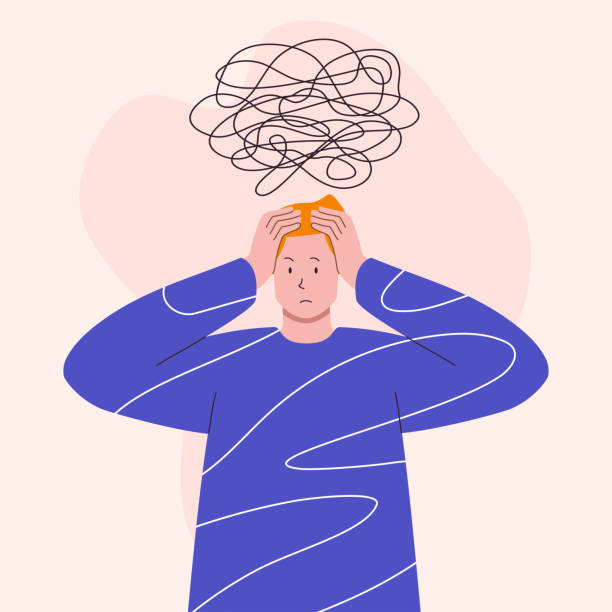
Talk to enough men about why they don’t share what’s going on inside, and a pattern emerges. It usually isn’t that they’re hiding something. It’s closer to a language they were never fully taught.
Psychologist Ronald Levant described this pattern decades ago as normative male alexithymia, a subclinical condition in which men have real trouble naming, locating, or putting words to their own emotional states.
The distinction matters. Clinical alexithymia affects roughly one in ten people, and researchers are still divided on whether men are more biologically prone to it.
What Levant pointed to instead was something more social than neurological: a mismatch between an emotional experience and the internal vocabulary needed to translate it.
A man can feel that something is wrong. He can feel it in his chest, in his sleep, in how short he is with people he loves. He just may never have been given the tools to turn that sensation into a sentence.
Silence, in other words, is rarely the absence of feeling. It’s the absence of a translator.
The Cost of Carrying It Alone
This isn’t just an abstract communication problem. In the United States, men die by suicide at close to four times the rate of women, according to the CDC, even though women are diagnosed with depression more often.

That gap has held steady for years and appears, to varying degrees, in most countries tracked by the World Health Organization. The most common explanation isn’t that men suffer more. It’s that their suffering tends to travel through different channels.
Pain that doesn’t get spoken often gets rerouted instead. It shows up as irritability, as overwork, as a drink after a hard day that slowly becomes two, then a habit.
Anger is frequently the only negative emotion boys are given cultural permission to express, so grief, fear, and shame learn to wear anger’s clothing just to be let out of the house.
Why Men Learn to Hide What They Feel
The roots of this go deeper than personal preference. Three forces tend to reinforce each other: the real social risk of opening up, the rules boys absorb early about which emotions are allowed, and a friendship style that was never quite built for this kind of conversation.
The Vulnerability Paradox
Men are regularly told to open up more, yet the reaction to real vulnerability is often more complicated than the advice suggests.
Research on relationship dynamics has found that when men express fear, sadness, or deep uncertainty, partners and peers sometimes respond with subtle withdrawal or discomfort rather than warmth. Not always, and not everywhere, but often enough that many men learn the lesson early and thoroughly.
A closed door is rarely stubbornness. It’s usually a risk assessment, run so many times it no longer feels like a choice.
The Rules Boys Learn Early
Psychologist James O’Neil’s Gender Role Conflict Scale, developed in the 1980s and still widely used in research today, identifies restrictive emotionality as one of the clearest ways rigid masculine norms damage wellbeing.
Boys learn early which feelings are acceptable to export. Anger usually passes inspection. Sadness, fear, and tenderness often do not. By adulthood, expressing them can feel less like honesty and more like forfeiting status.
A Support System Built for Activities, Not Feelings
Women are frequently socialized toward what researchers call face-to-face friendships, built on direct verbal processing and shared vulnerability. Men are more often socialized into side-by-side friendships, built around shared activity: sports, work, a shared hobby, a group chat that mostly trades jokes. Both are real forms of connection. Only one of them comes prewired for a conversation about what’s actually going on underneath.
This is why a man can have a phone full of contacts and still feel like there’s no one he can actually call. If that specific ache sounds familiar, listening closely to everyone else while rarely being asked to open up yourself, it’s worth reading more about why it can feel so hard to open up even when you’re good at listening to others.
Strength Doesn’t Mean Silence
None of this means the goal is for men to process emotions exactly the way women are socialized to, or to turn every conversation into group therapy. It means the definition of strength itself may need an update. The old version rewarded stoicism: carrying the full weight alone, without complaint, as proof of character.
A more accurate definition looks different. It’s the willingness to sit with an uncomfortable feeling long enough to name it. It’s asking for help before a crisis forces the issue. It’s letting one other person see the parts that don’t have anything left to prove.
Strength is the distance between managing a feeling and being ruled by it, not the distance between having one and hiding it.
What Actually Helps
Change rarely starts with a dramatic breakthrough. It usually starts smaller: naming one feeling out loud, texting a friend “rough week, honestly” instead of “all good,” or simply admitting that carrying everything solo has stopped working. Men who’ve made progress here often describe it less as becoming a different person and more as giving themselves permission to stop performing one.
Professional therapy is one path, and a valuable one, but it isn’t the only entry point, and it isn’t always where someone wants to start. Some men first need a lower-stakes space, somewhere to practice saying the actual sentence out loud before they say it to the people closest to them.
That’s often true for men who’ve spent years being the reliable one for everyone else, the person others call rather than the person who calls. If that role sounds familiar, it’s worth understanding why the “strong one” role is so hard to put down before it quietly burns you out.
This is part of why non-clinical spaces exist in the gap between handling it alone and booking a therapist. Callin, for instance, offers confidential conversations with trained peer listeners for people who want to think out loud with someone objective, without worrying about burdening a partner, a friend, or a coworker, and without needing a diagnosis to justify the conversation. It doesn’t replace therapy.
It simply gives the sentence somewhere to go before it has anywhere else to go. If you’ve been putting off an honest conversation because you didn’t want to be a burden, that hesitation is worth understanding too.
Most men learned silence the way they learned to walk: early, without being asked, and without much say in the matter. Unlearning it doesn’t require becoming someone new. It just asks for one honest sentence, said out loud, to one person who will actually hear it. That’s not weakness. That’s where strength was supposed to start all along.
Frequently Asked Questions
What is normative male alexithymia?
Normative male alexithymia is a term coined by psychologist Ronald Levant to describe a common, non-clinical pattern in which men have difficulty identifying and putting words to their own emotions. It isn’t a diagnosis. It reflects socialization more than biology, and it can be unlearned with practice and the right support.
Why do men often express anger instead of sadness or fear?
Anger is frequently the one negative emotion boys are given permission to show growing up. When sadness, fear, or grief aren’t considered acceptable to display, they often surface as irritability or anger instead, since anger is the emotional channel that stayed open.
Is male emotional suppression the same thing as toxic masculinity?
Not exactly. Toxic masculinity is a broad cultural critique, while male emotional suppression describes a specific, researched pattern of socialization and its psychological costs. Treating it only as a moral failing tends to shut the conversation down before it starts, which is part of why so many men stay quiet in the first place.
Why is the male suicide rate so much higher than the female rate?
In the United States, men die by suicide at close to four times the rate of women, according to CDC data, even though women are diagnosed with depression more often. Researchers point to several contributing factors, including a tendency to externalize pain rather than voice it, more lethal method choice, and lower rates of help-seeking.
How can I help a man in my life open up?
Ask specific, low-pressure questions rather than broad ones like “how are you.” Create space without forcing it, and resist the urge to immediately problem-solve once he does share something real. Often the most helpful response is simply staying present and letting him finish the sentence.
Can men unlearn emotional suppression as adults?
Yes. It tends to happen gradually, through small, repeated practice: naming a feeling out loud, talking to a peer listener or therapist, or simply telling one trusted person the truth instead of “I’m fine.” The pattern was learned, which means it can be retrained.
Why don’t men have as many close friendships as women?
Men are often socialized toward side-by-side friendships built around shared activities rather than face-to-face friendships built around verbal processing. Both are real, but only one is set up for the kind of conversation a genuine crisis requires.

Leave a Reply