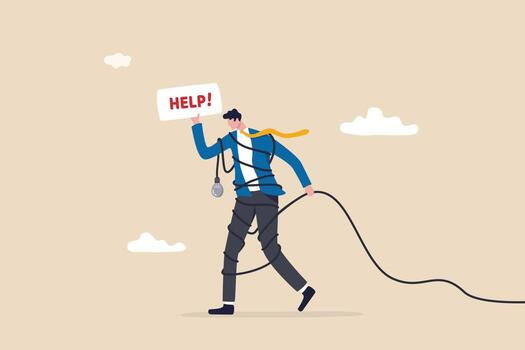
If you have asked, “Do I need a mental health diagnosis before asking for help?” the simple answer is NO. Millions of people benefit from everyday emotional support long before reaching a clinical threshold. You do not need a mental health diagnosis to deserve emotional support.
The two are not the same thing. Waiting until a crisis before seeking support is not inevitable. Everyday emotional connection is preventative care.
Licensed therapists, psychiatrists, and clinical psychologists play an essential and irreplaceable role for people experiencing mental health conditions. Everyday emotional support complements that care. It does not compete with it.
Key Takeaways
- Emotional wellbeing exists on a continuum. Most people will experience distress that is real, painful, and completely valid without ever meeting clinical diagnostic criteria.
- Social support is one of the most robustly researched protective factors in psychology. Being heard reduces stress, strengthens resilience, and can reduce the likelihood of developing more serious difficulties.
- There is a meaningful difference between emotional distress and mental illness. Both deserve care. Neither should be dismissed.
- Feeling overwhelmed, burned out, lonely, or stuck does not require a label. It requires a compassionate response.
Introduction: The Permission Problem
Something quietly discouraging happens to a lot of people when they start to struggle emotionally.
They notice they are not quite okay. They feel the weight of it. Maybe they are sleeping badly, or snapping at people they love, or spending Sunday evenings with a hollow sense of dread. They consider reaching out. And then a small, critical voice intervenes.
But is it really that bad? Am I being dramatic?
This is what we might call the permission problem. A pervasive, largely unexamined belief that emotional support must be earned through sufficient suffering.
That unless a professional has named what is wrong with you, your distress does not fully count. That reaching out too soon is an imposition. That you should wait.
It is a damaging belief. And it is also, the evidence suggests, simply wrong.
The World Health Organization defines mental health not as the absence of illness but as “a state of well-being in which an individual realizes his or her own abilities, can cope with the normal stresses of life, can work productively, and is able to make a contribution to his or her community.”
That definition leaves enormous room for human struggle that is real, meaningful, and worth taking seriously, without a diagnosis ever entering the picture.
This article argues something straightforward. Emotional support exists on a continuum. People deserve access to that support at every point along it. And building a culture that values everyday human connection is not a soft, secondary ambition. It is one of the most important things we can do for public health.
Why Do So Many People Feel They Need a Diagnosis Before They Ask for Help?

The belief that you need a diagnosis to deserve support did not appear from nowhere. Several cultural and structural forces have helped create it.
The Medicalisation of Emotional Life
Over the past several decades, the language of psychiatry has quietly colonised everyday conversation. Sadness has become depression. Worry has become anxiety disorder.
Exhaustion has become burnout (though burnout still sits in contested diagnostic territory). This is partly a sign of increasing mental health awareness, which is genuinely valuable. But it has a shadow side.
When every emotional state is assigned a clinical name, people begin to believe that only clinical names confer legitimacy. If you cannot name your diagnosis, you begin to wonder whether your experience qualifies for attention at all.
Dr. Lucy Foulkes, a psychologist and author who has written extensively on this phenomenon, has raised concerns about what she describes as the expansion of the mental health umbrella to cover ordinary human difficulty.
Her concern is not that mental illness is overdiagnosed in every individual case, but that cultural frameworks increasingly encourage people to interpret normal emotional variation as pathology. One unintended consequence: some people feel they need a clinical problem to justify seeking care.
Therapy Culture and the Diagnosis Prerequisite
In many countries, especially the United States and United Kingdom, access to formal therapy is tied, directly or indirectly, to a diagnosis. Insurance coverage often requires one. NHS referrals often require demonstrated clinical need. Even private therapy can feel like a space reserved for people with identifiable conditions.
This creates a structural message: clinical support is for clinically diagnosable people. Everyone else should, presumably, manage on their own.
Stigma and Social Expectations
Mental health stigma has reduced significantly over recent decades. But it has not disappeared. Many people, particularly men, people from certain cultural backgrounds, and those in high-responsibility professional roles, still feel that acknowledging emotional struggle signals weakness. Read more about how emotional expression varies across cultures.
When stigma surrounds mental health, people are less likely to seek support early. They wait. They cope. They minimise. And by the time they do seek help, the situation is frequently more complex than it needed to be.
Social Media and the Comparison Trap
Social media has created a new and particular form of suffering comparison. People scroll past others apparently thriving, apparently functional, apparently okay, and conclude that their own relatively ordinary distress is not serious enough to mention.
Meanwhile, they also encounter dramatic representations of mental health crisis, which set an unconsciously high bar for what qualifies as real suffering.
The result: many people feel simultaneously too well to deserve help and too overwhelmed to feel fine.
The Validation Paradox
There is also something more personal at work. Many people do not seek support because they are not sure their feelings will be validated.
If you go to a therapist and they tell you your problems are not clinical, does that mean your problems do not count? The fear of being told you are fine, when you clearly are not feeling fine, keeps many people from reaching out at all.
This is the validation paradox. The very place people go to feel understood can feel inaccessible without proof of suffering.
The Difference Between Emotional Distress and Mental Illness
This distinction is important to hold clearly. Not because one experience matters more than the other, but because conflating them creates confusion in both directions.
What Emotional Distress Looks Like
Emotional distress is a normal, universal, and often temporary response to the pressures and losses of human life. It includes:
- Grief after bereavement or relationship loss
- Anxiety before a significant life transition
- Burnout after sustained overwork or caregiving
- Loneliness during periods of social isolation
- Sadness following disappointment or failure
- Overwhelm when demands exceed resources
- Decision fatigue and the particular exhaustion of modern life
None of these experiences are trivial. All of them are painful. And all of them are, broadly speaking, appropriate responses to difficult circumstances. They do not necessarily indicate illness. They indicate that something in the person’s life, environment, or relationships needs attention.
The American Psychological Association describes distress as a state of emotional suffering characterised by symptoms of depression and anxiety. It notes that distress exists on a spectrum and does not automatically constitute a diagnosable disorder.
What Clinical Mental Illness Looks Like
Mental health conditions, by contrast, are diagnosed when a cluster of symptoms meets specific criteria for duration, severity, and functional impairment. The Diagnostic and Statistical Manual of Mental Disorders (DSM-5) and the International Classification of Diseases (ICD-11) provide these frameworks.
Conditions such as major depressive disorder, generalised anxiety disorder, bipolar disorder, post-traumatic stress disorder, schizophrenia, and obsessive-compulsive disorder are not simply intensified versions of everyday emotional difficulty. They are recognised medical conditions with biological, psychological, and social components that typically require evidence-based clinical treatment.
This is an important point to hold without diminishing either experience. Clinical mental illness is real, serious, and deserving of specialist care. Everyday emotional distress is also real, often serious in its own right, and deserving of compassionate support.
The Protective Factor Gap
Between feeling fine and experiencing a clinical condition, there is a wide, largely unaddressed middle ground. Research in psychology consistently shows that social support is among the most powerful protective factors available to human beings.
A landmark body of work by psychologist Dr. Sheldon Cohen at Carnegie Mellon University demonstrated that people with stronger social networks have better immune function, recover more quickly from illness, and are more resilient under stress.
The mechanism is not mystical. Social connection regulates the nervous system. It reduces cortisol. It activates the parasympathetic nervous system. Being heard, genuinely and without judgment, produces measurable physiological calm.
This is why the gap between everyday support and clinical care is not just inconvenient. It is a public health gap. Learn more about why adult emotional needs often go unmet in modern life.
Why Everyday Emotional Support Matters
The phrase “emotional support” is often treated as something vague and soft. It is neither.
The Science of Being Heard
Active listening, the practice of giving full, non-judgmental attention to another person, has documented psychological effects.
Research published in journals including the Journal of Counseling Psychology and the British Journal of Clinical Psychology shows that feeling genuinely listened to reduces anxiety, increases a sense of self-efficacy, and promotes what psychologists call emotional processing, the capacity to make sense of and integrate difficult experiences.
Callin’s approach to active listening is grounded in this evidence. Being truly heard is not a minor comfort. It is a biological and psychological event.
Co-Regulation and the Nervous System
Human beings are not designed to process emotion alone. Research on co-regulation, the process by which one person’s nervous system helps to calm another’s, shows that we are neurologically wired for social connection as a stress-management strategy.
Dr. Daniel Siegel, clinical professor of psychiatry at UCLA and one of the leading voices in interpersonal neurobiology, has written extensively about the way the brain changes in response to safe, attuned relationships. Connection is not just emotionally satisfying. It is physiologically regulating.
This helps explain why talking to someone when you need to vent, but not therapy, is not a compromise. For many people, in many situations, it is exactly the right response.
Social Connection as Prevention
The U.S. Surgeon General’s 2023 Advisory on the Healing Effects of Social Connection described social isolation and loneliness as a public health crisis. It noted that loneliness is associated with a 29% increased risk of heart disease, a 32% increased risk of stroke, and a 50% increased risk of developing dementia.
These are not psychological statistics. They are medical ones. And they make a compelling case that investing in social connection is not a luxury. It is prevention.
Peer connection also plays a specific role in preventing burnout. Three mechanisms stand out: shared experience reduces shame, being witnessed reduces the feeling of aloneness, and consistent support prevents the stress accumulation that eventually tips into crisis.
Resilience Is Built in Relationship
Psychological resilience, the capacity to adapt to adversity without being permanently derailed by it, is not a fixed trait.
Research by psychologist Dr. George Bonanno at Columbia University shows it is largely relational. People who have access to consistent support across a range of relationships are significantly more likely to recover from difficulty without developing lasting symptoms.
Resilience is not something you have. It is something that gets built, slowly, through repeated experiences of feeling understood and not alone.
What Happens When We Wait Until Crisis?
Waiting for things to get bad enough before seeking support has real costs. Not catastrophic, inevitable ones. But real ones.
Stress Accumulation
The stress response is designed for acute, time-limited threats. When stressors are chronic, unprocessed, and unwitnessed, the physiological effects compound. Cortisol remains elevated. Sleep deteriorates. Cognitive flexibility narrows. Small things begin to feel large.
Burnout is one of the clearest examples of what accumulated, unsupported stress produces. It is not simply tiredness. It is a state of emotional, physical, and cognitive depletion that develops when demands consistently exceed available resources, including social and emotional ones. Workplace stress, in particular, can build to crisis point when support is absent.
Chronic Loneliness
Loneliness is not the same as being alone. It is the experience of a gap between the connection you have and the connection you need. And it becomes self-reinforcing over time.
Research by Dr. John Cacioppo at the University of Chicago showed that chronic loneliness triggers a hypervigilance response in the brain, making people more likely to perceive social threat and less likely to seek connection. The longer loneliness continues, the harder it becomes to break the pattern. This is why you might crave connection but still withdraw from people. It is a neurological pattern, not a personal failing.
The Silence Before the Crisis
Many people who eventually experience a mental health crisis describe a long period before it during which they knew something was wrong but said nothing. They minimised. They waited. They hoped it would pass.
Sometimes it does pass. But sometimes the silence itself becomes part of the problem. Unwitnessed suffering does not simply dissipate. It accumulates. It reshapes how people see themselves and what they believe they deserve.
Feeling guilty for needing emotional support is extraordinarily common. It is also one of the quietest barriers to getting support early.
Support Snapshot: Everyday Emotional Support
What it is: Regular, accessible human connection focused on listening, presence, and being heard without judgment.
Best for: Loneliness, burnout, life transitions, relationship stress, grief, overwhelm, decision fatigue, general emotional heaviness, and any period when life feels harder than usual.
Strengths:
- Accessible without referral, waiting list, or diagnosis
- Reduces isolation and feelings of shame
- Regulates the nervous system through co-regulation
- Builds resilience over time through consistent support
- Can be available in real time, when it is needed
- Removes the threshold of “bad enough”
Limitations:
- Not a substitute for evidence-based treatment when clinical conditions are present
- Cannot prescribe medication or provide clinical assessment
- Not appropriate as the sole response to acute mental health crisis
- Quality varies significantly depending on the platform or relationship
When professional mental health care may be needed:
- Symptoms are persistent, severe, or significantly impairing daily function
- You are experiencing thoughts of self-harm or suicide
- A mental health condition has been identified or is suspected
- Previous trauma requires specialist therapeutic processing
- Distress has not improved with social support over time
Support Is Not the Same as Therapy
Both matter. They serve different purposes. The confusion between them helps neither.
Warmlines are an underused but valuable form of everyday support. Unlike crisis lines, which are designed for acute emergencies, warmlines offer a compassionate human voice for people who are struggling but not in immediate danger. Understanding the difference between a warmline and a crisis line can help you choose the right kind of support for where you actually are.
When friends do not feel like enough, that is also a real experience worth taking seriously. Friendships carry enormous value. But they are not designed to carry the full weight of a person’s emotional needs. People who feel lonely even when they have friends are not failing at friendship. They are experiencing a genuine mismatch between the kind of support available and the kind they need.
When Professional Mental Health Care Is Important
Everyday emotional support is valuable. It is not, and should never be positioned as, a replacement for clinical care when clinical care is what someone needs.
Therapy, psychiatry, and evidence-based psychological treatment are essential components of a healthy society. They save lives. They reduce suffering. They enable people who would otherwise be unable to function to build meaningful, stable lives.
Professional mental health care is particularly important when:
- Symptoms are persistent, recurring, and significantly disrupting daily life
- A person is experiencing thoughts of harming themselves or others
- Substance use is becoming a coping mechanism
- Symptoms suggest a diagnosable condition, including depression, anxiety disorders, PTSD, bipolar disorder, or psychosis
- Previous trauma is producing intrusive, distressing responses that ordinary support does not reach
- A person has already been diagnosed with a mental health condition and requires ongoing clinical monitoring
If you are experiencing a mental health emergency, please contact emergency services or a crisis line immediately. In the UK, you can call the Samaritans on 116 123. In the US, you can call or text 988 to reach the Suicide and Crisis Lifeline.
A diagnosis is not a label to fear. For many people, it is a door. It opens access to treatment, accommodation, understanding, and community. This article is not arguing that diagnosis is unnecessary for those who need it. It is arguing that diagnosis should not be the price of being heard.
How Everyday Emotional Support Can Complement Therapy
For people who are in therapy, or who have received a diagnosis and are managing a mental health condition, everyday emotional support is not an alternative. It is an addition.
Research consistently shows that therapeutic outcomes improve when people have strong social support networks outside the therapy room. The work done in a clinical session is processed, integrated, and reinforced through the relationships and conversations that happen in ordinary life.
Therapy happens for fifty minutes a week. Life happens the other ten thousand minutes.
Having consistent emotional support during difficult periods, whether that is a close friend, a peer support service, or a structured listening platform like Callin, means that the space between therapy sessions does not have to feel empty or uncontained.
Many therapists actively encourage their clients to build a wider support network. Not because therapy is insufficient, but because human beings are social creatures who need more than one relationship to thrive.
AI emotional support, while convenient, has real limitations in this regard. Human connection, with all its imperfection and reciprocity, offers something that no algorithm can replicate: the felt experience of being truly seen by another person.
Absolute Support: A Philosophy of Accessible Human Connection
There is a concept worth naming carefully here.
Absolute Support is the idea that emotional support should be available to every person, at any point on the spectrum of human experience, without requiring a diagnosis, a referral, a particular level of suffering, or proof that things are bad enough.
It is not a clinical concept. It is not therapy. It is not a treatment pathway.
Absolute Support is a philosophy grounded in one of the most robust findings in social psychology: that human beings who feel consistently heard, witnessed, and not alone are more resilient, more healthy, and more capable of navigating difficulty without reaching crisis.
This philosophy draws on established research in several areas:
- Social support theory, which has consistently shown that perceived social support is one of the strongest predictors of positive mental and physical health outcomes (Cohen & Wills, 1985)
- Interpersonal neurobiology, which demonstrates that the nervous system is regulated through safe, attuned relationships (Siegel, 2010)
- Positive psychology, which identifies connection and belonging as central pillars of human flourishing (Seligman, 2011)
- Community psychology, which has long argued for prevention and early intervention as more humane and cost-effective approaches to wellbeing than waiting for crisis
Callin was built to give this philosophy a practical home. Not to replace the therapist’s office. Not to treat illness. But to occupy the wide, real, and underserved space that exists between casual conversation and clinical care.
In that space, people going through breakups deserve to be heard. People who are always the strong one for everyone else deserve support too. People living alone who have no one to process the day with deserve a compassionate human voice. People coping with remote worker loneliness deserve more than a wellness programme.
Absolute Support is not the absence of clinical care. It is the presence of human care, early, consistently, and without conditions.
Building a Culture That Values Everyday Emotional Support
The final question is not only personal. It is structural.
What kind of culture do we want to build?
One in which people wait until they are in crisis before they feel they deserve to be heard? Or one in which everyday emotional support is seen as a normal, healthy, preventative part of life, like exercise, sleep, and good nutrition?
Psychological safety, the experience of being in an environment where you can speak honestly without fear of judgment, is one of the most powerful predictors of wellbeing at work, in relationships, and in communities.
Research by Dr. Amy Edmondson at Harvard Business School, originally conducted in the context of high-performing teams, has since been extended to understand why people do or do not seek support in personal contexts.
The answer is consistent. People seek support when they believe they will not be judged for needing it.
Building that culture requires several things:
Normalising the conversation. Talking about emotional difficulty should not require a clinical label. It should be as ordinary as talking about a bad night’s sleep or a stressful week at work.
Reducing the threshold. The message that support is only for serious problems keeps people silent until their problems are serious. Lowering that threshold, and making it genuinely easy to reach out before things escalate, is one of the most effective early intervention strategies available.
Distinguishing support from treatment. Therapy is not the only form of care worth naming. Peer support, active listening, warmlines, and community connection all belong in the vocabulary of mental health without needing to be medicalised.
Listening before problem-solving. Most people who are struggling do not primarily want solutions. They want to feel understood. The simple act of giving someone full attention without rushing to fix them is, in itself, a meaningful contribution to their wellbeing.
If you are someone who always stops talking about your problems when people care about you, you are not alone. That pattern often comes from a fear of being too much, or a learned belief that your needs are secondary. Building a culture of support means creating conditions where that fear has less grip.
15 Things To Note…
- A diagnosis can open the door to treatment. It should never become the price of being heard.
- Not every difficult season is a disorder. But every difficult season deserves compassion.
- Human beings often need conversation before they need intervention.
- Emotional support is not a substitute for healthcare. It is part of a healthier society.
- Listening early may reduce suffering later.
- Being heard is not a luxury. It is a physiological necessity.
- The gap between feeling fine and needing clinical care is not empty space. It is where prevention lives.
- Support without diagnosis is not informal care. It is foundational care.
- Resilience is not a personality trait. It is a relational outcome.
- The belief that you are not bad enough to deserve support is itself a symptom of a culture that has placed clinical thresholds where human warmth should be.
- Waiting until crisis is not strength. It is what happens when support feels unavailable.
- You do not need a name for what you are feeling before someone is allowed to sit with you in it.
- Connection is not a soft outcome. It is a measurable, physiological event with protective effects on the brain and body.
- Mental health is not binary. The space between flourishing and disorder is wide, real, and worth attending to.
- Everyday emotional support does not compete with therapy. It creates the conditions in which therapy, when needed, is more likely to work.
Frequently Asked Questions
Do I need a mental health diagnosis to get help? No. You do not need a diagnosis to deserve support. Many people benefit from emotional support long before they meet any clinical threshold.
Do I need therapy if I’m just stressed? Not necessarily. Stress is a normal human experience, and peer support, active listening, or structured emotional support services may be entirely appropriate. If your stress is persistent, severe, or significantly affecting your daily functioning, speaking to a professional is a sensible next step.
Can I ask for help if I’m not depressed? Absolutely. Depression is one of many reasons people seek support. You do not need to be depressed, anxious, or diagnosable to reach out.
What is emotional support? Emotional support is the experience of being heard, understood, and not alone in your feelings. It includes active listening, empathy, and compassionate presence. It is distinct from clinical treatment.
What is the difference between therapy and peer support? Therapy is delivered by a licensed professional and uses evidence-based techniques to treat psychological conditions. Peer support is provided by trained individuals with shared lived experience. Both are valuable. They serve different purposes at different points on the spectrum of need.
Is burnout a mental illness? Burnout is recognised by the World Health Organization as an occupational phenomenon, not a medical condition. It is characterised by exhaustion, cynicism, and reduced professional efficacy. It is serious, real, and responsive to support and rest.
Can talking to someone really help? Yes. Extensive research shows that being genuinely listened to reduces stress hormones, activates the parasympathetic nervous system, and promotes emotional processing. Talking helps in measurable, biological ways.
Do I need a diagnosis before seeing a therapist? No. You can see a therapist without a prior diagnosis. A therapist will conduct their own assessment. Some insurance and healthcare systems require a referral or diagnosis for funding purposes, but this is a structural issue, not a clinical one.
Is loneliness a medical condition? Loneliness is not a diagnosis, but its effects on physical and mental health are well-documented. The U.S. Surgeon General has described chronic loneliness as a public health crisis. It deserves to be taken seriously, regardless of whether it carries a clinical label.
Can emotional support prevent burnout? Evidence suggests that consistent social support is one of the most effective protective factors against burnout. It does not guarantee prevention, but it significantly reduces the risk.
What if I don’t think my problems are serious enough? The belief that your problems are not serious enough is one of the most common and most harmful barriers to seeking support. If something is affecting your quality of life, it is serious enough.
What is a warmline? A warmline is a non-crisis emotional support line staffed by trained volunteers or peers. It is designed for people who are struggling but not in immediate crisis. It offers a compassionate human voice without requiring a diagnosis or referral.
Is it normal to feel overwhelmed? Yes. Feeling overwhelmed is a universal human experience. It is a signal that demands are exceeding available resources, including emotional and social ones. It is not a character flaw and it does not require a diagnosis.
Can I get emotional support without going to therapy? Yes. There are many forms of emotional support available, including peer support, warmlines, structured listening services, support groups, and compassionate friendships. Explore affordable emotional support options here.
What is active listening? Active listening is the practice of giving full, non-judgmental attention to another person without interrupting, problem-solving, or redirecting. Research shows it produces measurable reductions in the listener’s stress and anxiety.
I feel lonely even though I have friends. Is that normal? Yes. Loneliness is about the quality and depth of connection, not simply the number of relationships. It is possible to feel genuinely isolated even within a wide social circle.
What is the difference between emotional distress and mental illness? Emotional distress is a normal, often temporary response to difficult life circumstances. Mental illness involves a recognised cluster of symptoms that meet specific diagnostic criteria for duration, severity, and functional impairment. Both are real. Both deserve care.
When should I see a professional instead of seeking peer support? If you are experiencing thoughts of harming yourself or others, if your symptoms are severe and persistent, if you suspect a diagnosable condition, or if peer support has not helped over time, professional care is the appropriate next step.
Is it okay to vent to someone who isn’t a therapist? Yes. Venting, expressing feelings out loud to a compassionate listener, is a legitimate and evidence-supported form of emotional processing. It does not require a clinical professional.
What should I do if everything feels too much right now? Reach out. To a friend, a warmline, a peer support service, or a professional. Feeling overwhelmed is a signal that you need more support, not a sign that something is permanently wrong. Here are seven things you can do when everything feels too much.
A Final Word
There is a version of emotional wellbeing that only exists in a clinical setting, waiting to be unlocked by the right diagnosis, the right referral, the right professional.
That version is not good enough.
Human beings need connection throughout their lives, not only when things have reached a breaking point. They need spaces where they can say something is wrong before they can say I know exactly what it is. They need to be heard, not because they have earned it, but because they are human.
Callin exists because that need is real, constant, and currently underserved. Not as a replacement for therapists or psychiatrists, whose work is essential. But as a recognition that there is a wide, meaningful, and important space between casual conversation and clinical care.
You do not need a diagnosis to ask for help.
You never did.
Further Reading on Callin
- Who Can I Talk to When I Feel Lonely?
- What Is a Warmline?
- I Need Someone to Talk to, Not Therapy
- Feeling Overwhelmed but You Don’t Need Therapy?
- What to Do When You Need to Vent
- Why Modern Life Is Emotionally Overwhelming
- 8 Affordable Emotional Support Options
- The Benefits of Consistent Emotional Support
References and Further Reading
- Cohen, S., & Wills, T. A. (1985). Stress, social support, and the buffering hypothesis. Psychological Bulletin, 98(2), 310–357.
- Cacioppo, J. T., & Patrick, W. (2008). Loneliness: Human Nature and the Need for Social Connection. W. W. Norton & Company.
- Bonanno, G. A. (2004). Loss, trauma, and human resilience. American Psychologist, 59(1), 20–28.
- Siegel, D. J. (2010). The Mindful Therapist. W. W. Norton & Company.
- Seligman, M. E. P. (2011). Flourish. Free Press.
- Foulkes, L. (2021). Losing Our Minds: The Challenge of Defining Mental Illness. Bodley Head.
- World Health Organization. (2022). World Mental Health Report: Transforming Mental Health for All.
- U.S. Surgeon General. (2023). Our Epidemic of Loneliness and Isolation.
- American Psychological Association. (2023). Dictionary of Psychology: Distress.
- Edmondson, A. (1999). Psychological safety and learning behavior in work teams. Administrative Science Quarterly, 44(2), 350–383.

Leave a Reply