Being the strong one who feels responsible for other people’s emotions is kind. But at what cost? If you’ve asked yourself about how to stop carrying everyone’s problems or wondered why you feel responsible for the emotional temperature of every room you walk into, the problem is rarely a lack of willpower. It is usually a missing structure. This article explains why that structure goes missing and how to rebuild it.
Key Takeaways
- Emotional over-functioning is a structural pattern, not a personal flaw. Families, friend groups, and workplaces often organize around one reliable person without anyone deciding to make that happen.
- The Competence Paradox explains why capable people get less support, not more. The calmer you appear, the less often others check on you.
- Strength and capacity are not the same thing. Even the most resilient systems, from elite athletes to power grids, require scheduled recovery to keep functioning.
- Sustainable support comes from a portfolio, not a single source. Personal recovery practices, reciprocal relationships, structured listening spaces, and professional care each serve a different function.
- Structured listening spaces, like warmlines and peer support lines, give reliable people somewhere to set down responsibility without having to manage someone else’s reaction.
- The fix is not becoming less caring. It is building emotional infrastructure that distributes care across more than one person.
Introduction
You are the person everyone calls.
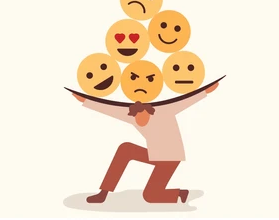
When a friend’s marriage is falling apart, you get the 11pm text. When a coworker is overwhelmed, you get pulled into the side conversation. When a family member is struggling, you are the one who organizes the plan, makes the call, and holds everyone together.
You are dependable. You are calm under pressure. You are capable in a way that other people quietly rely on.
And yet, almost nobody asks the obvious question back to you:
Who supports you?
This article is not about becoming less caring. It is not a warning about burnout, and it is not a therapy worksheet. It is a systems explanation for something millions of reliable people experience but rarely have language for.
Here is the key insight that reframes everything else in this article: the strongest people usually do not need more resilience. They need more places to put their resilience down.
Section 1: Why Communities Naturally Create “Strong Ones”
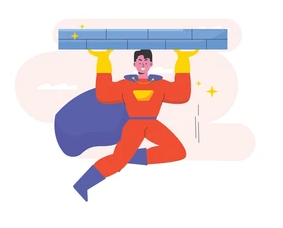
Emotional over-functioning is the pattern in which one person in a group consistently absorbs more emotional responsibility, decision-making, and stress management than anyone else, while the group adjusts around that arrangement instead of correcting it.
This pattern shows up almost identically across families, friendships, and workplaces, even though none of those groups would describe themselves as exploitative.
How groups redistribute stress
Every group, whether it is a family of four or a team of forty, has to manage collective stress somehow. Sociologists who study family behavior describe this through overfunctioning and underfunctioning reciprocity, a concept developed within Bowen family systems theory.
The idea is straightforward: when anxiety rises in a group, some members respond by stepping in and taking control, while others respond by stepping back and letting someone else handle it. Over time, these two roles lock into place. The overfunctioning person calms their own anxiety by managing everyone else’s problems.
The underfunctioning person calms their own anxiety by handing problems away. Neither role is permanent by nature. Both are learned, reinforced, and rarely discussed out loud.
The same pattern appears in workplaces under a different name. Risk management researchers call it key person dependency, the condition in which critical knowledge, decisions, or emotional steadiness become concentrated in one individual instead of being distributed across a team.
Organizational researchers note that this kind of dependency rarely happens on purpose. It happens by default, because no one builds in redundancy unless they are forced to. The same is true at home. No family meeting decides who will be the one everyone calls. The role simply settles onto whoever shows up first, stays calmest, and says yes most often.
Sociologist Arlie Hochschild’s research on emotional labor, first introduced in her 1983 study of service workers, showed that managing feelings on behalf of others is real work, even when it produces nothing visible.
That insight applies just as well outside the workplace. The friend who absorbs everyone’s stress at dinner, the sibling who mediates every family conflict, and the employee who quietly stabilizes a chaotic team are all performing labor that the group depends on but rarely names.
Why this is not malicious
None of this typically happens because a group is selfish. It happens because:
- Reliable behavior gets rewarded with more responsibility, not less.
- Groups under stress gravitate toward whoever reduces the stress fastest.
- No one tracks emotional workload the way they track financial or physical workload, so imbalance accumulates invisibly.
Key Takeaways
- Over-functioning is a group pattern, not an individual personality trait.
- Families and workplaces both organize around dependable members in similar, predictable ways.
- This redistribution is usually unconscious, which is why it rarely gets corrected without deliberate structural change.
Section 2: Why Reliability Often Creates Isolation
If you have ever felt lonely around people you are close to, this section explains a major reason why.
The Competence Paradox describes the tendency for socially capable people to receive less emotional support as their visible competence increases, even though their actual need for support has not decreased.
How invisible needs form
People take cues from how someone presents, not from how someone actually feels. If you consistently appear calm, organized, and in control, the people around you stop checking in, not because they stopped caring, but because your presentation tells them there is nothing to check on.
This produces three compounding effects:
- Assumptions of resilience. Others assume that because you handled the last five crises well, you will handle the next one the same way, without needing anything from them.
- Reduced check-ins. People naturally direct concern toward whoever appears to be struggling. A calm exterior redirects that concern elsewhere, even when it is needed just as much.
- Performance pressure. Once a group sees you as “the strong one,” showing strain can feel like breaking an unspoken agreement, so many reliable people mask discomfort to preserve the role.
This is one reason some over-functioning behavior gets mislabeled. A pattern of constant vigilance, pre-emptive problem solving, or difficulty relaxing can look, from the outside, like a trauma response, when it may simply be a learned coping role that formed in response to group dynamics rather than a single traumatic event. Naming the difference matters, because the intervention is not the same.
A parallel from caregiving research
Public health research on informal caregivers offers a useful comparison, because caregivers occupy a similar structural position: one person carrying disproportionate responsibility while the people around them adjust to that arrangement.
A 2025 AARP report found that a large share of family caregivers are the sole provider of care for the person they support, with no one sharing the role.
Separately, an umbrella review of caregiver studies published in 2025 found that informal caregivers experience depression, anxiety, and caregiver burden at rates substantially higher than the general population, with researchers linking much of that burden to inadequate outside support rather than the caregiving tasks alone.
The lesson generalizes beyond formal caregiving. Whenever one person becomes the sole emotional point of contact for a group, isolation tends to follow, regardless of how capable that person is.
If this resonates, it may help to read about why asking for support can feel uncomfortable for capable people, since guilt is often the emotional residue of the Competence Paradox.
Key Takeaways
- The more competent someone appears, the less support they tend to receive, regardless of actual need.
- This happens through reduced check-ins and unspoken pressure to maintain a “strong” appearance.
- Research on informal caregiving demonstrates the same pattern: sole responsibility correlates strongly with elevated stress and isolation.
Section 3: The Difference Between Strength and Capacity
Sustainable strength is the ability to perform reliably over time because output is matched with adequate recovery, as opposed to raw strength, which describes the ability to perform well in a single instance regardless of what it costs afterward.
This distinction is well established outside emotional life, and it offers a useful, non-clinical way to think about emotional overload.
What athletic science shows
Sports medicine researchers describe a condition called overtraining syndrome, which occurs when an athlete’s training load exceeds their recovery capacity for an extended period. The treatment is not more discipline. It is structured rest.
Athletic programs address this through periodization, a method of deliberately scheduling lower-intensity recovery periods between high-output training cycles. Without periodization, performance does not just plateau. It declines, sometimes for months, even after training stops.
The relevant principle: capacity is not a fixed trait you either have or lack. It is a resource that depletes under sustained load and rebuilds under structured rest. Strength without recovery is not strength. It is a countdown.
What organizational and infrastructure systems show
The same logic governs systems that have nothing to do with emotion. Engineers use the term single point of failure to describe any component a system depends on so heavily that its failure takes down the whole system.
Risk analysts apply the identical concept to people inside organizations, warning that businesses which route too much critical knowledge through one employee are not benefiting from that employee’s reliability. They are accumulating risk. The fix engineers and risk managers recommend is always the same: build redundancy before the failure happens, not after.
Power grids, bridges, and server networks all require scheduled maintenance, not because they are weak, but because every system that absorbs continuous load needs planned downtime to keep functioning. Nobody calls a bridge fragile for needing inspection. The same standard should apply to people.
Applying this to emotional responsibility
If you are the reliable one in your family, friend group, or workplace, this principle reframes the problem correctly. You do not have a weakness that needs fixing. You have a system without scheduled recovery.
That is a stress management and design problem, not a character problem, and it shows up constantly in people experiencing professional burnout after years of being the dependable one at work.
Key Takeaways
- Strength that lacks recovery is not durable. It is a temporary state that eventually fails.
- Athletic science (overtraining and periodization) and engineering (single points of failure) both confirm that sustained output requires built-in rest, not willpower.
- Reframing emotional overload as a design problem, rather than a personal weakness, opens the door to practical solutions.
Section 4: Building an Emotional Support Portfolio
Support diversification is the practice of distributing emotional reliance across multiple, distinct sources instead of depending on a single relationship, outlet, or coping method to absorb all of one’s stress.
Just as financial advisors warn against putting all your savings into a single investment, relying on one person, one friendship, or one outlet to process everything creates a fragile system. If that one source becomes unavailable, overwhelmed, or simply human on a bad day, the entire structure is at risk.
A sustainable approach uses four layers, each serving a function the others cannot fully replace.
Layer 1: Personal Recovery Practices
This is the foundation: solitary practices that help you process stress without needing another person present. Reflection, journaling, walking, and quiet time all belong here. These practices will not replace human connection, but they reduce how much pressure gets routed into other layers, and they give you somewhere to start managing stress before it reaches other people.
Layer 2: Reciprocal Relationships
These are relationships where support genuinely flows both directions: friends, partners, and trusted peers who you support and who support you in return. The key word is reciprocal. A relationship where you are always the listener is not a support relationship. It is an extension of the same role you are trying to step out of.
Many reliable adults find this layer thin, partly because making friends as an adult takes deliberate effort once school-era social structures disappear, and partly because being the strong one for years can make it hard to even recognize when boundaries have quietly disappeared from a friendship.
Layer 3: Structured Listening Spaces
This layer is often missing entirely, and it is the one most people do not know exists. A structured listening space is an environment specifically designed for someone to process thoughts out loud, on a predictable schedule, without needing to manage the other person’s reaction, give anything back, or perform competence.
Unlike a friendship, there is no relationship history to navigate.
Unlike therapy, there is no clinical framework.
This category includes peer support lines, warmlines, and dedicated spaces to vent that exist purely for the purpose of being heard. It is especially valuable for people who feel isolated by circumstance, such as remote workers managing loneliness without the casual office check-ins that used to provide informal support.
Layer 4: Professional Support When Needed
Therapy, coaching, and specialized care remain essential for diagnosable conditions, deep patterns, or clinical needs. This layer is necessary, but it is not designed to absorb daily emotional overflow on its own, and it should not be the only layer a reliable person has access to. Understanding how the broader mental health support system actually works can help people choose the right layer for the right need, rather than assuming therapy is the only legitimate form of support available.
Why all four layers matter together
Resilient people are not the ones who found one perfect outlet. They are the ones who built several smaller ones, so no single layer collapses under the full weight. A missing Layer 3 is one of the most common gaps, because most adults were never told this category of support exists.
Key Takeaways
- Relying on a single person or outlet for all emotional processing creates a fragile system, not a strong one.
- A diversified support portfolio includes personal recovery, reciprocal relationships, structured listening, and professional care.
- Most overloaded, reliable people are missing Layer 3 (structured listening spaces) entirely, simply because they do not know it exists.
Section 5: Why Structured Listening Helps Reliable People Recover
Structured listening spaces solve a specific problem that other layers cannot. Friends require reciprocity. Family carries history and expectation. Therapy requires a clinical framing and, often, a waitlist. For someone whose entire identity in a group is built around being capable, all three of those settings can quietly require performance.
A structured listening environment removes that requirement. Services built around dedicated, non-clinical listening, like Callin, are designed around a simple premise: a person calls in, talks to someone trained to listen, and does not have to manage that person’s emotional reaction, repay the conversation later, or prove they are coping well.
The conversation is scheduled, predictable, and built entirely around the caller’s need to externalize thoughts, not around diagnosing or fixing them.
This matters specifically for reliable people because:
- Dedicated listening removes the asymmetry that exists in most of their relationships, where they are usually the one listening.
- Non-clinical support lowers the barrier to entry for people who do not need treatment, just somewhere to think out loud, similar to wanting someone to talk to without needing therapy.
- Scheduled conversations create the predictable recovery window that periodization research shows performance-driven systems require.
- Predictable emotional space allows someone to stop performing competence for the length of one conversation, which is rare for people used to being everyone else’s support.
Callin is one example of a broader category that includes peer support lines and warmlines more generally. The category matters more than any single provider. What all of them share is a structural answer to a structural problem: a place built specifically to receive emotional weight, rather than a relationship that has to absorb it on top of everything else it already carries.
Anyone who has searched for a safe space to vent or wondered what to do when they feel overwhelmed but don’t think they need therapy is, in practice, looking for exactly this layer.
Key Takeaways
- Structured listening spaces work because they remove the performance and reciprocity requirements present in most other relationships.
- This category includes warmlines, peer support lines, and services like Callin, not one single product.
- Predictable, scheduled listening mirrors the recovery structure that performance science recommends for any system under sustained load.
Section 6: Creating a Fairer Distribution of Care
Distributed emotional infrastructure describes a group’s collective capacity to share emotional labor across multiple people, rather than routing it through one individual by default.
Healthy families, friendships, and workplaces are not the ones where nobody ever needs support. They are the ones where support has more than one entry point.
Practical ways to build this
- Name the pattern out loud. Most over-functioning arrangements persist because nobody has said them aloud. A simple statement, such as noticing that you have been the one everyone calls for years, can start a conversation a group has never had.
- Redirect, don’t just absorb. When someone brings you a problem that belongs to a third person, it is reasonable to point them toward that person instead of taking it on yourself.
- Build reciprocity deliberately. Ask for support occasionally, even in small ways, so the relationship muscle for receiving does not atrophy. This is also how people stop defaulting into a people-pleasing role without becoming distant.
- Normalize structured outlets. Encouraging a friend, partner, or team member to use a listening line or active listening service is not a substitute for caring about them. It is an acknowledgment that no single person should carry everything alone.
- Audit the load, not just the person. In workplaces, this looks like the same redundancy planning risk managers recommend for key employees. In families, it looks like rotating responsibilities instead of letting them calcify around whoever said yes first.
None of this requires becoming less available. It requires making availability sustainable, the same way every resilient system, from a body to a bridge to a team, sustains output through planned redistribution rather than constant strain.
Key Takeaways
- Distributed emotional infrastructure means support has multiple entry points, not just one.
- Naming the pattern, redirecting problems, and building reciprocity are concrete, low-cost ways to start redistributing care.
- Structured outlets benefit everyone in a group, not just the person who has been overloaded.
Conclusion
Being the strong one is not the problem.
Being the only strong one is the problem.
Families, friendships, and workplaces do not need their most reliable member to disappear or harden. They need more places for emotional weight to land. Sustainable care has never come from one person holding everything together through sheer will.
It comes from systems that let support flow in multiple directions: inward through personal recovery, outward through reciprocal relationships, sideways through structured listening, and, when needed, upward through professional care.
You do not need to become less dependable to fix this. You need somewhere to put down what you have been carrying, and people around you who are willing to pick some of it up.
FAQ
How do I stop being the strong one for everyone? Start by treating it as a structural issue, not a personality flaw. Identify who else in the group could realistically share a piece of the load, redirect at least one recurring problem back to the person it actually belongs to, and add a structured outlet, such as a listening line, so you are not the only place support exists.
Why does being dependable feel exhausting? Dependability without recovery behaves like physical overtraining. Output continues while rest does not, and performance eventually declines even though effort stays high. The exhaustion is the predictable result of a system without scheduled downtime, not a sign of weakness.
What happens when nobody supports the person who supports everyone else? The Competence Paradox takes over: the group assumes a capable person does not need help, check-ins decrease, and isolation grows even though the person is surrounded by people. Left unaddressed, this often shows up later as professional burnout or a sudden withdrawal that surprises everyone except the person experiencing it.
Can strong people experience emotional burnout? Yes. Burnout is not reserved for people who appear fragile. It is a function of load versus recovery, and capable people frequently carry the heaviest, least visible load of anyone in their group. Reviewing the common reasons people burn out at work makes clear that competence is one of the strongest predictors of who ends up overloaded, not a protection against it.
How do emotionally resilient people build support systems? They diversify. Rather than relying on one friend, one coping habit, or one outlet, resilient people typically maintain a mix of personal recovery practices, reciprocal relationships, structured listening spaces, and professional support when it is genuinely needed, so no single layer has to absorb everything.
Why is emotional support diversification important? A single source of support is a single point of failure. If that one relationship, habit, or outlet becomes unavailable, overloaded, or strained, there is nothing left to catch the weight. Diversification, the same principle organizations use to manage key person dependency risk, keeps the whole system stable even when one part of it is temporarily unavailable.
Sources Referenced
- Hochschild, A. (1983). The Managed Heart: Commercialization of Human Feeling. University of California Press.
- Bowen Center for the Study of the Family. Research on overfunctioning and underfunctioning reciprocity in family systems.
- AARP, Caregiving in the U.S. report data, 2025.
- ScienceDirect, umbrella review of meta-analyses on depression, anxiety, burden, and burnout in informal caregivers, 2025.
- Stanford FASTR Program and peer-reviewed sports medicine literature on overtraining syndrome and periodization.
- Risk management and organizational research on key person dependency and single points of failure.

Leave a Reply