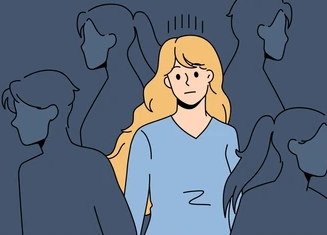
If you are asking who you can talk to when you feel lonely, the honest answer is: more people and services exist to listen than you might realise. You can reach a trusted friend, a family member, a free warm line, an online community, or a compassionate human listener through services like Callin. You are not out of options. You are simply looking for the right one.
Key Takeaway
- Loneliness is not a character flaw. It is one of the most common human experiences, and it is one that can change.
- You do not need to be in crisis to reach out. Wanting to talk is reason enough.
- Real, accessible options exist right now — from trusted friends to warm lines to compassionate listening services like Callin.
- Warm lines are free, confidential, and designed for people who simply need someone to talk to — no emergency required.
- A full spectrum of support exists between handling things alone and seeing a therapist. Most people never explore it.
- Loneliness that persists over time increases the risk of depression, anxiety, and physical health problems. Reaching out early matters.
- The best step forward is often the smallest one you will actually take.
Loneliness is not a niche experience. A 2023 advisory from the U.S. Surgeon General found that roughly half of American adults report measurable levels of loneliness.
The World Health Organization has declared social isolation a global public health concern. The NHS estimates that over nine million people in the UK often or always feel lonely.
None of this makes your loneliness any easier to bear. But it does mean you are not unusual, broken, or alone in feeling this way.
Asking who you can talk to is not weakness. It is one of the most self-aware things a person can do.
Who Can I Talk to When I Feel Lonely?

The right person or service depends entirely on what you need right now. Some people want warmth from someone they already love. Others want anonymity. Some need structure and professional guidance. Below is a clear breakdown of real options and who each one is best suited for.
Friends and Family
Friends and family are often the first people we think of. Sometimes they are the right call. A trusted friend who listens without judging, a sibling who has known you for years, or a parent who simply picks up the phone can provide exactly the warmth you need.
The honest challenge is that this does not always work. People are busy. Some are dealing with their own difficulties. Others respond with advice when what you needed was simply to be heard. If talking to friends does not feel like enough, that is not a reflection on your worth or your friendships. It is a sign that a different kind of support might serve you better right now.
Trusted Coworkers
Workplace relationships are often underestimated as a source of connection. A coworker who genuinely cares about you can make a real difference, particularly if you work remotely and feel cut off from social contact.
Remote worker loneliness is a real and documented experience, and an honest conversation with someone you trust at work can break the isolation quickly. That said, professional boundaries matter. Use your judgement about what to share.
Neighbours and Community Members
Connection does not require depth to be meaningful. Research published in the American Journal of Public Health found that brief, frequent interactions with neighbours correlate with meaningfully reduced feelings of loneliness.
A five-minute conversation with the person next door is not a substitute for intimacy. But it is real human contact, and it counts.
Faith Leaders and Spiritual Communities
For people of faith, religious communities offer structured belonging and, often, direct one-to-one pastoral support. Many faith leaders have training in supportive listening. If you are part of a faith community, reaching out to a leader or chaplain is a legitimate and frequently underused option.
Support Groups
Support groups bring together people who share a common experience. Whether you are navigating grief, a health condition, a relationship breakdown, or persistent loneliness, there are groups both in-person and online where people genuinely understand what you are going through.
The American Psychological Association recognises peer support as a meaningful complement to professional care. Finding peer support as an adult is more accessible than most people realise.
Warm Lines
A warm line is a non-emergency emotional support service where trained volunteers or peers listen to people who are not in immediate crisis. They are free. They are confidential. They require no appointment and no reason beyond “I need to talk.” We cover warm lines in detail below, but they are one of the most accessible and least known options available.
Therapists and Counsellors
A licensed therapist offers structured, ongoing support rooted in clinical training. If your loneliness is persistent, tied to depression or anxiety, or affecting your ability to function, professional therapy is a strong option.
The National Institute of Mental Health notes that untreated loneliness and social withdrawal can worsen over time and increase risk for depression. Therapy is not always immediately affordable, but many therapists offer sliding-scale fees. The NHS provides free psychological therapies in England. Medicaid covers mental health care in the United States.
Callin
Callin exists for people who want to talk to a real, compassionate person but do not feel they need therapy right now. If you need someone to talk to but not therapy, Callin offers trained listeners who give you their full attention without judgement, diagnosis, or agenda.
It fills the space that traditional support systems consistently miss: between reaching out to a friend and booking a therapist.
What Should You Do If You Have No One to Talk To?

This is one of the hardest places to be. If you genuinely feel like there is nobody in your life to reach out to, it is worth knowing that this is both more common than it is talked about and genuinely changeable.
Start with what is accessible right now.
Call or message a warm line You do not need an existing relationship, a referral, or a crisis to justify calling. Warm lines exist precisely for moments like this.
Join an online community Communities on Reddit (r/lonely, r/MentalHealth) and platforms like 7 Cups can provide real human responses within minutes, around the clock.
Use a listening service A real person at Callin is available to hear you without judgement. That matters more than it might sound.
Take one small offline step Harvard Health Publishing consistently shows that even minimal positive social contact reduces loneliness over time. If making friends as an adult feels overwhelming, start smaller. A library. A coffee shop. One text message.
“Emotional support is most effective when it is accessible before distress becomes a crisis. Waiting until you are at your lowest point is never a requirement for reaching out.”
If you are unsure where to start, these eight emotional support options offer a practical and accessible overview.
Who Can I Talk to When I Feel Lonely at Night?
Night-time loneliness has a particular quality. The world goes quiet. Distractions disappear. Thoughts intensify. Many people find that loneliness they can manage during the day becomes harder to carry after dark. The good news is that support does not stop at 6pm.
Warm lines with extended hours
Many U.S. warm lines operate late into the night or around the clock. In the UK, the Samaritans (116 123) operates 24 hours a day, seven days a week, and is open to anyone who needs to talk, not only those in crisis. The Crisis Text Line (text HOME to 741741 in the US) also serves people who feel overwhelmed, at any hour.
Online communities that never close
If you are struggling at 2am, someone in a different time zone is awake. Text-based support forums and peer communities are active at all hours. The absence of a local person to call does not mean the absence of human connection.
Knowing your option before you need it
For people who find that everything feels too much at night, having a known option in advance makes it dramatically easier to actually use it when the moment comes. Decide now who you will call if tonight feels hard. That decision itself is a form of self-care.
If night-time loneliness is a recurring pattern for you, it is worth exploring the underlying reasons. Loneliness after midnight is rarely just about the time.
Who Can I Talk to When I Don’t Want to Burden Anyone?
The fear of being a burden is one of the most common reasons people stay silent when they are struggling. It feels selfless. In practice, it keeps people isolated in ways that hurt them and quietly damages the relationships they are trying to protect.
Here is what the research actually shows. A study published in the Journal of Social and Personal Relationships found that people consistently underestimate how willing others are to help. We predict that reaching out will inconvenience or overwhelm those we care about. Most of the time, we are wrong.
That said, not every person in your life has the capacity to be your primary emotional support. Being the strong one for everyone can leave you without anyone to lean on yourself.
This is exactly where warm lines and Callin become valuable. They exist so the emotional weight does not have to fall on someone who is already stretched. There is no burden to calculate. You can talk honestly because the person on the other end is there specifically for this.
“Reaching out is not a sign that you are failing to cope. It is often one of the healthiest coping strategies available.”
If guilt about needing support is something you recognise in yourself, you are not alone. There are real, documented reasons people feel guilty for needing emotional support, and understanding them can help you move past the block.
What Is a Warm Line?
Definition: A warm line is a non-emergency emotional support phone or online service staffed by trained volunteers or peers. It provides compassionate support to people who are not in immediate crisis — no appointment, no referral, no diagnosis required.
Unlike a crisis line, a warm line does not require you to be in danger. You do not need to be suicidal, in acute distress, or facing an emergency. You can call because you feel lonely. Because you need to vent. Because you have had a hard week and you simply need someone to talk to at 9pm on a Tuesday.
Warm lines are typically:
- Free
- Confidential
- Staffed by trained volunteers or peers with lived experience
- Available without referral or appointment
- Entirely non-judgemental
In the United States, the National Alliance on Mental Illness (NAMI) and SAMHSA both recognise warm lines as a valuable component of community mental health.
Many U.S. states have their own warm lines. In the UK, organisations like Mind and Rethink operate similar services. For a full comparison of how warm lines sit within the broader support landscape, see warm lines vs crisis lines explained.
Who Can I Talk to When I Feel Lonely? Comparing Your Options
Understanding the difference between your options helps you choose the right one for the right moment. No single service suits every situation.
📞 Warm Line — Non-crisis support
- Availability: Extended hours
- Anonymous: ✅ Yes
- Cost: ✅ Free
- Needs crisis: ❌ No
- Ongoing relationship: ❌ No
- Clinical training: ❌ No
Best for: Feeling lonely, stressed, or overwhelmed. Need to vent. No emergency required.
🚨 Crisis Line — Immediate emergencies
- Availability: 24/7
- Anonymous: ✅ Yes
- Cost: ✅ Free
- Needs crisis: Designed for it
- Ongoing relationship: ❌ No
- Clinical training: Varies
Best for: Immediate risk to yourself or others. Thoughts of suicide or self-harm. Acute safety concerns.
🧠 Therapy — Clinical treatment
- Availability: Scheduled appointments
- Anonymous: ❌ No
- Cost: Varies
- Needs crisis: ❌ No
- Ongoing relationship: ✅ Yes
- Clinical training: ✅ Yes
Best for: Persistent mental health conditions. Structured, ongoing care with a licensed professional.
🤝 Callin — Human connection (recommended)
- Availability: Flexible hours
- Anonymous: ✅ Yes
- Cost: Accessible
- Needs crisis: ❌ No
- Ongoing relationship: ✅ Yes
- Clinical training: ❌ No
Best for: Everyday emotional support. A compassionate human conversation without needing to be in crisis.
No single option suits every situation. The healthiest approach is knowing the full spectrum and choosing what fits the moment you are in.
Signs It May Be Time to Seek Professional Mental Health Care
Loneliness is not always a mental health condition. But it can contribute to one, and it can also be a symptom of one. The distinction matters, and so does knowing when to seek a higher level of care.
Consider speaking with a doctor or licensed therapist if you notice any of the following:
- Your loneliness has persisted for several weeks or months without improvement
- You are withdrawing from activities or people you previously enjoyed
- You are experiencing persistent sadness, hopelessness, or emptiness
- Your sleep, appetite, or concentration is significantly disrupted
- You are using alcohol or other substances to manage emotional pain
- You have thoughts of harming yourself or ending your life
⚠️ If you are in crisis right now
If you are experiencing thoughts of suicide or self-harm, please contact a crisis line immediately.
- UK: Samaritans — 116 123 (free, 24/7)
- US: Call or text 988 (Suicide and Crisis Lifeline)
- Emergency: 999 (UK) or 911 (US)
Small Things You Can Do Today If You Are Feeling Lonely
Loneliness does not always lift through a single conversation. But small actions accumulate. Research from Brigham Young University, which analysed data from over 3.4 million people, found that social isolation is associated with a 29% increased risk of heart disease and a 32% increased risk of stroke. Connection is not optional for human wellbeing. It is a biological need.
Send one message
Not a call. Not a long email. One message to someone you have not spoken to in a while. It can be brief. “I was thinking about you” is enough. Most people underestimate how much a small message means to the person who receives it.
Step outside
Physical movement in shared spaces, even without direct social interaction, reduces the felt intensity of loneliness. A fifteen-minute walk in a public area can genuinely shift your internal state. Libraries, coffee shops, and community centres provide ambient human contact without requiring you to talk to anyone.
Name what you are feeling
Research from UCLA suggests that labelling an emotion reduces its intensity. Saying to yourself “I feel lonely right now” is not defeat. It is clarity. And clarity enables action. Emotional expression is a skill, not a character trait.
Reach out to a warm line or Callin
You do not need a plan or to know what to say. “I just needed to talk to someone” is a complete sentence. That is enough. Active listening from a real person can shift the weight of loneliness in ways that are hard to fully describe until you experience them.
Reduce passive social media use
A 2018 study in the Journal of Social and Clinical Psychology found a causal link between passive social media scrolling and increased loneliness and depression. Watching other people’s curated lives tends to deepen the sense of disconnection, not ease it. Active contact beats passive observation every time.
For more grounded, practical strategies, coping with stress and emotional overwhelm offers a useful place to start.
If You Only Remember Three Things
- Feeling lonely does not mean you are alone in your experience. It is one of the most universal human feelings, and it is one that can change.
- You do not have to wait until you are in crisis to reach out for support. Wanting to talk is reason enough.
- The best conversation is often the one you decide to have today.
Frequently Asked Questions
Who can I call just to talk when I feel lonely?
Warm lines are designed for exactly this. You can also reach out to Callin for a compassionate conversation with a real person. Friends and family are valid options too, if that feels right in this moment.
Can I talk to someone anonymously?
Yes. Warm lines and Callin both allow you to speak without sharing personal details. You can use them without giving your name.
Are warm lines free?
Most warm lines are free to use. Some have limited hours or availability by region. National warm lines in the U.S. are generally free. Callin offers accessible pricing for on-demand human support.
Can loneliness become depression?
Yes. Persistent loneliness is a significant risk factor for depression and anxiety. Harvard Health Publishing notes that chronic loneliness activates the same stress responses in the body as physical pain. Reaching out early matters, and it does not require a formal reason to do so.
Why do I feel lonely even when I have friends?
Loneliness is not about the number of people in your life. It is about the quality and depth of connection you experience. Many people feel lonely in relationships, in busy households, and in large social groups. This experience is more common than most people realise, and it deserves to be taken seriously.
Who can I talk to at night when I feel lonely?
The Samaritans (UK, 116 123) and the 988 Suicide and Crisis Lifeline (US) operate 24 hours. Many warm lines have extended evening hours. Callin and text-based services also offer support outside of standard hours. Decide in advance who you will contact. It makes the decision easier when the moment arrives.
Is it okay to reach out just because I am lonely?
Absolutely. You do not need to be in crisis to deserve support. Loneliness is a legitimate reason to reach out. It always has been.
What is the difference between a warm line and a crisis line?
A warm line is for people who are struggling but not in immediate danger. A crisis line is for acute emergencies, including thoughts of suicide or self-harm. Both have their place. Neither replaces the other. For a full breakdown, see warm line vs crisis line explained.
What if I feel too anxious to make a call?
Text-based services exist specifically for this. The Crisis Text Line (text HOME to 741741 in the US) accepts texts. Callin also offers options that do not require a voice call if that feels more comfortable right now.
Can I talk to someone about loneliness without it turning into therapy?
Yes. Warm lines and Callin are not therapy. There is no diagnosis, no treatment plan, and no clinical agenda. It is simply a conversation with someone who will listen. If you need to vent but not therapy, these services were built for exactly that.
Why do I stop talking about my problems when people care about me?
This is a deeply common experience. It is often tied to fear of judgement, fear of being a burden, or past experiences of not being heard. Understanding why you go quiet when people care can help you begin to change that pattern.
I crave connection but keep withdrawing. Is that normal?
Yes. This push-pull between wanting connection and pulling away from people is a recognisable emotional pattern, often linked to past relational experiences. You are not alone in this, and it is something that can shift with the right support.
What if I feel lonely even around people?
Feeling lonely in a room full of people is one of the more painful forms of loneliness. It points to a disconnection that is not about physical presence. This type of loneliness deserves its own attention and understanding.
Is AI emotional support enough when I am lonely?
No. AI can provide reflection and information, but it cannot offer genuine human connection. Research consistently shows that human-to-human contact is what actually reduces loneliness. AI emotional support has real and significant limitations and should not be treated as a substitute for human presence.
How do I know if I need therapy or just someone to talk to?
If your distress is persistent, significantly affecting your daily functioning, or tied to a diagnosable condition, professional therapy is likely the right level of support. If you are struggling but functional and simply need to be heard, a warm line, Callin, or peer support may be exactly what you need. Many people benefit from both at different points in their lives.
What are the benefits of consistent emotional support?
Regular emotional support reduces cortisol levels, improves immune function, and is associated with better mental health outcomes over time. The American Psychological Association identifies social connection as one of the strongest predictors of long-term wellbeing. The benefits of consistent emotional support go far beyond mood.
A Final Word
If you have read this far, you are already doing something important. You are looking for a way forward instead of staying stuck.
Loneliness is not permanent. It is not proof that something is wrong with you. It is a signal, and signals can be responded to.
The options in this article are real. They range from the deeply personal to the quietly anonymous. What matters is not which option is objectively best. What matters is which one you will actually use.
You deserve to be heard. Not when things get worse. Not when you have built up enough reason to justify asking. Right now, exactly as you are.
One conversation does not fix everything. But it can make today lighter than yesterday. And that is a place to start.
References and Further Reading
- U.S. Surgeon General. (2023). Our Epidemic of Loneliness and Isolation: The U.S. Surgeon General’s Advisory. U.S. Department of Health and Human Services.
- World Health Organization. (2023). Social Connection as a Global Public Health Priority.
- NHS England. Loneliness: Statistics and Support Resources.
- Harvard Health Publishing. The Health Risks of Loneliness. Harvard Medical School.
- American Psychological Association. Social Connection and Wellbeing: Evidence and Practice.
- National Institute of Mental Health. Depression: Overview and Related Conditions.
- National Alliance on Mental Illness (NAMI). Warm Lines: A Community Mental Health Resource.
- SAMHSA. Peer Support and Warm Lines in Community Mental Health Systems.
- Holt-Lunstad, J., Smith, T.B., Baker, M., Harris, T., & Stephenson, D. (2015). Loneliness and social isolation as risk factors for mortality. Perspectives on Psychological Science, 10(2), 227-237.
- Cacioppo, J.T. & Hawkley, L.C. (2010). Loneliness matters: A theoretical and empirical review of consequences and mechanisms. Annals of Behavioral Medicine, 40(2), 218-227.
- Hunt, M.G., Marx, R., Lipson, C., & Young, J. (2018). No more FOMO: Limiting social media decreases loneliness and depression. Journal of Social and Clinical Psychology, 37(10), 751-768.
- Lieberman, M.D. (2013). Social: Why Our Brains Are Wired to Connect. Crown Publishers.
- Pressman, S.D., et al. (2005). Loneliness, social network size, and immune response to influenza vaccination in college freshmen. Health Psychology, 24(3), 297-306.

Leave a Reply