
Emotional Needs are no longer adequately met by the traditional relationship categories of romantic partners, friends, and therapists. Today, partners are overwhelmed by expectations to fulfill every role, while adult friendships have shifted toward light maintenance rather than deep processing.
Meanwhile, everyday struggles are increasingly pathologized and routed to strained clinical therapy systems. This structural shift creates a massive support gap. Adults find themselves socially connected yet lacking a space to process life without clinical labels or burdening loved ones.
Consequently, new relational infrastructure, like dedicated listening services, is emerging to hold the weight conventional relationships can no longer carry.
Key Takeaways
- Modern adults are usually not lacking relationships. They are lacking the right category of relationship for what they actually need.
- For most of the last century, emotional life was organized into three categories: romantic partner, friend, and therapist. Each had a defined scope and a limited job.
- Romantic partnerships have absorbed responsibilities once spread across an entire household and community, a pattern this article calls emotional hyper-consolidation.
- Adult friendships have shifted toward maintenance and logistics rather than deep emotional processing, a pattern this article calls low-stakes friendship culture.
- Therapy has expanded to cover ordinary life difficulties that were once handled informally, a trend researchers describe as concept creep, or the pathologizing of the ordinary.
- Between friendship and therapy sits an unnamed space: real emotional needs that are not clinical, not diagnostic, and not consistently served by either category. This is the support gap.
- A new category of relational infrastructure, including structured peer support and dedicated listening services, is emerging to hold needs the older three categories were never built to carry.
- The U.S. Surgeon General’s 2023 advisory defines loneliness as a mismatch between desired and actual connection, not simply an absence of people. That distinction is central to this article’s argument.
Introduction
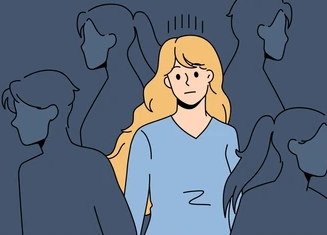
Picture someone with a partner, three close friends, two active group chats, and a calendar full of plans. By most measures, this person is not isolated. Yet by evening, they often feel quietly depleted, mildly unseen, and unsure who to call.
This is a common experience, and an unremarkable one to describe out loud. It also raises a real question. How can someone be socially connected and emotionally unsupported at the same time?
The conventional answer is that the person needs more relationships, or better ones. This article argues something different. The problem is rarely quantity. It is architecture.
For most of modern history, emotional support was distributed across three categories: a romantic partner, a circle of friends, and, when needed, a therapist. Each category carried a defined and manageable share of the emotional load. Nobody expected a friend to do what a partner did, or a partner to do what a clinician did.
Those categories have not expanded to match the emotional demands now placed on adults. The result is not loneliness in the traditional sense of having no one around. It is something closer to what researchers and writers have started naming directly: a specific kind of emotional overwhelm that can exist even inside a full life.
The U.S. Surgeon General’s 2023 advisory on loneliness defines the condition precisely this way, as a gap between the connection a person wants and the connection they actually receive, rather than a simple absence of people. That distinction matters.
A person can be surrounded by others constantly and still feel this gap, a pattern explored in more detail in why it is possible to feel lonely even while surrounded by people.
This is a category mismatch, not a connection deficit. The rest of this article examines why each traditional category strains under modern demand, and what is emerging to occupy the space between them.
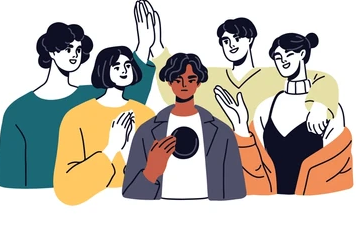
Section 1: The Myth of the All-In-One Partner
Definition. Emotional hyper-consolidation describes the modern pattern of routing nearly all emotional, logistical, and identity-related needs through a single romantic relationship.
For most of human history, a romantic partnership existed primarily to manage survival. Households needed two adults to handle labor, food, shelter, and child-rearing. Emotional intimacy was welcome, but it was not the central function of the arrangement. Extended family, neighbors, and community institutions absorbed much of the emotional work that a couple did not have to do alone.
That function has changed considerably. Northwestern University psychologist Eli Finkel, whose research on what he calls the all-or-nothing marriage is widely cited in sociology and psychology, traces how expectations of partnership shifted across the twentieth and twenty-first centuries.
Couples once asked their marriages to meet basic needs. Later generations asked marriage to provide companionship. Today, many adults expect a partner to provide all of it simultaneously: best friend, emotional processor, confidant, co-parent, financial strategist, and personal growth partner, often without the surrounding community that once shared the load.
This is not a character flaw on the part of any individual couple. It is a structural shift. Fewer extended families live nearby. Fewer adults have a stable circle of multigenerational support.
The romantic relationship has become, almost by default, the last remaining generalist role left in many people’s emotional lives, simply because nothing else is positioned to take the overflow.
The consequences are predictable and well documented. When one person becomes the sole destination for every form of support, the relationship absorbs pressure it was never built to hold.
Partners report emotional fatigue. Minor disagreements carry outsized weight, because there is no other outlet for the feelings sitting underneath them. Intimacy itself can start to feel like another item on a long list, rather than a source of renewal.
Recognizing this pattern is often the first useful step toward managing the chronic stress that builds when one relationship is asked to absorb too much, and toward setting boundaries that protect both partners from carrying more than either can sustainably hold.
“A relationship asked to be everything may end up not being anything.”
– Callin
Takeaways
- Romantic partnerships historically existed for practical survival, not comprehensive emotional management.
- Modern partners are often expected to be best friend, therapist, co-parent, and growth coach simultaneously.
- This consolidation produces emotional fatigue and intimacy overload, even inside otherwise healthy relationships.
- The trend reflects a loss of surrounding social infrastructure, not a failure of the couple.
Section 2: Why Adult Friendships Struggle to Carry Emotional Weight
Definition. Low-stakes friendship culture describes the adult tendency to use friendship primarily for maintenance, updates, and logistics rather than for deep emotional processing.
Adult friendship operates under real constraints that childhood and early adulthood did not impose. Careers demand more hours. Families consume whatever time remains. People move for jobs, for partners, for affordability, repeatedly breaking the geographic proximity that friendship has always depended on for its upkeep.
The data on this shift is unambiguous. Research from the Survey Center on American Life found that the share of Americans reporting six or more close friends fell sharply between 1990 and the early 2020s, with the decline most pronounced among men.
The same body of research found that daily time spent maintaining friendships drops from more than two hours in adolescence to roughly thirty minutes by middle age.
Friendship has not disappeared from adult life. It has been steadily deprioritized by the structure of that life, a pattern examined in the specific difficulty of building new friendships once the built-in social structures of school and early adulthood disappear, and in the particular isolation that comes with remote work, where there is no longer a shared physical space in which friendship can form.
Under these constraints, many adult friendships settle into a maintenance mode by default. Conversations focus on catching up, sharing updates, and coordinating logistics. This is not a failure of the friendship. It is a rational adaptation to limited time and competing obligations.
It carries a real cost, however. Many adults hesitate to bring a significant emotional burden into a friendship that has settled into this lighter register. They worry about being too much, about disrupting an established rhythm, or about asking for something the friendship was not built to hold in its current form.
This hesitation often overlaps with a broader pattern of habitually minimizing one’s own needs to avoid inconveniencing other people, and it is closely related to the guilt many people feel simply for needing support in the first place, a feeling that frequently has little to do with whether the friend in question would actually mind.
“Most adult friendships are built for maintenance, not for weight-bearing. Asking them to do both at once is where the strain begins.”
– Callin
Takeaways
- Adult friendships are shaped by reduced free time, geographic mobility, and competing responsibilities.
- Time spent on friendship drops from over two hours daily in adolescence to about thirty minutes daily in middle age.
- Conversations tend toward updates and logistics rather than deep emotional disclosure.
- Many adults withhold real distress from friends out of guilt or fear of disrupting the relationship’s established rhythm.
Section 3: The Clinical Expansion of Everyday Emotional Life
Definition. Pathologizing the ordinary describes the trend of routing common, non-clinical emotional experiences, such as burnout, uncertainty, or identity change, into clinical or diagnostic frameworks by default.
Therapy is a legitimate and valuable resource. It treats real clinical conditions, and it has measurably helped a great many people. Nothing in this section argues against therapy or against the medical understanding of mental illness. The point is narrower than that.
It is an observation about scope. Psychologist Nick Haslam’s research on what he terms concept creep documents how clinical language, including terms like trauma, anxiety, and abuse, has steadily broadened to describe a wider range of everyday experience than it once did.
Related work by sociologists Allan Horwitz and Jerome Wakefield, examining diagnostic criteria for depression, argues that ordinary sadness and grief have at times been classified using the same clinical language as major depressive disorder, blurring a distinction that used to be meaningful.
The destigmatization of mental health over the past two decades is, on balance, a genuine social good. But destigmatization and diagnostic expansion are not the same thing, and the two have become tangled together. The practical effect shows up constantly in daily life.
Burnout, a predictable response to an unsustainable workload, gets treated as something only a clinician can address, rather than a problem that often has identifiable, addressable causes in how a job or a life is actually structured. Career uncertainty becomes anxiety.
A difficult life transition becomes a disorder. Identity questioning, a normal part of adult development, becomes something to diagnose rather than something to simply work through.
Some experiences that get labeled this way are, on closer inspection, ordinary reactions to a hard set of circumstances rather than evidence of an underlying trauma response, and others involve identifying so closely with a past difficulty that the difficulty itself starts to define a person’s entire sense of self.
This expansion has a structural consequence. It funnels enormous demand toward a clinical system already strained by a shortage of providers that predates the current wave of demand, while leaving people who do not need clinical treatment with the impression that ordinary emotional difficulty is something only a licensed professional can legitimately address.
For many, the result is a quiet sense of moving through life on autopilot rather than feeling genuinely present in it, with no clear, non-clinical place to bring that feeling before it becomes something larger.
“Not every difficult feeling is a symptom. Some are simply the ordinary weather of being a person with a complicated life.”
– Callin
Takeaways
- Therapy remains a valuable, legitimate resource for clinical conditions and should not be discouraged.
- Clinical language has broadened to describe experiences that were once considered ordinary, a pattern researchers call concept creep.
- Burnout, uncertainty, and identity shifts are commonly treated as clinical issues by default, even when they are not.
- This expansion increases pressure on an already limited supply of mental health providers.
Section 4: The Emerging Support Gap
Definition. The support gap is the structural space between friendship and therapy, occupied by needs that are real, emotionally significant, and frequent, but not clinical or diagnostic.
Taken together, the first three sections describe a consistent pattern. Romantic partners are overloaded. Friendships are calibrated for lighter contact. Therapy is calibrated for clinical treatment. In between sits a category of need that none of the three was designed to hold.
This need has a specific and recognizable shape. It is the need to talk through a hard day without turning it into a diagnosis. It is the need for someone to simply listen, fully, without the conversation being filtered through a partner’s own stress or a friend’s limited bandwidth.
It is the need expressed by the growing number of people who say, in plain terms, that they need someone to talk to but do not need therapy, a phrase common enough to function as its own recognizable category of search behavior and everyday speech.
The gap is becoming more visible for a few converging reasons. Friendship has contracted under the pressures described in Section 2. The clinical system, strained by the demand described in Section 3, often carries waitlists measured in weeks or months.
And many adults have internalized a belief that needing support at all is something to feel embarrassed about, a belief examined directly in the specific guilt that surrounds asking for help, even when the need itself is entirely reasonable.
What the support gap requires is not more therapy and not a deeper obligation placed on friendship. It requires something more specific: a place to vent that is structured and judgment-free, and that does not require an existing relationship to carry the weight, along with a confidential outlet where the goal is simply to be heard rather than treated, and practical guidance for people who are overwhelmed but do not believe their situation calls for clinical treatment.
“The support gap is not a sign that people are too fragile. It is a sign that the available categories were built for a narrower range of need than adults actually have.”
– Callin
Takeaways
- The support gap sits structurally between friendship and therapy, occupied by real but non-clinical emotional needs.
- It includes needs like sustained listening, processing without judgment, and a confidential outlet that does not depend on an existing relationship.
- The gap has grown more visible as friendship has contracted and therapy access has tightened.
- Guilt about needing support at all compounds the problem, discouraging people from seeking help even when it is available.
Section 5: The Rise of a New Relationship Category
Definition. Relational infrastructure refers to organized, non-clinical systems built specifically to provide emotional support and listening, distinct from both informal friendship and licensed clinical care.
Societies tend to build infrastructure once a need becomes visible and recurring enough to warrant it. Public libraries did not exist because reading was new. They existed because access to reading had become a recognized, recurring need that informal, ad hoc arrangements could no longer meet at scale. A similar pattern appears to be unfolding around the support gap.
Peer support programs, staffed by trained non-clinicians, have expanded across community mental health systems in recent years. Warmlines, phone and chat services built specifically for people who are struggling but not in crisis, now operate in dozens of U.S. states.
The distinction matters structurally: a warmline is built for ongoing, non-emergency emotional support, while a crisis line is built for acute intervention, and the two serve different needs even though they are sometimes confused.
Research on these services, including work referenced by the American Psychiatric Association, has found that users report reduced distress and increased community engagement after using non-clinical peer support, independent of any clinical treatment they may separately be receiving.
This broader category, dedicated listening, scheduled emotional processing, and confidential, non-clinical support, is what appears to be emerging to occupy the support gap.
It is defined by a few consistent features: a trained listener rather than a friend with limited bandwidth, a predictable and scheduled structure rather than an ad hoc favor, and a confidential setting that requires neither an existing relationship nor a clinical referral.
Active listening, the practice of giving someone full, undivided attention without redirecting the conversation toward advice or judgment, is itself a specific and trainable skill, distinct from the more reciprocal, give-and-take nature of ordinary friendship.
Callin is one example of this category in practice. It connects people with trained listeners for structured, confidential conversation, positioned explicitly as neither therapy nor casual friendship.
It does not diagnose, and it does not replace clinical treatment. It occupies the space this article has described: a real emotional need, met without forcing it into a clinical frame or asking an already-stretched friendship to absorb it.
It sits alongside a wider set of emotional support options that have emerged for people seeking help outside the traditional partner-friend-therapist triangle, reflecting a broader societal pattern rather than a single product solving a single problem.
“When an emotional need becomes common enough and visible enough, a society eventually builds a category for it. The support gap is currently somewhere in that process.”
– Callin
Takeaways
- Peer support and warmline models have expanded specifically to serve people who need support but are not in crisis and do not need clinical treatment.
- This emerging category is defined by trained listening, predictable structure, and confidentiality, distinct from both friendship and therapy.
- Services like Callin represent one practical response to this gap, not a replacement for either friendship or clinical care.
- The pattern reflects a broader societal trend: new emotional needs eventually generate new social infrastructure.
Conclusion
The challenge facing many modern adults is not a shortage of relationships. Most people reading this have a partner, friends, or both. The challenge is a shortage of relationship categories suited to how emotional life actually works now.
Romantic partnerships have absorbed responsibilities once spread across households and communities. Friendships have adapted to scarce time by becoming lighter and less weight-bearing.
Therapy has expanded to cover a wider range of human difficulty than it was originally built to treat. None of these shifts happened because people made poor choices. They happened because the structures surrounding modern life changed faster than the categories meant to support it.
The emotional demands of adulthood have grown. The social architecture inherited from previous generations has not grown to match it. That gap is not a personal failing. It is a structural one, and structural gaps tend to get filled eventually.
When a society creates new emotional needs, it eventually creates new social infrastructure to meet them.
Frequently Asked Questions
What is the support gap between friendship and therapy? The support gap is the space between casual friendship and clinical therapy where real, significant emotional needs exist that are not severe enough to require treatment and too heavy for most everyday friendships to carry consistently.
Why do I feel emotionally unsupported even though I have friends? Many adult friendships are structured around maintenance, such as catching up and coordinating logistics, rather than deep emotional processing. This can leave real needs unmet even within a full social circle.
Can emotional support exist outside therapy? Yes. Non-clinical emotional support, including structured peer support, warmlines, and trained listening services, addresses real emotional needs without requiring a clinical diagnosis or treatment plan.
What is non-clinical emotional support? Non-clinical emotional support refers to listening and processing services provided without a diagnostic or treatment framework. It is typically delivered by trained peers or listeners rather than licensed clinicians, and it focuses on being heard rather than being treated.
Why are adult emotional needs changing? Adult emotional needs have not necessarily changed in kind, but the social structures that once absorbed them, extended family, stable neighborhoods, and lifelong local friendships, have weakened. The same underlying needs now concentrate more heavily on fewer relationships.
Can one person meet all of your emotional needs? Research on modern romantic relationships suggests this is structurally difficult. Expecting one partner to be best friend, confidant, co-parent, and emotional processor at once tends to produce strain rather than resolve it, even in otherwise strong relationships.
Sources and Further Reading
- Finkel, E. J. The All-or-Nothing Marriage: How the Best Marriages Work. Dutton, 2017.
- Cox, D. A. “The State of American Friendship: Change, Challenges, and Loss.” Survey Center on American Life, American Enterprise Institute, 2021.
- U.S. Department of Health and Human Services, Office of the Surgeon General. “Our Epidemic of Loneliness and Isolation.” 2023.
- Haslam, N. “Concept Creep: Psychology’s Expanding Concepts of Harm and Pathology.” Psychological Inquiry, 2016.
- Horwitz, A. V., and Wakefield, J. C. The Loss of Sadness: How Psychiatry Transformed Normal Sorrow into Depressive Disorder. Oxford University Press, 2007.
- American Psychiatric Association. “Warm Lines: Providing Help Before a Crisis Develops.”

Leave a Reply