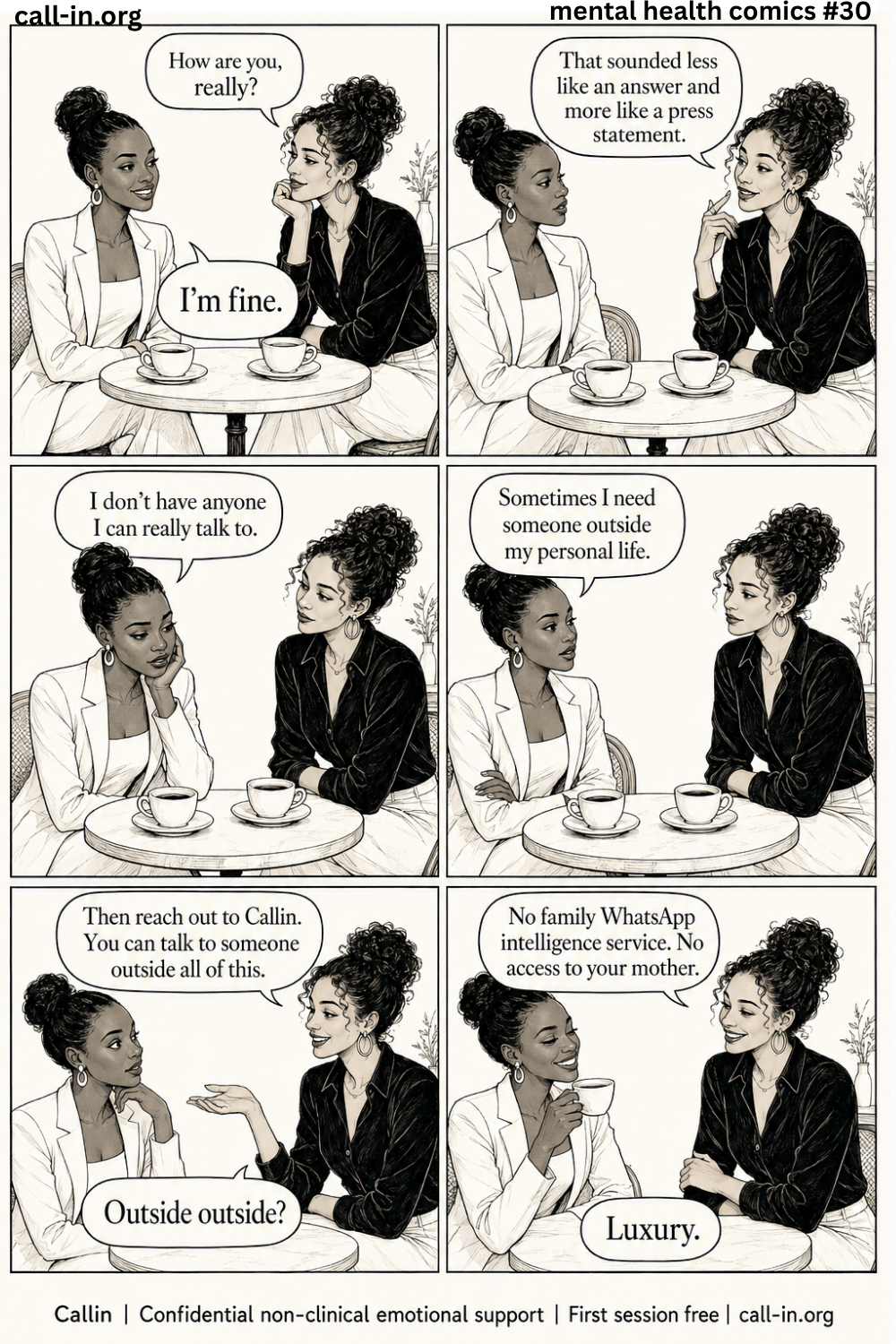
When therapy is not the answer, sometimes you just need someone to listen.
If you feel alone and have no one to talk to or share your true feelings with, it may not mean that nobody is physically around you. Sometimes, it means you do not feel safe, understood, or welcome enough to tell anyone what is really happening inside you. And that is why Callin exists.
Perhaps people interrupt, minimize your feelings, or immediately offer advice. Perhaps you are frightened of becoming a burden. You may even be surrounded by friends, relatives, classmates, or colleagues and still feel emotionally alone.
Sometimes therapy is the right form of support. Sometimes you are not looking for a diagnosis, treatment, or another appointment. You simply need a real person who will listen without judging you or trying to fix everything.
That is the space Callin Support was created to provide.
Key Takeaways
- Feeling lonely is about the quality of connection, not simply how many people you know.
- Fear of judgment, unwanted advice, or burdening others can make honest conversation feel unsafe.
- Wanting someone to listen does not automatically mean you need therapy.
- Trusted people, peer communities, support services, GPs, and trained listeners can all provide different forms of help.
- If you feel unsafe or unable to cope, urgent or clinical support is more appropriate than a non-clinical listening service.
Why Do I Feel Like I Have No One to Talk To?
There is a particular kind of exhaustion that does not show up on any clinical checklist. It arrives after months of holding it together at work, texting back “all good!” when you are not, and lying awake replaying conversations no one else knows you are still thinking about. It may not qualify as a crisis, but it is not nothing either.
Feeling that you have no one to talk to often means that you have no one you can talk to honestly. There may be people available for jokes, errands, birthday dinners, and discussions about what everyone is watching on television. That does not mean they feel safe enough for the truth.
You may also have learned to occupy a particular role. You are the dependable friend, calm colleague, sensible sibling, or parent who keeps everything moving. When people are accustomed to receiving strength from you, revealing that you are struggling can feel like breaking an unspoken contract.
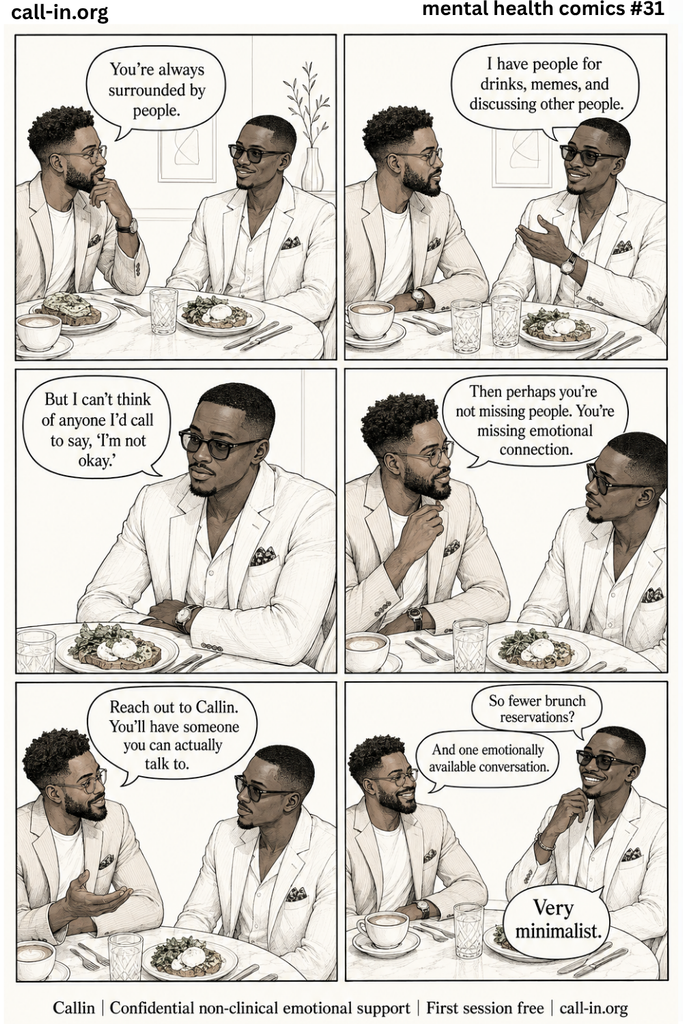
This is how emotional loneliness hides in plain sight. Your phone contains hundreds of contacts, yet you cannot think of one person to call and say, “I am not doing very well.” A crowded contact list can still be a locked room.
The U.S. Surgeon General’s advisory on social connection defines loneliness as the distress caused by a gap between the connection someone wants and the connection they actually experience. That distinction matters. Loneliness is not proof that you are unwanted. It may be evidence that your current relationships are not meeting a particular emotional need.
Can You Feel Lonely Even When You Have People Around You?
Yes. Physical proximity and emotional closeness are not the same thing.
Social isolation refers to having few relationships or limited social contact. Loneliness is subjective. It can happen in an empty apartment, a busy office, a long-term relationship, or a family group chat that produces forty-seven notifications and somehow still contains no safe place to be vulnerable.
Research summarized by the Surgeon General describes three dimensions of social connection: structure, function, and quality. Structure concerns how many relationships you have. Function concerns whether those relationships provide the support you need. Quality concerns whether your interactions feel helpful, satisfying, and emotionally safe.
This explains why “getting out more” is not always a complete answer to loneliness. More interaction can increase the quantity of contact without improving its quality. You can attend three social events in a week and still return home feeling that nobody truly met you there.
The World Health Organization reports that loneliness affects people across every age group and region. It is not a personal defect or evidence that you have failed at relationships. Sometimes loneliness is not a popularity problem. It is an emotional-access problem.
What If I Do Not Need Therapy and Just Want Someone to Listen?
Wanting a thoughtful conversation does not automatically mean you need clinical treatment. Human beings have always processed life through other human beings. We speak so that confusing thoughts become clearer, private feelings become nameable, and experiences that seemed enormous inside our heads acquire edges.
Good listening is more active than remaining silent while waiting for your turn to speak. An active listener pays attention, reflects what they hear, asks questions that help you understand your own experience, and resists rushing toward a solution. Advice may be useful later, but advice offered too early can feel like someone trying to close a conversation you have only just become brave enough to begin.
Sometimes the sentence “I just need someone to listen” is remarkably precise. You may not be asking another person to repair your relationship, confront your manager, reorganize your life, or produce a five-point recovery plan before you have finished your tea. You may need enough room to hear yourself think.
The need to be listened to is not a smaller version of the need for therapy. It is a different human need. Therapy may address mental health conditions, trauma, persistent distress, behavior patterns, or symptoms affecting daily life. Non-clinical emotional support can offer companionship, reflection, and space for everyday experiences that still deserve attention.
If cost, format, or clinical language has made support feel inaccessible, it may help to explore affordable mental health support that is not therapy or consider different alternatives to therapy for venting. The goal is not to avoid appropriate care. It is to find support that fits what you actually need.
Who Can I Talk to When I Feel Alone?
The best person to talk to depends on what you are carrying, how private it feels, and what kind of response would help.
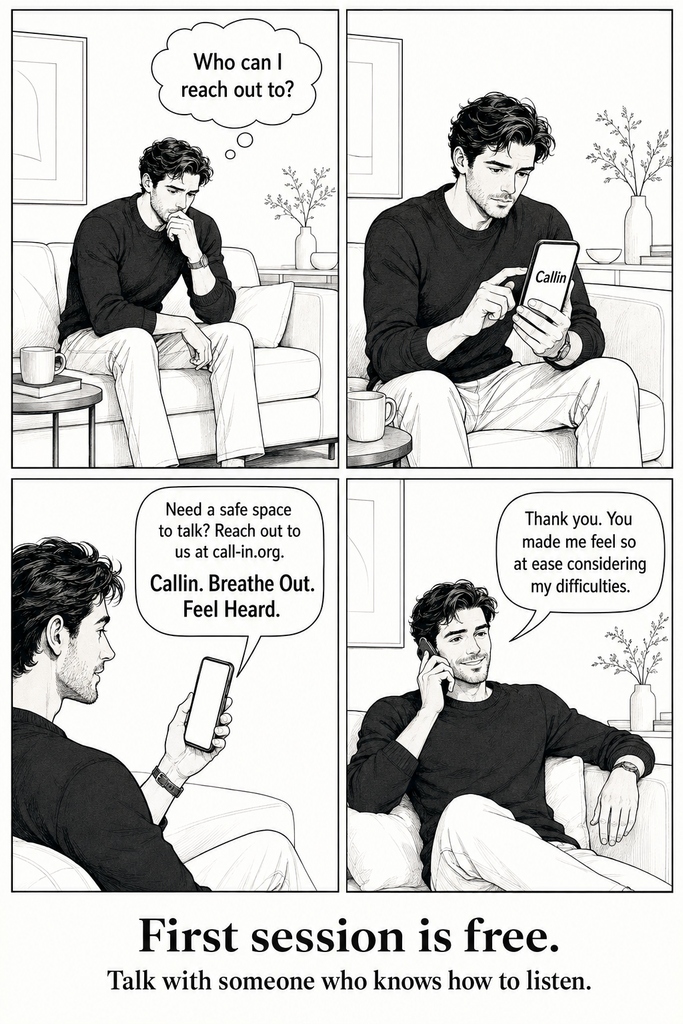
A Trusted Person in Your Life
A friend, relative, partner, colleague, mentor, or faith leader may be able to offer support. It can help to make the request specific: “Could you listen for ten minutes? I am not looking for advice yet.” People sometimes reach for solutions because they do not know what else is expected of them.
Of course, not every trusted person has the emotional capacity, discretion, or skill to hold every conversation. Someone loving you does not automatically make them the right person for a particular subject. That is not necessarily a failure of the relationship.
A Peer or Support Community
Support groups and peer communities can reduce the strange isolation of believing nobody else could understand. They may be particularly valuable during grief, caregiving, relocation, divorce, chronic illness, identity questions, or major life transitions.
The right community should respect privacy and avoid pressuring members to disclose more than they want. For people who cannot speak freely at home or within their social circle, identity-specific resources such as LGBTQ+ non-clinical emotional support may feel safer.
University, Workplace, or Community Support
Students may have access to university wellbeing teams, student-support advisers, peer programs, or campus counseling. Employees may have an Employee Assistance Program, occupational health service, trained wellbeing contact, or confidential helpline.
Libraries, community centers, charities, cultural organizations, and local support groups can also create opportunities for connection. These spaces may not solve everything, but they can make life feel less sealed off.
A GP or Mental Health Professional
A GP or qualified mental health professional may be the right starting point if loneliness is accompanied by persistent low mood, intense anxiety, panic attacks, trauma symptoms, major changes in sleep or appetite, substance misuse, or difficulty functioning.
Clinical care and human listening are not opposing teams. Many people benefit from both. If anxiety is the main concern, this guide explains where to get help for anxiety and how different forms of support may fit.
A Trained Listening Service
A trained listening service can help when you want an objective person outside your personal life. This can remove the worry that the conversation will alter a friendship, reach a family member, become office gossip, or reappear six months later during an argument.
People searching for “non-clinical online emotional support near me” are not always asking for someone on the next street. Often, “near me” means reachable, private, and available without turning support into an exhausting project. In the UK, this guide to alternatives to Samaritans when you need someone to talk to explains several available options.
How Callin Provides Someone to Talk To
Callin offers confidential, personalized, non-clinical online emotional support through trained peer active listeners. Sessions provide space to talk about loneliness, stress, burnout, heartbreak, work pressure, overthinking, relocation, identity, or the emotional clutter that accumulates when you have been “fine” for rather too long.
You can speak with the same dedicated listener over time. There is no diagnosis, and you do not have to arrive with a polished explanation of what is wrong. Your listener focuses on understanding your experience and offers advice only when you ask for it.
The quiet luxury of a dedicated listener is not merely that they remember the facts. They remember the emotional meaning, so you do not have to rebuild the bridge every time you need to cross it.
Because sessions take place online across time zones, this format can be useful for students, professionals, people living abroad, LGBTQ+ people, people processing heartbreak, and everyday overthinkers whose brains have apparently scheduled a board meeting at 2 a.m.
Your First Callin Session Is Free
A first Callin session can last from 20 minutes to one hour, depending on what you need. Some people want a brief introduction. Others need more time to settle, explain what has been happening, and decide whether the service feels right.
There is no commitment. If Callin is suitable, client onboarding can follow. If a different form of support would better meet your needs, you can be signposted toward a more appropriate service.
You can read more about what happens in a Callin first session before deciding whether you would like to begin.
When Listening Is Helpful and When More Support Is Needed
Listening can help with reflection, emotional relief, decision-making, stress, loneliness, and the experience of feeling unseen. The CDC notes that supportive relationships give people emotional resources and help them cope with stressful life challenges.
However, non-clinical emotional support does not replace therapy, medical care, safeguarding, or crisis intervention. Professional assessment may be important when distress is persistent, worsening, connected to trauma, or interfering substantially with work, study, relationships, sleep, or basic daily tasks.
If you are in the UK and feel unable to keep yourself safe, call 999 or go to A&E. For urgent mental health help that is not an emergency, use NHS 111 online or call 111 and select the mental health option. You can also call Samaritans free on 116 123 or text SHOUT to 85258 for confidential crisis text support.
If you are outside the UK, contact your local emergency service or crisis line. Seeking urgent help is not an overreaction. Support should match the seriousness of what you are experiencing.
Being Heard Is One of Life’s Quiet Luxuries
There is dignity in having somewhere to bring the unfinished version of a thought. Somewhere you do not have to entertain, reassure, perform competence, or apologize for having feelings at an inconvenient time.
Being heard does not remove every difficult circumstance. It can, however, reduce the loneliness of carrying it, help you recognize what you feel, and make the next decision easier to see. Relief does not always arrive as a dramatic breakthrough. Sometimes it arrives as the first full breath you have taken all week.
You deserve support before life becomes unbearable. You deserve conversation before crisis. You deserve at least one place where “I am not fine” does not create panic, judgment, or an unsolicited lecture.
That’s not nothing.
Frequently Asked Questions
Why do I feel like I have no one to talk to even though I have friends?
Having friends does not guarantee that every relationship feels emotionally safe. You may fear judgment, feel trapped in the role of the “strong one,” or need a kind of understanding your current relationships do not provide. This can create emotional loneliness even when you are socially active.
Is it normal to need someone to talk to?
Yes. Talking helps people seek perspective, organize their thoughts, feel connected, and process difficult experiences. Needing emotional support is part of being human, not evidence that you are weak, dramatic, or incapable.
Where can I speak with someone if I do not want therapy?
Options include a trusted person, a peer-support group, a university or workplace wellbeing service, a community organization, a helpline, or a trained non-clinical listener. The appropriate option depends on whether you want companionship, practical guidance, ongoing support, clinical treatment, or urgent help.
Does talking about my feelings actually help?
It can. A good conversation may help you name emotions, notice patterns, clarify what matters, and feel less alone. Talking is most helpful when the listener is attentive and the conversation does not become repetitive rumination that leaves you feeling more agitated.
What if I am worried about burdening my friends?
You can ask whether they have the time and emotional space to listen before beginning. If the subject feels too private or you need more support than one relationship can reasonably provide, a confidential listening service or mental health professional may offer a useful alternative.
What should I do if I need someone to talk to right now?
If you are distressed but safe, consider contacting a trusted person, helpline, peer-support service, or trained listener. If you may harm yourself, cannot remain safe, or believe someone else is in immediate danger, contact emergency or crisis support in your country immediately.

Leave a Reply