Author: Amanda Riley

  • The Survival Paradox: Why Safety Can Still Feel Unsafe

    The Survival Paradox: Why Safety Can Still Feel Unsafe

    texting emotionally draining

    The survival paradox is what happens when a protection strategy that once kept you safe keeps running long after the danger has passed. You leave the situation that hurt you, but the nervous system does not always get the memo. This does not mean something is wrong with you. It means a part of you is still trying to help, using outdated instructions.

    (more…)
  • What Can I Do When I Feel Alone and Have No One to Talk To

    What Can I Do When I Feel Alone and Have No One to Talk To

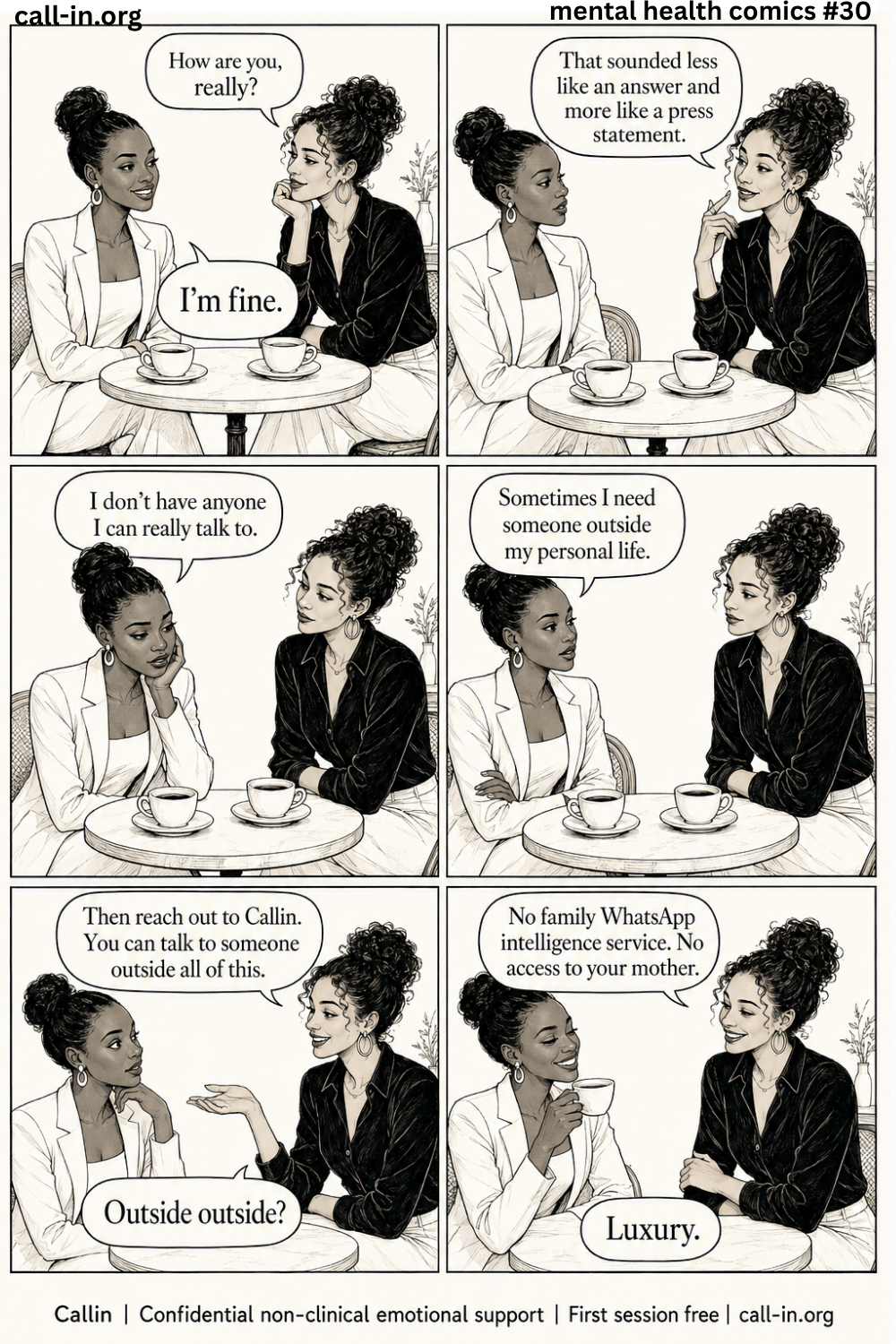
    two women talking about getting emotional support from Callin Support when they feel alone

    When therapy is not the answer, sometimes you just need someone to listen.

    If you feel alone and have no one to talk to or share your true feelings with, it may not mean that nobody is physically around you. Sometimes, it means you do not feel safe, understood, or welcome enough to tell anyone what is really happening inside you. And that is why Callin exists.

    (more…)
  • LGBTQ+ Emotional Support Online: A Confidential Place to Talk Without Judgment

    LGBTQ+ Emotional Support Online: A Confidential Place to Talk Without Judgment

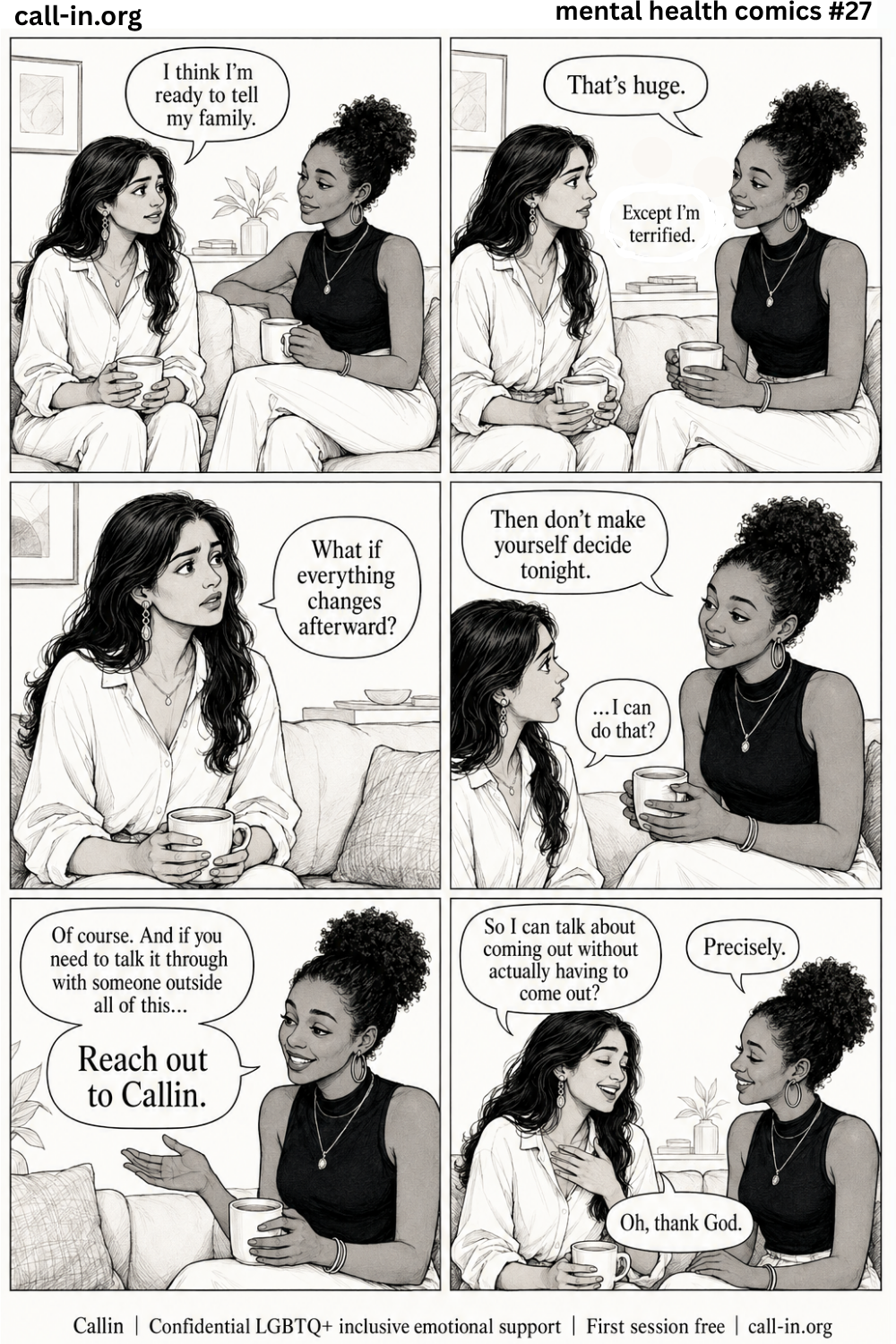
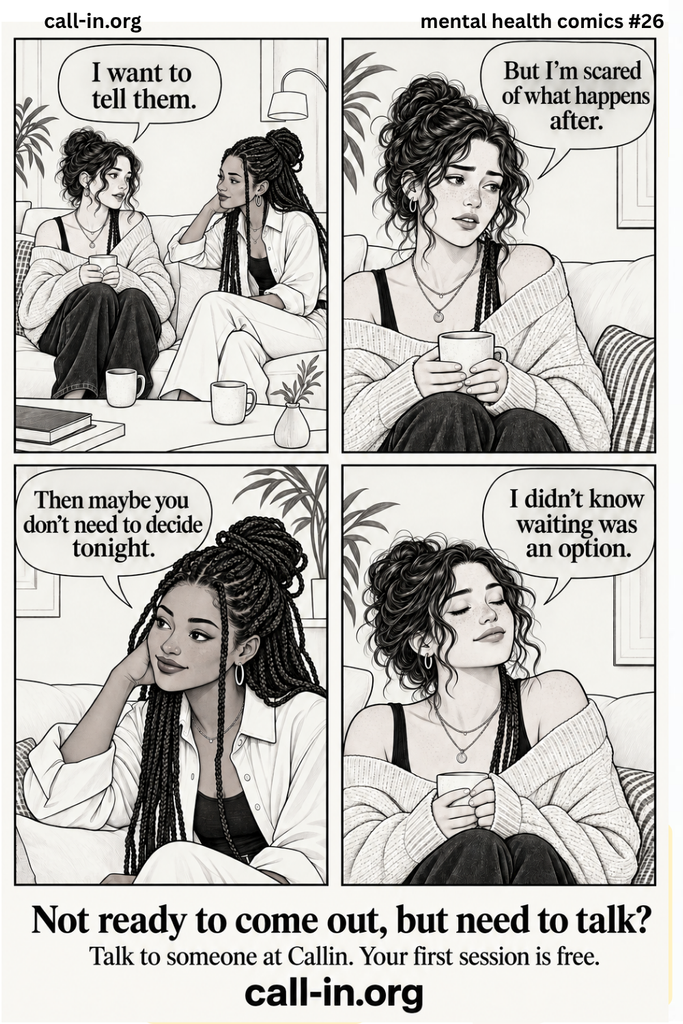
    LGBTQ+ emotional support at Callin.

    If you are LGBTQ+ and need someone to talk to, you do not have to be in crisis, out to your family, certain about your identity or ready for therapy before you are allowed support.

    (more…)
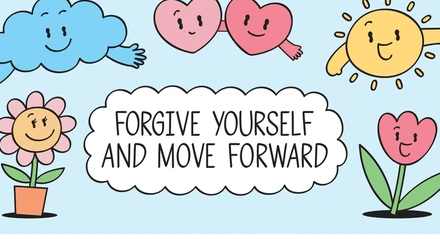
  • Why You Find It Hard to Forgive Yourself for One Small Mistake

    Why You Find It Hard to Forgive Yourself for One Small Mistake

    forgive yourself

    You are not broken, and you are not alone. If one mistake from years ago still visits you at two in the morning, while a thousand quiet successes say nothing, that is not a character flaw. It is negativity bias, an ancient survival wiring, mistaking an old social stumble for a threat it still has to solve.

    (more…)
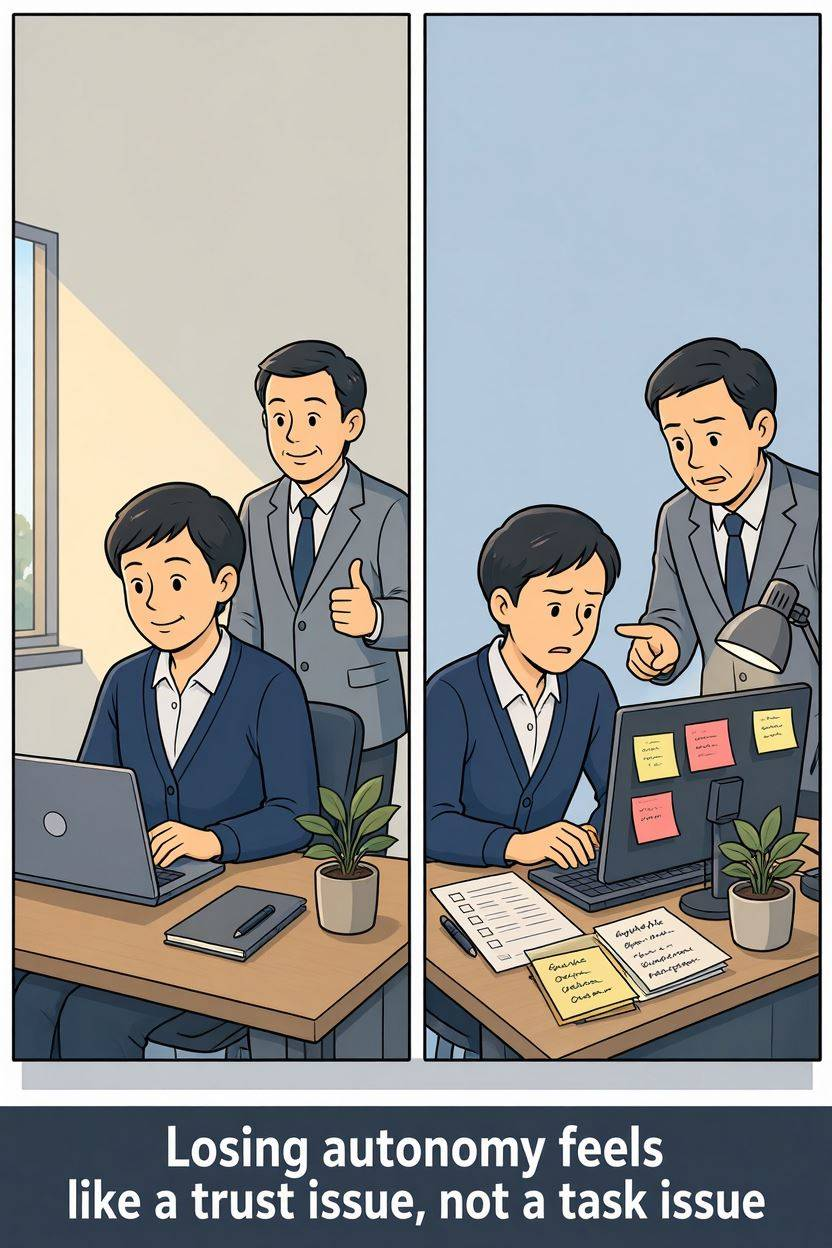
  • Why Micromanagement at Work Hurts When We Have Been Working Independently

    Why Micromanagement at Work Hurts When We Have Been Working Independently

    why micromanagement at work causes stress sometimes

    Micromanagement after autonomy is frustrating because it rarely feels like a comment on your tasks. It feels like a comment on your trustworthiness. When new leadership starts checking in more than you are used to, the sting usually has less to do with the number of check-ins and more to do with what those check-ins seem to say about how much you are believed.

    (more…)
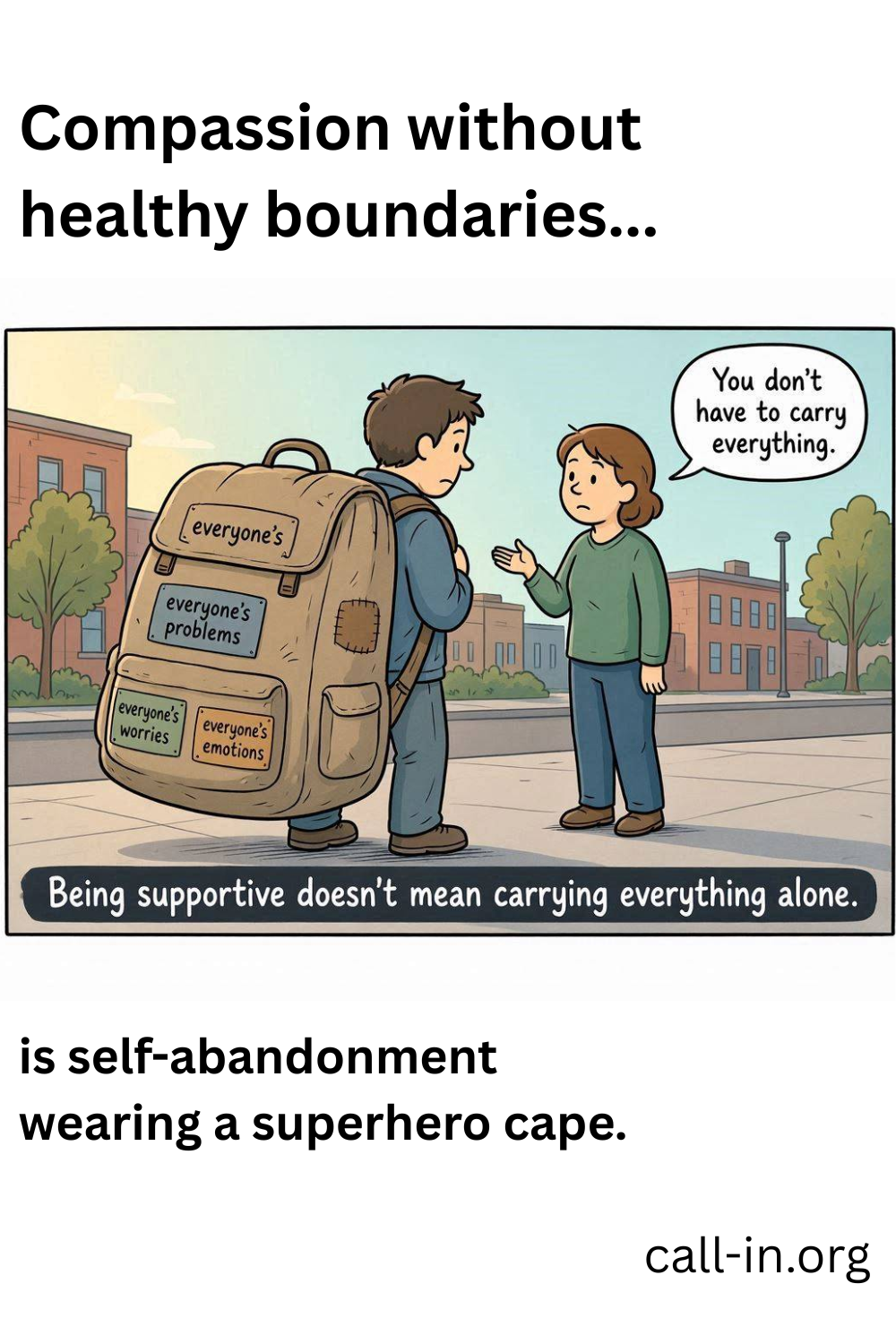
  • How Can I Set Healthy Boundaries without Seeming Like a Bad Person

    How Can I Set Healthy Boundaries without Seeming Like a Bad Person

    Setting boundaries without guilt starts with understanding that the guilt is a biological reflex, not proof you have done something wrong. Your nervous system was built to treat conflict as a threat to social survival, so it fires an alarm even over low-stakes moments like declining a work call. Once you recognize that pattern for what it is, holding a limit calmly becomes far more manageable.

    (more…)
  • I Need Someone to Talk to Instead of AI

    I Need Someone to Talk to Instead of AI

    can ai take the place of humans? looking for someone to talk to instead of talking with an AI

    Can AI replace human connection? Not really, and not because artificial intelligence isn’t impressive. It can write, diagnose, and even sound remarkably empathetic. But real human connection depends on something no model can generate: one nervous system responding to another, in real time, with real stakes. That instinct is not a flaw in your wiring. It is the whole point.

    (more…)
  • Why a Safe Space to Vent Matters for Your Wellbeing

    Why a Safe Space to Vent Matters for Your Wellbeing

    A safe space to vent is any conversation where you can say what you are actually feeling without being judged, fixed, or minimized. It matters because holding emotions in carries real costs to your body and mind, while being heard, even briefly, can ease that weight almost immediately. The harder question is usually not whether you need one. It is where to find it.

    (more…)
  • Why Can’t I Open Up Even Though I Listen to Everyone Else?

    Why Can’t I Open Up Even Though I Listen to Everyone Else?

    listen to everyone

    Quick answer: Many people who listen well to others struggle to talk about their own feelings because listening and disclosing are two different skills. If you have spent years being the dependable one, asking for support can feel unfamiliar, even risky. This is a common pattern, not a flaw, and it is one that can shift with small, consistent practice.

    If you are the person everyone calls when they need to vent, but you go quiet when someone asks how you are really doing, you are not alone. This pattern shows up constantly in people who work in caregiving roles, in the friend who always “has it together,” and in employees who quietly absorb everyone else’s stress at work.

    After years of listening to people describe this exact experience, a few things become clear: this is not about being closed off. It is about having built one skill very well while leaving another one unpracticed.

    (more…)
  • The Dangers of “I’m Fine”: The Cost of Surface-Level Interactions

    The Dangers of “I’m Fine”: The Cost of Surface-Level Interactions

    i'm fine pretend

    Surface-level interactions are the reasons why we say, “I’m fine.” So it would seem.

    You pass someone in a hallway. They ask how you are. You say fine, thanks, and ask the same back. They say fine too. Neither of you slows down. By the time you have said it, you are already three steps past each other, already thinking about the next thing.

    This exchange happens to most people dozens of times a day, and thousands of times a year. It happens at the coffee machine, in the elevator, at the start of a meeting, at the checkout counter, in a text message that opens with hey, how’s it going.

    (more…)
  • Why Do I Stop Talking About My Problems Even When People Care About Me?

    Why Do I Stop Talking About My Problems Even When People Care About Me?

    talking about my problems

    If you find yourself asking, “why do I stop talking about my problems even when people care about me?” the short answer is this: you have learned, consciously or not, that sharing carries a cost.

    It is not a sign of ingratitude, weakness, or emotional dysfunction. It is a deeply rational response to experiences that taught you that vulnerability is not always free. The good news is that understanding why this happens is the first step to finding better, more sustainable ways to feel genuinely heard.

    (more…)
  • What To Do When You Need To Vent, But Not Therapy

    What To Do When You Need To Vent, But Not Therapy

    emotional support
    emotional support

    When you need to vent but do not therapy? You can seek non-clinical emotional support. This includes peer support groups, warmlines, and structured listening services.

    These spaces offer dedicated time to process everyday stress and identity shifts without clinical labels. They rebuild lost informal support networks, providing a confidential environment for active listening and reflection. Using these platforms helps metabolize daily pressure effectively before it escalates into a crisis.

    (more…)
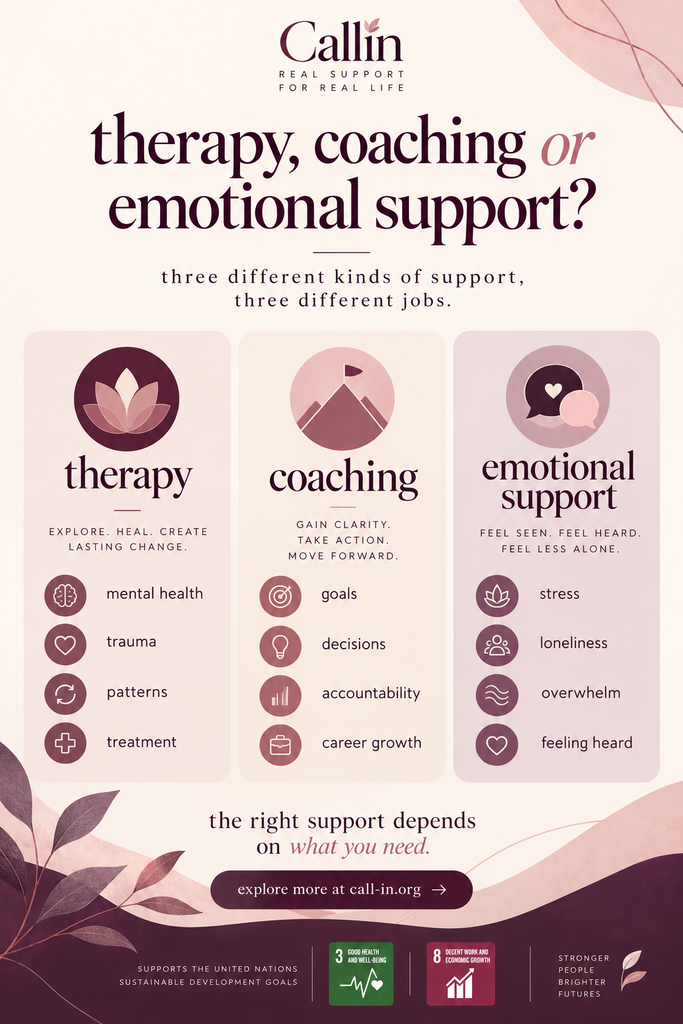
  • Non-Clinical Mental Health Support vs. Therapy: Which One?

    Non-Clinical Mental Health Support vs. Therapy: Which One?

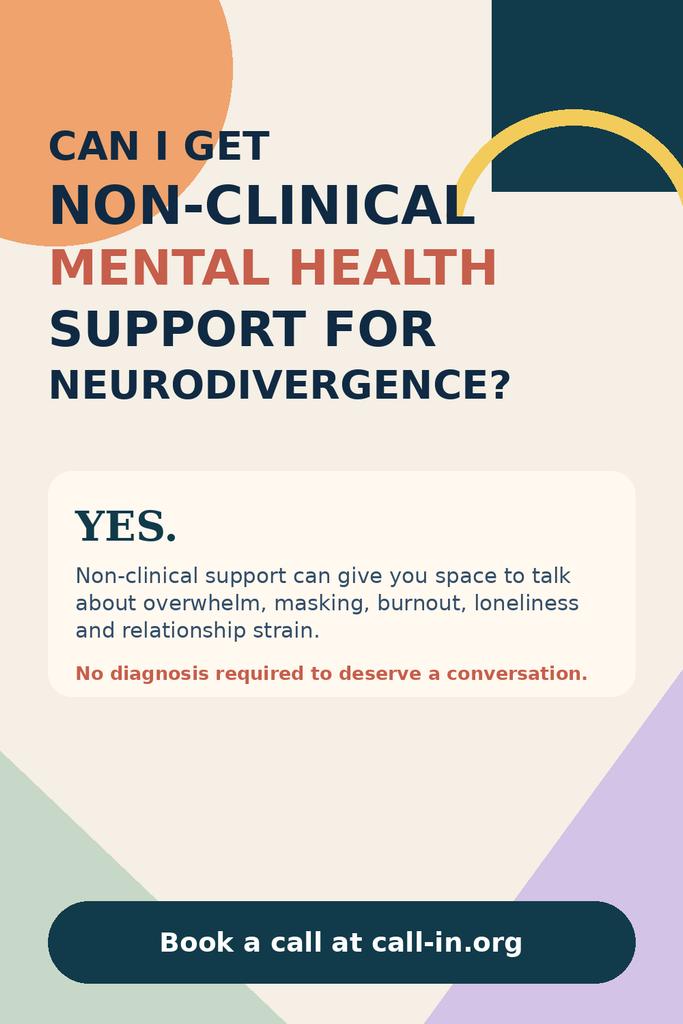
    get non-clinical mental health support at callin support today

    If you need help processing everyday stress, loneliness, or overthinking, non-clinical emotional support is usually enough. If you are dealing with a diagnosable condition, trauma, or patterns that are affecting your daily functioning, therapy is the better fit. This guide breaks down exactly how to tell the difference.

    (more…)
  • The Language of Connection: How Therapy Speak Changed Modern Relationships

    The Language of Connection: How Therapy Speak Changed Modern Relationships

    Key Takeaways

    • Therapy speak, the use of clinical and psychological terms in everyday conversation, has grown rapidly since the 2010s, driven by social media, the mainstreaming of therapy, and rising mental health awareness.
    • This shift has real benefits. It has given people vocabulary for experiences they once struggled to name, and it has helped normalise conversations about mental health.
    • The same language can also make relationships feel transactional when terms built for clinical or workplace contexts, such as emotional labour or capacity, are applied to friendships, families, and romantic partnerships.
    • Constant self-analysis does not always lead to better relationships. Psychological research on rumination shows that overthinking can increase distress without producing useful insight.
    • Many of the people who feel unseen in their relationships are not missing a framework. They are missing what researchers call witnessing: the experience of being heard without being diagnosed, optimised, or fixed.
    • Healthy communication usually means knowing when a clinical concept genuinely applies, and when ordinary patience, curiosity, and listening would serve the relationship better.
    (more…)
  • Feeling Overwhelmed but You Don’t Need Therapy? Helpful Tips

    Feeling Overwhelmed but You Don’t Need Therapy? Helpful Tips

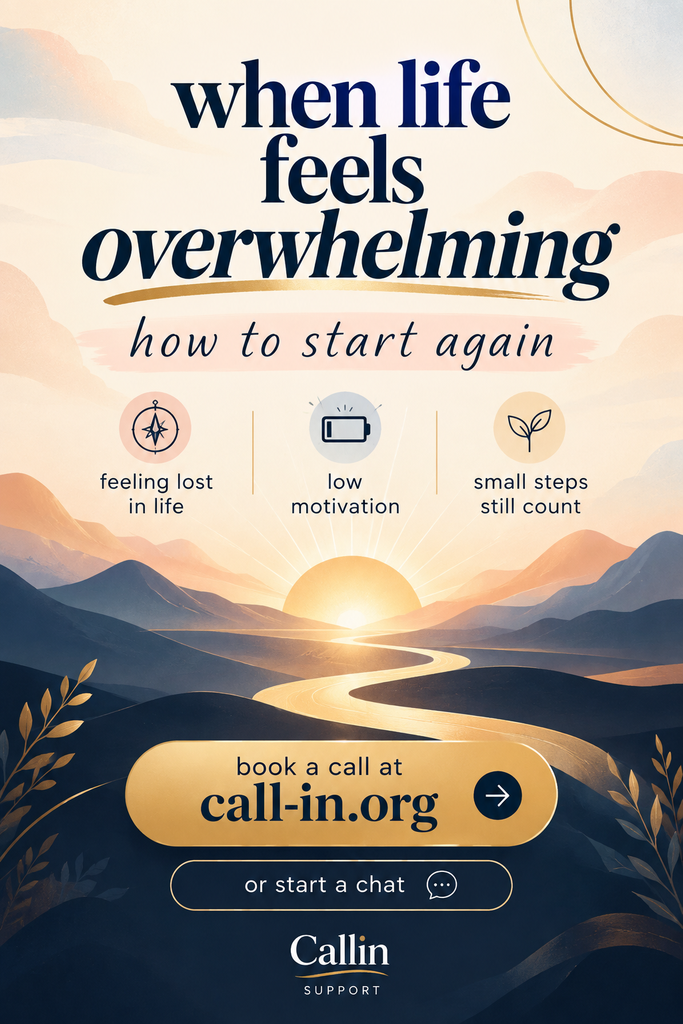
    Really, what do you when you’re feeling overwhelmed, but you know therapy is not the answer? We’ve all been there at one point or the other in our lives.

    Those moments you tell people you’re fine. But deep down, you’re not. You go through the motions – go to work, answer the emails, make dinner, show up for the people who need you.

    From the outside, everything looks normal. But underneath it, you’re running on fumes. You’re not in crisis. You’re not depressed, at least not in any way you’d put a name to. You just feel heavier than you used to, like you’re carrying something you can’t quite put down.

    (more…)
  • 9 Helpful & Easy Steps to Overcoming Professional Burnout

    9 Helpful & Easy Steps to Overcoming Professional Burnout

    professional burnout
    professional burnout

    Professional burnout has reached epidemic proportions in 2026, affecting more than half of the American workforce. If you’re reading this while feeling emotionally drained, cynical about your work, and questioning whether you can continue at this pace, you’re not alone, and more importantly, recovery is possible.

    This comprehensive guide will walk you through understanding professional burnout, recognizing its warning signs, and implementing a proven recovery framework that works even when you can’t take extended time off.

    (more…)