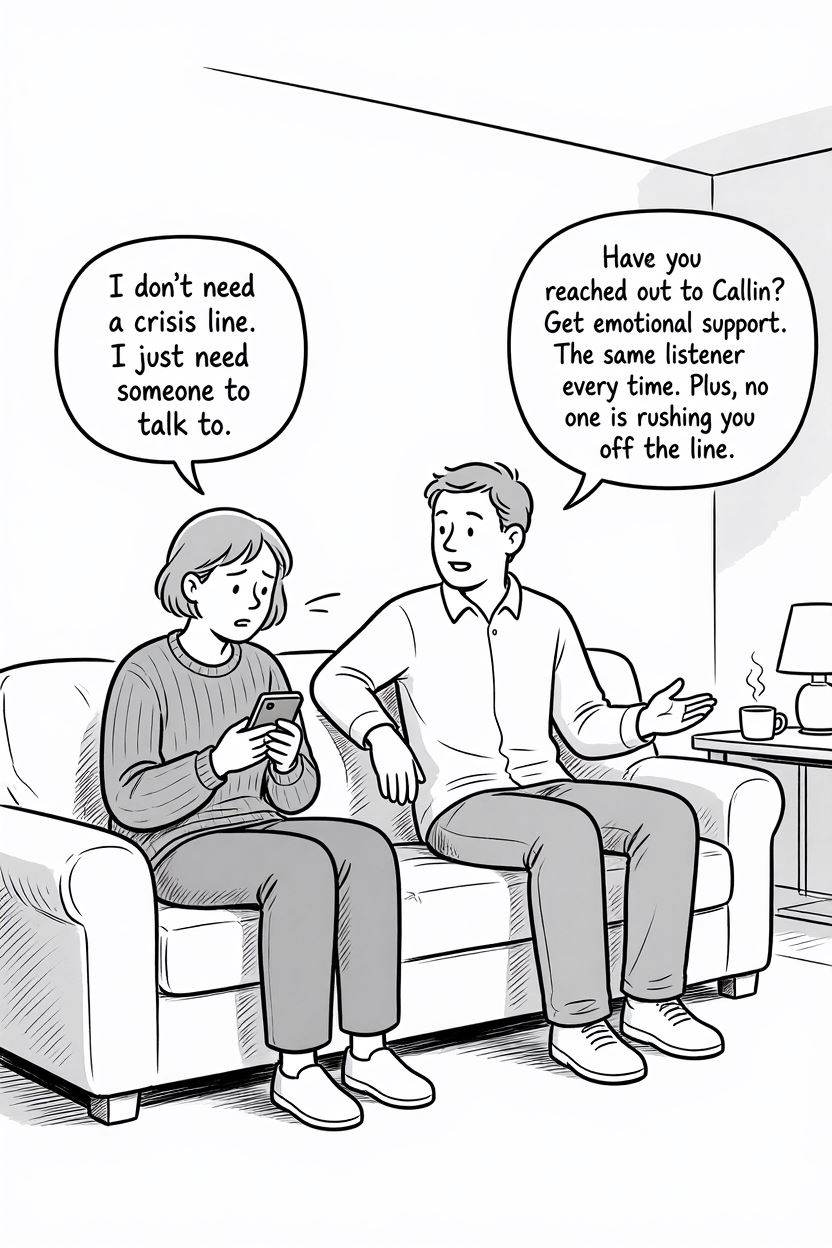
If you need someone to talk to besides Samaritans, your options include Shout’s text service, SANEline, warmlines, community peer groups, and non-clinical listening services such as Callin, which pairs you with the same trained listener for a scheduled call. But if you’re in crisis or thinking about suicide right now, call Samaritans free on 116 123 first. For everyday stress, loneliness, or overthinking, the alternatives below are worth exploring too.
Key Takeaways
- If you are in crisis, Samaritans, Shout, or 999 still come first. Everything else in this guide is for the space around and after that.
- Samaritans is built for on-demand crisis access, which is exactly why it connects you with whichever volunteer is free rather than the same person each time.
- Warmlines, peer support platforms, and services like Callin exist for the everyday weight that does not need emergency intervention but still deserves a real conversation.
- A scheduled call with the same listener changes the shape of the conversation, not just the comfort of it.
- The right choice usually depends on whether you need urgent safety support, ongoing continuity, or a one-off place to think out loud.
First, If You’re in Crisis Right Now
Before anything else, if you are having thoughts of suicide or your safety feels at risk in this moment, please reach out to a crisis service rather than continuing to search for alternatives.
Samaritans is free, confidential, and answers calls 24 hours a day, 365 days a year on 116 123, and you do not need to be suicidal to call them. Shout offers the same round-the-clock support by text at 85258, which can feel easier if speaking out loud is hard right now.
If your life is in immediate danger, call 999 or go to your nearest emergency department.
None of the options described further down this page are built to replace that kind of support.
They exist for the space around a crisis, and for the much larger, much more common category of everyday emotional weight that does not require emergency intervention but still deserves somewhere to go.
Why “Something Other Than Samaritans” Is Such a Common Search
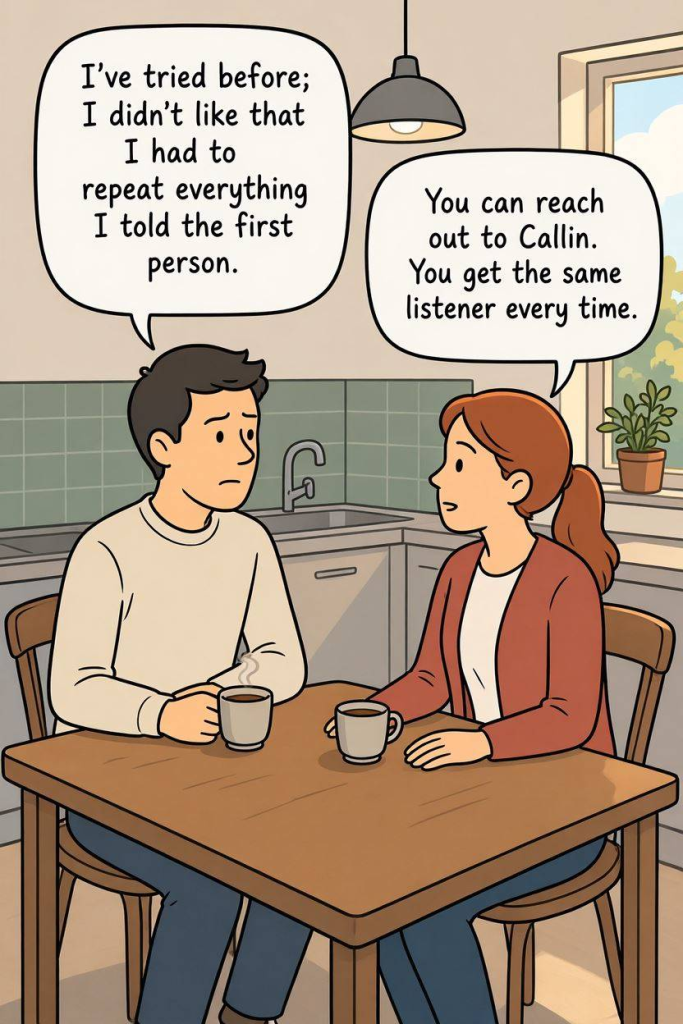
People land on this question for reasons that have very little to do with dissatisfaction and a lot to do with what they actually need.
Some have called Samaritans before during a hard moment and found it genuinely helpful, but now want a calmer, scheduled conversation rather than reaching out only when things spike.
Others were never in crisis at all. They are dealing with the kind of ordinary, grinding stress that busyness culture treats as normal, and they simply want a place to put it down.
A lot of this comes down to modern isolation showing up in small, easy-to-miss ways. Group chats can leave people feeling lonelier, not less alone, because a reaction emoji is not the same as being heard. For many people, texting itself has become emotionally exhausting rather than restful, which pushes them toward the idea of an actual voice on the other end of a scheduled call.
What Samaritans Does Well, and Where Its Model Has Natural Limits
Samaritans has answered well over 100 million calls since it began, and it remains one of the most trusted crisis resources in the UK and Ireland precisely because of how it is designed.
You call whenever you need to, at any hour, and you are connected to whichever trained volunteer is available at one of its branches. That structure is a strength, not a flaw. It is what makes the service reliably available at 3am on a Tuesday and during a family emergency on a holiday weekend.
That same design means Samaritans is not built around continuity with one specific person. It is an on-demand safety net, so the volunteer you speak to depends on who is staffing the phones when you call, and calls are typically shorter, present-moment conversations rather than an ongoing relationship.
For crisis support, that is exactly the right trade-off. For someone who wants a calmer, planned conversation with a familiar voice each time, it points toward a different kind of service instead.
Other Places to Reach Out for Support
Crisis and Text-Based Alternatives
If talking out loud feels difficult, Shout’s text service at 85258 offers the same free, 24/7, UK-wide crisis support as Samaritans, just over text instead of a phone call. SANEline (0300 304 7000, evenings) and the National Suicide Prevention Helpline UK (0800 587 0800, evenings) are two more free options aimed specifically at people in distress or having thoughts of suicide.
These services share the same on-demand, whoever-is-available structure as Samaritans, for the same reason: they need to be there the moment someone reaches out.
Warmlines and Peer Support Lines
A warmline sits one step back from a crisis line. It is peer-staffed and built for the heaviness of daily life, the kind that does not need emergency intervention but still deserves attention. Warmlines share Samaritans’ free, on-demand structure, so you still will not usually get the same volunteer each time, but the conversations tend to be less crisis-focused and more about being heard through an ordinary hard week.
Non-Clinical Listening Services Like Callin
This is where the model changes shape. Non-clinical listening services such as Callin work on a booked, scheduled basis rather than on-demand, which is what makes a same-listener setup possible in the first place. You connect with a listening service for a call you both showed up ready for, instead of catching a volunteer between other callers. Neither format is better in the abstract. They are simply built for different moments, and online emotional support peer listeners exist specifically for the moment when you want a real conversation on your own schedule.
Therapy and Counseling
Therapy is the right call when you are dealing with a diagnosable condition, unresolved trauma, or a pattern that has lasted months and is affecting how you function day to day. It involves assessment, structure, and a treatment plan aimed at change over time, which is different from what any listening line, warmline, or peer platform is designed to offer. Plenty of people use both at once, leaning on therapy for the clinical work and a non-clinical option for the ordinary weeks in between.
Community Groups and Shared-Experience Spaces
Shared-experience groups, whether local or online, remove some of the explaining that other conversations require. Talking to someone who has actually lived through job loss, a breakup, or a specific health condition can feel different from talking to someone who is simply sympathetic. These spaces work well alongside any of the other options on this list rather than instead of them.
AI Chat Tools
AI chat tools have become a genuinely common first stop for people who want to think out loud at 2am with zero friction. Whether AI can actually replace human connection is a fair question, and the honest answer is that it can be a useful pressure valve for organizing your thoughts, but it cannot offer the specific thing a trained human listener offers: someone who is actually affected by what you say and who brings real judgment, not a prediction, to how they respond.
What a Scheduled, Same-Listener Model Actually Changes
The value of talking to the same listener each time is not just familiarity for its own sake. Trust tends to build through repetition. The first call with anyone, human or otherwise, often gets spent on context you would rather skip. By the third or fourth scheduled session with the same person, you can start further in, because they already know the shape of what you are carrying.
Scheduling changes the emotional tone of the call too. Nobody on either end is squeezing the conversation between other callers or worrying about a queue. That does not make an on-demand crisis line worse at its job. It makes a scheduled, non-clinical listening call better suited to a different job: the ongoing, unhurried kind of conversation that everyday stress and loneliness actually need.
The Everyday Reasons People End Up Needing Someone to Talk To
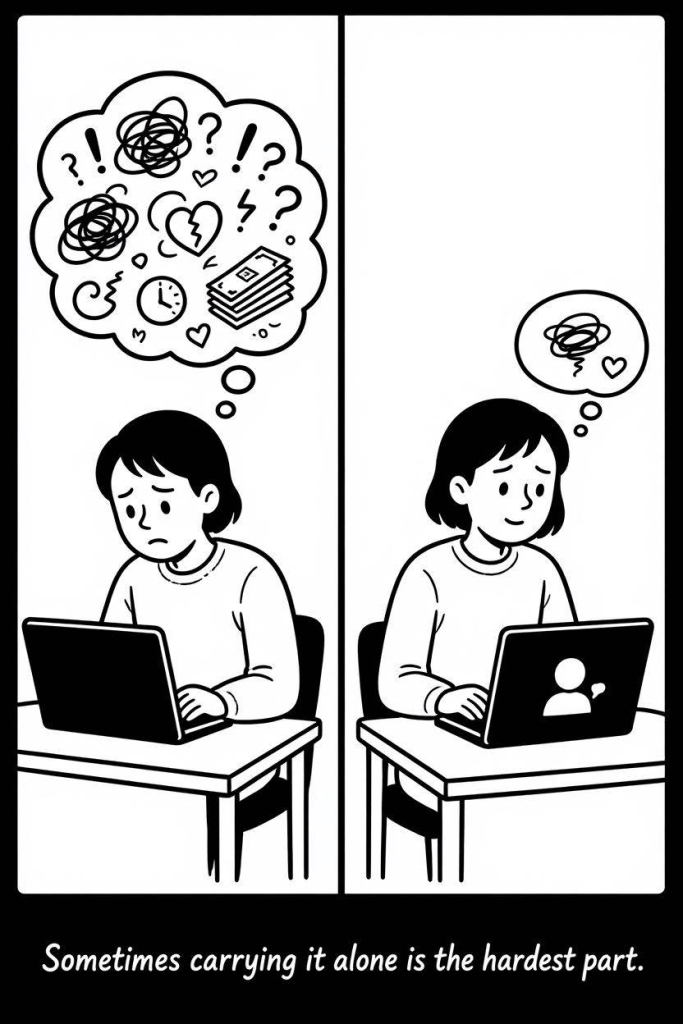
Loneliness researchers, including the U.S. Surgeon General’s 2023 advisory on social connection, describe chronic isolation as carrying health risks on par with smoking, which is a strong signal that the ache behind “I need someone to talk to” is not an overreaction. A lot of that ache has very specific, modern shapes.
Remote work has its own particular flavor of loneliness, where you can be in back-to-back video calls all day and still not have a single real conversation. Moving to a new city drains people emotionally in a way that catches many by surprise, because rebuilding a support system takes far longer than unpacking boxes does. Coming out can be exhausting in ways that have nothing to do with regret, simply because managing other people’s reactions is its own form of labor.
Then there is the quieter kind of struggle: feeling emotionally numb even when nothing is technically wrong, feeling guilty for resting when you are not working, or struggling to forgive yourself for one small mistake long after everyone else has moved on. None of these need a diagnosis to be worth talking about, and none of them require you to be in crisis before you are allowed to reach out.
How to Decide Which Option Fits Right Now
Start with safety. If there is any risk to your life, a crisis line or emergency services come first, every time, no exceptions. If safety is not the concern, the next useful question is what you actually want from the conversation. There is a real difference between venting and trauma dumping, and knowing which one you need helps you pick the right kind of listener and the right length of conversation.
It also helps to notice whether you mostly want to be heard or mostly want direction. People often reach for advice when what you actually needed was just to be heard, and a non-judgmental listener is trained to hold space first rather than jump to solutions. If part of what is weighing on you is guilt about reaching out at all, learning to set boundaries without feeling like a bad person is worth reading on its own, because that guilt is often the actual barrier, not the conversation itself.
Finally, think about whether this is a one-off need or something that shows up regularly. A single hard week might just need one good conversation. A recurring pattern, especially one tied to why digital boundaries are so hard to hold onto or why productivity systems end up fueling anxiety instead of easing it, often benefits from a standing, scheduled space rather than a one-time call.
Where Callin Fits Into This
Callin was built specifically for the non-crisis side of this list: a scheduled, confidential call with a trained peer listener, with the same listener each time so the conversation does not start from zero every session. It is worldwide, has no waitlists, and the first 20-minute session is free, which makes it easy to see whether the format works for you before committing to anything. Callin does not offer clinical treatment or crisis intervention, and it is not a substitute for Samaritans, Shout, or emergency services when safety is on the line. It exists for the stress, loneliness, and overthinking that make up most of what people are actually carrying on an average week.
Frequently Asked Questions
Is Callin a replacement for Samaritans or another crisis line?
No. Callin is a non-clinical, scheduled listening service for everyday stress, loneliness, and overthinking. If you are in crisis or having thoughts of suicide, contact Samaritans on 116 123, text Shout at 85258, or call 999 for immediate danger.
What is the difference between a warmline and a crisis line?
A crisis line, like Samaritans or Shout, is built for emergencies and immediate safety concerns and is staffed so someone is always available right away. A warmline is for everyday emotional support that does not require urgent intervention, though it is often still on-demand rather than scheduled.
Can I use a non-clinical listening service if I’m already in therapy?
Yes. Many people use a non-clinical option between therapy sessions to process daily stress without waiting for their next scheduled appointment. It complements clinical treatment rather than competing with it.
Why doesn’t a crisis line connect me with the same volunteer each time?
Crisis lines are designed for on-demand access at any hour, so they connect you with whoever is available at that moment rather than booking you in advance. That trade-off is what allows them to be there the instant someone needs help, which matters more than continuity in a crisis.
Is it normal to want ongoing conversations instead of one-off crisis calls?
Yes. Wanting a calmer, planned conversation with a familiar listener is a completely reasonable preference, especially for stress and loneliness that build up over time rather than spike suddenly. That preference is exactly what scheduled, non-clinical listening services were built to meet.
How do I know if I need a peer listener or a licensed therapist?
If you are dealing with a diagnosable condition, unresolved trauma, or a pattern that has lasted months and affects your daily functioning, a licensed therapist is the right fit. If you mainly need to process everyday stress, loneliness, or overthinking without a clinical framework, a peer listener may be enough.
What if I’m not sure my problem is “big enough” to reach out about?
That uncertainty does not disqualify you from support. Trained listeners on warmlines and non-clinical platforms hear “this might sound small, but” constantly, and the threshold for deserving a conversation is lower than most people assume.
There is no single right answer for everyone searching for something other than Samaritans, and that is a good thing. Whether you end up on a crisis line, a warmline, in a therapist’s office, or on a scheduled call with a peer listener, reaching out at all is the part that actually takes courage. The rest is just finding the format that fits what you are carrying this week.