If you are looking for help for anxiety, the honest answer is that there is no single door to walk through. Options range from your doctor/GP and talking therapy to medication, self-help tools, and non-clinical support like active listening. The right starting point usually depends on how much anxiety is interfering with your daily life, not on finding some perfect, one-size-fits-all fix.
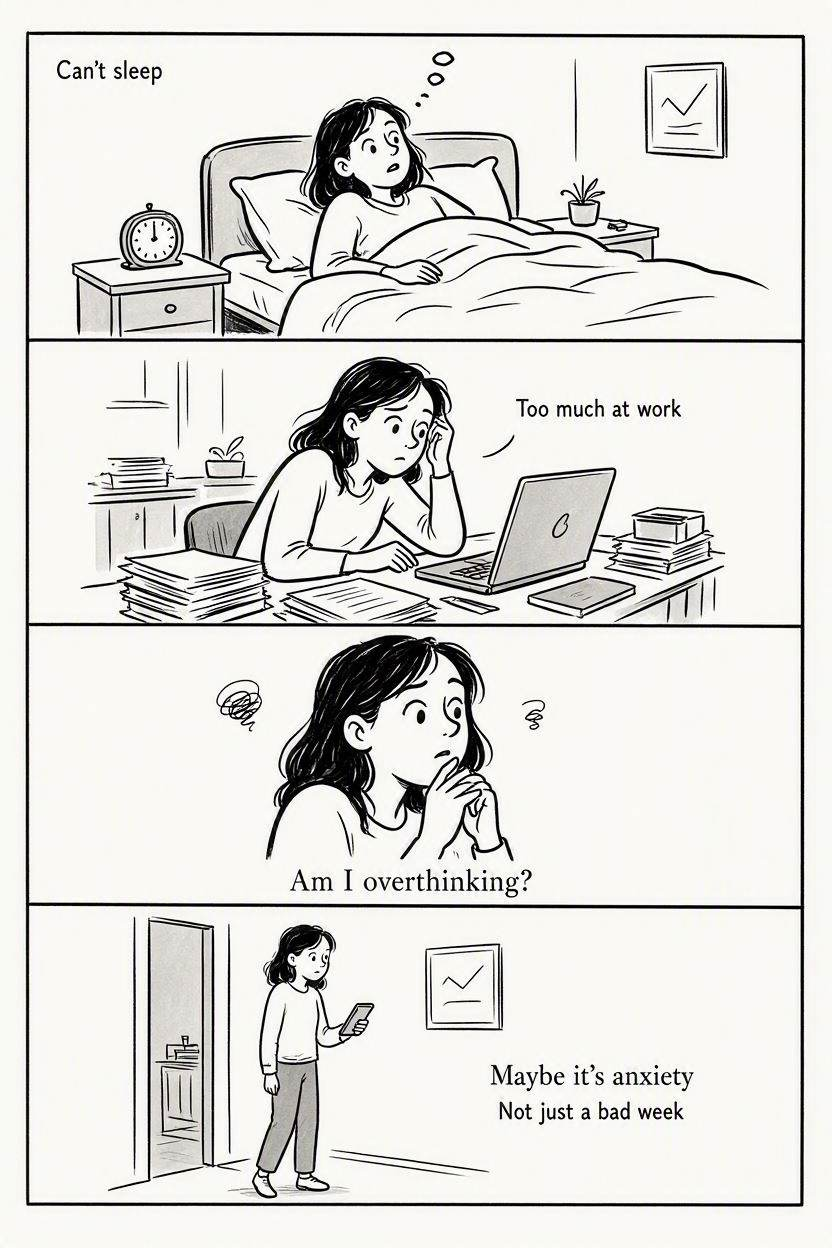
I found out how many doors there actually were on a Tuesday night, lying in bed with my phone six inches from my face, reading a stranger’s thread about “signs your anxiety is actually a disorder.”
I did not have a diagnosis. I had a racing heart, a group chat I had left on read for three days, and a search bar full of half-typed questions I was too embarrassed to finish. Contrary to what most of us have been misled to believe, needing help is not a personal failing. It is closer to a smoke alarm doing its job.
Key Takeaways
- Anxiety exists on a spectrum, and everyday stress is not automatically an anxiety disorder, though both deserve attention.
- Your GP or family doctor is usually the fastest and most direct route into further support, including free NHS talking therapies in the UK.
- Therapy, particularly cognitive behavioral therapy, has the strongest evidence base, but it is not the only option and not always immediately accessible.
- Non-clinical support, like non-judgmental active listening, can help you process everyday anxiety and is a useful complement to, not a replacement for, clinical care.
- If anxiety ever comes with thoughts of harming yourself, that is an emergency, not a self-help project, and deserves an immediate response.
What Anxiety Actually Is, and Why So Many People Are Searching for Help
Anxiety, at its most basic, is your body’s alarm system going off in anticipation of a threat. Stress is a response to something happening right now, a deadline, an argument, a near miss in traffic.
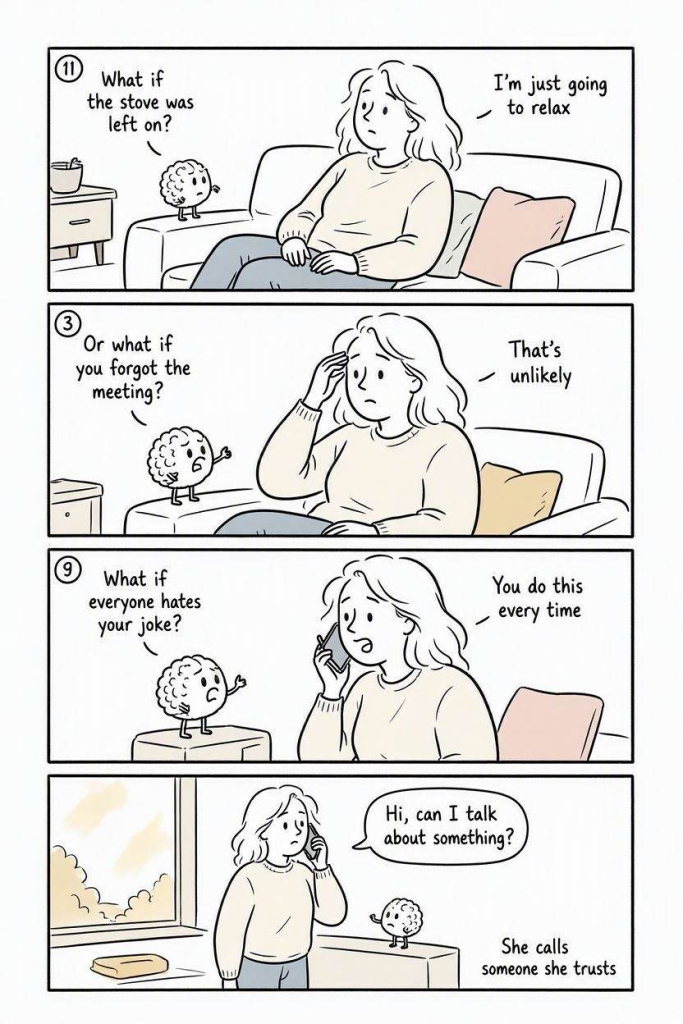
Anxiety is what happens when that alarm keeps ringing even after the threat has passed, or rings for things that have not happened yet and might never happen.
The scale of this is bigger than most people assume. National surveys in the United States estimate that roughly one in five adults experiences a diagnosable anxiety disorder in any given year, and close to a third will meet the criteria at some point in their lives, according to data compiled by the National Institute of Mental Health.
Globally, the World Health Organization estimates that anxiety disorders affect several hundred million people, making them the most common mental health condition on the planet. Women are consistently affected at higher rates than men across nearly every study on the subject.
Here is the part that rarely makes it into the headline statistic: anxiety is not one experience. Generalized anxiety disorder looks like persistent, hard-to-control worry about ordinary things.
Panic disorder shows up as sudden, physical surges of fear. Social anxiety narrows a person’s world around the fear of being watched or judged. Someone Googling “help for anxiety” at 2 a.m. could be describing any one of these, or none of them, and simply be a person under more pressure than they know how to name.
Why Asking for Help Still Feels So Hard
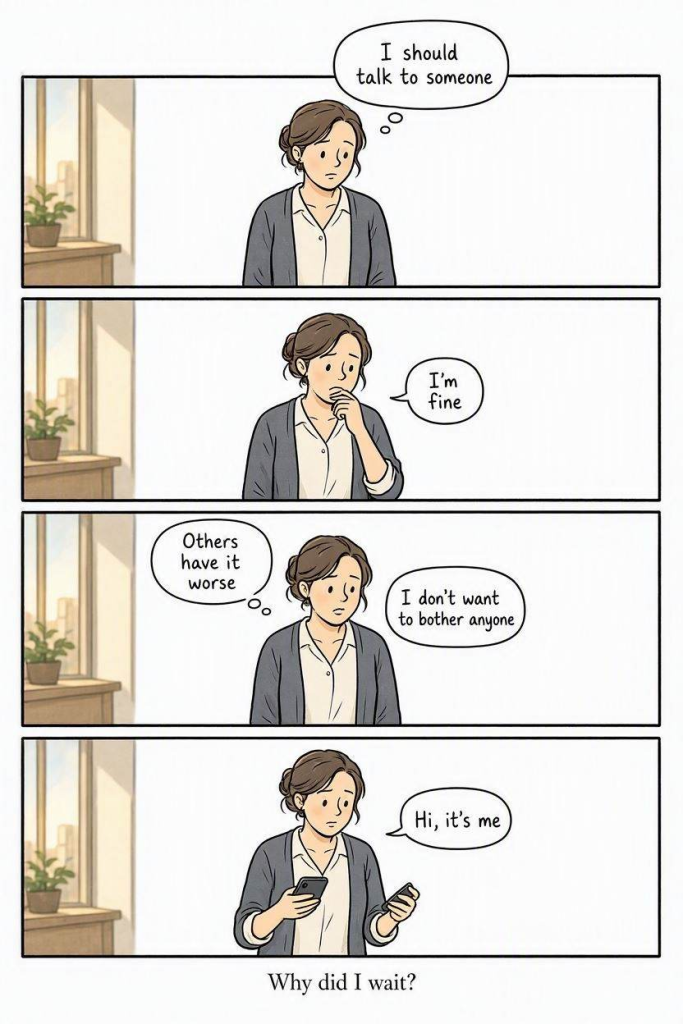
Who decided that quietly struggling was a virtue? Somewhere along the way, a lot of us absorbed the idea that needing support is evidence of weakness rather than evidence of being human.
Add in genuine barriers, the cost of private therapy, waitlists for NHS talking therapies, the fear of being dismissed or over-pathologized, and it becomes clear why so many people spend months circling the idea of getting help before they act on it.
There is also a newer, stranger barrier: an internet that hands out diagnoses faster than any clinician ever could. Self-diagnosis culture is not inherently dishonest.
Recognizing your own patterns in a TikTok video or a symptom checklist can be the first spark of self-awareness that leads someone toward real support. But it can also become a place to stop, a label collected instead of a conversation started. Curiosity about your own mind is healthy. Mistaking a fifteen-second video for a full clinical picture is where things get shaky.
Discipline in seeking care is, in a strange way, the distance between knowing something is wrong and doing something about it. That gap is where most people live for far too long.
Where to Actually Find Help for Anxiety
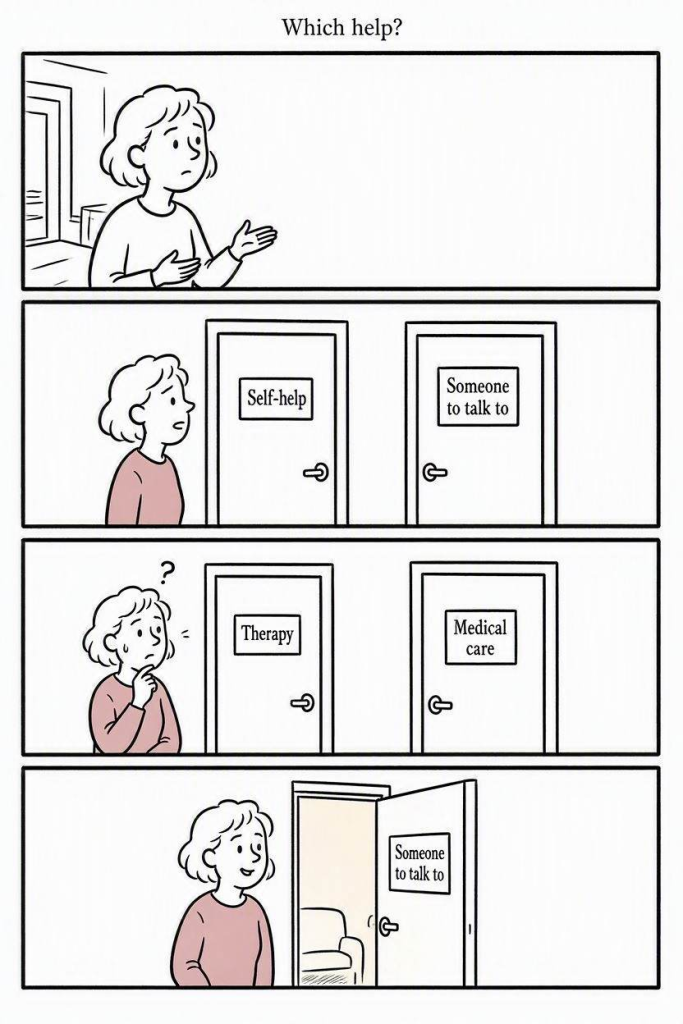
There is no hierarchy here, no single “correct” first step. What follows are the options that tend to help, in roughly the order most people encounter them.
Your GP is usually the fastest door into the system. A family doctor can rule out physical causes of anxiety symptoms, such as thyroid issues or medication side effects, and refer you into further care.
In the UK, this includes free NHS talking therapies, which do not always require a formal diagnosis to access. It is a five- to ten-minute conversation that tends to feel far bigger in imagination than it does in reality.
Talking therapy has the strongest research base of any single approach. Cognitive behavioral therapy, in particular, has been studied extensively and consistently shows meaningful improvement in anxiety symptoms by helping people identify and gently challenge the thought patterns that keep the alarm ringing.
Other approaches, including acceptance and commitment therapy and exposure-based methods, are well suited to specific anxiety presentations like phobias or panic disorder. Therapy is not fast, and it is not always immediately available, but its evidence base is difficult to argue with.
Medication can lower the volume without fixing the source. For some people, particularly those with moderate to severe symptoms, medication prescribed by a doctor or psychiatrist reduces the physical intensity of anxiety enough to make other work, therapy, lifestyle change, daily functioning, possible again.
It is a tool, not a verdict on your character, and it works best alongside other support rather than instead of it.
Self-help tools work better as scaffolding than as the whole structure. Breathing techniques, grounding exercises, regular movement, consistent sleep, and reducing caffeine can measurably calm an overactive nervous system.
Research from bodies like the American Psychological Association consistently links regular physical activity and sleep hygiene to lower anxiety symptoms. These tools rarely resolve a clinical anxiety disorder on their own, but they make everything else more manageable.
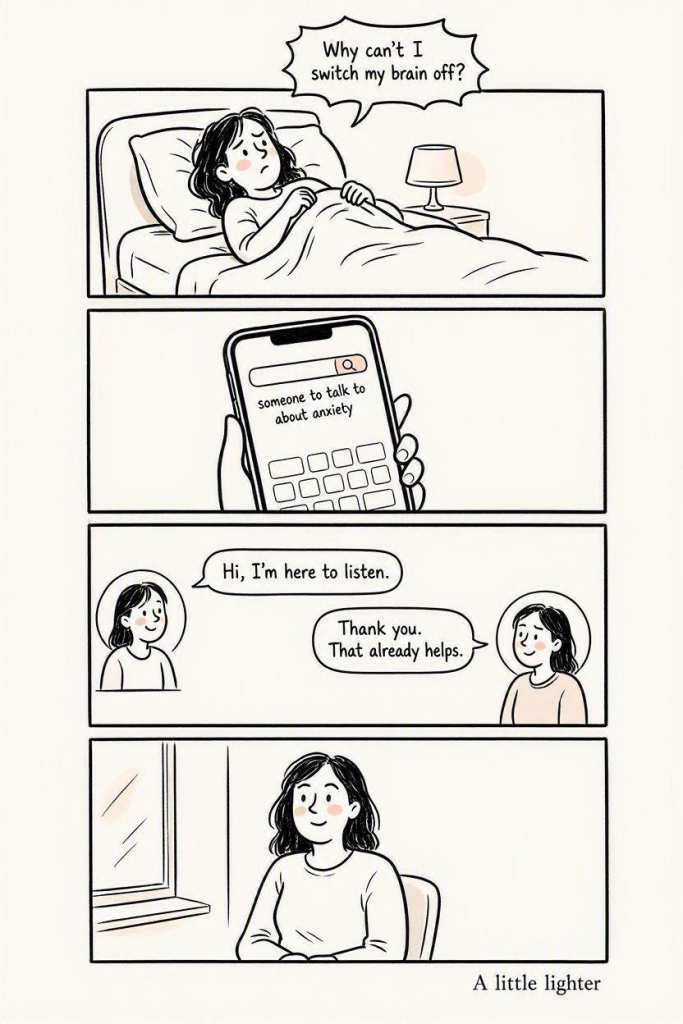
Non-clinical, peer-based support fills a gap that therapy alone often cannot reach. Not every anxious moment needs a clinician. Sometimes what a person needs is simply someone to talk to right now who will listen without an agenda, a diagnosis, or a bill attached to it.
A growing body of research, including a large systematic review and meta-analysis published in Psychiatric Services, found that peer support interventions produce a modest but measurable reduction in anxiety symptoms alongside improvements in personal recovery.
It will not replace therapy, and reputable services are candid about that, but it can be a meaningful and immediate form of relief, particularly for everyday stress, loneliness, or overthinking that has not risen to the level of clinical treatment.
Helplines and crisis services matter when anxiety turns into something more urgent. If anxiety ever arrives with thoughts of self-harm, or you feel unsafe, that is not a moment for a breathing app.
In the UK, Samaritans can be reached free, any time, at 116 123. In the US, the 988 Suicide and Crisis Lifeline is available by call or text. These services exist for exactly this reason, and using them is not an overreaction.
How to Tell Which Option Fits Where You Are
Is this really generalized anxiety, or are you simply exhausted and overcommitted? Only you can answer that, and even then, not always alone.
A useful, non-clinical way to think about it is impairment: does the worry interfere mildly with your day, moderately, or does it stop you from doing things you would otherwise do, like leaving the house, sleeping, or maintaining relationships.
Research using the Sheehan Disability Scale suggests impairment among people with anxiety disorders is fairly evenly spread across mild, moderate, and serious categories, which is a useful reminder that there is no single “real anxiety” threshold you need to cross before your experience counts.
If your worry is mild and situational, self-help tools and a non-judgmental space to talk things through may be exactly enough.
If it is moderate and recurring, a conversation with your GP is a reasonable next step, alongside continuing to lean on people or services that let you vent without being handed unsolicited advice. If it is serious, chronic, or affecting your safety, professional and potentially clinical care is not optional, it is the point.
A Word on the Internet’s Relationship With Anxiety
We are not helpless in the face of this, even when it feels that way at 2 a.m. with a search bar open. The instinct to look something up, to compare, to find language for what you are feeling, is not the enemy. What matters is what you do with what you find.
A quiz or an article can be a useful mirror, never the whole picture. If it helps to see where you stand, a short, low-stakes quiz can be a gentler starting point than a clinical checklist, provided it is treated as a conversation starter rather than a diagnosis.
Where Callin Fits Into This
For some people, the missing piece is not more information, it is a confidential space to say the anxious thought out loud before deciding what to do about it.
That is where Callin exists, as a non-clinical platform where trained peer listeners offer confidential, judgment-free emotional support for everyday stress, overthinking, and the kind of anxiety that builds up between one therapy appointment and the next.
It is not a replacement for a GP, a therapist, or a psychiatrist, and it was never meant to be. It is simply one more door, for the moments when talking to a friend feels like too much to ask and a clinical waitlist feels too far away.
Anxiety can make the world feel very small and very loud at the same time. It rarely stays that way once someone actually reaches out, whether that is to a doctor, a therapist, a friend, or a stranger trained to listen.
The version of you that got through every hard night before this one is still in there, and asking for help is not the end of that story. It is usually where it starts to change.
Frequently Asked Questions
What is the difference between everyday stress and an anxiety disorder?
Stress is a reaction to a specific, identifiable pressure, and it tends to ease once that pressure lifts. An anxiety disorder involves persistent, often disproportionate worry that continues even when nothing immediate is wrong, typically for six months or more, and interferes with daily functioning. If your worry outlasts its trigger by a wide margin, it may be worth discussing with a doctor.
How do I know if I need therapy for anxiety?
A reasonable signal is impairment rather than intensity alone. If anxiety is affecting your sleep, work, relationships, or ability to do ordinary tasks, or if self-help strategies have not moved the needle after a few weeks, a conversation with your GP or a therapist is a sensible next step. You do not need a formal diagnosis to book that first appointment.
Can I get help for anxiety without seeing a doctor?
Yes, for many people, especially with mild or situational anxiety. Self-help techniques, lifestyle changes, and non-clinical emotional support can meaningfully ease everyday anxiety. If symptoms are moderate to severe or persistent, involving a doctor or therapist alongside these tools tends to produce better outcomes.
Is non-clinical emotional support the same as therapy?
No, and reputable non-clinical services are upfront about that distinction. Therapy is delivered by a licensed clinician using evidence-based methods to treat diagnosable conditions. Non-clinical support, like active listening from a trained peer, offers a confidential space to talk and process feelings, and works well as a complement to clinical care rather than a substitute for it.
What should I do if my anxiety feels like an emergency?
If anxiety comes with thoughts of self-harm or you feel unsafe, treat it as urgent. In the UK, Samaritans is available free, 24 hours a day, at 116 123. In the US, call or text 988 for the Suicide and Crisis Lifeline. If there is immediate danger, contact emergency services.
Does peer support actually help with anxiety, or is it just talking?
Research suggests it does more than pass the time. A systematic review and meta-analysis of randomized controlled trials, published in Psychiatric Services, found peer support produced a modest but statistically meaningful reduction in anxiety symptoms alongside gains in personal recovery. It is not a substitute for clinical treatment, but it is a genuine, evidence-informed source of relief for everyday anxiety.
How much does help for anxiety typically cost?
Costs vary widely. NHS talking therapies in the UK are free, though waitlists exist. Private therapy generally ranges from moderate to significant hourly costs depending on location and specialization. Lower-cost alternatives, including community programs, sliding-scale clinics, and non-clinical peer support, exist for people who need support before or alongside formal treatment.