
Quick answer: Many people who listen well to others struggle to talk about their own feelings because listening and disclosing are two different skills. If you have spent years being the dependable one, asking for support can feel unfamiliar, even risky. This is a common pattern, not a flaw, and it is one that can shift with small, consistent practice.
If you are the person everyone calls when they need to vent, but you go quiet when someone asks how you are really doing, you are not alone. This pattern shows up constantly in people who work in caregiving roles, in the friend who always “has it together,” and in employees who quietly absorb everyone else’s stress at work.
After years of listening to people describe this exact experience, a few things become clear: this is not about being closed off. It is about having built one skill very well while leaving another one unpracticed.
Key Takeaways
- Being the listener in your relationships is often a learned role, not a fixed personality trait. It can come from family dynamics, past experiences, or simply being good at it.
- Opening up feels hard because it requires a different skill set than listening. Skill in receiving support has to be practiced separately from skill in giving it.
- Common blockers include fear of burdening others, discomfort with appearing weak, and a habit of solving problems instead of naming feelings.
- Constantly suppressing your own emotions is linked to exhaustion, loneliness, and difficulty accepting help, even when your relationships are genuinely supportive.
- Learning to open up is a gradual, practical skill. Small steps work better than big declarations.
- Talking to someone outside your usual circle, such as a trusted friend, a support group, a therapist, or a peer listening service, can lower the pressure of being seen differently by people who already know you.
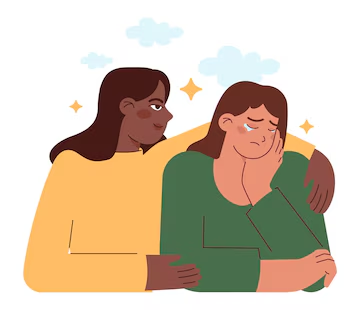
Why Do Some People Become “The Listener”?
People usually become the listener through a mix of personality and circumstance. Some are naturally attentive and calm under pressure, which makes them easy to talk to.
Others learn the role early, in families where one person had to stay steady while things around them were unpredictable.
Some grow into it at work, where they become the informal support system for stressed colleagues, a pattern common enough that workplace stress often outpaces what standard wellness programs are built to handle.
None of this is a coincidence, and none of it is a flaw. Being dependable feels good. People trust you. You get a clear sense of purpose from helping. But there is a quiet tradeoff.
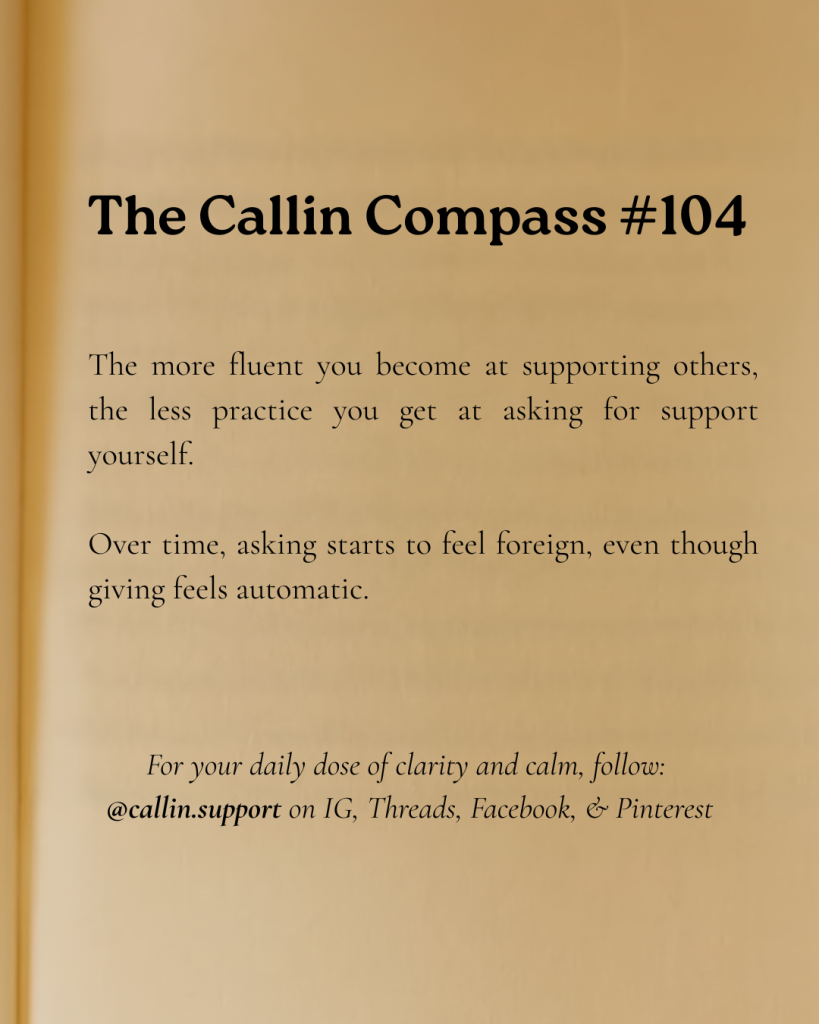
This is closely tied to what researchers call emotional labor, the effort involved in managing your own feelings while responding to someone else’s. It is real work, even when it looks effortless from the outside.
Why Opening Up Can Feel Surprisingly Difficult
If you are asking why you can’t open up even though you listen to everyone else, the answer usually involves a few overlapping reasons.
You worry about burdening others. If you are used to being the strong one, sharing a struggle can feel like handing someone a weight they did not ask to carry. This is one of the most common reasons people avoid talking to friends about what they are going through.
You fear looking weak. Consistently being the reliable one can create an identity you feel you have to protect. Admitting difficulty can feel like it contradicts that identity, even when no one around you would actually think less of you.
You do not have practice putting feelings into words. Active listening trains you to reflect other people’s emotions back to them. It does not automatically train you to name your own.
Self-disclosure, the psychological term for sharing personal thoughts and feelings with another person, is a distinct skill that develops through repetition, not through listening alone.
You feel responsible for everyone else’s wellbeing. When you are used to holding space for others, your attention naturally goes outward. Redirecting it inward can feel unfamiliar, even self-indulgent, though it is not.
You are more comfortable solving problems than sitting with feelings. Listeners are often fixers. Fixing a problem, even someone else’s, is more concrete and controllable than naming your own uncertainty out loud.
These patterns often connect to hyper-independence, a tendency to handle everything alone because relying on others once felt unsafe or unavailable.
They can also overlap with people-pleasing, where your own needs get quietly deprioritized to keep things smooth for everyone else. Neither of these labels means something is wrong with you. They describe patterns, not conditions.
What Happens When You Keep Everything Inside
Constantly suppressing your own emotions has costs, even when your relationships are otherwise healthy.
Research on emotional suppression, including decades of work by psychologist James Pennebaker on written and spoken disclosure, has found that people who disclose their thoughts and emotions to a high degree show measurable physiological changes, including lower stress responses, compared to when they discuss only surface-level topics.
In other words, holding things in is not a neutral choice. It has a physical and emotional cost, even if that cost builds slowly.
Left unaddressed, this pattern can contribute to:
- Emotional exhaustion, the sense of being drained even after a normal day
- Loneliness, despite having people around who care about you, a pattern explored in why connection can feel shallow even in real relationships
- Feeling misunderstood, because people only see the version of you that manages everything well
- Burnout, which tends to build quietly before becoming obvious
- Difficulty accepting support even when it is offered, because receiving it feels unfamiliar
This is not about catastrophizing small habits. It is about recognizing that a one-sided pattern, giving support constantly and rarely receiving it, is not sustainable indefinitely. Surface-level interactions have a real cost, even when they look fine from the outside.
Learning to Receive Support
Opening up is a skill, and like any skill, it develops through repetition, not through willpower alone. A few practical starting points:
Start with one person you already trust. You do not need to open up to everyone at once. Choose one relationship where the risk feels manageable.
Answer “how are you?” honestly, in small doses. You do not have to share everything. Try replacing “I’m fine” with one true sentence, like “It’s been a long week.” The habit of always saying “I’m fine” has a real cost over time.
Journal before a conversation. Writing down what you are feeling beforehand can make it easier to say out loud later. This mirrors the expressive writing research used in Pennebaker’s studies, where simply putting emotions into words was linked to reduced distress.
Notice the urge to change the subject. When a conversation turns toward you, pay attention to the impulse to redirect it back to the other person. Noticing the pattern is the first step to interrupting it.
Let someone listen without trying to fix anything. This can feel uncomfortable at first if you are used to being the one who solves things. Practice sitting with being heard, not fixed.
These steps are incremental on purpose. Talking about your problems does not require a diagnosis or a crisis to be worthwhile.
When It Helps to Talk With Someone Outside Your Everyday Life
Some people find it easier to open up to someone who is not part of their day-to-day life. There is less concern about being judged, less worry about changing an existing relationship, and less pressure to manage how you are perceived afterward.
This is one reason peer support groups and structured listening spaces exist alongside friends, family, and therapy. Research on self-disclosure and social support has found that confiding in someone willing to listen is essential to gaining the benefits of social support, and reciprocity in that disclosure builds trust over time. That listener does not always need to be someone from your existing circle.
Options worth knowing about include trusted friends or family, peer support groups, warmlines, which are non-crisis phone lines staffed by trained peer listeners, therapy when it is the right fit, and non-clinical peer listening platforms like Callin, where the goal is simply to be heard by someone trained to listen, without judgment or expectation.
None of these options replace the others. They are different tools for different moments, and it’s worth understanding what kind of support you actually need before choosing one.
A Final Thought
Being a good listener does not mean you are required to carry every burden by yourself. Letting yourself be heard is not selfish. It is part of what keeps relationships balanced, including your relationship with yourself.
If you have spent years being the person everyone leans on, consider this a gentle nudge to lean on someone too, even in a small way. You do not have to change all at once. You just have to start.
Frequently Asked Questions
Why can’t I talk about my feelings? Talking about feelings requires a different skill than listening to them. If you have spent years focused on supporting others, self-disclosure may simply be underdeveloped, not broken. With practice, it becomes easier, starting with small, low-stakes moments of honesty.
Why am I always the one listening? People often become “the listener” through personality, family roles, or simply being consistently reliable. Over time, this becomes the default role in relationships, even when it was never explicitly chosen. It can be unlearned with intention.
Is it normal to struggle with vulnerability? Yes. Fear of vulnerability is common and does not require a traumatic cause. Many people simply have more practice giving support than receiving it. Struggling with this does not mean something is wrong with you.
How do I get better at opening up? Start small. Share one honest sentence with a trusted person. Journal before conversations to organize your thoughts. Notice when you deflect attention away from yourself, and practice letting someone listen without solving the problem for you.
Can talking to someone outside my friend group help? Yes. Many people find it easier to be honest with someone who is not part of their daily life, since there is less concern about judgment or changing an existing relationship. Peer support groups, warmlines, and peer listening platforms can all serve this purpose.
This article reflects general patterns observed through years of peer listening work and is informed by established research on emotional disclosure and social support. It is not a substitute for professional mental health care. If you are in crisis, please contact a local crisis line or emergency services.

Leave a Reply