The loneliness paradox is the strange experience of wanting connection while unintentionally making it harder to receive. Many people wait to be noticed while quietly protecting themselves from being known. Understanding this pattern will not make loneliness your fault. It will show you where the door actually is, and who has been holding it shut.
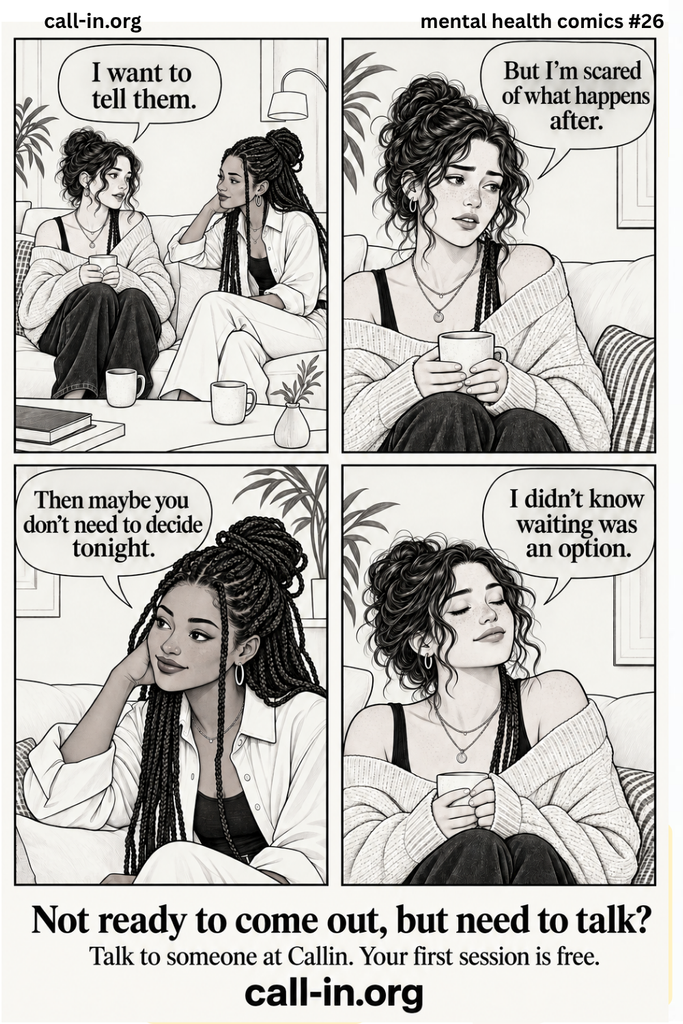
If you are LGBTQ+ and need someone to talk to, you do not have to be in crisis, out to your family, certain about your identity or ready for therapy before you are allowed support.
Netflix’s The Polygamist is a soapy, addictive South African drama about betrayal, secrets, and one woman’s very public unraveling. But underneath the scandal are relationship lessons that have nothing to do with polygamy and everything to do with how we forgive, tolerate, compare, and eventually lose ourselves in relationships that were supposed to be love.
Venting and trauma dumping can look identical from the outside: two people talking, one describing pain. The difference lives in the exchange itself. Venting is a mutual, consent-based release that settles the nervous system. Trauma dumping is an unmanaged, one-sided flood that overwhelms it. Knowing which one is happening changes everything about how the conversation should go.
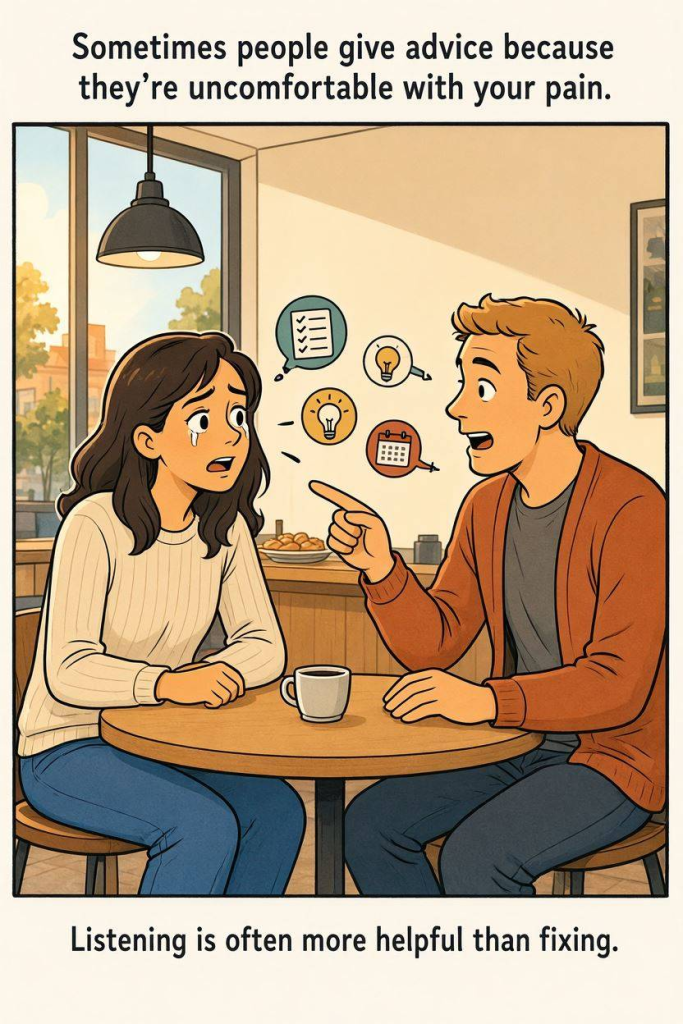
People give unsolicited advice when you want to vent because of something psychologists call the righting reflex, an automatic urge to fix distress rather than sit with it. It is not a sign they do not care about you. Understanding what actually drives unsolicited advice can help you ask for the kind of listening you need, so you feel heard instead of handled.
Twin flames may or may not be a real phenomenon, but a twin flame toxic relationship is unfortunately very real for the people living inside one. The idea of a soul destined to complete you can be comforting, even beautiful, until it becomes the reason you excuse manipulation, chaos, or the slow disappearance of your own peace. Belief and self-respect do not have to be at odds.
Setting boundaries without guilt starts with understanding that the guilt is a biological reflex, not proof you have done something wrong. Your nervous system was built to treat conflict as a threat to social survival, so it fires an alarm even over low-stakes moments like declining a work call. Once you recognize that pattern for what it is, holding a limit calmly becomes far more manageable.
Group chat loneliness happens because these channels reward speed and volume over depth, leaving you technically present but emotionally unseen. You are not imagining the ache of scrolling through twenty messages and feeling more alone than before you opened the app. That reaction is a rational response to a flawed structure, not a flaw in you.
Can AI replace human connection? Not really, and not because artificial intelligence isn’t impressive. It can write, diagnose, and even sound remarkably empathetic. But real human connection depends on something no model can generate: one nervous system responding to another, in real time, with real stakes. That instinct is not a flaw in your wiring. It is the whole point.
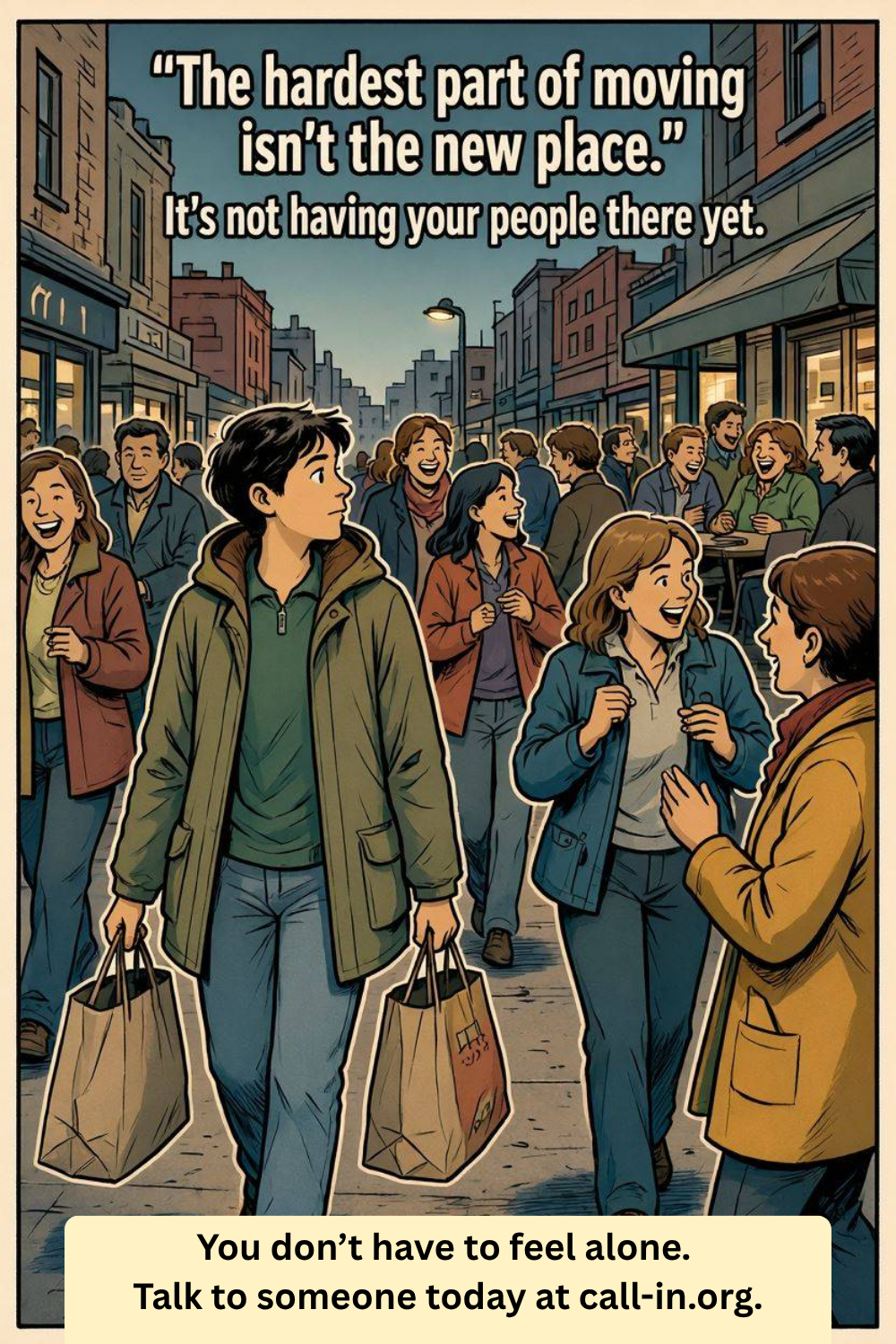
Rebuilding a support system after moving works best when you stop searching for a single close friend and instead create repeated, low-pressure contact with the same people over time, such as through a class, a volunteer shift, or a regular café visit.
Trust and closeness build gradually, not instantly, so consistency matters more than intensity. Leaning on existing long-distance relationships while this unfolds helps ease the transition.
Quick answer: Texting cannot fully replace real conversation because it strips away tone of voice, timing, and immediate emotional feedback. It works well for logistics and quick check-ins, but conversations involving emotional support, nuance, or difficult topics tend to go better over a call or in person, where more of the actual message can come through.
Quick answer: Many people who listen well to others struggle to talk about their own feelings because listening and disclosing are two different skills. If you have spent years being the dependable one, asking for support can feel unfamiliar, even risky. This is a common pattern, not a flaw, and it is one that can shift with small, consistent practice.
If you are the person everyone calls when they need to vent, but you go quiet when someone asks how you are really doing, you are not alone. This pattern shows up constantly in people who work in caregiving roles, in the friend who always “has it together,” and in employees who quietly absorb everyone else’s stress at work.
After years of listening to people describe this exact experience, a few things become clear: this is not about being closed off. It is about having built one skill very well while leaving another one unpracticed.
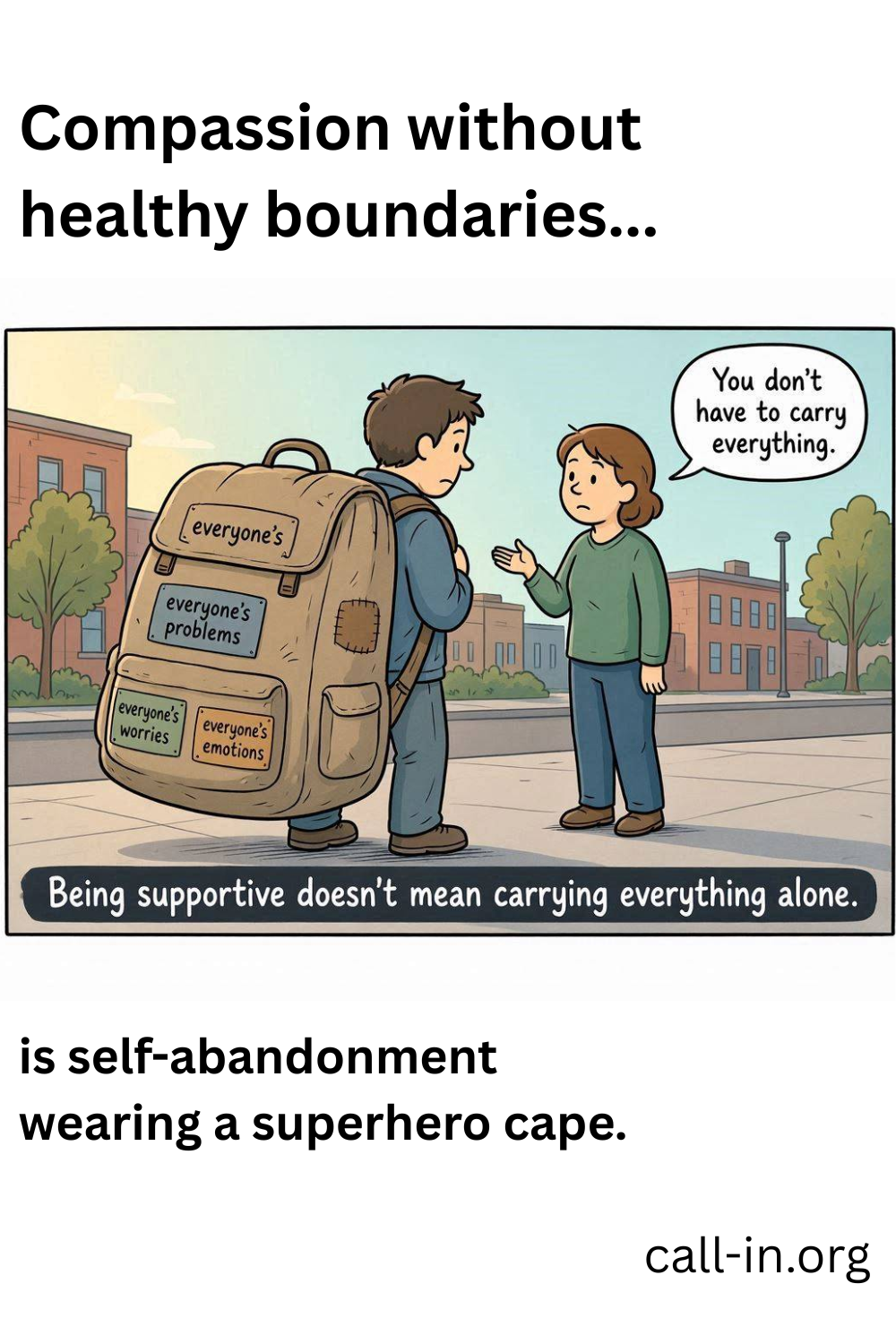
Quick Answer: Yes, two stressed friends can genuinely support each other. Shared understanding often reduces loneliness and builds resilience. But neither person should feel responsible for carrying the other’s entire emotional load alone. Support works best as something offered within limits, not something owed without end.
Quick Answer: Social media often makes people feel less connected because frequent digital interaction is not the same as meaningful connection. Scrolling, liking, and brief exchanges can keep you informed about other people’s lives without giving you the emotional presence, attention, and depth that real connection requires. You can be constantly online and still feel unseen.
I have spent years listening to people talk through loneliness, stress, and the strange ache of modern life. One thing comes up again and again. Someone will tell me they talked to fifteen people online today, and still feel completely alone. This is not confusion on their part. It is a real pattern, and it has a real explanation.
Loneliness and the feeling of being alone in a crowded room are not always the same experience. Conflating them leads to poor self-understanding and ineffective responses.
This article proposes a new descriptive term, Bathyalgia (bath-ee-AL-jee-ah), from the Greek bathys (depth) and algos (pain), to describe the specific ache that arises when connection is available but qualitatively incompatible with a person’s inner life.
Bathyalgia is not a psychiatric diagnosis, a medical condition, or a scientifically validated clinical construct. It is offered as a conceptual vocabulary for an experience that existing language inadequately captures.
Quick Answer: You can talk to a warmline, an anonymous peer support space, or a professional active listening service. Each option gives you a place to speak openly without worrying about your friend’s schedule, mood, or emotional capacity. These options exist because friendship was never designed to carry every emotional load on its own. Choosing one is not a failure. It is a practical way to get support that fits the moment you are in right now.
To provide the best experiences, we use technologies like cookies to store and/or access device information. Consenting to these technologies will allow us to process data such as browsing behavior or unique IDs on this site. Not consenting or withdrawing consent, may adversely affect certain features and functions.
Functional
Always active
The technical storage or access is strictly necessary for the legitimate purpose of enabling the use of a specific service explicitly requested by the subscriber or user, or for the sole purpose of carrying out the transmission of a communication over an electronic communications network.
Preferences
The technical storage or access is necessary for the legitimate purpose of storing preferences that are not requested by the subscriber or user.
Statistics
The technical storage or access that is used exclusively for statistical purposes.The technical storage or access that is used exclusively for anonymous statistical purposes. Without a subpoena, voluntary compliance on the part of your Internet Service Provider, or additional records from a third party, information stored or retrieved for this purpose alone cannot usually be used to identify you.
Marketing
The technical storage or access is required to create user profiles to send advertising, or to track the user on a website or across several websites for similar marketing purposes.