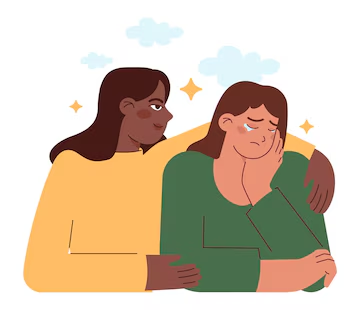
Quick Answer: Yes, two stressed friends can genuinely support each other. Shared understanding often reduces loneliness and builds resilience. But neither person should feel responsible for carrying the other’s entire emotional load alone. Support works best as something offered within limits, not something owed without end.
Key Takeaways
- Two stressed friends can support each other well, especially when both feel understood rather than judged.
- Warning signs appear when every conversation becomes about problems, or when both people leave feeling more drained than before.
- Supporting someone is different from carrying their emotional load. Healthy friendship involves listening, not becoming someone’s unpaid therapist.
- Small, practical habits protect both people from burnout without ending the support.
- Expanding your support network beyond the friendship protects it. It does not replace it.
Why Friendship Matters During Stressful Times

Being understood by someone who is also struggling has real value. Shared experience often removes the isolation that makes stress feel heavier than it is. When a friend says “I feel that too,” it changes something. You are no longer carrying the feeling alone, even if the circumstances have not changed.
This is one of the oldest functions of friendship. Long before therapy existed as we know it, people processed hard seasons together, side by side. That instinct is not outdated.
Feeling heard by someone who understands your situation firsthand can build resilience in a way that professional support sometimes cannot fully replicate, because it comes from someone who is living something similar, not just studying it.
None of this requires perfect timing or perfect words. Often it just requires presence. If you have felt the particular relief of a friend simply saying “that sounds really hard” without trying to fix it, you already know what this looks like.
When Stress Begins to Overwhelm the Friendship

Support between two stressed people can tip into something heavier. A few signs are worth noticing.
- Every conversation becomes about problems. Catching up starts to feel like a debrief of everything going wrong, with little room for anything else.
- Both people leave conversations more exhausted, not less. A talk that should have brought relief instead leaves both of you drained.
- Guilt creeps in before opening up. You hesitate to share because you know your friend is struggling too, and you do not want to add to it.
- Messages start to feel heavy. You see their name on your phone and feel a flicker of dread instead of warmth, because responding feels like more than you have capacity for.
- You start to feel responsible for fixing their life. Listening turns into a sense of obligation to solve things that were never yours to solve.
None of these signs mean the friendship is failing. They mean both people are carrying more than usual, and the friendship is beginning to absorb weight it was not built to hold alone.
Researchers who study something called co-rumination, the pattern of two people extensively discussing and revisiting problems together, have found it cuts both ways. It can genuinely deepen closeness through shared disclosure.
It can also, when it becomes the main way two people relate, contribute to increased anxiety and depressive symptoms for both people involved. The same behavior that builds connection can, in excess, keep both people stuck in the problem rather than moving through it.
Supporting Someone Versus Carrying Their Emotional Load
There is an important difference between being there for a friend and becoming their therapist. Healthy friendship involves listening, encouragement, and honesty. It does not require you to hold someone’s entire emotional wellbeing on your shoulders.
This is where the idea of emotional capacity helps. Think of it as a battery. Everyone has one, and it drains with stress, poor sleep, and their own hard days, the same as yours does.
When your battery is already low, you can still offer care, but you cannot offer the same depth you could on a full charge. That is not a failure. It is simply how energy works.
A friend can hold space for you without solving your problems. A friend can sit with your pain without absorbing it as their own. When either person starts to feel like they must fix everything the other is going through, the friendship has drifted from support into something closer to responsibility, and responsibility of that size belongs to a wider circle, not one exhausted person.
How to Support Each Other Without Burning Out
A few practical habits can keep support sustainable for both people.
- Ask if it’s a good time before unloading. A simple “do you have space for something heavy right now?” respects both people’s energy.
- Take turns listening. If every conversation flows one direction, notice it. Support works best when it moves both ways over time, even if not in every single conversation.
- Check in on emotional energy, not just events. Instead of only asking what happened, ask how much capacity the other person has today.
- Give each other permission to pause. It is fair to say “I want to hear this, but can we talk in an hour, I’m running on empty right now.”
- Make room for ordinary moments. Not every conversation needs to be about the hard stuff. Shared laughter and small talk protect a friendship as much as deep conversation does.
- Respect boundaries without taking them personally. A friend saying they need space is not a rejection. It is honesty, and it deserves to be treated as a gift, not a wound.
None of this requires formal rules. It just requires both people paying attention to what the other, and themselves, actually have to give.
When Additional Support Can Help
Sometimes both friends are carrying more than any one relationship can hold, no matter how much care exists between them. This is not a sign of failure. It is a sign that a season is heavy enough to need more than one source of support.
This might mean talking to a trusted family member, joining a support group, seeing a therapist, or reaching out to a peer emotional support service built for exactly this kind of moment.
Expanding a support network does not replace a friendship. It protects it, by taking pressure off two people who are already stretched thin. If this feels familiar, you might find reasons you feel guilty for needing emotional support or someone to talk to when you don’t want to burden your friends helpful next reads.
Widening your circle of support is not an admission that the friendship failed. It is often what allows the friendship to keep going.
A Closing Thought
Friendships do not grow stronger because two people carry everything alone. They grow stronger when both people feel safe enough to be honest about their limits, and know that neither one has to hold the full weight of the other’s struggles by themselves.
Two stressed friends absolutely can support each other. The support just tends to last longest when it comes with room to breathe.
Frequently Asked Questions
Can two anxious people support each other? Yes. Shared understanding often reduces the isolation anxiety brings. It works best when both people also have outlets beyond the friendship, since two anxious people relying solely on each other can sometimes amplify worry rather than ease it.
Is it okay to lean on a friend when they’re also stressed? Yes, in moderation. Mutual support during hard times is a normal, valuable part of friendship. The key is checking in on each other’s capacity rather than assuming it is always available, and making space for both people to receive support, not just give it.
What is compassion fatigue in friendships? Compassion fatigue is the emotional and physical exhaustion that can come from caring for someone else’s struggles over time. In friendships, it can show up as dread before a phone call, feeling numb to a friend’s pain, or needing distance despite still caring deeply.
How do I know if I’m emotionally draining my friend? Signs include your friend responding less often, seeming distracted or short during conversations, or conversations consistently centering on your problems without much space for theirs. Asking directly, and listening honestly to the answer, is usually more reliable than guessing.
When should I look for support outside my friendships? Consider it when conversations with friends leave both of you more drained rather than lighter, when guilt keeps you from opening up, or when your struggles feel too large for any one relationship to hold. Additional support protects the friendship rather than replacing it.
Related reading on Callin:
- Someone to Talk to When I Don’t Want to Burden My Friends
- Reasons You Feel Guilty for Needing Emotional Support
- How Do I Know If I Need Emotional Support, Not Therapy
- Why Does Social Media Make Me Feel Less Connected
- How to Stop Being the Strong One for Everyone
- 3 Reasons Peer Connection Prevents Burnout
- How to Set Healthy Boundaries
- Callin Offers Active Listening: Feel Heard Today
- Benefits of Consistent Emotional Support
Sources referenced:
- Rose, A. J., “Co-rumination in the Friendships of Girls and Boys,” Child Development, PubMed
- Co-rumination as a Moderator Between Best-Friend Support and Adolescent Psychological Distress, Journal of Adolescence, PMC
- Psychology Today, “Compassion Fatigue” (Basics)

Leave a Reply