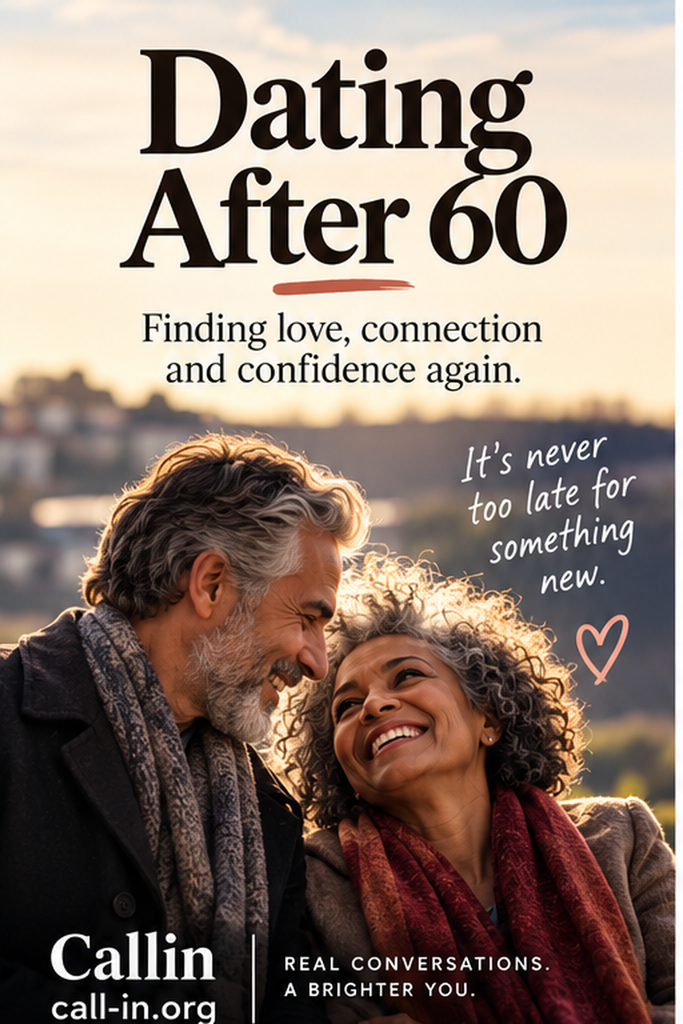
Dating after 60 can feel like entering a familiar world that somehow changed while you were away. You may want companionship, romance, sex, affection, adventure, or simply someone whose name makes you smile when it appears on your phone. But if you have not dated for years, working out where to begin can feel surprisingly intimidating.
Perhaps you were married for decades. Perhaps you lost a partner, ended a relationship, spent years happily single, or have simply reached a point where you would like someone alongside you again.
Whatever brought you here, wanting love later in life does not require an explanation.
You are still allowed to want somebody.
Key takeaways
- Dating and romantic relationships remain part of many people’s lives well beyond 60, and research does not support the stereotype that older adults stop wanting intimacy or companionship.
- Dating later in life may require more deliberate effort because social networks, routines, geographical distance, health, caregiving, and established lifestyles can affect who is available.
- Dating apps can help, but they are only one route to meeting someone. Activities, introductions, community groups, travel, volunteering, and existing social networks can also create opportunities.
- Loneliness can make attention feel more valuable than compatibility, so wanting companionship should not require abandoning your standards.
- You do not have to know whether you want marriage, cohabitation, a long-distance relationship, companionship, or something less traditional before you begin exploring what feels right.
Is dating after 60 really common?
Yes.
Dating in later life is not an unusual exception to how ageing supposedly works. Research using a nationally representative U.S. sample of adults aged 57 to 85 found that around 14 percent of single participants were currently in a dating relationship. Dating became less common with increasing age, but it remained a meaningful part of later adulthood. PubMed
Family patterns in later life have also changed considerably. Researchers reviewing marriage, divorce and cohabitation among older adults have documented increases in later-life divorce and growing use of cohabitation as an alternative to remarriage after divorce or widowhood. PubMed
In other words, adulthood after 60 does not have one prescribed relationship structure.
People date.
People remarry.
People live together.
People live separately while maintaining committed relationships.
And some people decide they like their own house far too much to share it again.
You are not too old to want romance
There is a cultural contradiction around ageing.
People are encouraged to remain active, curious, social and engaged with life, but romantic desire is sometimes treated as though it should quietly retire at the same time as somebody’s pension.
It does not work like that.
Research into online dating profiles has found that older adults continue to express interest in affection, companionship and romantic relationships. A study examining 600 online personal advertisements across four age groups found clear evidence that older adults continued actively seeking partners rather than withdrawing from romantic life. PubMed
Age UK similarly notes that relationships in later life are diverse and that sex and intimacy remain important to many older adults. Age UK
Wanting somebody at 68 is not fundamentally stranger than wanting somebody at 28.
Your priorities may simply be different.
Dating after 60 can actually come with advantages
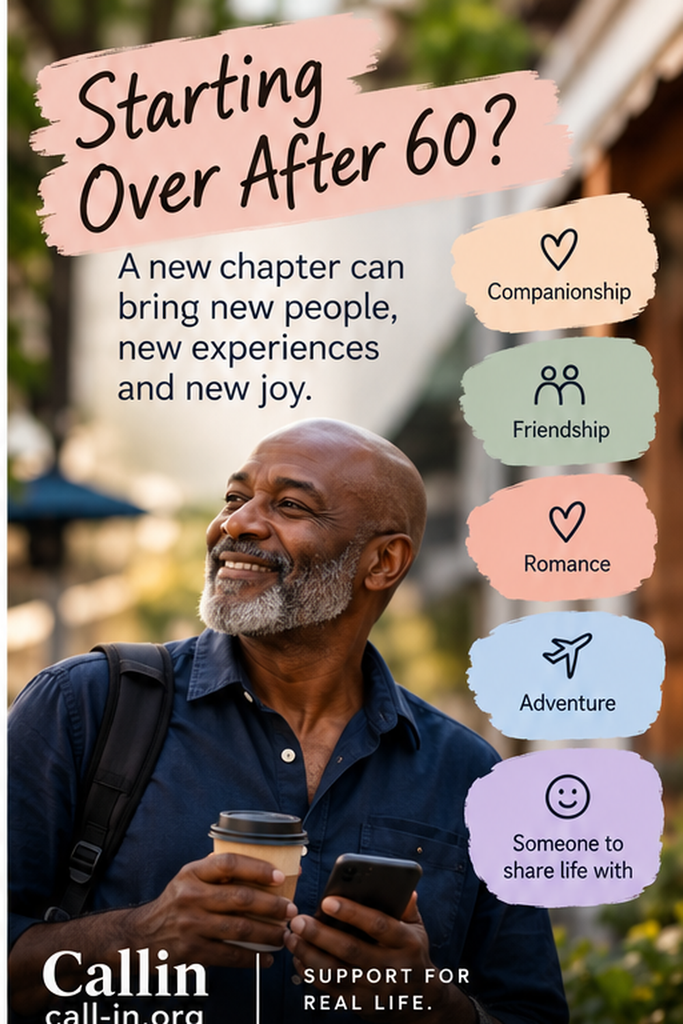
Dating when you are older is not merely younger dating with worse knees.
You have lived more life.
You may understand yourself better.
You may be less interested in performing a version of yourself that you think another person wants.
Recent psychology research specifically examining dating in later life suggests that older adults can bring strengths to new romantic relationships, including emotional experience accumulated across the lifespan. At the same time, the researchers found that relationship context matters, so age itself should not be romanticised as automatically making relationships easier. PubMed
Still, there can be freedom in knowing more clearly what works for you.
You may be much less impressed by nonsense.
That is not a disadvantage.
But the dating pool can feel smaller
This is one of the first things many people notice.
You open an app and find someone interesting.
They live 73 miles away.
Another person seems promising but wants something completely different.
Someone else is technically nearby but incompatible in almost every meaningful way.
Then the app starts recycling people you have already seen.
Dating research suggests older adults can be willing to travel farther than younger adults to meet someone they consider compatible. One study comparing older and younger online daters found that older adults were relatively selective about partner characteristics while also being prepared to travel greater distances for the right person. PubMed
That gives us an important distinction.
A limited local dating pool is not the same thing as limited romantic possibility.
Sometimes geography is the problem before you are.
Decide how much distance actually works for your life
Long-distance possibilities can become tempting when local options are limited.
That is not automatically a bad idea.
But decide what you can realistically sustain before attraction starts renegotiating your boundaries.
Would you happily travel an hour?
Two hours?
Could you maintain a relationship where you only meet twice a month?
Would either person eventually relocate?
There are no universally correct answers.
The important thing is to distinguish “I really like this person” from “our lives can practically support this relationship.”
Chemistry cannot shorten the motorway.
Dating apps are a tool, not a verdict on your romantic future
Online dating can be useful after 60 because it exposes you to people you might never encounter through your normal routine.
Research published in The Journals of Gerontology found that older and younger adults presented themselves somewhat differently in online dating profiles, but older adults were clearly participating in digital dating and seeking companionship and relationships through the medium. PubMed
Still, an app has limits.
If you log in tonight and see nobody you like, that does not mean nobody suitable exists.
It means nobody suitable appeared within the particular app, settings, location, and moment you were searching.
That is a much smaller conclusion.
Do not make dating apps your emotional weather report
This is where apps can become exhausting.
Three matches and you feel hopeful.
Nobody replies and suddenly your confidence falls through the floor.
You go on one disappointing date and decide romance is dead.
Someone attractive likes your photograph and suddenly Tuesday is magnificent.
Dating should not have that much authority over how you feel about yourself.
An algorithm cannot tell you whether you are lovable.
It can tell you who happened to swipe right.
Those are very different measurements.
Where can people over 60 meet someone without dating apps?
Almost anywhere people interact repeatedly.
Community groups, volunteering, walking groups, fitness activities, classes, book clubs, religious or secular communities, cultural activities, travel groups, dancing, local organisations, alumni networks and introductions through friends can all increase your opportunities to meet people.
The important word is often repeatedly.
Going somewhere once gives you access to strangers.
Going regularly gives strangers time to become familiar.
You may meet a future partner directly.
You may also meet someone who eventually says, “I know somebody you would really like.”
Do not underestimate introductions.
Build a social life while you build a dating life
Romance should not have responsibility for rescuing your entire social world.
This becomes particularly important after divorce, widowhood or the end of a long relationship because you may have lost more than one person.
A relationship can contain routines.
Mutual friends.
Shared weekends.
Family connections.
Holidays.
Someone to tell small things to.
When the relationship ends, ordinary life can suddenly feel much quieter.
The World Health Organization’s 2025 Commission on Social Connection describes loneliness and social isolation as significant wellbeing concerns across the lifespan, including later adulthood. World Health Organization
Dating may eventually bring companionship.
Friendship and community can provide connection now.
Starting again after divorce can feel surprisingly strange
Perhaps your last first date was 35 years ago.
The world contains apps now.
People talk about “talking stages.”
Apparently somebody can “soft launch” a relationship.
You may reasonably wonder what everybody is doing.
You do not need to learn every piece of modern dating vocabulary before you participate.
The fundamentals have not changed as much as the technology has.
Do you enjoy this person’s company?
Are they interested in you?
Are you interested in them?
Can you communicate?
Are your values and lives reasonably compatible?
Do you feel respected?
Everything else is decoration.
If the end of your previous relationship still feels emotionally raw, Callin’s guide to dealing with relationship heartbreak may help you separate grieving the relationship from deciding what you want next.
Dating after bereavement can involve complicated emotions
Wanting another relationship does not erase the one you lost.
People sometimes feel guilty when they begin dating after the death of a spouse or partner.
They wonder whether they are moving on too quickly.
They worry about what family will think.
They compare every new person with someone they loved for decades.
Age UK’s guidance on dating in later life specifically acknowledges that grief can coexist with wanting a new relationship. Beginning another relationship does not mean the previous person has been forgotten or that the earlier relationship mattered less. Age UK
Love is not a storage cupboard where one person must be removed before there is room for somebody else.
Human attachment is more complicated than that.
Do not rush because you feel you are running out of time
Later-life dating can come with an unusual urgency.
At 30, somebody might think, “I have time to figure this out.”
At 67, the thought can become, “I do not want to waste three years on the wrong person.”
That concern is understandable.
But urgency can make incompatibility look negotiable.
You still get to have standards.
You still get to say no.
You still get to discover after six dates that someone perfectly pleasant is not your person.
Age does not turn every available partner into an opportunity you must accept.
Loneliness can make attention feel like compatibility
This deserves particular care.
Imagine you have spent months alone.
Then someone messages you every morning.
Suddenly your phone lights up.
You have plans.
Someone asks how your day was.
The relief can be enormous.
That relief is real, but it is not necessarily the same thing as compatibility.
You may still need to ask whether the person is kind, respectful, reliable, emotionally available, safe, and interested in the same kind of relationship you want.
Loneliness says, “Please do not take this connection away.”
Compatibility asks, “Is this connection actually good for me?”
Try to let both questions speak.
Dating after 60 does not have to mean marriage
One of the more interesting features of later-life relationships is that people may become less committed to traditional scripts about what romance is supposed to become.
Researchers examining partnership patterns among older adults have documented increases in cohabitation and alternatives to remarriage. More recent qualitative research has also described considerable variety in how older adults think about commitment, independence, companionship and caregiving. PubMed
Perhaps you want marriage.
Perhaps you want a committed partner who keeps their own home.
Perhaps you want companionship and travel.
Perhaps you want sex and affection without merging finances.
Perhaps you do not know yet.
That is allowed.
Dating can be exploration rather than an application for marriage.
Living apart together can be a real relationship
After decades of managing a household, some people discover they quite like having their own bathroom.
Their own routines.
Their own finances.
Their own side of the bed, which is conveniently the whole bed.
Research into repartnering later in life has documented relationships in which couples remain emotionally close while maintaining separate homes. PubMed
A serious relationship does not necessarily require reproducing the structure of your previous one.
You can ask:
What would partnership look like if I designed it for who I am now?
That question can be remarkably freeing.
Sex and intimacy do not expire either
Later-life dating is sometimes discussed as though everybody involved merely wants someone to attend garden centres with.
Some people absolutely do want companionship above everything else.
Others still want sex.
Others want affection, cuddling, kissing, romance and physical intimacy in ways that may have changed considerably from earlier life.
Research with UK adults aged 66 to 92 found that participants frequently described intimacy, connection and companionship as important parts of their romantic relationships, even where sexual function or priorities had changed with age. PubMed
Other qualitative research has similarly found continued interest in sexuality and romantic intimacy among older adults entering new relationships. PubMed
Ageing can change sexuality.
It does not automatically delete it.
Safer sex still matters after 60
Pregnancy may no longer be a concern for many older adults.
Sexually transmitted infections still exist.
If you begin a new sexual relationship, conversations about sexual health, testing, protection, consent, health conditions and medication remain relevant.
Age UK notes that sexual health services are available regardless of age, gender or sexual orientation and encourages older adults to continue taking sexual health seriously. Age UK
There is no age at which asking sensible questions becomes embarrassing.
Online dating also requires practical safety
Romantic scams do not become less dangerous because somebody is intelligent or experienced.
A scammer may spend weeks or months creating trust.
Be cautious if someone refuses video calls, repeatedly avoids meeting, quickly tries to move communication away from the original platform, declares intense feelings unusually early, or asks for money.
Age UK’s current later-life dating guidance specifically warns about these patterns and advises people never to send money or financial information to someone they do not know well. Age UK
Meet early dates in public places.
Tell somebody where you are going.
Arrange your own transport where practical.
Romance can be spontaneous without requiring you to suspend ordinary judgment.
Be careful with intense long-distance connections
Distance creates an interesting psychological environment.
You can communicate for hours without seeing very much ordinary life.
You know their childhood stories.
You know their dreams.
You know their favourite music.
But you may not know how they react when the restaurant loses the booking.
Digital communication can create intimacy quickly because conversation becomes the main activity.
Let reality catch up.
Use video.
Meet safely when practical.
See each other in ordinary situations, not only romantic weekends.
A relationship eventually has to survive an ordinary Tuesday.
What if your confidence has changed?
Dating after 60 can bring unfamiliar insecurities.
Your body has changed.
Perhaps your health has changed.
Perhaps a previous relationship damaged your confidence.
Maybe you have not flirted with somebody new for 30 years.
You may look at dating photographs and wonder whether anybody could find you attractive now.
Try not to compare your current body with a younger version of yourself as though you are entering the same dating market you entered at 25.
The people you are meeting have aged too.
They have histories too.
They have scars, wrinkles, divorces, losses, children, health concerns, bodies that changed, and stories they did not have at 25.
You are meeting each other now.
Do not let one rejection become a referendum on ageing
Someone does not reply.
A date does not lead anywhere.
A person chooses somebody else.
It is tempting to think:
“It is because I am too old.”
But dating contains rejection at every age.
One person’s attraction tells you about one person’s attraction.
It does not provide an objective measurement of your value.
If one date does not create chemistry, the useful conclusion is generally:
There was no mutual match.
Not:
I have aged out of love.
Comparing yourself with your ex can make dating miserable
This is especially tempting after divorce.
Your former partner meets someone first.
Suddenly you are losing a competition that nobody officially announced.
Perhaps they remarry.
You are still deleting dating apps every second Thursday.
That difference does not mean they succeeded and you failed.
Relationships do not operate according to a queue.
Finding somebody quickly can lead to a wonderful partnership.
Taking longer can also lead to one.
Your former partner’s timeline is not evidence about yours.
What if you hate modern dating?
Then use less of it.
You do not have to date like a 24-year-old because your phone contains the same apps.
Use technology where it helps.
Ignore it where it does not.
You might keep one dating profile while prioritising travel, volunteering, classes, community activities and introductions through friends.
You might exchange a few messages and move quickly to a phone or video conversation because endless texting bores you.
You get to design a dating process that suits your life.
You do not need to postpone your life until you find someone
This may be the most important point.
Wanting love is not the same thing as placing your life on hold until love arrives.
Go on the trip.
Join the group.
Book the restaurant.
Learn something.
Invite your friends.
Create weekends you enjoy.
Build a life that contains people, pleasure, meaning and ordinary things to look forward to.
Then, if somebody arrives, they are not being assigned responsibility for turning an empty existence into a worthwhile one.
They are being invited into something already living.
What if dating makes you feel more lonely?
This can happen.
Sometimes dating makes the absence of partnership more visible.
You were reasonably content.
Then you downloaded an app.
Now you are seeing photographs of hundreds of potential relationships that are not yours.
You start noticing couples everywhere.
You think about companionship more frequently because you are actively looking for it.
If dating repeatedly leaves you feeling worse, taking a break does not mean giving up.
It may simply mean you need to separate the desire for a relationship from the pressure of constantly searching for one.
What if you need someone to talk to while you are dating?
Dating later in life can stir up much more than romance.
It can bring back grief.
Rejection.
Excitement.
Body confidence issues.
Memories of a previous marriage.
Fear of being alone.
Fear of losing independence.
Questions you may not particularly want to discuss with your children or your friends.
Callin’s non-clinical mental health support provides a confidential place to talk through experiences such as loneliness, relationship changes, heartbreak, stress, life transitions, overthinking and feeling overwhelmed.
Callin is not a dating service.
We cannot locate your soulmate.
We also do not provide therapy, diagnosis, psychiatric care, medical treatment, emergency intervention or crisis support.
What Callin can provide is a real human conversation when starting again feels more complicated than you expected.
If you prefer typing, you can also explore online emotional support chat with a real person.
You are not looking for everyone
Dating apps can make romance feel like a numbers problem.
There are thousands of profiles.
Millions of single people.
Endless swiping.
But you are probably not looking for thousands of partners.
You are looking for one person, or perhaps one meaningful connection at a time, where timing, attraction, values, lifestyle, communication and mutual interest align.
That can take time.
Research on older online daters has found that older adults can be selective about what they want while still actively seeking meaningful partnership. PubMed
Selective does not mean impossible to please.
Sometimes it means you finally know yourself.
There is no expiry date on being surprised by someone
Perhaps you will meet someone online.
Perhaps a friend introduces you.
Perhaps you meet while travelling.
Perhaps they sit beside you at something you almost did not attend.
Perhaps dating takes longer than you hoped.
Perhaps the first person you date turns into a funny story rather than a relationship.
Later life is not the epilogue unless you decide it is.
There can still be first dates.
First kisses.
Terrible flirting.
Excellent flirting.
Awkward conversations.
Unexpected attraction.
Sex.
Companionship.
Heartbreak.
Love.
And the slightly ridiculous excitement of seeing one particular name appear on your phone.
You are not too old for another chapter.
You are simply old enough to know that it does not have to look like the previous one.
FAQs
Is 60 too old to start dating again?
No. Research shows that dating, romance, intimacy and new partnerships continue into later adulthood. A national U.S. study of people aged 57 to 85 found that a meaningful proportion of single older adults were in dating relationships. PubMed
Your dating life may look different from when you were younger, but different does not mean finished.
Where can I meet singles over 60?
Dating apps are one option, but they are not the only one. Social groups, classes, volunteering, walking groups, travel, community activities, faith or secular organisations, cultural events and introductions through friends can all create opportunities.
Repeated activities can be particularly useful because people have time to become familiar instead of being expected to decide whether they like each other during one event.
Is dating after divorce at 60 difficult?
It can be emotionally complicated because you may be adjusting not only to dating but also to the loss of routines, identity, companionship and shared relationships associated with a long partnership.
You also have more life experience and may understand your needs and boundaries more clearly than you did when younger. Give yourself permission to learn how you want dating to look now rather than recreating your previous relationship.
How soon should I date after divorce or bereavement?
There is no universal timetable that applies to everyone.
Some people want companionship relatively soon. Others need substantial time before dating feels right. After bereavement especially, wanting another relationship can coexist with continuing love and grief for the person who died. Age UK notes that entering a new relationship does not invalidate or erase a previous one. Age UK
Are dating apps good for people over 60?
They can be useful because they expose you to people outside your existing social circle. Research confirms that older adults actively use online dating and seek companionship and relationships through these platforms. PubMed
Apps work best as one tool rather than the only place where you allow romantic possibilities to exist.
What if everyone I like lives far away?
Decide what distance is genuinely sustainable for you before becoming heavily emotionally invested. Older online daters have been found to show greater willingness than younger adults to travel to meet a desired partner, but willingness to travel does not automatically make a long-distance relationship practical. PubMed
Think about travel time, finances, frequency of meetings and whether either person would eventually want to relocate.
Is it normal to want sex after 60?
Yes. Sexual desire and intimacy vary enormously between individuals, but ageing does not create a universal end point for sexuality.
Research involving older adults has found continued importance attached to intimacy, companionship and sexual connection in later-life romantic relationships. PubMed
How this connects to the UNSDGs
This article aligns primarily with United Nations Sustainable Development Goal 3: Good Health and Well-Being. Social connection, companionship and healthy relationships can form part of wider emotional wellbeing throughout the life course, and the WHO Commission on Social Connection has highlighted loneliness and social isolation as important public health concerns. World Health Organization
The connection should not be overstated. Dating itself is not a UN development target, and Callin is not affiliated with or endorsed by the United Nations. The relevance lies in social connection, emotional wellbeing, healthy ageing and access to appropriate support.
Sources and Further Reading
Neff and Beer, Personality and Social Psychology Bulletin, 2026. Recent psychology research examining the experiences and potential relational strengths of people dating later in life. PubMed
Read Dating in Later Life on PubMed
Brown and Shinohara, Journal of Marriage and Family. A national portrait of dating among adults aged 57 to 85, examining prevalence and characteristics of later-life daters. PubMed
Read Dating Relationships in Older Adulthood on PubMed
Alterovitz and Mendelsohn, Psychology and Aging. Research examining partner preferences in online dating across different age groups, including people aged 60 to 74 and 75 and above. PubMed
Read Partner Preferences Across the Life Span on PubMed
Davis and Fingerman, The Journals of Gerontology. Research comparing online dating profiles of older and younger adults and exploring differences in how people present themselves and what they seek. PubMed
Brown and Wright, Innovation in Aging. A review examining marriage, divorce, cohabitation and changing partnership patterns among older adults. PubMed
Read Marriage, Cohabitation, and Divorce in Later Life
Freak-Poli and colleagues, research on sex and relationships in later life. Qualitative research with UK adults aged 66 to 92 examining changing sexuality, intimacy, connection and relationship satisfaction in later adulthood. PubMed
Read Sex and Relationships in Later Life on PubMed
World Health Organization, Commission on Social Connection, 2025. WHO’s global report examines loneliness, social isolation and the importance of meaningful social connection across the lifespan. World Health Organization
Read the WHO Commission on Social Connection report
Age UK, Dating in Later Life. Current practical guidance on dating, new relationships, bereavement, online safety and intimacy for older adults. Age UK
Read Age UK’s Dating in Later Life guide
If dating again has brought up loneliness, uncertainty, heartbreak or questions you do not want to carry by yourself, Callin offers confidential non-clinical emotional support while you work out what you want this next part of your life to look like.

Leave a Reply