Yes. Non-clinical mental health support for neurodivergence can help you process overwhelm, masking, loneliness, burnout, relationship strain, and the exhausting business of navigating systems that were not designed with your brain in mind.
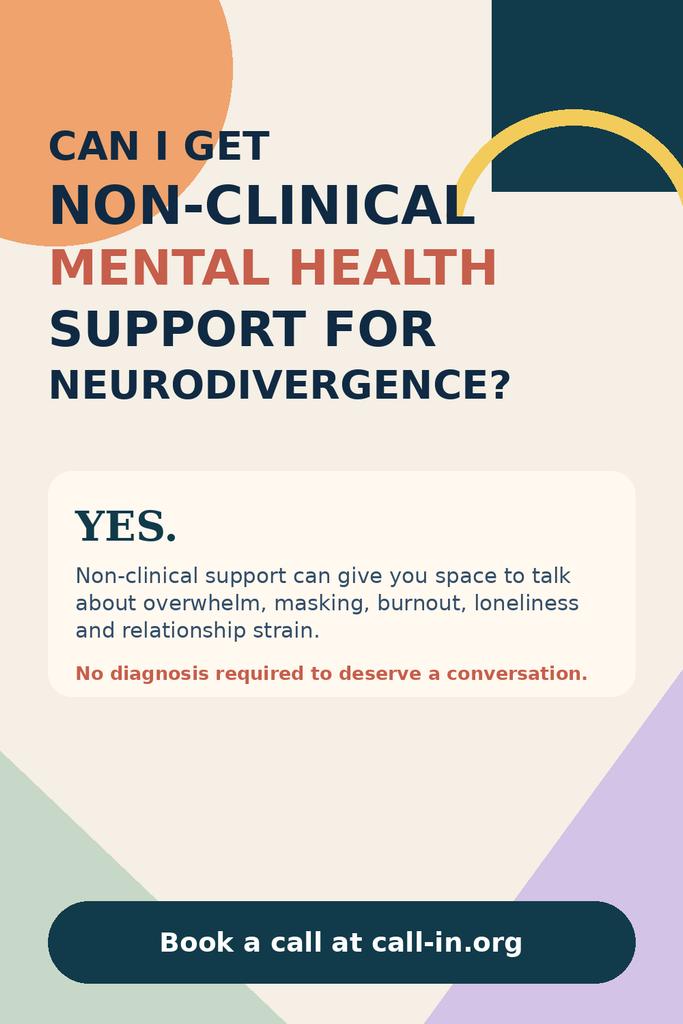
You do not need to prove you are “struggling enough” to be heard. The key is knowing what this support can do, what it cannot do, and what affirming support should feel like.
Key Takeaways
- Neurodivergence is not automatically a mental illness, but neurodivergent people can experience anxiety, depression, burnout, shame, isolation, and emotional exhaustion.
- Non-clinical support can provide listening, reflection, peer connection, and space to understand everyday experiences. It cannot diagnose autism or ADHD, prescribe medication, or provide psychotherapy.
- You usually do not need a formal diagnosis to use an active listening service, community group, or many peer support spaces. Individual services may set their own eligibility rules.
- Good support adapts to communication, sensory, and processing needs. It should not pressure someone to appear less neurodivergent.
- Persistent mental health symptoms, serious loss of functioning, medication questions, diagnostic needs, or safety concerns require qualified clinical support.
What Does Neurodivergence Mean?
Neurodivergence is an umbrella term for minds that function differently from what society treats as neurologically typical. It commonly includes autism, ADHD, dyslexia, dyspraxia, dyscalculia, and Tourette syndrome, although there is no universally agreed list.
Neurodiversity describes the variation across all human brains, not only a particular group.
Difference and difficulty can exist together. A person may value their creativity, focus, pattern recognition, or directness while needing help with sensory overload, executive functioning, communication, or transitions. Harvard Health’s explanation of neurodiversity emphasizes both strengths and support needs.
Not every neurodivergent person has the same experience. Autism is not ADHD with different stationery, and two autistic people may have very different needs. Useful support begins with curiosity, not assumptions downloaded from social media.
Why Might a Neurodivergent Person Need Emotional Support?
Being neurodivergent does not mean being mentally unwell. However, continually adapting to environments and communication styles that do not fit can create distress. The difficulty may come from the interaction between the person and the world, not the neurotype alone.
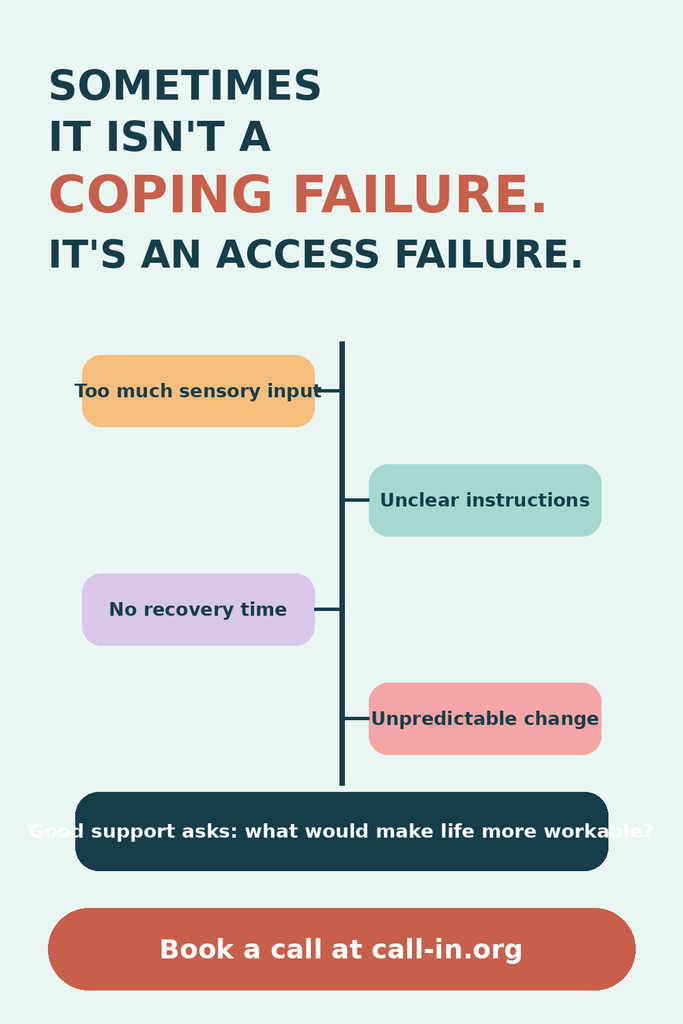
Sometimes what looks like a coping failure is an access failure. A person may need clearer instructions, less sensory input, more recovery time, predictable plans, or someone who believes that a “small” demand used the final spoon in the cutlery drawer.
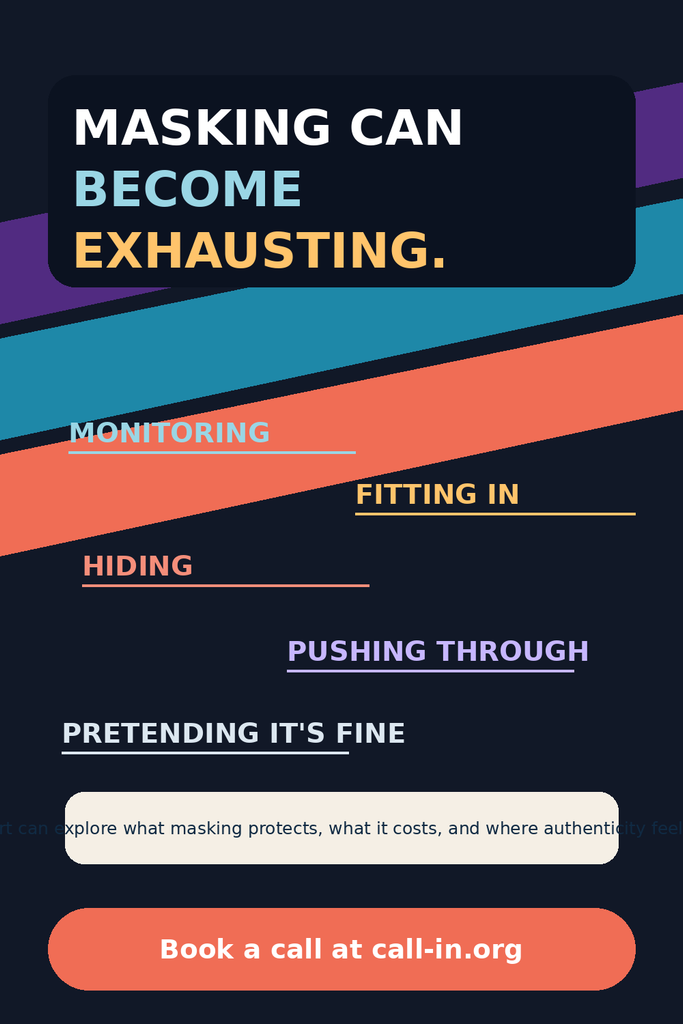
Masking can become exhausting
Masking means hiding or suppressing natural traits to meet social expectations. It can include monitoring eye contact, copying communication, suppressing movement, or pretending that noise and change are manageable. It may help someone avoid judgment, but constant self-monitoring is exhausting.
A listener cannot tell someone to “unmask” as though safety, work, family, and prejudice do not exist. Unmasking is not a party trick. Support can explore where masking happens, what it protects, what it costs, and where authenticity feels safe.
Burnout can be more than ordinary tiredness
Autistic burnout is often described as profound exhaustion and reduced functioning. A 2025 systematic review of 48 studies involving about 4,000 autistic people linked it with sensory and social overwhelm, camouflaging, stigma, and everyday pressures. Rest, sensory relief, autonomy, self-understanding, and community support were associated with recovery.
The samples were not fully representative, so these findings should not be stretched across every autistic person or neurotype. Still, recovery cannot always be squeezed out of a more efficient to-do list, especially when the list feels personally vindictive.
Late recognition can rearrange your life story
Discovering neurodivergence in adulthood can bring relief, grief, anger, and a forensic review of the past. Events once filed under “lazy,” “too sensitive,” “rude,” or “chaotic” may have another explanation. That reframing can be compassionate and emotionally enormous.
Non-clinical support offers space for that identity shift without turning the conversation into an assessment. A person may grieve the help they missed while discovering what support could look like now. Relief and sadness are allowed in the same room.
What Can Non-Clinical Support Help With?
Non-clinical mental health support for neurodivergence offers emotional processing and human connection, not diagnosis or treatment. A listener, mentor, or peer supporter may help you slow down an experience, name what happened, and decide what to communicate next. They should never claim to diagnose autism, ADHD, or another condition.
People may use this support to talk about:
- sensory or social overwhelm after work, study, travel, or family events
- the shame that can follow executive functioning difficulties
- friendship, dating, parenting, or workplace misunderstandings
- masking and the fear of being judged when more authentic
- loneliness, rejection, exclusion, or feeling chronically misunderstood
- the uncertainty of waiting for an autism or ADHD assessment
- anger or grief following a late diagnosis
- how to describe needs to a partner, relative, tutor, or manager
- emotional exhaustion between therapy or clinical appointments
The listener does not need a five-step solution before you finish your first sentence. Often, the work is separating the problem from the shame wrapped around it. Good support asks what is making life harder and what would make it more workable, not how to make you look more typical.
What Does Neurodiversity-Affirming Support Look Like?
Affirming support treats neurodivergent traits with dignity while taking real difficulties seriously. It does not romanticize distress, and it does not treat a person as a malfunctioning version of somebody else. Support is accessibility, not correction.
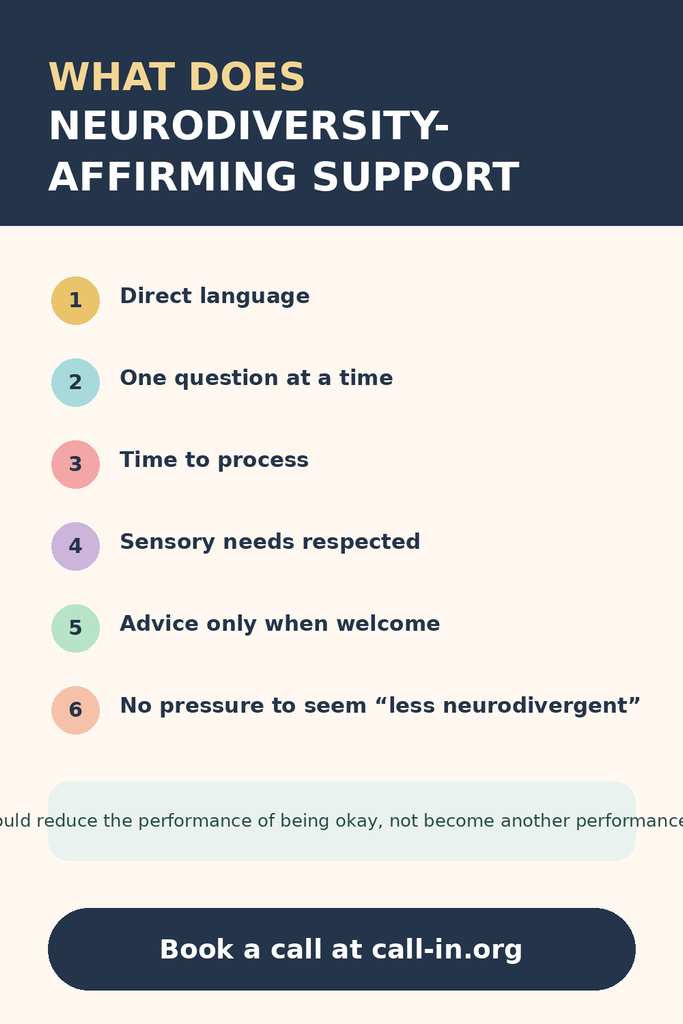
A helpful listener may use direct language, ask one question at a time, allow pauses, clarify rather than infer, and check whether advice is welcome. They may ask about preferred language, sensory conditions, and whether the person wants reflection, brainstorming, or room to speak. Nobody should have to perform perfect eye contact to prove engagement.
These adjustments are not fussiness. NHS England guidance for supporting autistic adults recommends explicit communication, processing time, sensory adjustments, predictable plans, and flexible appointment formats. The same principle improves non-clinical conversations: reduce avoidable barriers so the person can participate.
Do I Need a Formal Diagnosis to Get Support?
Usually, no. Many peer groups, listening services, online communities, and charities welcome people who are diagnosed, awaiting assessment, exploring whether they may be neurodivergent, or supporting someone else. Always check the service’s own rules, particularly for diagnosis-specific programs.
A conversation can respect your account without confirming a diagnosis. That protects dignity and safety. Diagnosis may be a gateway to particular systems, but it should not be a gateway to human compassion.
Formal assessment can provide diagnostic clarity, medication, specialist treatment, or documentation. The NHS advises speaking with a GP about an autism assessment and says support may be available while you wait. For possible adult ADHD affecting work, study, or relationships, the NHS also recommends a GP, who may refer you to a specialist.
Six Types of Support to Consider
The best option depends on the job you need the support to do. One person may want peer recognition, another may need help requesting workplace adjustments, and another may need treatment for depression alongside autism or ADHD support. These needs can overlap without becoming the same thing.
1. Trained active listening
An active listener provides confidential space to talk through feelings and experiences without diagnosing or treating you. This can suit overwhelm, loneliness, relationship strain, shame, transitions, or the long gap between “I am not okay” and a formal appointment. Continuity with the same listener may reduce the exhaustion of explaining your history repeatedly.
2. Neurodivergent peer support
Peer groups can offer the relief of speaking with people who recognize the experience from the inside. The National Autistic Society’s moderated online community provides spaces for autistic people and families to connect, while ADHD UK runs video-based support groups on diagnosis, work, parenting, and other themes. Peer experience is valuable, but it is not a substitute for professional diagnosis or individualized medical advice.
3. Mentoring or neurodivergence coaching
A mentor or coach may help with routines, planning, communication, workplace challenges, or practical goals. Coaching is not psychotherapy, and the title “coach” does not by itself guarantee standardized clinical training. Ask about training, experience, confidentiality, safeguarding, fees, and how the person responds when a need falls outside their scope.
4. Workplace or education support
Sometimes emotional strain decreases when the environment becomes more accessible. Written instructions, predictable deadlines, quieter workspaces, flexible communication, task-planning support, or advance notice of changes may reduce unnecessary friction. The NHS lists several examples of reasonable adjustments for adults with ADHD.
Eligible people in the UK may also receive practical or mental health support through Access to Work. Students can ask their school, college, or university about disability, inclusion, counseling, mentoring, and study-skills services. Support is not only about coping better with the obstacle; sometimes the obstacle can be moved.
5. Neurodiversity-informed therapy
Therapy may be appropriate for anxiety, depression, trauma, compulsions, eating difficulties, or other mental health concerns that coexist with neurodivergence. The approach may need adjustments to communication, pace, sensory conditions, emotional identification, or homework. A therapist should address distress without treating harmless neurodivergent traits as symptoms to erase.
In England, adults can often self-refer to NHS Talking Therapies for anxiety and depression. Ask whether the service can make neurodivergence-related adjustments and whether the practitioner has relevant experience. In Scotland, Wales, and Northern Ireland, a GP can explain the local route.
6. Clinical assessment and treatment
Only an appropriately qualified professional can diagnose autism, ADHD, or a mental health condition. ADHD medication must be started and monitored by an ADHD specialist, according to the NHS. Clinical support is also important when symptoms are persistent, worsening, or seriously affecting safety and daily functioning.
How to Choose Safe, Helpful Support
Ask the provider what “neurodiversity-affirming” means in their actual practice. Do they adapt their language and pace? Can you state communication preferences? What training do listeners receive, how is confidentiality handled, and what happens if someone needs clinical or crisis care?
Be cautious with anyone who promises to cure neurodivergence, diagnoses you during an informal conversation, discourages prescribed medication, or presents one method as the answer for every brain. Other warning signs include pressuring you to suppress harmless traits, dismissing sensory needs, infantilizing you, or blaming every difficulty on neurodivergence. A trustworthy service understands both its value and its edges.
The right support should leave you feeling more understood, not more defective. It may challenge you gently, but it should not require you to translate your entire nervous system before compassion becomes available. Support should reduce the performance of being okay, not become another performance to perfect.
When Non-Clinical Support Is Not Enough
Non-clinical support can complement care, but it cannot manage every need.
Seek help from a GP or qualified mental health professional if you have significant depression or anxiety, severe or prolonged loss of functioning, an eating disorder, addiction, mania, psychosis, self-harm, medication concerns, or symptoms you do not understand.
You deserve assessment that considers neurodivergence without assuming every difficulty is “just the autism” or “just the ADHD.”
If you need urgent mental health help in the UK, contact NHS 111 and select the mental health option, or request an urgent GP appointment. If you or someone else is in immediate danger, call 999 or go to A&E. You can also call Samaritans on 116 123 or text SHOUT to 85258 for confidential crisis support.
You Should Not Have to Translate Yourself Alone
Neurodivergent people deserve support before overwhelm becomes collapse. Sometimes that means diagnosis, adapted therapy, medication, or formal accommodations. Sometimes it means one calm conversation in which nobody mistakes a different communication style for a character flaw.
For people who want an objective, confidential, non-clinical space, Callin offers sessions with trained peer active listeners and continuity with the same dedicated listener, including a free 20-minute first session. Callin does not diagnose neurodivergence, provide therapy or medical treatment, or replace crisis care.
The aim is not to become less yourself so that support systems find you more convenient. It is to understand what your mind is carrying, reduce unnecessary shame, and find the kind of help that fits. You are allowed to need support without turning your difference into a defect.
Frequently Asked Questions
Is neurodivergence a mental illness?
Not automatically. Neurodivergence is an umbrella concept describing neurological differences, while a mental illness involves clinically significant difficulties in mood, thinking, or behavior. A neurodivergent person can also experience anxiety, depression, trauma, or another mental health condition and may need support for both.
Can I use neurodivergent support without a diagnosis?
Many listening services, peer communities, and charities do not require a formal diagnosis, although eligibility differs. A non-clinical supporter can respect your experiences and language without confirming that you have autism or ADHD. Formal diagnosis requires an appropriately qualified professional.
Can an active listener help with autistic or ADHD burnout?
An active listener can help you process exhaustion, identify pressures, communicate needs, and feel less alone. They cannot diagnose burnout, provide medical treatment, or determine whether another physical or mental health condition is contributing. Significant or prolonged loss of functioning should be discussed with a qualified healthcare professional.
What is the difference between a listener, coach, and therapist?
A listener focuses on emotional expression, reflection, and feeling heard. A coach usually focuses on goals, routines, skills, or practical change, while a therapist uses professional psychological approaches to address emotional or behavioral difficulties. Training and regulation differ, so always check a provider’s qualifications and scope.
How can I explain my communication needs?
You might say that you prefer direct questions, need extra processing time, find several questions at once difficult, or communicate more easily without sustained eye contact. You can also ask for written information, predictable session structure, or notice before changes. A good provider will treat this information as useful access guidance, not inconvenience.
What should I do while waiting for an autism or ADHD assessment?
Ask your GP or referral service what interim support is available. You may also explore peer groups, practical workplace or education adjustments, counseling for coexisting mental health concerns, and non-clinical emotional support. These options cannot confirm a diagnosis, but they may make the waiting period less isolating and more manageable.
Is online emotional support suitable for neurodivergent people?
It can be, particularly when travel, unfamiliar rooms, sensory environments, or spontaneous social interaction create additional strain. Suitability depends on your communication preferences, privacy, support needs, and the service’s accessibility. Ask about format, structure, confidentiality, and whether audio-only participation or other adjustments are available.
Leave a Reply