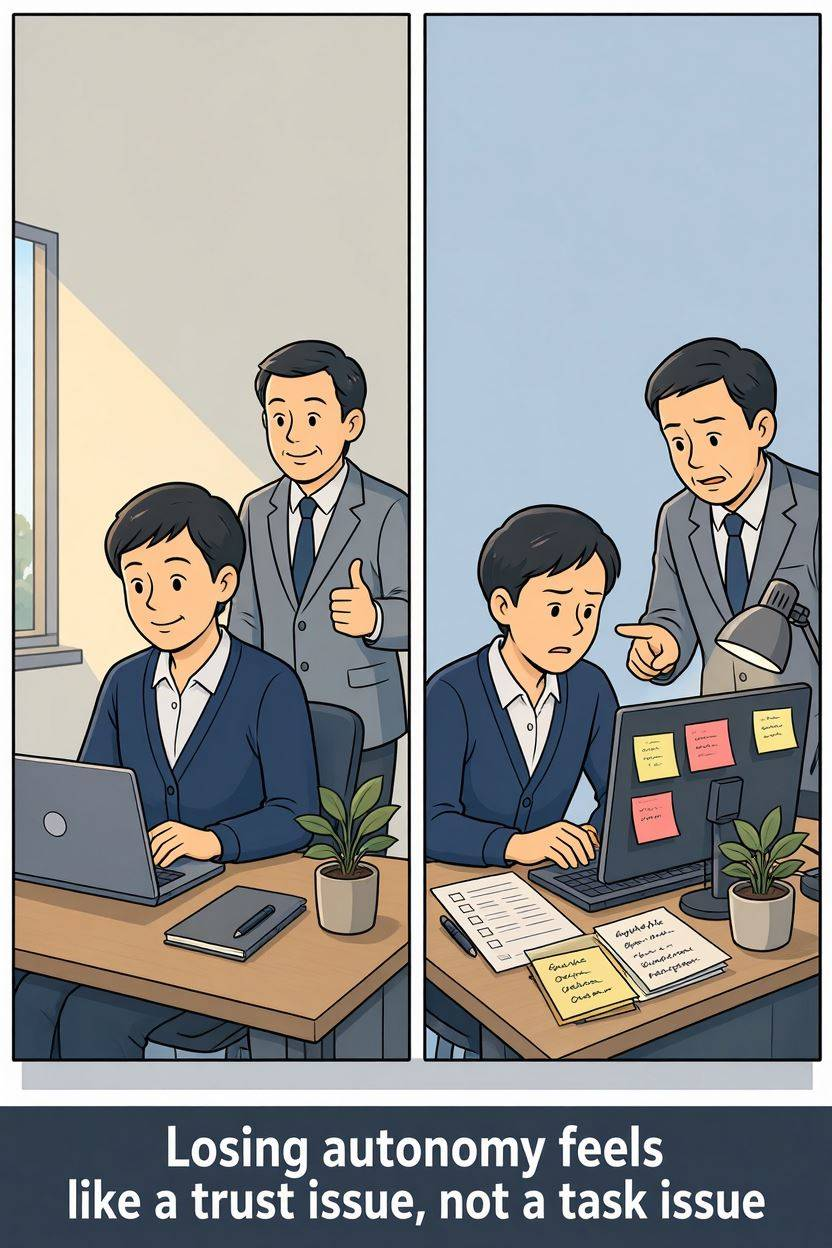
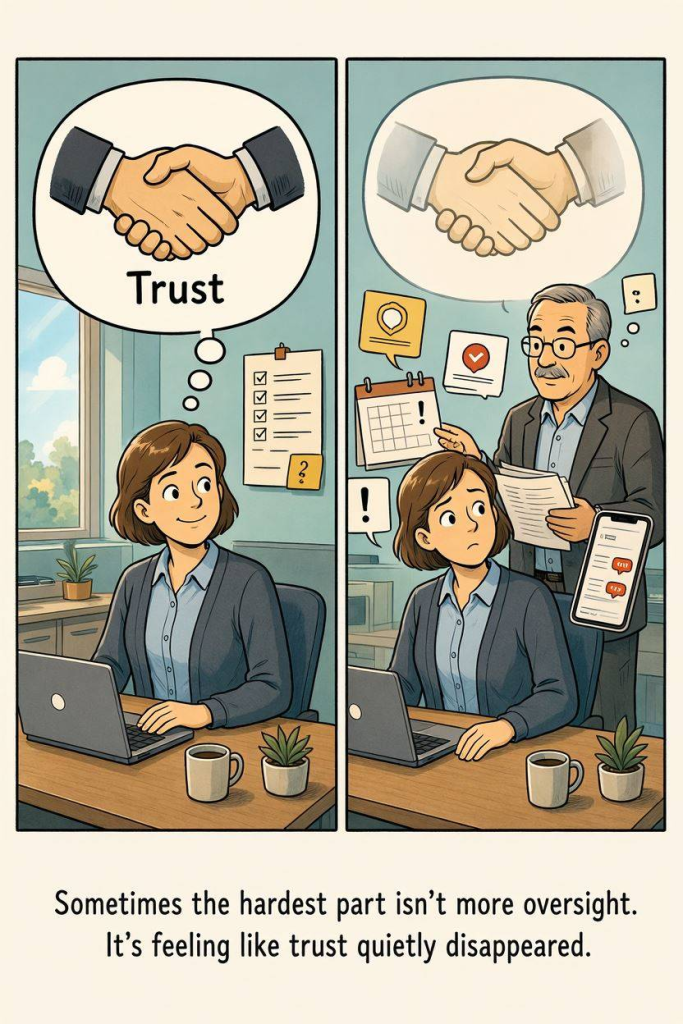
Micromanagement after autonomy is frustrating because it rarely feels like a comment on your tasks. It feels like a comment on your trustworthiness. When new leadership starts checking in more than you are used to, the sting usually has less to do with the number of check-ins and more to do with what those check-ins seem to say about how much you are believed.
Key Takeaways
- Micromanagement after a period of autonomy rarely feels like a task issue. It usually registers as a trust issue, which is why it stings more than the actual oversight would justify on its own.
- New leadership often increases oversight simply to understand an unfamiliar environment, not necessarily as a permanent style, though sometimes it does reflect a genuinely control-based approach.
- Framing the conversation around mutual expectations, rather than defending your competence, tends to open more room for change than confrontation does.
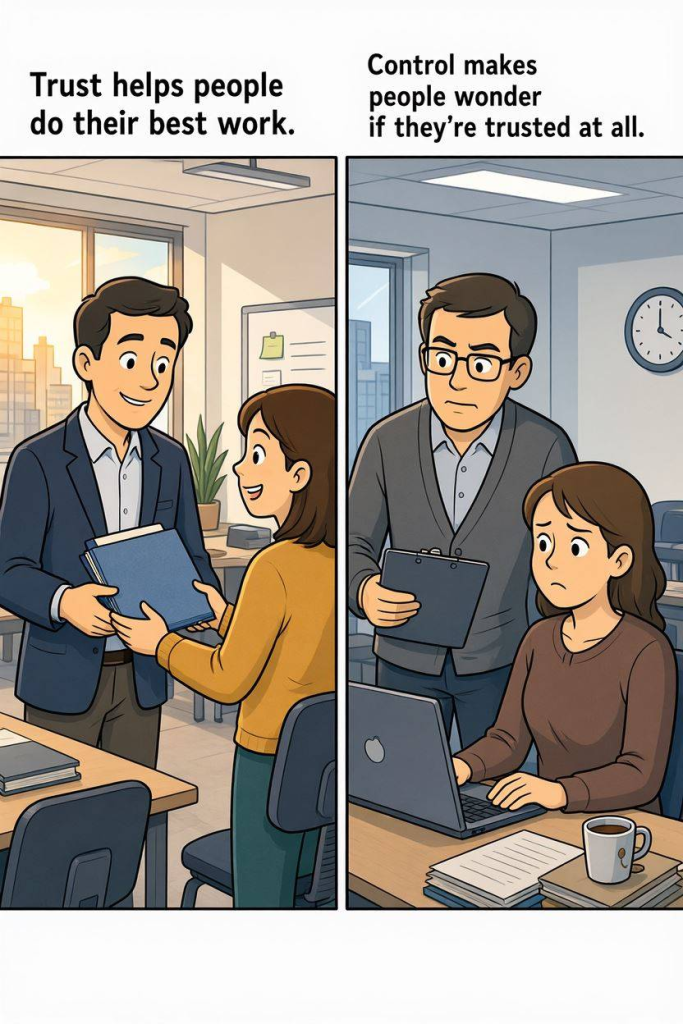
- Good leadership is defined by creating the conditions for capable people to do their best work, not by tracking every detail of how that work gets done.
- When autonomy is replaced with constant monitoring and no conversation, it can quietly shift the unspoken agreement, the psychological contract, between an employee and the organization.
Why Micromanagement and Losing Autonomy Feels Like Losing Trust
For years, autonomy usually functions as quiet proof that you are trusted. Nobody hands over full control of a project and then steps back entirely unless they believe the person holding it will handle it well.
When that proof suddenly gets replaced by frequent check-ins, status updates, or approval requests, it does not read as a neutral management adjustment. It reads as a downgrade, even when nobody intended it that way.
There are usually two very different explanations sitting underneath increased oversight, and they produce almost identical behavior from the outside.
One is a new leader trying to understand an environment they did not build and have not yet seen in action.
The other is a leadership style built around control rather than trust, one that would show up with anyone in your position, regardless of their track record. Telling these two apart matters, because the right response to each is different.
What New Leadership Is Usually Trying to Do
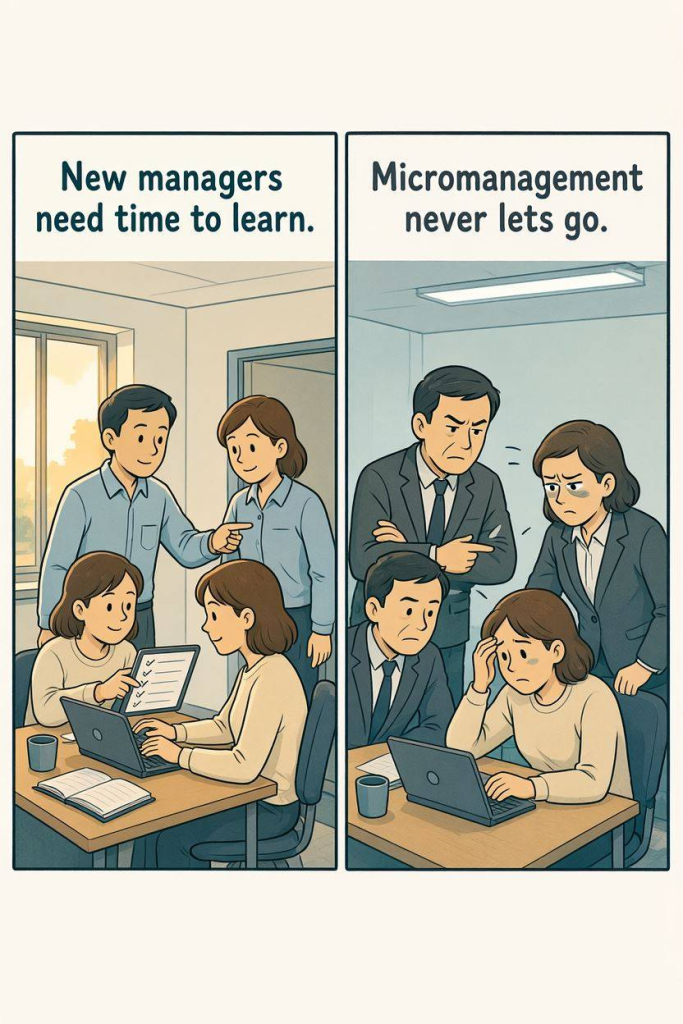
A new manager who seems to be doing a lot of micromanagement is rarely inherits your reputation the way they inherit your job title. They may have read your file, heard good things secondhand, or seen one quarter of results, but none of that is the same as watching you work.
Autonomy, in most workplaces, is something earned through a manager directly witnessing that a person handles ambiguity well. A leadership change effectively resets that evidence to zero, even though nothing about your actual competence has changed.
This is often the most frustrating part of the whole situation. The oversight is not really a judgment about you. It is closer to a manager rebuilding, from scratch, a track record they never personally got to see, while also learning everything else about a new team and a new environment at the same time. That does not make the extra scrutiny comfortable to sit through, but it does change what kind of response actually helps.
Conversation, Not Confrontation
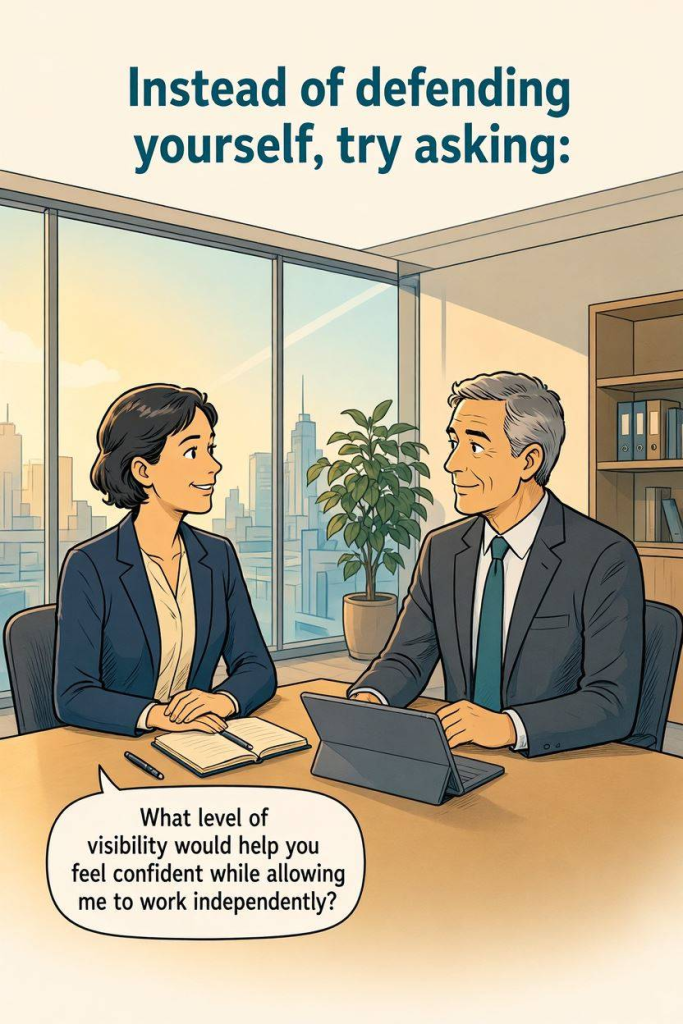
The instinct when autonomy feels threatened is often to defend it, to explain, sometimes at length, why you do not need the extra oversight.
That approach tends to read as resistance, which can make a control-oriented manager tighten their grip and make a still-adjusting manager feel like their concerns were dismissed outright. A more effective opening move is a direct question about expectations rather than a defense of your track record.
A question like, “What level of visibility would help you feel confident while allowing me to continue working independently?” does something subtle but important.
It shifts the conversation from a plea for freedom, which can sound defensive, to an offer of information, which sounds collaborative. It also gives the manager a concrete way to answer that does not require them to admit any distrust, which makes an honest answer more likely.
What Good Leadership Actually Requires
Good leadership was never really about knowing every detail of how someone’s work gets done. It is about creating the conditions where capable people can do their best work, then trusting the outcome enough to step back.
Oversight and trust are not automatically opposites, since even highly autonomous roles usually need some visibility for an organization to function. The distinction that matters is whether oversight is calibrated to the person in front of a manager or applied as a blanket default regardless of performance.
There is a useful test for telling the two apart. Oversight tied to genuine adjustment tends to loosen as trust builds, easing in response to consistent delivery.
Oversight tied to a control-based style tends to stay flat no matter how much evidence of competence accumulates. If the level of scrutiny has not moved at all despite months of reliable work, that flatness is more informative than any single check-in could ever be on its own.
The Psychological Contract, and What Happens When It Shifts
Organizational psychologists use the term psychological contract to describe the unspoken agreement between an employee and an employer, the expectations neither side ever puts in writing but both quietly rely on.
Autonomy, recognition, and a reasonable level of trust are common, unstated terms of that contract for anyone who has earned them over years of solid work.
When oversight increases sharply without any conversation acknowledging the change, that contract can feel like it has been rewritten without your input, even if your formal job description never moved at all.
This is part of why the frustration can feel disproportionate to the actual inconvenience of an extra status update or a shorter leash on approvals. It is rarely about the additional five minutes of reporting.
It is about a shift in an agreement you did not get a say in, which can quietly change how invested you feel in a role you previously did without hesitation.
What Helps While Trust Rebuilds
Documenting your own decisions and outcomes during this period does double duty. It gives you concrete material to reference in a conversation about expectations, and it gives you your own evidence to look at on days when the extra scrutiny starts to feel like it means something about your ability rather than about a transition.
If the adjustment period is dragging on and starting to affect how you see your own competence, it may be worth reading about why self-worth can quietly start depending on being seen as productive, since that link is easy to form without noticing it happening.
Proactive, brief updates, offered before they are requested, often reduce oversight faster than resisting it does, since they answer the underlying need for visibility without requiring the manager to ask.
This is not the same as over-explaining or seeking approval for every decision. It is closer to giving someone the information they would otherwise have to come looking for, which tends to shorten the adjustment period rather than extend it.
If asking for more independence out loud still feels uncomfortable, setting boundaries without feeling like you are being difficult is a skill most people have to practice, not something that comes naturally to everyone.
When to Escalate Beyond a Conversation
Sometimes a clear, well-timed conversation and several months of consistent delivery still do not change anything.
If oversight stays exactly as tight as it was on day one, despite reasonable questions being asked and answered honestly, that pattern is worth taking seriously rather than continuing to wait out.
At that point, the situation is less about a transition and more about a mismatch between your working style and a genuinely control-based management approach, which may call for a different kind of conversation, potentially with HR or someone above your direct manager.
Adjusting to a leadership change, especially one that touches something as personal as how much you are trusted to work independently, is not a small thing, even though it can feel strange to say that out loud at work.
For some people, working through the frustration privately with a friend or partner is enough. For others, especially when the situation feels too repetitive to keep bringing up with the same people, having somewhere else to talk it through without feeling like a burden, like the confidential peer support Callin offers, can make it easier to separate a normal adjustment period from a genuine mismatch in values.
Autonomy that was earned once can usually be earned again, even after a leadership change disrupts it temporarily. The path there tends to run through conversation rather than defense, patience rather than resignation, and enough self-trust to keep doing solid work while someone else catches up to what you already know about yourself.
Frequently Asked Questions
Is it normal to feel micromanaged when a new manager starts?
Yes. A period of closer oversight after a leadership change is common, since a new manager has not yet had the chance to see your work firsthand. That does not make the feeling of lost autonomy any less real, but it does mean the oversight is often temporary rather than personal.
How long does it usually take for a new manager to loosen oversight?
There is no fixed timeline, but most adjustment periods ease within a few months as a manager accumulates direct evidence of reliable work. If scrutiny has not shifted at all after a meaningful stretch of consistent performance, it is reasonable to revisit the conversation.
What if I raise the topic and the oversight does not change?
If a direct, calm conversation about expectations does not lead to any adjustment over time, that is useful information in itself. It may suggest a broader management style rather than a temporary transition, which is worth discussing with HR or someone above your manager.
How do I ask for more autonomy without sounding defensive?
Framing the request as a question about what would help the manager feel confident, rather than a defense of your competence, tends to land better. Offering information proactively is usually more persuasive than explaining why oversight is not needed.
Could micromanagement be about the manager rather than about me?
Often, yes. A new manager who is still learning their own role may default to closer oversight with everyone, not just you, as a way of managing their own uncertainty rather than making a specific judgment about your ability.
What is the difference between reasonable check-ins and micromanagement?
Reasonable check-ins tend to focus on outcomes and ease over time as trust builds. Micromanagement tends to focus on process, stays constant regardless of performance, and often extends into decisions that do not meaningfully require sign-off.
Should I document the oversight I am experiencing?
Keeping a simple, factual record of decisions, outcomes, and any conversations about expectations can help you track whether a pattern is genuinely easing or staying flat, and gives you something concrete to reference if the situation needs to go further.

Leave a Reply