Setting boundaries without guilt starts with understanding that the guilt is a biological reflex, not proof you have done something wrong. Your nervous system was built to treat conflict as a threat to social survival, so it fires an alarm even over low-stakes moments like declining a work call. Once you recognize that pattern for what it is, holding a limit calmly becomes far more manageable.
We explore how our bodies respond when we set boundaries in this podcast episode.
Key Takeaways
- Guilt after setting a boundary is a biological alarm response, not evidence that you did something wrong.
- People-pleasing usually develops when childhood praise gets tied to being agreeable rather than being honest.
- A boundary is a decision about your own behavior. An ultimatum tries to control someone else’s.
- Pushback from others often confirms a boundary is necessary. It is rarely a reason to drop it.
- Boundaries get easier through repetition, not through finding the perfect words to soften them.
What Actually Happens in Your Brain When You Set Boundaries

The discomfort of saying no is not a character flaw. It is a leftover survival mechanism from a time when being cast out of the group meant real physical danger. For most of human history, staying inside the tribe was the difference between eating that week and starving, so the brain learned to treat social friction as an emergency.
Neuroscience backs this up in a concrete way. Research from UCLA psychologist Naomi Eisenberger and colleagues found that social rejection activates overlapping regions of the brain to physical pain, which is part of why conflict with someone you rely on can feel almost bodily unpleasant.
When you prepare to set a limit with someone important to you, the amygdala reads that friction as a threat and releases cortisol and adrenaline, the same chemicals involved in any fight-or-flight response.
Your heart rate climbs, your breathing gets shallow, and the guilt that follows is really just your body reacting to a threat that, in the modern world, no longer exists.
Here is the part that rarely gets said out loud: the intensity of your guilt usually tracks how much someone has come to depend on your lack of limits, not how reasonable the boundary actually is.
A boundary that provokes a strong reaction is often the one you needed most. Guilt, in that sense, can be a signal you are finally doing something right, not a warning that you are doing something wrong.
Why People-Pleasing Feels Like Part of Your Identity
Many people are raised to believe their value depends on how useful they are to others. Being accommodating, agreeable, and endlessly available gets rewarded early and often, and over time that reinforcement builds an identity around being helpful rather than being honest.
When that pattern becomes your default way of relating to people, a boundary stops feeling like self-care and starts feeling like betrayal.
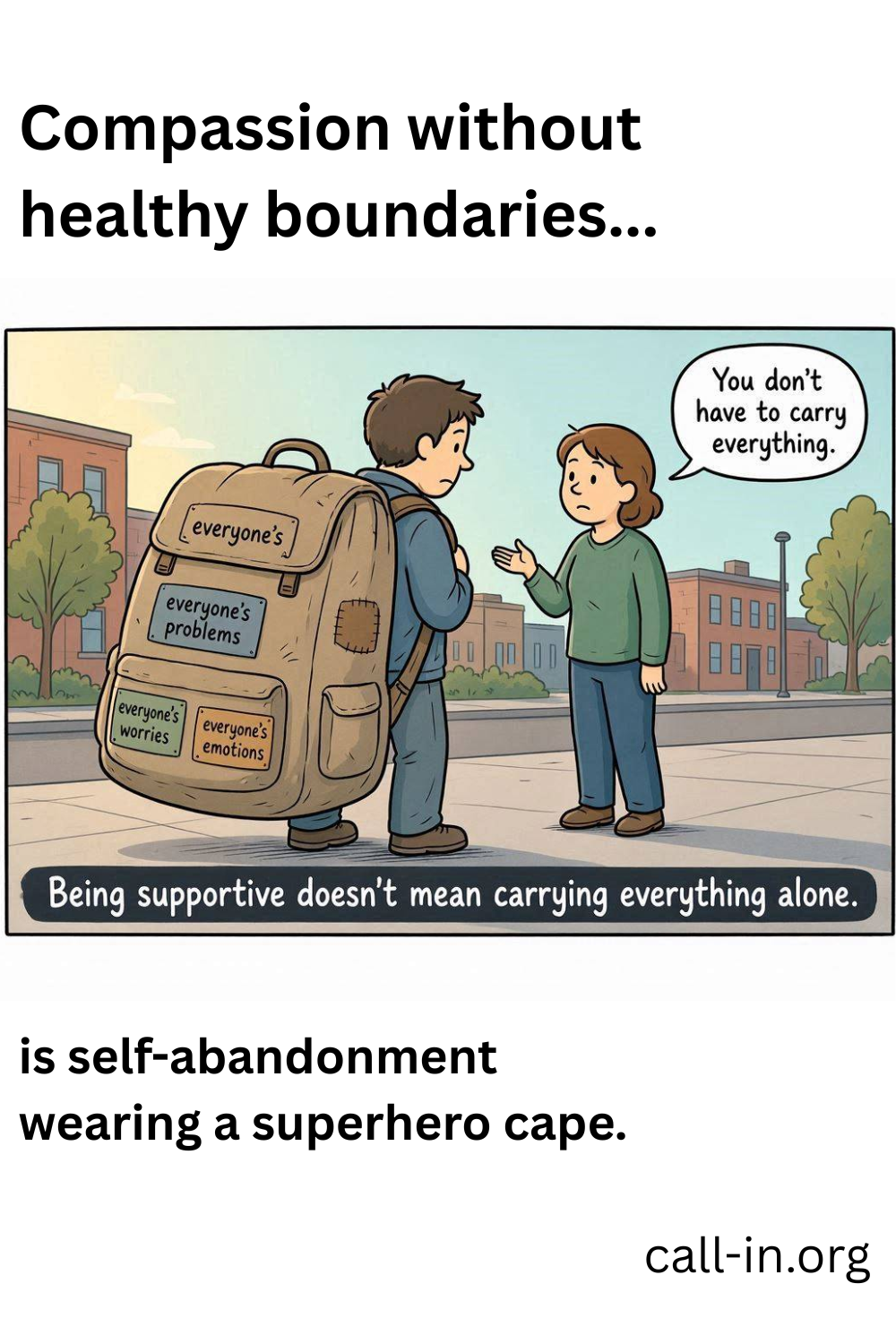
There is a harder truth underneath the guilt: chronic over-giving is not generosity, it is a quiet form of dishonesty. When you say yes to things you do not have the capacity for, you are promising more of yourself than you actually have, and the relationship eventually pays for that gap in resentment or burnout.
Genuine closeness cannot be built on a transaction where the entry fee is your own exhaustion. If this pattern of earning approval through overextension sounds familiar, it is worth reading more about how to stop being a people pleaser in a way that protects the relationships you actually want to keep.
Boundaries Are Not Ultimatums, Here Is the Real Difference
A major reason people avoid setting limits is that they confuse a boundary with an ultimatum. An ultimatum points outward. It demands that someone else change: “Stop texting me after 9 p.m. or I will be furious.” That framing puts the other person on the defensive immediately, because it asks them to modify their behavior to suit your comfort.
A genuine boundary points inward. It describes what you will do to protect your own time and energy, without asking anyone’s permission first. It sounds more like this: “I don’t have the mental capacity to read work messages after 9 p.m., so I’m turning my phone on silent and will reply the next morning.”
Notice that nothing in that sentence requires the other person to agree, apologize, or change. You are not managing their behavior. You are managing your own response, and that shift is what makes a boundary sustainable instead of combustible.
What Happens When People Push Back
Once you start setting limits with people who are used to your unlimited availability, expect friction. This is sometimes called systemic pushback, and it is a predictable response from anyone who has quietly benefited from the version of you that never said no.
Guilt trips, passive-aggressive comments, or open frustration are common, not because your boundary is wrong, but because you have disrupted a pattern that used to work in their favor.
The discomfort someone else feels in that moment is not automatically yours to fix. If you rush in to soothe their frustration or water down your limit to restore the peace, you teach them, and yourself, that a boundary can be dissolved with a bit of pressure.
Real relational safety is not the absence of friction. It is two people surviving a moment of discomfort and still respecting each other on the other side of it. If the guilt of holding steady through that friction feels disproportionate to what you are actually asking for, it can help to understand the broader reasons you feel guilty for needing support in the first place.
How to Build the Boundary-Setting Muscle Without the Guilt Spiral
Boundary setting works like any other skill: it improves with low-stakes repetition, not with finding the one perfect sentence. You do not need to start with your most demanding relative or restructure your entire job in one conversation.
Start smaller, with things like declining an optional invitation you do not have energy for, telling a coworker you will review their file tomorrow instead of tonight, or letting a call go to voicemail during a quiet moment.
One quiet giveaway is worth noticing here. If you find yourself needing three paragraphs to justify a simple no, some part of you still believes you need permission to have limits at all.
Deliver the boundary clearly and once, without a trailing list of apologies or justifications. Over-explaining signals that your need for rest is negotiable, when the entire point of a boundary is that it is not.
Finding Steadier Ground
Guilt fades with practice, not with certainty that you are doing it perfectly. Every uncomfortable conversation you get through without collapsing your limit is evidence your nervous system can survive the friction, and that evidence adds up faster than most people expect.
None of this requires you to become a different person, only to stop confusing self-sacrifice with goodness.
Some people find it easier to think through a boundary, or process the guilt that follows one, when they are not carrying the added worry of burdening the very person the boundary involves.
Frequently Asked Questions
Why do I feel guilty even when my boundary is reasonable?
Guilt is generated by your nervous system’s threat detection, not by an objective judgment of fairness. A boundary can be entirely reasonable and still trigger guilt, because the brain is reacting to potential social friction rather than evaluating whether the request itself was fair.
Is it normal to feel anxious before setting a boundary?
Yes. Anticipatory anxiety before a difficult conversation is extremely common and reflects the same threat response involved in the guilt that follows. Most people feel the anxiety fade once the conversation is over, even if it did not go perfectly.
How do I set boundaries with family without causing a fight?
Keep the boundary inward-facing by describing what you will do rather than what you need them to change. Family systems often have the longest history of a particular pattern, so expect more pushback than usual, and hold the line calmly rather than escalating or over-explaining.
What is the difference between a boundary and being selfish?
A boundary protects your capacity to keep showing up in a relationship over time, while selfishness disregards the other person entirely. Boundaries actually tend to make relationships more honest, since they replace resentment-fueled overextension with a realistic picture of what you can offer.
How long does it take before boundaries stop feeling uncomfortable?
There is no fixed timeline, but most people notice the guilt softening after repeated low-stakes practice rather than after any single conversation. Consistency matters more than intensity, since each repetition teaches your nervous system that the feared social consequence does not actually happen.
What should I do if someone reacts badly to my boundary?
Let their reaction exist without rushing to fix it or immediately reverse your position. A strong reaction often reflects how much someone relied on the old pattern rather than how unreasonable your new limit is.
Can boundaries improve a relationship instead of harming it?
Yes, and often significantly. Relationships built on one person’s constant overextension tend to accumulate quiet resentment, while relationships that include honest limits tend to become more trusting, because both people know where they actually stand.

Leave a Reply