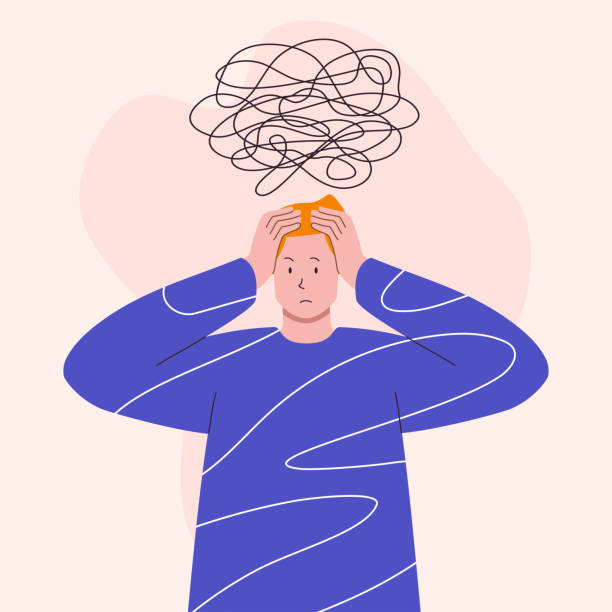
If overthinking has taken over and you need someone to talk to right now, non-clinical peer support can connect you with a trained listener the same day, often within minutes, with no diagnosis or appointment required.
The looping thoughts that feel unbearable at midnight usually just need an outside voice to interrupt them. Here is why the spiral happens and how to actually break it.
Key Takeaways
- Overthinking often gets louder at night not because more is wrong, but because your brain has fewer distractions competing for its attention.
- Rehearsing a conversation in your head repeatedly does not prepare you for anything. It just deepens the same worst-case script, since you are writing both sides of it.
- The hardest part of nighttime overthinking is often that your usual support, friends, family, a therapist’s office, is asleep or closed exactly when you need it most.
- You do not need a diagnosis to justify reaching out. Most overthinking spirals need a sounding board, not clinical intervention.
- Non-clinical peer support exists specifically for this gap: real-time, judgment-free conversation, available at hours when almost nothing else is.
Why Overthinking Gets Louder at Night
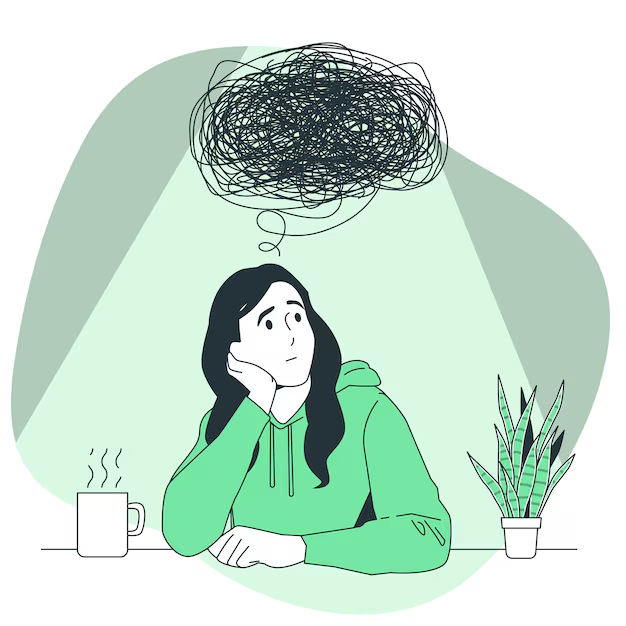
Your Brain Runs Out of Distractions, Not Ideas
During the day, your attention is constantly pulled in different directions. Meetings, messages, errands, and conversations all compete for the same mental bandwidth that overthinking needs to take hold.
That competition is not a coincidence. Task-focused thinking and ruminative thinking draw on overlapping cognitive resources, so a full day genuinely leaves less room for spiraling.
At night, that competition disappears almost entirely. The same worry that barely registered at 3 p.m., because you were in back-to-back meetings, expands to fill the newly empty space at 11 p.m.
Nothing about the situation itself has changed. What changed is how much mental room is left for it to occupy, which is a large part of why psychologists studying rumination consistently find it intensifies in quiet, low-stimulation settings.
The Rehearsal Trap
One of the more exhausting habits of an overthinking mind is rehearsal, replaying a conversation or scenario over and over, often refining it slightly each time. It can feel productive, like you are preparing yourself for what is coming. In practice, it rarely works that way.
Rehearsal is a closed loop. You are writing every line, for every person involved, based entirely on your own fears rather than on how anyone would actually respond.
Because nothing new ever enters the loop, it tends to deepen the most catastrophic version of events rather than resolve it. A real conversation, with a real person who responds in ways you cannot fully predict, is one of the few things that reliably breaks this pattern, because it introduces information your imagination cannot generate on its own.
The Problem With 2 A.M.: When Your Usual Support Is Asleep
Daytime stress comes with built-in outlets. You can mention it to a coworker, text a friend on their lunch break, or book a session with a therapist during office hours. Nighttime overthinking rarely has any of that. The people you would normally call are asleep, and most clinical services are closed until morning.
This is precisely the gap that warmlines and peer listening services were built to fill. Warmlines exist specifically for people who are not in crisis but still need to talk, often running well into the evening or around the clock, staffed by trained peers rather than clinicians.
If part of what keeps you from reaching out is a reluctance to wake someone up or interrupt their night, it may help to recognize that this hesitation is common, and that not wanting to burden the people you love is exactly why services built around availability, rather than a personal relationship, exist in the first place.
You Don’t Need a Diagnosis, You Need a Sounding Board

It is easy to assume that reaching out for help means something is seriously wrong. Most of the time, that is not the case. A racing mind at midnight usually does not need a psychiatric assessment.
It needs an outside perspective, a real-time reality check from someone who is not exhausted, emotionally entangled, and running on the same limited information you are.
Your own internal narrator at 2 a.m. is not a reliable one. Fatigue narrows perspective-taking and makes worst-case scenarios feel more plausible than they would in daylight. An objective, empathetic listener does not need to fix your situation to help. Simply hearing an outside voice respond to what you are describing is often enough to pull you out of the loop.
What Actually Happens When You Say It Out Loud
There is real psychology behind why speaking a thought changes how it feels.
Putting an emotion into words, what researchers call affect labeling, appears to ease the brain’s stress response, shifting activity away from threat-processing regions and toward areas involved in reasoning things through. In plain terms, saying the thought out loud, to a person who is actually listening, helps your brain process it instead of just replaying it.
This is different from simply distracting yourself. Distraction can quiet a spiral temporarily, but the thought is usually still there afterward, waiting. Speaking it to a listener who reflects it back, asks a clarifying question, or simply lets you finish the thought out loud tends to soften its intensity in a way that scrolling or watching something rarely does.
What Happens in a Non-Clinical Listening Session
If you have never tried peer emotional support, the idea of reaching out at an odd hour can feel intimidating. In practice, a good session removes almost every barrier people expect to find.
- Come as you are. You do not need a script, a clear starting point, or an explanation for why your feelings count. You can start mid-thought, and the conversation will still make sense.
- Zero judgment, no urgency. Your listener holds space without rushing you toward a conclusion, letting you unpack things at whatever pace they naturally come out.
- Optional creative reflection. If you want to go beyond simply talking it through, some sessions incorporate structured, non-clinical self-reflection tools, like metaphorical framing or guided reflective prompts, to help you see the thought from a slightly different angle.
None of this requires you to know what you want out of the conversation before it starts. Most people figure that out along the way.
When Overthinking Is Tied to Something Bigger
Sometimes a spiral is an isolated bad night. Often, though, it is connected to something larger sitting underneath it, university stress, a demanding job, or a major life transition that has not had a real outlet yet.
Chronic workplace burnout in particular tends to show up as nighttime overthinking long before it shows up anywhere else, since the mind finally has quiet space to process what the day never allowed.
The same is often true after a breakup, a move, or any big change that reshuffles your sense of what comes next. If you are going through a breakup and feeling lost, or noticing that everything feels like too much lately, the overthinking itself is often less about any one thought and more a sign that stress has been accumulating without enough release.
Finding Someone to Talk to Right Now
If you need to talk right now, a few options work well depending on what is available to you. Warmlines remain one of the most established, often free ways to reach a trained peer listener outside standard hours.
Online peer support platforms offer more flexibility still, letting you book a session on your own schedule rather than waiting for a specific line to open.
This is where Callin fits for a lot of people in the middle of a spiral. It connects you with a trained peer listener for a confidential, non-clinical conversation, with no diagnosis, no waitlist, and no need to explain why tonight is the night you need to talk. It will not replace therapy when a clinical need is present, but for the ordinary, exhausting experience of overthinking at an hour when nobody else seems to be awake, it offers exactly what helps most: a real person, actually listening, right now.
Frequently Asked Questions
Is it normal to overthink more at night?
Yes, it is extremely common. With fewer daytime distractions competing for attention, the mind has more room for unresolved thoughts to surface, which is why the same worry can feel manageable at noon and overwhelming at midnight.
I don’t want to wake anyone up. Is there anyone I can actually talk to at 2 a.m.?
Yes. Warmlines and online peer support platforms are built specifically for off-hours support, staffed by trained listeners rather than relying on friends or family who are asleep. Many operate late into the night or around the clock precisely because overthinking does not follow business hours.
Do I need therapy for overthinking, or is a listener enough?
For most everyday overthinking, a trained peer listener is enough to interrupt the spiral and help you process what is on your mind. Therapy becomes the better fit when overthinking is persistent, tied to a diagnosed condition, or significantly disrupting your sleep, work, or daily functioning over time.
What are “structured self-reflection tools,” and do I have to use them?
These are optional, non-clinical techniques, such as metaphorical framing or guided reflective prompts, that some listeners use to help you see a thought from a different angle. They are never required. Many sessions are simply a conversation, and that alone is often enough.
Can talking to someone actually stop a spiral already in progress, or only prevent it?
Talking can do both. A real-time conversation with a responsive listener tends to interrupt an active spiral by introducing a perspective your own rehearsal cannot generate, while regular conversations over time can also reduce how often spirals start in the first place.
Is a late-night conversation with a peer listener actually confidential?
Reputable non-clinical platforms treat every session as private, regardless of the hour. It is worth confirming a platform’s specific privacy practices, but confidentiality is central to why people feel able to speak freely with a listener they do not otherwise know.
What if my overthinking is connected to something more serious, like anxiety or depression?
Persistent overthinking that comes with ongoing anxiety, low mood, or disrupted functioning is worth discussing with a licensed professional, since non-clinical support is not designed to diagnose or treat those conditions. A trained peer listener can still be a valuable part of your support in the meantime, and good platforms are upfront about when it is time to also involve professional care. If you are ever in crisis or having thoughts of suicide, contact the 988 Suicide and Crisis Lifeline or your local emergency services immediately.

Leave a Reply