Affordable therapy alternatives exist for the many people priced out of traditional therapy or stuck on long waiting lists. Options range from sliding scale counseling to support groups, peer support platforms, and active listening services, each offering a different kind of help. Finding the right one starts with understanding what each actually provides.
Quick answer: Many people who listen well to others struggle to talk about their own feelings because listening and disclosing are two different skills. If you have spent years being the dependable one, asking for support can feel unfamiliar, even risky. This is a common pattern, not a flaw, and it is one that can shift with small, consistent practice.
If you are the person everyone calls when they need to vent, but you go quiet when someone asks how you are really doing, you are not alone. This pattern shows up constantly in people who work in caregiving roles, in the friend who always “has it together,” and in employees who quietly absorb everyone else’s stress at work.
After years of listening to people describe this exact experience, a few things become clear: this is not about being closed off. It is about having built one skill very well while leaving another one unpracticed.
Modern healthcare excels at treating emotional crises. It has paid far less attention to preventing them. Perhaps it is time to change that.
Most adults maintain a small, quiet infrastructure of prevention without ever thinking of it that way. A dentist appointment twice a year, regardless of whether a tooth hurts.
An oil change before the engine makes a sound. A cardiovascular screening scheduled well before any symptom appears. None of these habits wait for a crisis. They exist precisely to keep a crisis from happening at all.
Quick Answer: Yes, two stressed friends can genuinely support each other. Shared understanding often reduces loneliness and builds resilience. But neither person should feel responsible for carrying the other’s entire emotional load alone. Support works best as something offered within limits, not something owed without end.
Emotional support online means having access to a real person who will listen, reflect, and help you process what you are feeling, without judgment or a clinical label attached. It exists for the everyday weight of stress, loneliness, or overwhelm that does not require therapy but still deserves attention. For many people, it is the missing middle ground they did not know existed.
Surface-level interactions are the reasons why we say, “I’m fine.” So it would seem.
You pass someone in a hallway. They ask how you are. You say fine, thanks, and ask the same back. They say fine too. Neither of you slows down. By the time you have said it, you are already three steps past each other, already thinking about the next thing.
This exchange happens to most people dozens of times a day, and thousands of times a year. It happens at the coffee machine, in the elevator, at the start of a meeting, at the checkout counter, in a text message that opens with hey, how’s it going.
Emotional venting is the act of speaking your feelings out loud so they have somewhere to go besides your own head. Done well, it does not keep you stuck in a negative feeling. It moves you through it, and it reminds you that you are not carrying it alone.
Quick Answer: Social media often makes people feel less connected because frequent digital interaction is not the same as meaningful connection. Scrolling, liking, and brief exchanges can keep you informed about other people’s lives without giving you the emotional presence, attention, and depth that real connection requires. You can be constantly online and still feel unseen.
I have spent years listening to people talk through loneliness, stress, and the strange ache of modern life. One thing comes up again and again. Someone will tell me they talked to fifteen people online today, and still feel completely alone. This is not confusion on their part. It is a real pattern, and it has a real explanation.
Quick Answer: You likely need emotional support if you want to feel heard, process a specific stress, or talk through something without a clinical framework. You likely need therapy if you are dealing with persistent symptoms, past trauma, or patterns that keep repeating despite your best efforts. Many people benefit from both at different points, and sometimes at the same time.
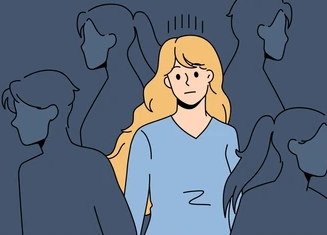
Loneliness and the feeling of being alone in a crowded room are not always the same experience. Conflating them leads to poor self-understanding and ineffective responses.
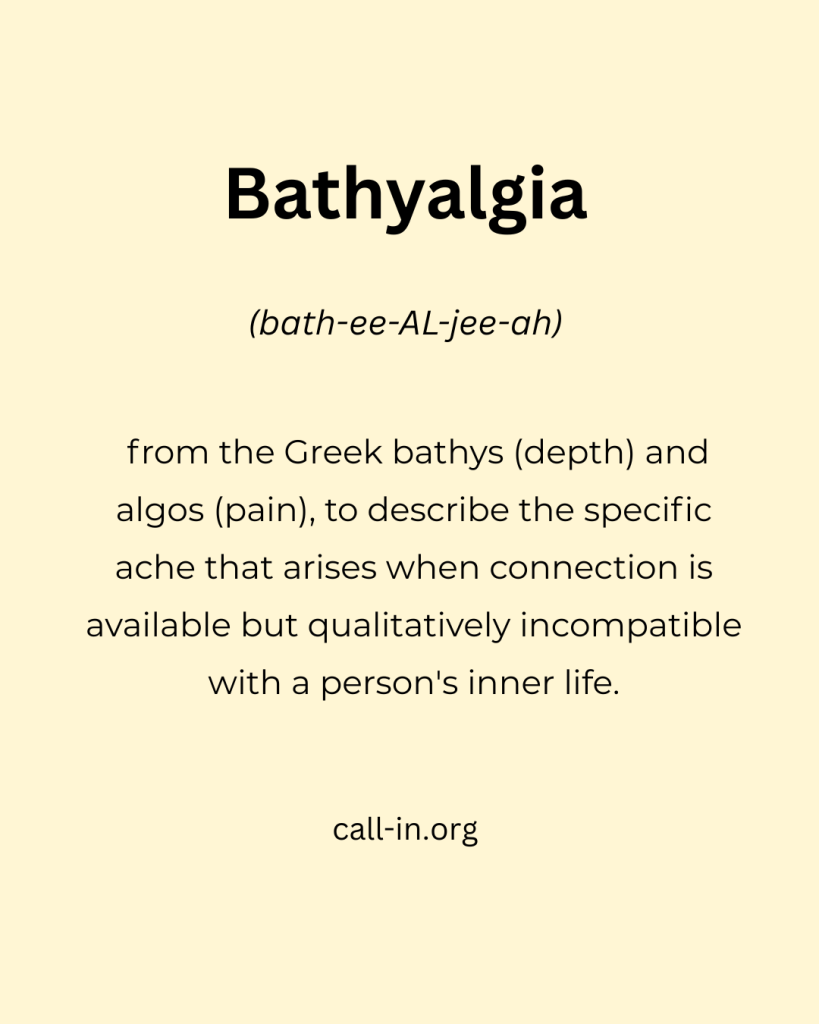
This article proposes a new descriptive term, Bathyalgia (bath-ee-AL-jee-ah), from the Greek bathys (depth) and algos (pain), to describe the specific ache that arises when connection is available but qualitatively incompatible with a person’s inner life.
Bathyalgia is not a psychiatric diagnosis, a medical condition, or a scientifically validated clinical construct. It is offered as a conceptual vocabulary for an experience that existing language inadequately captures.
Quick Answer: You can talk to a warmline, an anonymous peer support space, or a professional active listening service. Each option gives you a place to speak openly without worrying about your friend’s schedule, mood, or emotional capacity. These options exist because friendship was never designed to carry every emotional load on its own. Choosing one is not a failure. It is a practical way to get support that fits the moment you are in right now.
If you have asked, “Do I need a mental health diagnosis before asking for help?” the simple answer is NO. Millions of people benefit from everyday emotional support long before reaching a clinical threshold. You do not need a mental health diagnosis to deserve emotional support.
The two are not the same thing. Waiting until a crisis before seeking support is not inevitable. Everyday emotional connection is preventative care.
Licensed therapists, psychiatrists, and clinical psychologists play an essential and irreplaceable role for people experiencing mental health conditions. Everyday emotional support complements that care. It does not compete with it.
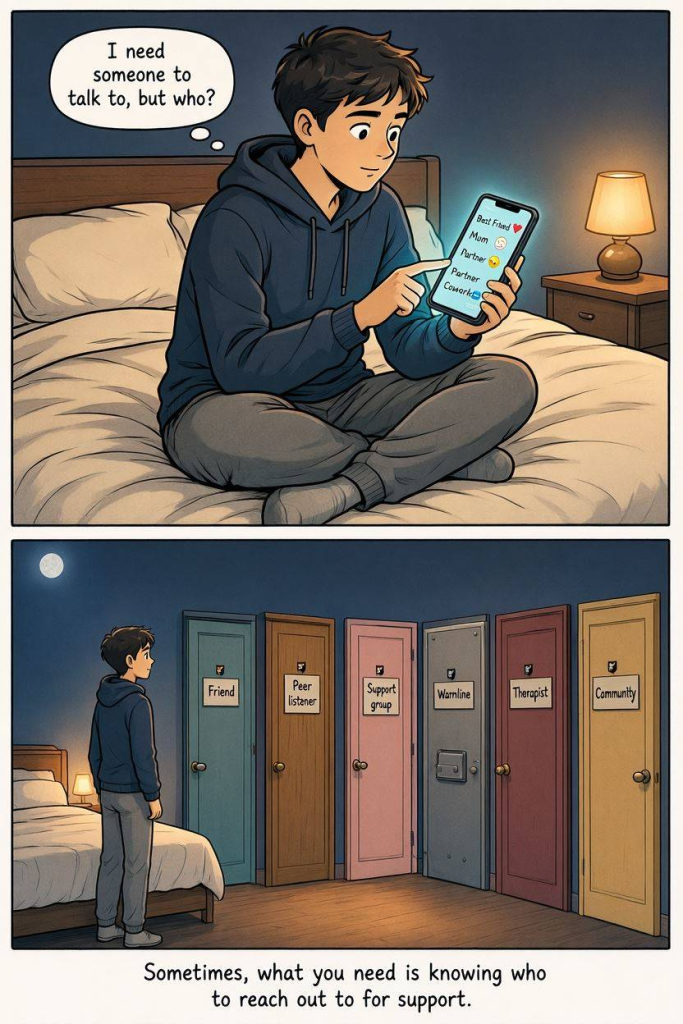
When you need someone to talk to and no name comes to mind, that does not mean you have run out of options. It usually means the obvious people, a best friend, a parent, a partner, do not feel like the right fit for what you are carrying today. There are at least nine real, accessible ways to have an honest conversation right now, and this guide walks through each one.
A warm line is a free, confidential, non-crisis peer support phone service for people who need someone to talk to. Here’s how warm lines work, who they help, and how they differ from a crisis line.
If you are asking who you can talk to when you feel lonely, the honest answer is: more people and services exist to listen than you might realise. You can reach a trusted friend, a family member, a free warm line, an online community, or a compassionate human listener through services like Callin. You are not out of options. You are simply looking for the right one.
In today’s fast-paced world, it’s easy to feel overwhelmed by the constant hustle and bustle driven by capitalism. Work culture often demands more from us than ever, leaving little room for downtime or self-care.
To cope with this stress, it’s important to carve out moments just for yourself, whether that’s through a quick walk during lunch or indulging in a hobby after work.
Finding ways to disconnect, even briefly, can help you recharge and regain perspective. Remember, it’s okay to prioritize your well-being over the endless grind; after all, you’re more than just a cog in the capitalist machine.