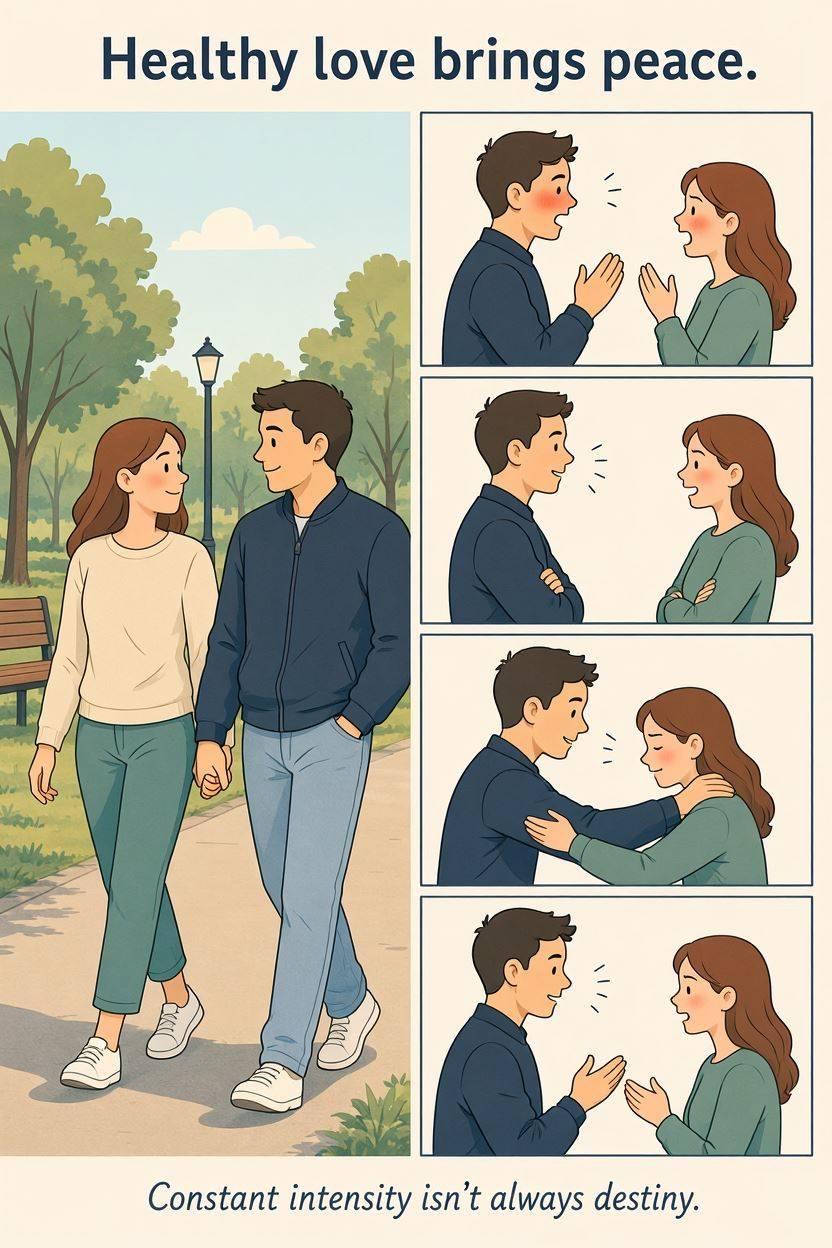
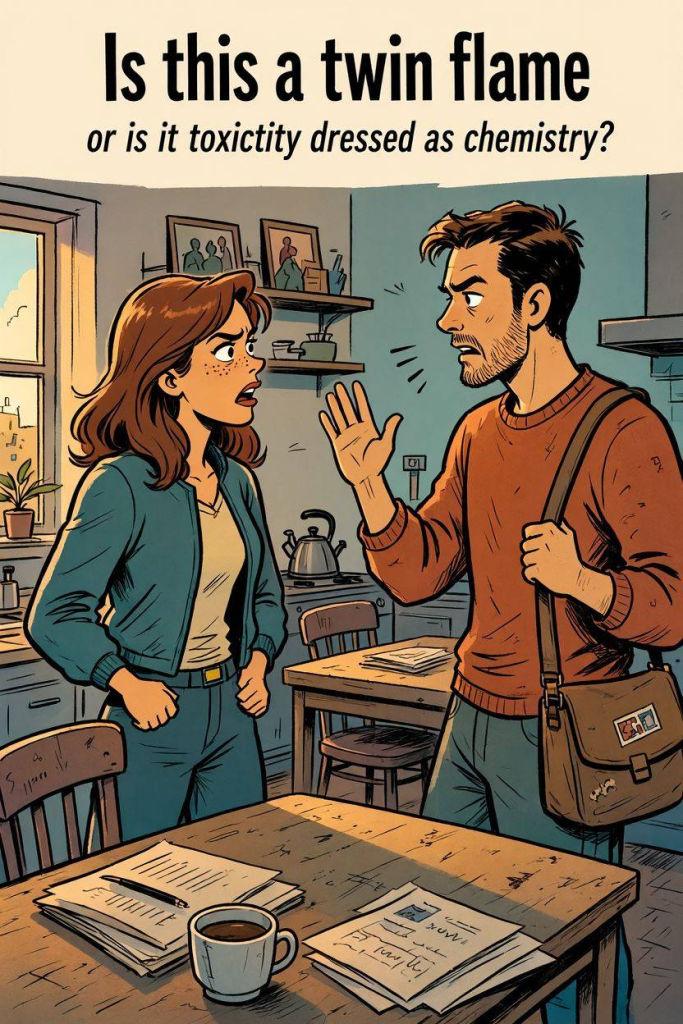
Twin flames may or may not be a real phenomenon, but a twin flame toxic relationship is unfortunately very real for the people living inside one. The idea of a soul destined to complete you can be comforting, even beautiful, until it becomes the reason you excuse manipulation, chaos, or the slow disappearance of your own peace. Belief and self-respect do not have to be at odds.
Key Takeaways
- Twin flame theory has no scientific basis, but the emotional intensity people describe is real, and psychology explains it more convincingly than destiny does.
- Intensity is not proof of a soul bond. Unpredictable affection paired with unpredictable conflict can create the same chemical pull that behavioral scientists study in conditioning experiments.
- Real connection, as described by thinkers from Erich Fromm to Carl Jung, moves a person toward growth. It does not require constant survival mode.
- A relationship should never ask you to override your own instincts, safety, or boundaries in the name of fate.
- Spirituality and discernment are not opposites. You can hold a belief in soul connection and still choose to walk away from harm.
What People Mean by “Twin Flame”
The term twin flame comes from New Age and metaphysical circles, where it describes two souls said to originate from the same spiritual source and reunite across lifetimes.
It is often distinguished from a soulmate by its intensity. Where a soulmate connection is usually described as comfortable and complementary, a twin flame is described as a mirror that reflects your own unresolved wounds back at you, which is part of why the relationship is expected to feel so consuming.
Neither term has an agreed scientific or clinical definition. They function more like folk psychology, offering people a story that explains why a particular connection felt so much bigger than others.
That is not inherently a problem. Humans have always reached for language to describe experiences that feel larger than ordinary life, and meaning-making is part of how we process intense emotion.
Twin Flame vs. Soulmate: What Is the Difference?
Most descriptions draw the line at intensity and disruption. A soulmate relationship is generally framed as supportive and steady, a partnership that fits with relative ease.
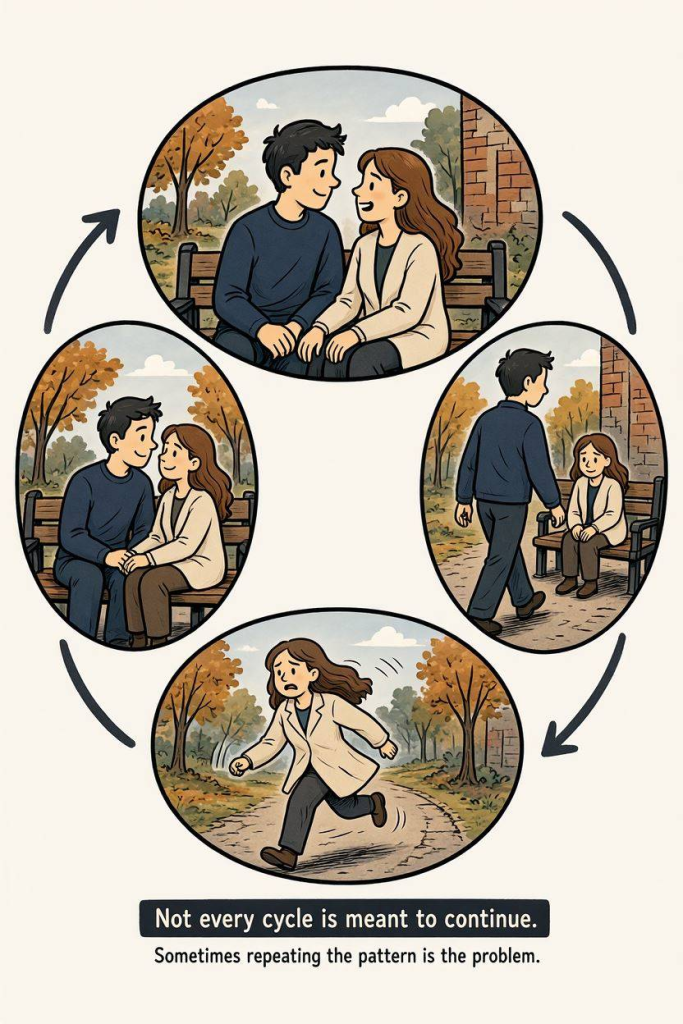
A twin flame relationship is framed as transformative but turbulent, often following a pattern known informally as the runner and the chaser, where one person pulls away and the other pursues, sometimes across repeated cycles of separation and reunion.
This distinction matters less for its accuracy and more for what it reveals. The runner and chaser pattern is, in plain psychological terms, a description of an anxious, unstable attachment cycle. Giving it a mythic name does not change what is happening underneath it.
Can a Twin Flame Be Non-Romantic?
Yes, according to the belief system itself. Many descriptions of twin flames include friendships, family bonds, or mentorships, framed as connections meant to teach a specific lesson rather than build a lifelong romance. This detail is worth remembering, because it undercuts the assumption that romantic intensity is proof of a twin flame bond in the first place.
Why the Idea of Destined Love Feels So Powerful
The longing for a predestined other half is far older than the term twin flame. In Plato’s Symposium, the character Aristophanes tells a myth in which humans were originally whole beings, split in two by the gods, forever searching for their missing half.
The story has survived for over two thousand years because it puts language to a very human ache, the feeling that another person could complete something in us that we cannot complete alone.
Carl Jung offered a related but more internal explanation through his concept of individuation, the lifelong process of integrating the parts of ourselves we have disowned or never developed.
Jung suggested that romantic partners often carry a projection of these unclaimed parts, which is why a new connection can feel less like meeting someone and more like recognizing them. The catch is that the recognition is partly happening inside your own psyche, not only between two people.
Viktor Frankl’s work adds another layer. Frankl argued that human beings are driven less by pleasure and more by a search for meaning, even in suffering.
Framing a painful relationship as fated or as a soul lesson can make the suffering inside it feel purposeful rather than pointless, which is psychologically comforting even when the relationship itself is doing harm.
We tend to call an experience destiny once it carries enough emotional weight, and the story usually gets written backward, after the chaos, not before it.
When Spiritual Belief Becomes a Reason to Stay
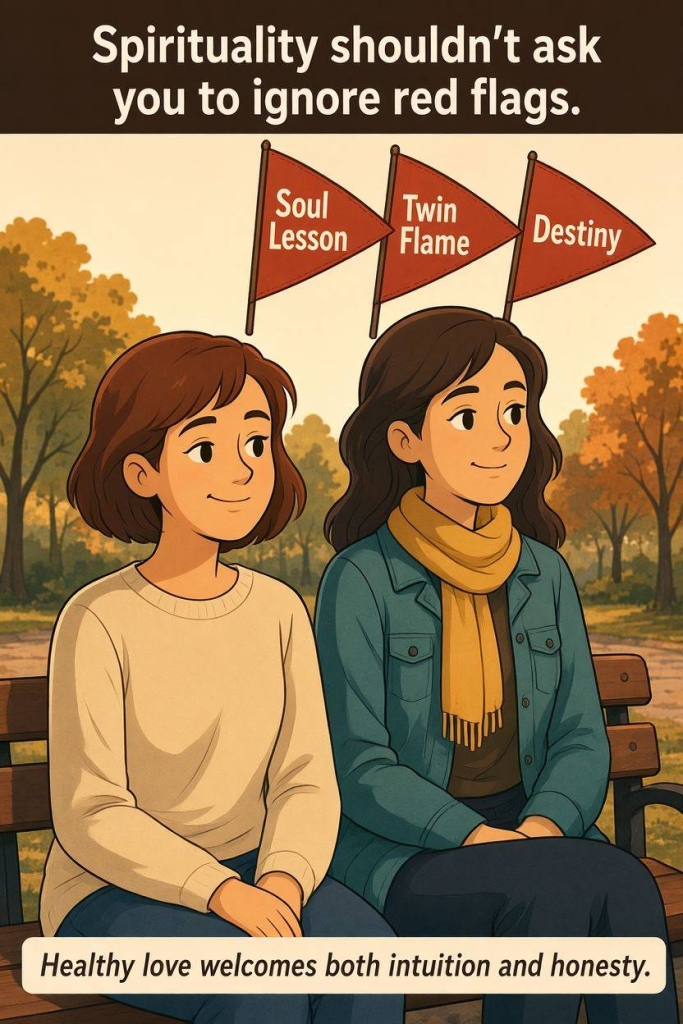
Psychologist John Welwood coined the term spiritual bypassing to describe the use of spiritual ideas and practices to avoid facing unresolved emotional wounds or uncomfortable truths.
In relationships, this can look like reframing jealousy as intuition, reframing control as protectiveness, or reframing a partner’s inconsistency as a test the universe has designed for personal growth.
The spiritual language is not necessarily dishonest. It is often a genuine attempt to make sense of pain, which is exactly what makes it so effective at keeping someone in place.
The phrase “we are meant to be” does a particular kind of work. It quietly removes personal agency from the decision to stay, so that leaving starts to feel like fighting the universe rather than protecting yourself.
It can help to recognize when you are gaslighting yourself into staying, since a belief that consistently requires you to override your own discomfort is not a spiritual experience so much as a coping mechanism wearing spiritual clothing.
What Attachment Theory Explains About Painful Bonds
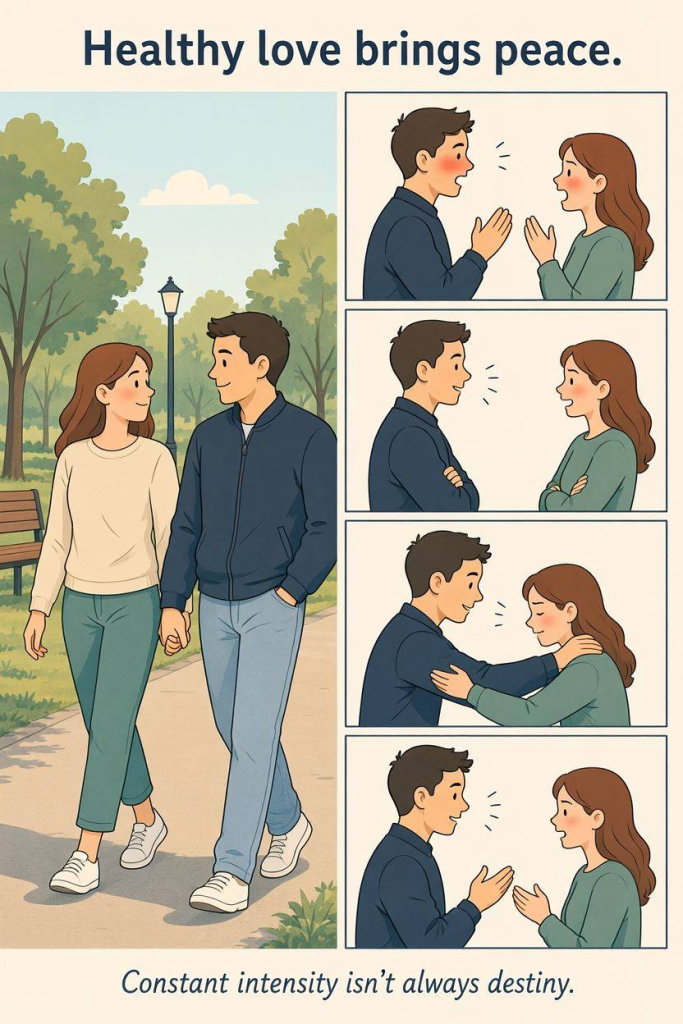
John Bowlby’s attachment theory describes how humans are wired from infancy to seek closeness with the people they depend on, and that system does not clearly distinguish between safe closeness and anxious closeness.
It responds to unpredictability by increasing attachment-seeking behavior rather than decreasing it, which helps explain why an unstable partner can feel harder to let go of than a stable one. The nervous system reads uncertainty as urgency, not as a warning sign.
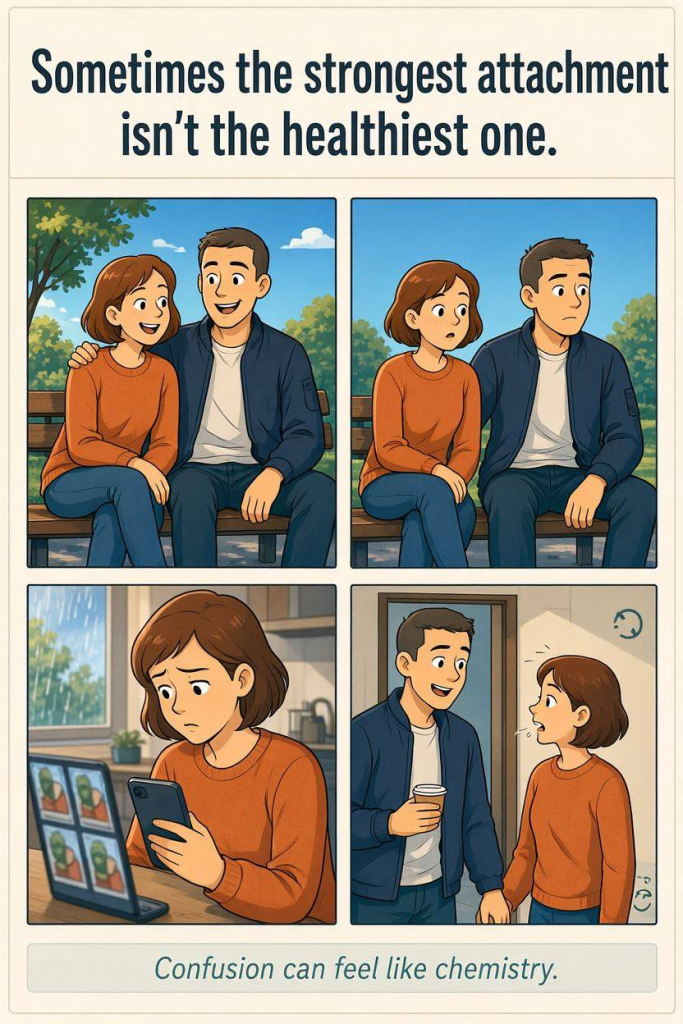
This is compounded by what addiction specialist Patrick Carnes described as trauma bonding, where cycles of affection and mistreatment create an attachment that is disproportionately strong compared to the amount of good treatment involved.
Behavioral psychology offers a related explanation through intermittent reinforcement, the finding that unpredictable rewards produce more persistent pursuit than consistent ones.
It is part of why a slot machine is more compelling than a vending machine, and it is part of why a partner who is warm one week and distant the next can feel more consuming than one who is simply, steadily kind.
Psychologist Dorothy Tennov used the term limerence to describe an intrusive, anxious infatuation marked by obsessive thinking and a craving for reciprocation, which can easily be mistaken for fated love when it is really a specific and time-limited emotional state.
The high highs and low lows that twin flame narratives often celebrate as proof of cosmic significance are, biologically, frequently just the signature of intermittent reinforcement at work.
Signs a “Destined” Relationship Has Become Harmful
A few patterns tend to show up when spiritual language is masking something more concerning. None of them require a diagnosis or a label, only honest attention.
- Persistent anxiety about where you stand, even after reassurance
- Feeling responsible for managing the other person’s moods or reactions
- Gradual isolation from friends or family who have raised concerns
- A repeated need for proof that you are loved or wanted
- Spiritual explanations offered for behavior that would otherwise be recognized as controlling or dismissive
- Feeling relief, rather than dread, during time apart
If any of this feels familiar, it can help to learn to spot the red flags of a narcissistic dynamic early, before the pattern becomes the norm.
If a relationship involves fear for your physical safety, that is a different situation than the one this article addresses, and it deserves immediate outside support, including a domestic violence hotline or local emergency services if you are ever in danger.
What Real Connection Is Supposed to Feel Like
Erich Fromm’s The Art of Loving offered a definition of love that still holds up: love as an active orientation, a practice of care, responsibility, respect, and knowledge of another person, rather than something that simply happens to you because fate arranged it.
Under this definition, love is closer to a skill than a feeling, something built through consistent behavior rather than confirmed by intensity.
This reframes the whole conversation around twin flames and soulmates. The difference between a soulmate and a trauma bond is not intensity. It is direction, whether the relationship is moving you toward yourself or away from it.
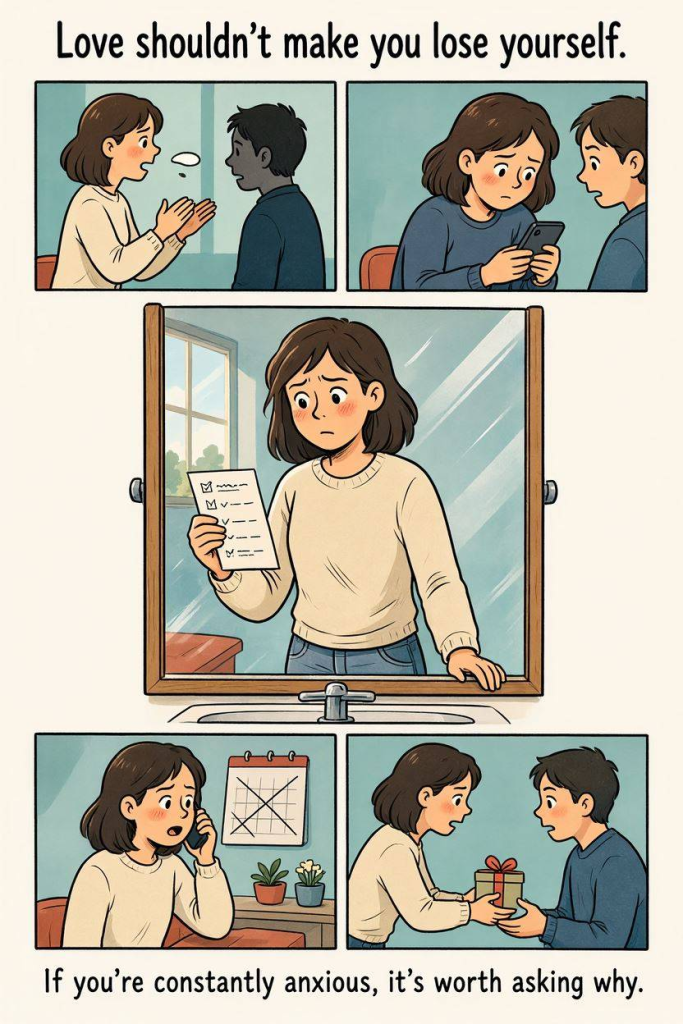
A connection that repeatedly asks you to shrink, apologize, or abandon your own judgment is not a soul lesson in disguise. It is simply costing you more than it is giving you.
Holding Both Spirituality and Boundaries
None of this requires giving up a belief in soul connection, destiny, or past lives if those ideas are meaningful to you.
Spirituality and discernment are not competing forces. In fact, many spiritual traditions explicitly teach discernment as a form of wisdom, the ability to tell the difference between a genuine calling and a familiar wound repeating itself in a new costume.
Setting healthy boundaries does not have to feel like betrayal, spiritual or otherwise. A relationship that is truly meant for your growth will generally be able to survive your boundaries. One that cannot survive them was probably asking you to disappear a little, and calling it fate.
When You Need Space to Process It
Sometimes what a person in this situation needs is not another debate about whether twin flames are real. It is simply somewhere confidential to think out loud about a relationship that friends and family are tired of hearing about, without having to defend a belief system in the process.
This is part of why non-clinical, peer-based spaces like Callin exist, offering a confidential place to process relationship confusion with a trained listener, alongside therapy rather than instead of it.
Frequently Asked Questions
Are twin flames scientifically real?
There is no scientific evidence for twin flames as a spiritual phenomenon, and the term does not appear in psychological or clinical research. The emotional intensity people describe is real, but it is better explained by attachment patterns, projection, and intermittent reinforcement than by a predestined soul bond.
What is the difference between a twin flame and a soulmate?
Popular use of the terms distinguishes them by intensity and disruption. A soulmate is typically described as steady and complementary, while a twin flame is described as turbulent, transformative, and prone to cycles of separation and reunion.
Can a twin flame relationship be toxic?
Yes. Believing a connection is destined does not protect it from becoming manipulative, controlling, or unstable, and the belief itself can make those patterns harder to recognize, since discomfort gets reframed as a spiritual test.
Why do people stay in relationships they believe are “meant to be”?
Framing a relationship as fated can make painful experiences feel meaningful rather than pointless, which is psychologically comforting. It also removes a sense of personal choice from the decision to stay, making leaving feel like going against destiny itself.
Is it wrong to believe in twin flames or soulmates?
No. Believing in soul connection, destiny, or past lives is a meaningful framework for many people, and it can coexist with healthy boundaries. The concern is not the belief itself but using it to excuse behavior that would otherwise be recognized as harmful.
How do I know if my relationship is toxic rather than destined?
A useful question is direction rather than intensity: does the relationship move you toward becoming more yourself, or does it require you to shrink, apologize, and override your own judgment on a regular basis? Genuine growth looks different from a repeating cycle of harm followed by reconciliation.
Can a twin flame connection be non-romantic?
Yes. Popular descriptions of twin flames include friendships, family relationships, and mentorships, framed as connections meant to teach a specific life lesson rather than build a romance, which suggests that intensity alone is not evidence of a romantic twin flame bond.
The Closing Thought
Whether or not twin flames exist, the ache behind the idea is old and deeply human, the wish to be recognized, chosen, and understood without having to explain yourself. That wish deserves an open heart. It also deserves a discerning one, because genuine love, in whatever form it takes, tends to move a person toward more peace, not less. If a connection asks you to choose between the two, it is worth asking which one it was actually protecting.

Leave a Reply