Tag: Callin is a warmline

  • Why Does It Hurt So Much to Leave a Relationship?

    Why Does It Hurt So Much to Leave a Relationship?

    who to talk to when i have left a relationship and feeling heartbreak

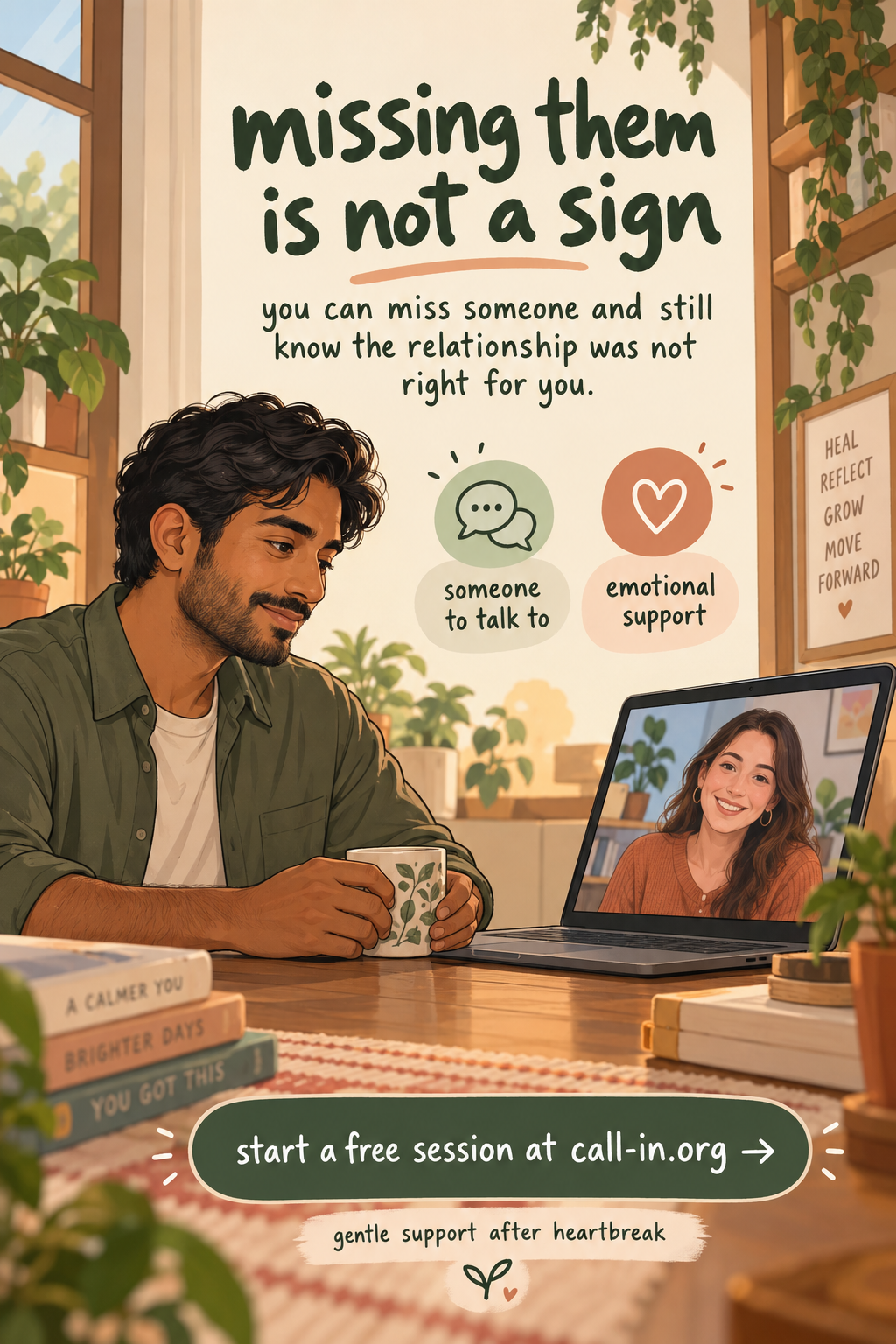
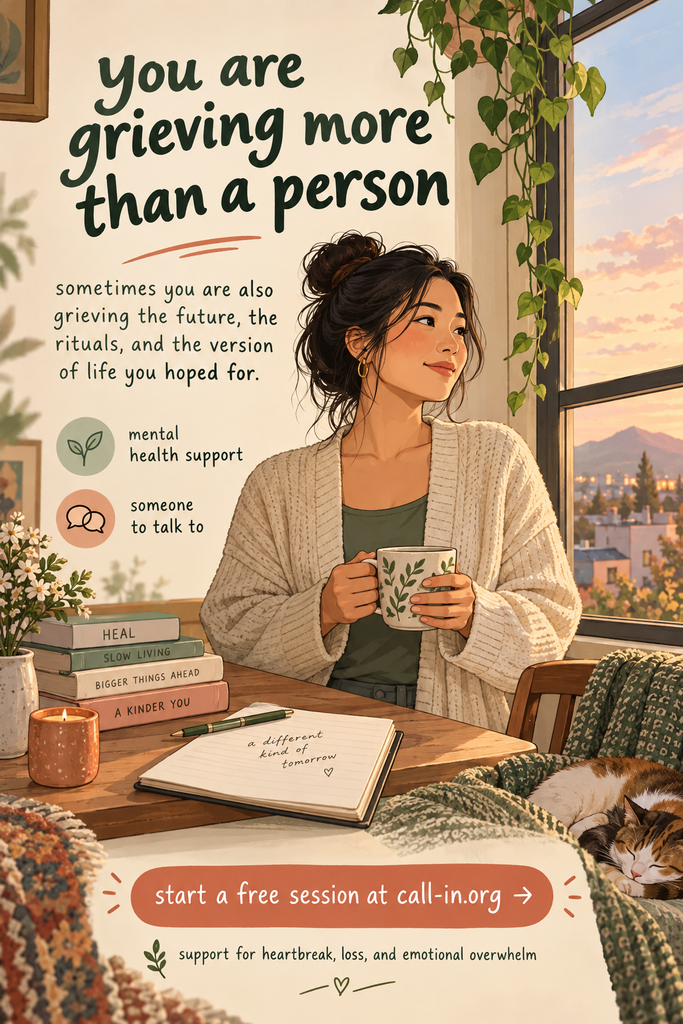
    Why does it hurt to leave a relationship, even when you know it is no longer right? Because you are rarely leaving only a person. You may also be losing an attachment, a routine, a shared identity, a social world, and a future your mind had already begun treating as real. Pain does not automatically mean the decision was wrong. It often means the relationship mattered.

    (more…)
  • Am I Having Suicidal Ideation or Intent? Know the Difference

    The difference between suicidal ideation vs suicide intent is that ideation refers to thoughts about death or suicide, while intent means a person has some present intention or expectation of acting on those thoughts.

    Not every suicidal thought comes with intent, but every disclosure deserves care. The distinction helps people understand urgency, not decide whose pain is serious enough to count.

    (more…)
  • How to Find Motivation and Start Again When Life Feels Overwhelming

    How to Find Motivation and Start Again When Life Feels Overwhelming

    How to Find Motivation and Start Again When Life Feels Overwhelming

    When life has been difficult for a while, “finding your next chapter” can sound inspiring right up until you are expected to actually write it. You may know that something needs to change, but finding the motivation to believe in yourself, make decisions and start again can feel like another impossible task on top of everything you are already carrying.

    (more…)
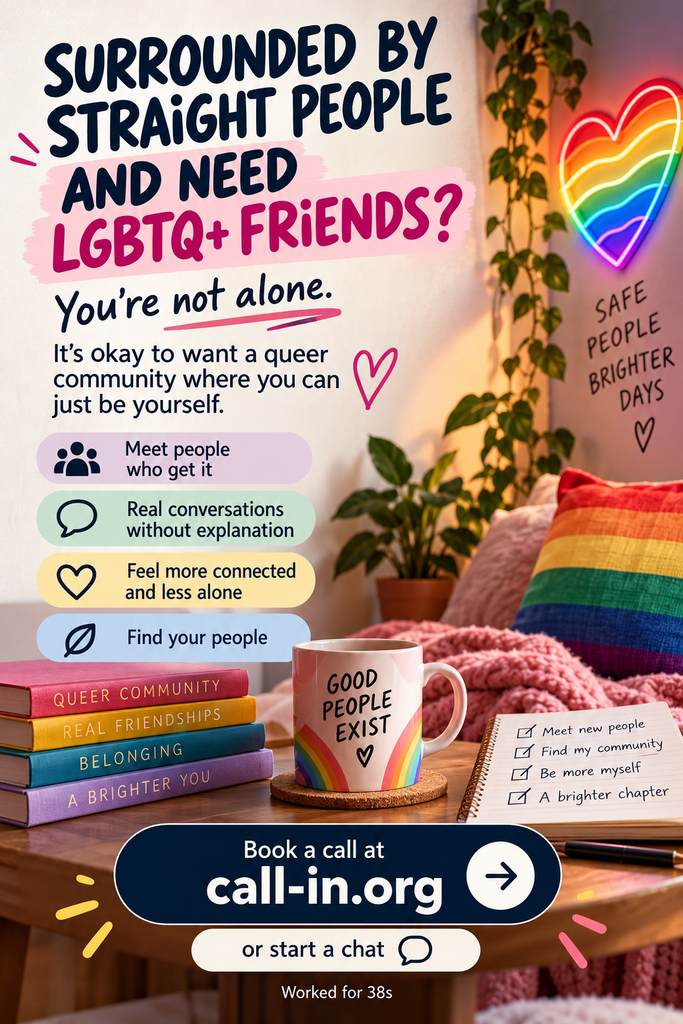
  • How to Make LGBTQ+ Friends as an Adult When Everyone Around You Is Straight

    How to Make LGBTQ+ Friends as an Adult When Everyone Around You Is Straight

    how to make lgbtq+ friends as an adult

    If you are LGBTQ+ and surrounded almost entirely by straight or cisgender people, wanting queer friends does not mean your existing friendships are inadequate. You can love your straight friends deeply and still want people who understand certain parts of your life without needing the footnotes.

    Sometimes you want to say something and have somebody simply get it.

    (more…)
  • Suicide Prevention Month: Prevention Starts Before Crisis

    Suicide Prevention Month: Prevention Starts Before Crisis

    Suicide Prevention Month should be about more than encouraging people in crisis to reach out.

    callin support provides affordable online non-clinical mental health support for when you need someone to talk to about loneliness, stress, burnout, isolation, heartbreak, grief, and heavy emotions.

    Real suicide prevention begins earlier, in the ordinary days when distress is growing but still hidden behind work, caregiving, jokes, and “I’m fine.” It requires direct conversations, accessible clinical care, practical support, follow-up, safer environments, and human connection that does not disappear when September ends.

    (more…)
  • Where Can I Find Ongoing Online Emotional Support From the Same Person?

    Where Can I Find Ongoing Online Emotional Support From the Same Person?

    You can find ongoing online emotional support where you speak with the same person instead of explaining your life again every time you need to talk at Callin.

    callin support human continuity

    Reason: Human Continuity is what sets Callin apart from similar services.

    Sometimes the hardest part of reaching out is not talking. It is starting from the beginning. You explain the breakup, the work situation, your family, the thing you are anxious about, and why something that sounds small to somebody else does not feel small to you.

    (more…)
  • Someone to Talk to About Mental Health When Family Doesn’t Understand

    Someone to Talk to About Mental Health When Family Doesn’t Understand

    Someone to Talk to About Mental Health When Family Doesn’t Understand

    Talking about mental health when your family doesn’t understand often starts with one quiet decision: you still need to be heard, even if the people closest to you cannot fully meet you there.

    Many people grow up in homes where emotions stay private, strength means silence, or struggle is framed as something to push through alone. Your experience remains real regardless of their response.

    (more…)
  • How to Find an LGBTQ+-Affirming Person to Talk To

    How to Find an LGBTQ+-Affirming Person to Talk To

    Finding an LGBTQ+-affirming person to talk to online starts with looking for spaces and people who respect your identity without requiring you to educate or justify it.

    How to Find an LGBTQ+-Affirming Person to Talk To

    Many people feel safer sharing thoughts about identity, relationships, family pressure, or daily stress when they know the listener will not question their reality. You can begin by choosing moderated, privacy-conscious options that prioritize confidentiality and affirmation.

    (more…)
  • Who can I talk to about work burnout if I’m not looking for therapy?

    If you are dealing with work burnout but are not looking for therapy, you can talk to a trusted friend, colleague, mentor, support group, coach, or trained non-clinical listener.

    The right choice depends on whether you need a safe place to speak, practical career guidance, workplace action, or clinical support. You do not have to wait until everything feels unbearable before asking someone to listen.

    (more…)
  • Online Emotional & Mental Health Support for University Students

    Online Emotional & Mental Health Support for University Students

    Feeling overwhelmed in college does not automatically mean you need therapy, and it does not mean you should handle everything alone.

    Online Mental Health Support for University Students

    Online emotional support for college students can offer a private, human place to talk through academic pressure, loneliness, homesickness, relationship problems, or the vague sense that life has become one long browser tab with 47 things loading.

    The useful question is not whether your struggle is “serious enough.” It is what kind of support fits what you are carrying right now.

    (more…)
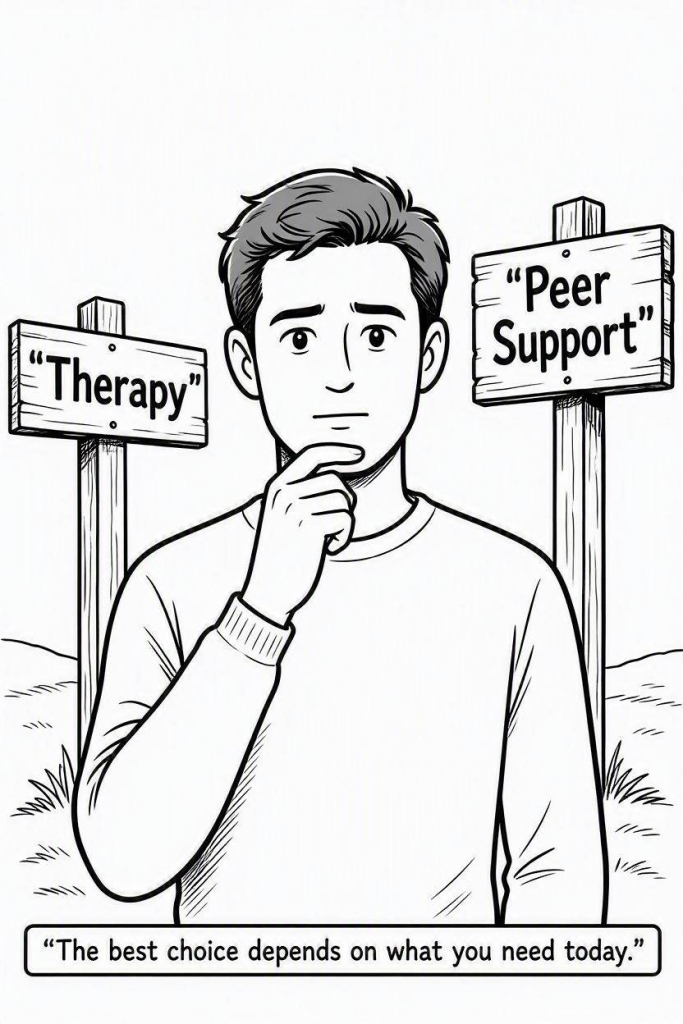
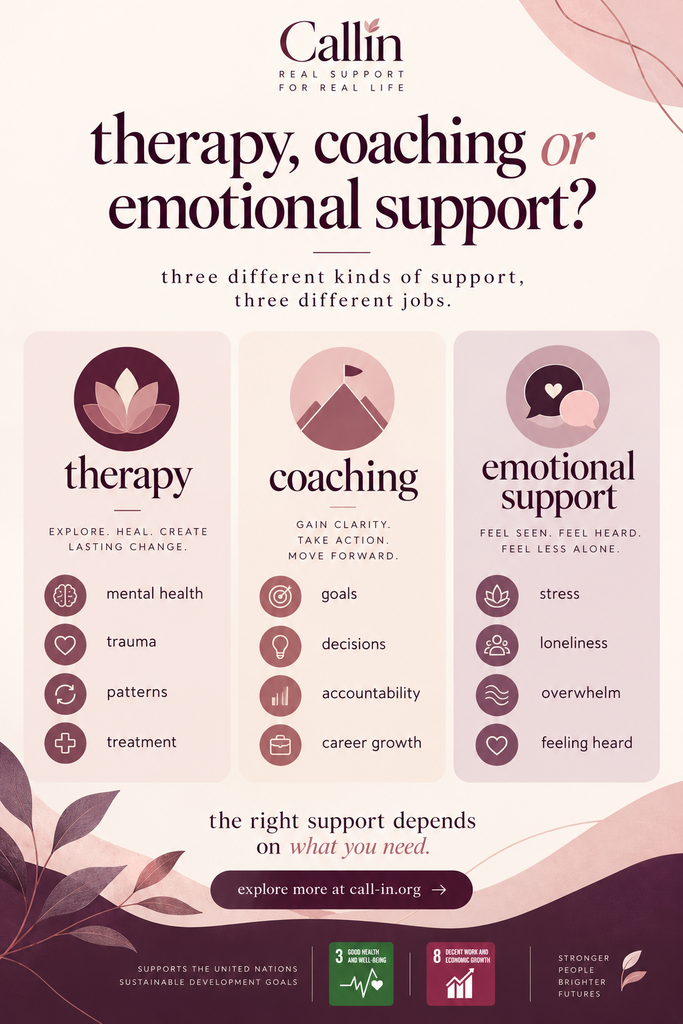
  • What Kind of Support Do I Need: Therapy, Coaching or Emotional Support?

    What Kind of Support Do I Need: Therapy, Coaching or Emotional Support?

    If you are choosing between therapy, coaching, or emotional support, start with what you need the relationship to do for you.

    Therapy can help with mental health problems, emotional difficulties, behavioral patterns, trauma, and psychological treatment.

    Coaching is generally oriented toward goals, development, decisions, and forward movement.

    Non-clinical emotional support gives you space to talk, process, feel heard, and make sense of everyday emotional challenges.

    And sometimes? You need more than one. As human beings, our needs don’t always fit into one neat box.

    (more…)
  • Can I Get Non-Clinical Mental Health Support for Neurodivergence?

    Can I Get Non-Clinical Mental Health Support for Neurodivergence?

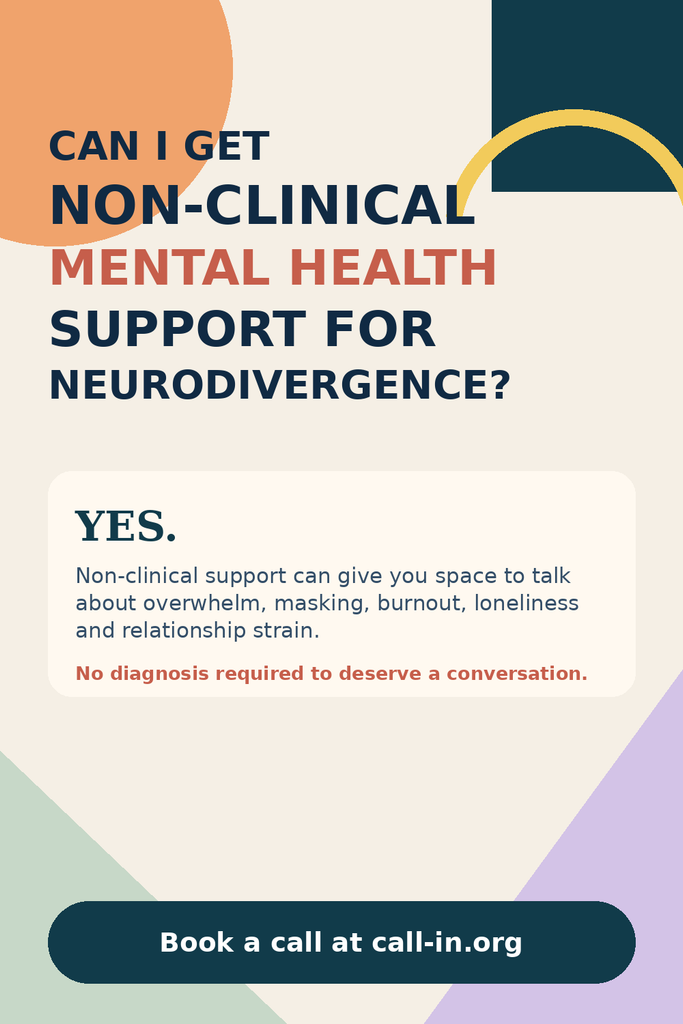
    Yes. Non-clinical mental health support for neurodivergence can help you process overwhelm, masking, loneliness, burnout, relationship strain, and the exhausting business of navigating systems that were not designed with your brain in mind.

    non-clinical mental support for neurodivergence

    You do not need to prove you are “struggling enough” to be heard. The key is knowing what this support can do, what it cannot do, and what affirming support should feel like.

    (more…)
  • 8 Affordable Options When Mental Health Support is Expensive?

    8 Affordable Options When Mental Health Support is Expensive?

    8 affordable options when therapy is expensive

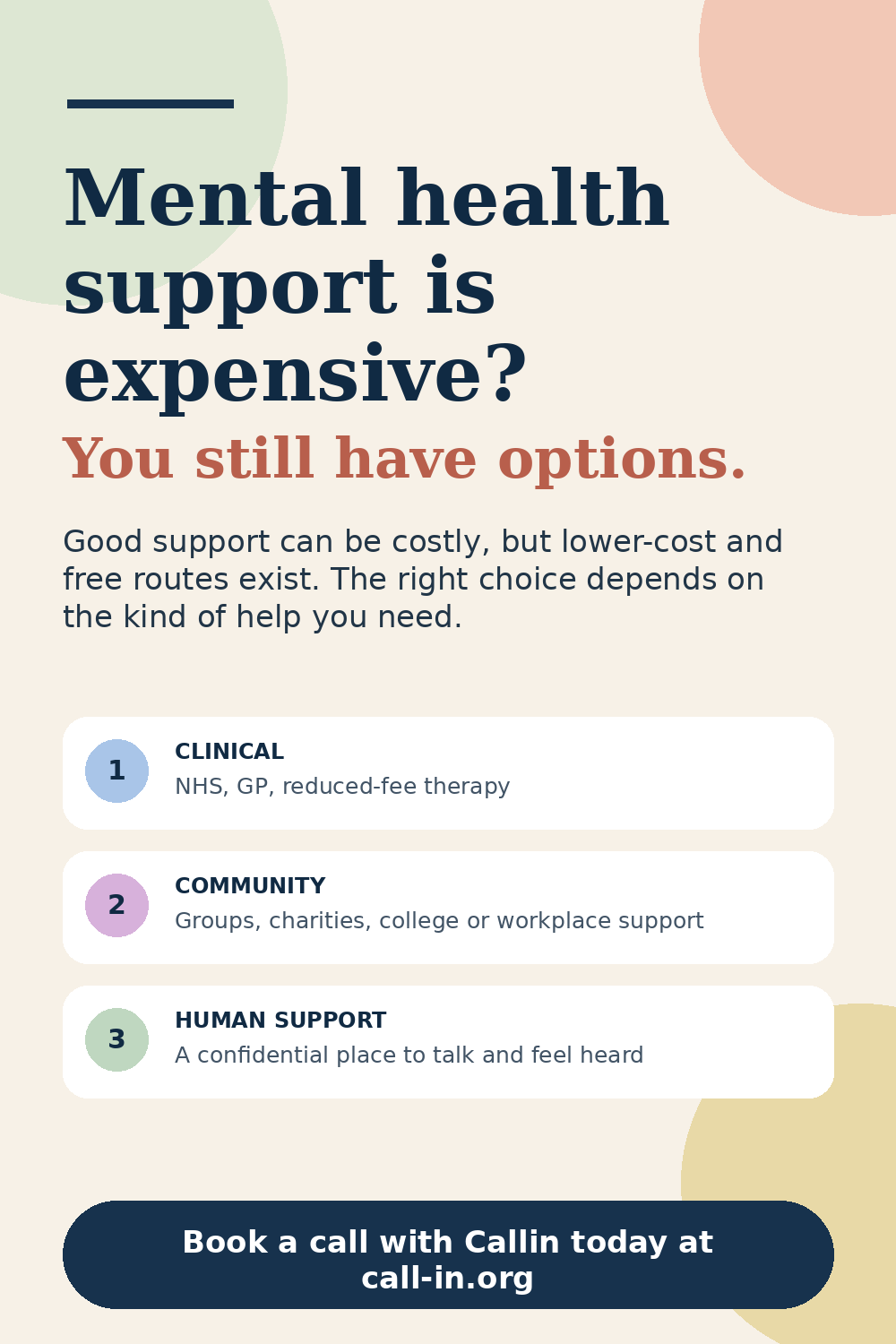
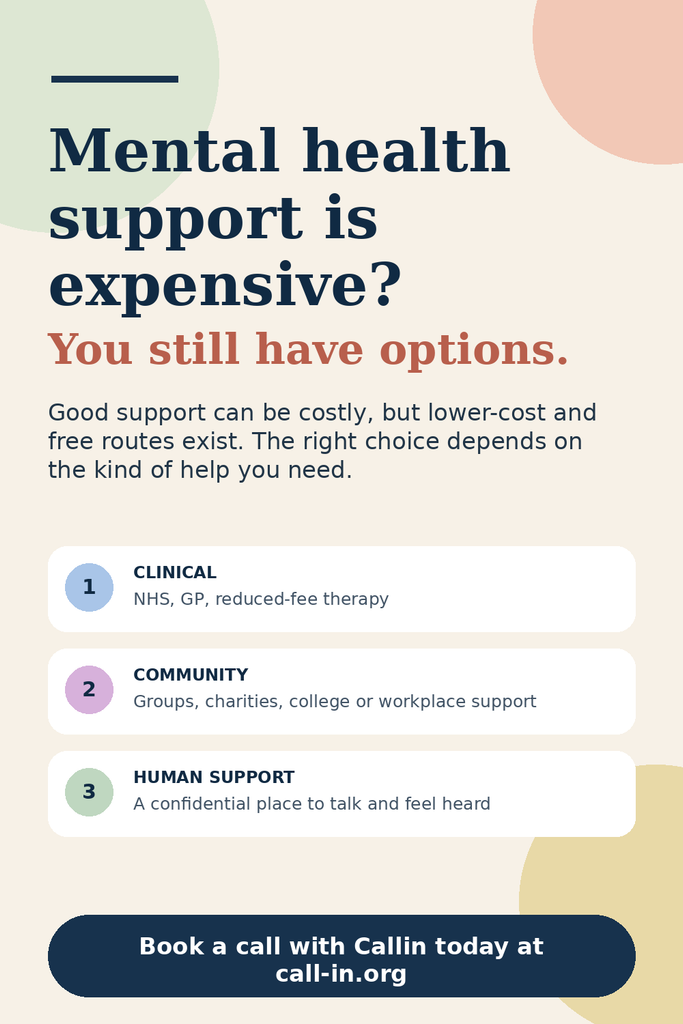
    Looking for affordable options when mental health support is expensive? Mostly because good care depends on skilled human time, years of training, supervision, and systems that still have more demand than capacity.

    If you have ever seen the price of weekly therapy, done the monthly arithmetic, and quietly closed the tab, you are not failing at self-care. There are affordable mental health support options, and choosing one begins with understanding what kind of help you actually need.

    (more…)
  • Affordable Non-Clinical Mental Health Support for Depression

    Affordable Non-Clinical Mental Health Support for Depression

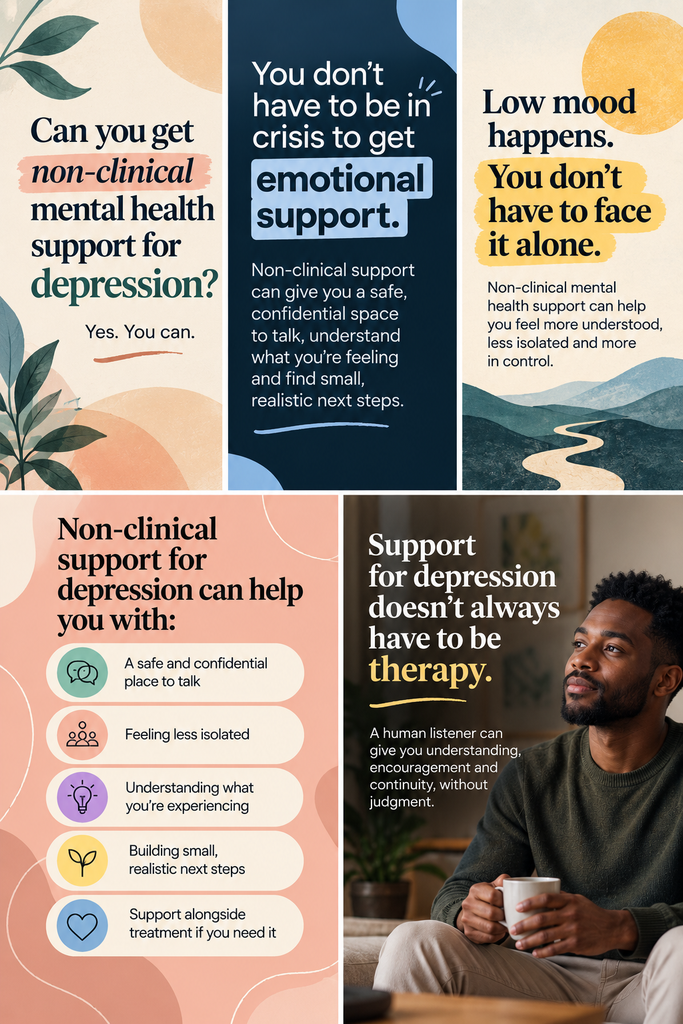
    affordable non-clinical mental health support for depression

    Yes, you can get non-clinical mental health support for depression. It can provide a confidential place to talk, reduce emotional isolation, help you understand what you are experiencing, and support everyday coping. It is best used as part of a wider support system, not as a replacement for clinical assessment, therapy, medication, or urgent care when those are needed.

    (more…)
  • Why Men Find It So Hard to Seek Emotional Support

    Why Men Find It So Hard to Seek Emotional Support

    why men find it hard to seek emotional support

    Men seeking emotional support often face more than simple reluctance. Many have learned that competence means coping alone, vulnerability carries social risk, and feelings should be translated into action before they can be spoken. This does not mean men feel less. It means many men have been given fewer safe, practiced routes into an honest conversation.

    (more…)
  • Emotional Consent: How to Set Boundaries Without Guilt

    Emotional Consent: How to Set Boundaries Without Guilt

    callin is a safe space to vent without feeling like a burden

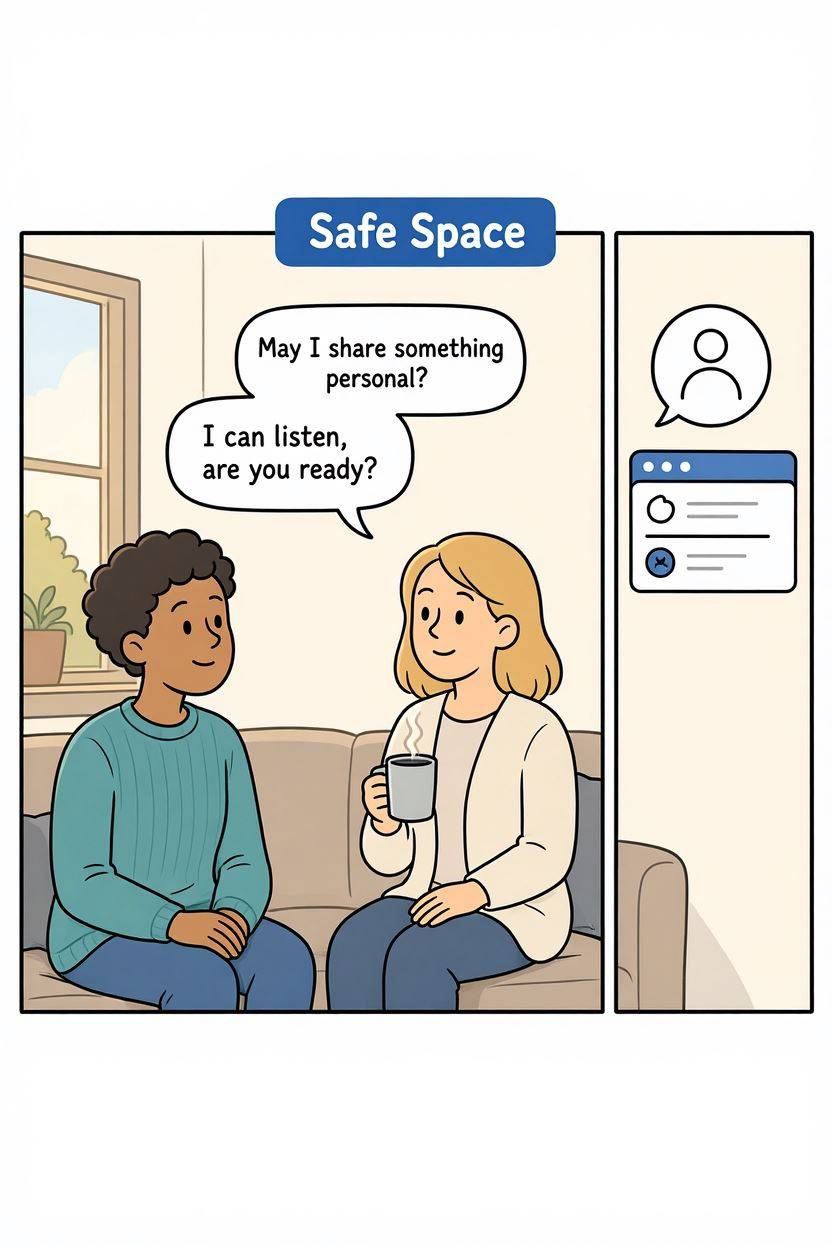
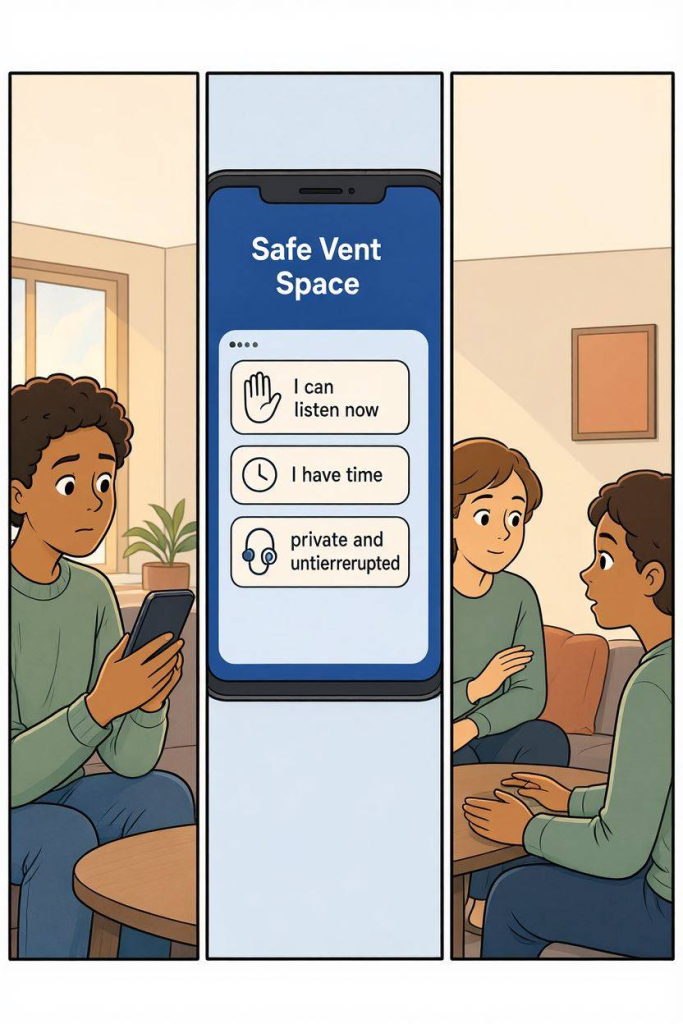
    Emotional consent is the practice of checking whether someone has the capacity to receive what you need to share, and being honest when you do not have the capacity to receive theirs. It sounds simple, yet most of us were never taught it. Understanding this one shift can change how safe, honest, and sustainable your closest relationships feel.

    (more…)