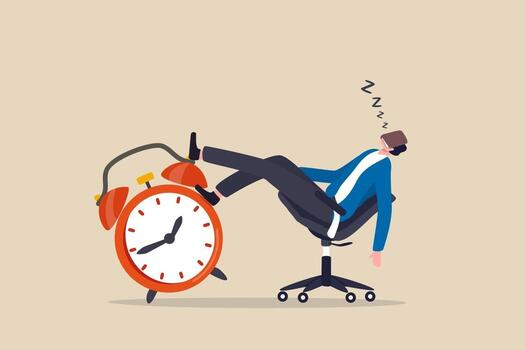
Here’s the thing nobody wants stitched onto a throw pillow: if you are googling why high achievers procrastinate, it is not because you are lazy or broken. It is because your brain is trying to protect you from a feeling, not from a task. I know this because last week I alphabetized my spice rack instead of finishing a project that was, generously, three days late.
Key Takeaways
- Procrastination is an emotional regulation strategy, not a discipline problem, so shame-based advice tends to make it worse.
- Delaying a high-stakes task can quietly protect your self-worth by giving you a built-in excuse if the outcome isn’t perfect.
- Perfectionism often causes procrastination, because a flawless idea in your head feels safer than a messy first draft on the page.
- Tiny, absurdly specific first steps bypass the emotional resistance that vague, intimidating goals trigger.
- Self-forgiveness, not stricter self-discipline, is one of the more reliably effective ways researchers have found to reduce future procrastination.
The Story Every Overachiever Recognizes

I once had a deck due to a client in eleven hours and used four of them to reorganize my Google Drive folders by color, which is not a real organizational system, I invented it that night, under duress, at 1 a.m.
At some point I stopped and asked myself the question every competent, accomplished person eventually asks while doing something deeply unnecessary at an unreasonable hour: why am I like this.
I have a résumé. I have references. I once ran a project that involved actual spreadsheets and actual stakeholders and actual competence.
And yet here I was, color-coding folders labeled “Misc” as if the fate of the free world depended on whether Misc was teal or maroon.
If this sounds familiar, you are not weird. Or something that involves a diagnosis. It just means you are running a very old, very common piece of software, and it is not called Laziness.exe. It is called your nervous system, and it is doing exactly what it was built to do.
Procrastination Is Not a Time Management Problem
Here is the part where I have to be a little bit responsible and mention that this has actually been studied, by people with lab coats and grant funding, not just by me and my color-coded folders.
What’s actually happening is that your brain registers the intimidating task, the report, the pitch, the difficult email, as an emotional threat before it registers it as a to-do item.
Your amygdala, the ancient smoke detector sitting in the middle of your brain, does not know the difference between “a bear is chasing me” and “I have to write the first sentence of a document that might reveal I don’t actually know what I’m doing.” It just sounds the alarm either way.
So you do what any reasonable creature does when the smoke detector goes off: you leave the room. Except leaving the room looks like replying to low-stakes emails, or deep-cleaning a kitchen that was already clean, or reading four industry newsletters you will not remember by lunch.
Each of those gives your brain a small, real hit of relief, which your dopamine system logs as a win. The bear is gone. Never mind that the bear was actually a deadline, and it is still very much out there, growing.
This is why, and I say this with love, buying a nicer planner does not fix procrastination. A planner is a logic tool. Procrastination is not a logic problem.
It never was.
(If you have ever wondered why the most beautifully color-coded productivity system in the world can still leave you frozen and anxious at your desk, productivity systems can quietly become their own source of anxiety, which is its own delightful trap.)
The Weirdly Smart Reason You Wait Until the Last Minute
Here’s an idea that took me embarrassingly long to accept: waiting until the last minute is not always chaos. Sometimes it is strategy, and your subconscious is a better lawyer than you are giving it credit for.
There’s a sociologist, Erving Goffman, who spent his career studying how people manage the way they appear to others, and I only know this because I read about it once, mostly as an excuse to avoid a different deadline. His basic idea was that we treat life a little like a stage performance, constantly managing the impression we give off.
Apply that to procrastination and you get something like this: if you wait until the eleventh hour to do the big, judged, high-stakes thing, you build yourself a built-in alibi. If it goes badly, well, you only had two hours, imagine what you could’ve done with a week. If it goes well, you’re a genius who works brilliantly under pressure.
Either way, your actual talent never has to sit in the room and be evaluated at full effort. That’s the quiet, unglamorous function of a lot of last-minute panic work. It isn’t a failure of planning. It’s an alibi you built for yourself months in advance, without ever writing it down.
I want to be clear that I am not saying this to make you feel exposed, mostly because I have done this so many times I would be exposing myself first. But once you see it, you start noticing how much of your self-worth got quietly wired to your output somewhere along the way, which is exhausting and also very fixable.
(This is worth sitting with if you’ve ever noticed that your sense of self-worth seems tied directly to how productive you were that day, because that wiring is usually where the procrastination started in the first place.)
The Gap Between the Genius Idea in Your Head and the Garbage First Draft
Before you write a single sentence of anything, it exists in your head in a state of flawless, undamaged perfection. The report is brilliant. The essay is moving. The business plan makes venture capitalists weep with joy. Then you open the document, and the first sentence you actually produce is, structurally, garbage.
This gap has a name in philosophy, something about the difference between pure potential and messy, finite reality, and very smart people in tweed jackets have written entire books about it.
I call it Tuesday. Whatever you call it, the gap is the whole problem. A perfect idea that never leaves your head can never fail.
The second you put it on the page, it becomes a real, flawed, criticizable object, and some part of you would rather protect the perfect idea forever than risk it.
Here’s the reframe that actually helped me, and it is annoyingly simple: a finished, imperfect draft can be improved. A perfect, unwritten idea cannot, because it does not exist anywhere except your increasingly anxious imagination. Only one of those two things can ever become a real report, sitting on a real desk, doing its job.
Okay, So What Actually Helps
I am not going to hand you a strict five-step morning routine, partly because I don’t trust anyone who claims to have one, and partly because rigid systems tend to collapse the second real life happens to you.
But there are a few things that consistently lower the emotional cost of starting, and they work with your nervous system instead of yelling at it.
The first is making your entry point stupidly small. Your brain does not resist “finish the report.” It resists the vague, enormous cloud that phrase represents.
It rarely resists “open the file and write one ugly sentence,” because there is nothing in that instruction big enough to trigger the alarm. Shrink the task until starting requires zero bravery, and momentum tends to show up on its own once you’re actually moving.
The second is giving yourself permission to stop.
Telling yourself you have to work on something scary for four hours is a great way to never begin it.
Telling yourself you get to work on it for exactly five minutes, with full permission to walk away the second the timer rings, removes the thing your brain was actually afraid of, which was never the task itself, it was the open-ended commitment.
The third is making the easy thing hard and the hard thing easy. If your phone is closer to your hand than your notes are, your environment is quietly voting against you every few minutes.
Put temptation a room away. Leave the actual task sitting open and ready on your screen the night before, so tomorrow-you doesn’t have to make a single decision before starting, just a movement.
And the fourth is deciding things in advance, before your tired, avoidant brain gets a vote. Something as plain as “the moment I finish my coffee, I open the document” tends to work better than any amount of willpower, because it removes the moment of choice where procrastination usually sneaks in.
The Serious Part
The guilt you feel after procrastinating is not a deterrent. It does not make you more likely to start on time next week. Researchers who study this have found something close to the opposite: people who actively forgive themselves for procrastinating on one task go on to procrastinate less on the next one, not more.
That tracks with something I’ve noticed in my own life, which is that shame doesn’t produce discipline, it produces more avoidance, because now the task is tangled up with feeling like a fundamentally lazy, disappointing person, and who wants to sit down and spend focused time with that feeling.
The guilt uses the exact energy that could have gone toward the task. It is not a punishment that motivates you. It is a second, quieter form of procrastination, dressed up as accountability.
If you take one thing from this entire article, let it be that you are allowed to put the trial down. You are allowed to stop cross-examining yourself over a missed deadline from March. (If this hits close to home, it’s worth understanding why it’s so hard to forgive yourself for even one small mistake, because that difficulty is usually doing more damage than the original mistake ever did.)
A Small, Honest Ending
I still color-code things I shouldn’t. I still occasionally discover a deep, urgent need to clean behind the refrigerator forty-five minutes before something important is due. I have not achieved enlightenment.
What’s changed is that I no longer treat it as proof that I’m secretly a fraud who got lucky this far. It’s just my nervous system, doing its overly dramatic smoke-detector thing, and I’ve gotten better at gently walking it back into the room.
Some of that shift came from finally saying the quiet part out loud to someone who wasn’t going to judge my Google Drive folder names. Not a lecture, not a fix-it session, just an actual conversation with someone trained to listen, who wasn’t a friend I’d be burdening or a coworker I’d have to see on Monday.
That’s honestly most of what a service like Callin is for: a confidential, non-clinical space to talk through the stuff that’s too small for therapy and too heavy for a group chat. If you’ve ever hesitated to bring something up because you didn’t want to burden the people closest to you with it, that hesitation is exactly the gap it’s built to fill.
Anyway. My spice rack is alphabetized and my faith in myself is, against all odds, mostly intact. Go write your one ugly sentence.
Frequently Asked Questions
Is procrastination a sign of laziness?
No. Most procrastination researchers now describe it as a form of emotional regulation rather than a character flaw. You are avoiding a feeling, usually anxiety, boredom, or fear of judgment, not avoiding effort itself.
Why do I procrastinate on important tasks but not small, boring ones?
Bigger, high-stakes tasks carry more emotional weight because more of your identity and self-worth feels tied to the outcome. Small tasks rarely threaten your sense of competence, so your brain doesn’t flag them as a threat worth avoiding.
Is procrastination linked to anxiety?
Often, yes. Anxiety and procrastination frequently feed each other. Avoiding the task brings short-term relief from anxious feelings, but it also lets the underlying anxiety about the deadline keep building in the background.
What is the five-minute rule for procrastination?
It’s a commitment to work on a task for just five minutes, with full permission to stop once the timer ends. The low bar removes the emotional resistance to starting, and many people find that once they begin, momentum carries them past the five-minute mark.
Can procrastination actually be a form of self-protection?
Yes. Delaying a high-stakes task can unconsciously protect your self-worth. If the outcome isn’t well received, you have a built-in excuse in the lack of time, rather than a verdict on your actual ability.
How long does it take to break a chronic procrastination habit?
There’s no fixed timeline, since it depends on the underlying cause, whether that’s perfectionism, fear of judgment, or burnout. What tends to help fastest is lowering the emotional stakes of starting, through smaller entry points and self-forgiveness, rather than trying to force more discipline.
Should I feel guilty about procrastinating?
Guilt tends to backfire. Research on self-forgiveness suggests that people who forgive themselves for procrastinating are less likely to repeat the pattern than people who stay harsh with themselves, since shame adds another layer of avoidance rather than motivation.

Leave a Reply