Tag: peer-support

  • Emotional Venting: Why It Helps You Feel Less Alone

    Emotional Venting: Why It Helps You Feel Less Alone

    Emotional venting is the act of speaking your feelings out loud so they have somewhere to go besides your own head. Done well, it does not keep you stuck in a negative feeling. It moves you through it, and it reminds you that you are not carrying it alone.

    (more…)

  • Why Does Social Media Make Me Feel Less Connected?

    Why Does Social Media Make Me Feel Less Connected?

    social media

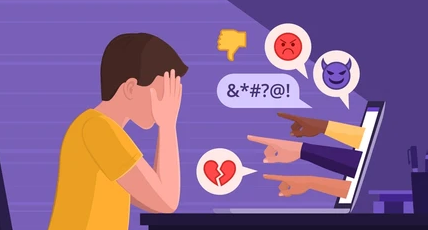
    Quick Answer: Social media often makes people feel less connected because frequent digital interaction is not the same as meaningful connection. Scrolling, liking, and brief exchanges can keep you informed about other people’s lives without giving you the emotional presence, attention, and depth that real connection requires. You can be constantly online and still feel unseen.

    I have spent years listening to people talk through loneliness, stress, and the strange ache of modern life. One thing comes up again and again. Someone will tell me they talked to fifteen people online today, and still feel completely alone. This is not confusion on their part. It is a real pattern, and it has a real explanation.

    (more…)
  • How Do I Know If I Need Emotional Support Instead of Therapy?

    How Do I Know If I Need Emotional Support Instead of Therapy?

    emotional support

    Quick Answer: You likely need emotional support if you want to feel heard, process a specific stress, or talk through something without a clinical framework. You likely need therapy if you are dealing with persistent symptoms, past trauma, or patterns that keep repeating despite your best efforts. Many people benefit from both at different points, and sometimes at the same time.

    (more…)
  • When Connection Feels Shallow: Why You Are Feeling Lonely In Your Relationships

    connection

    Loneliness and the feeling of being alone in a crowded room are not always the same experience. Conflating them leads to poor self-understanding and ineffective responses.

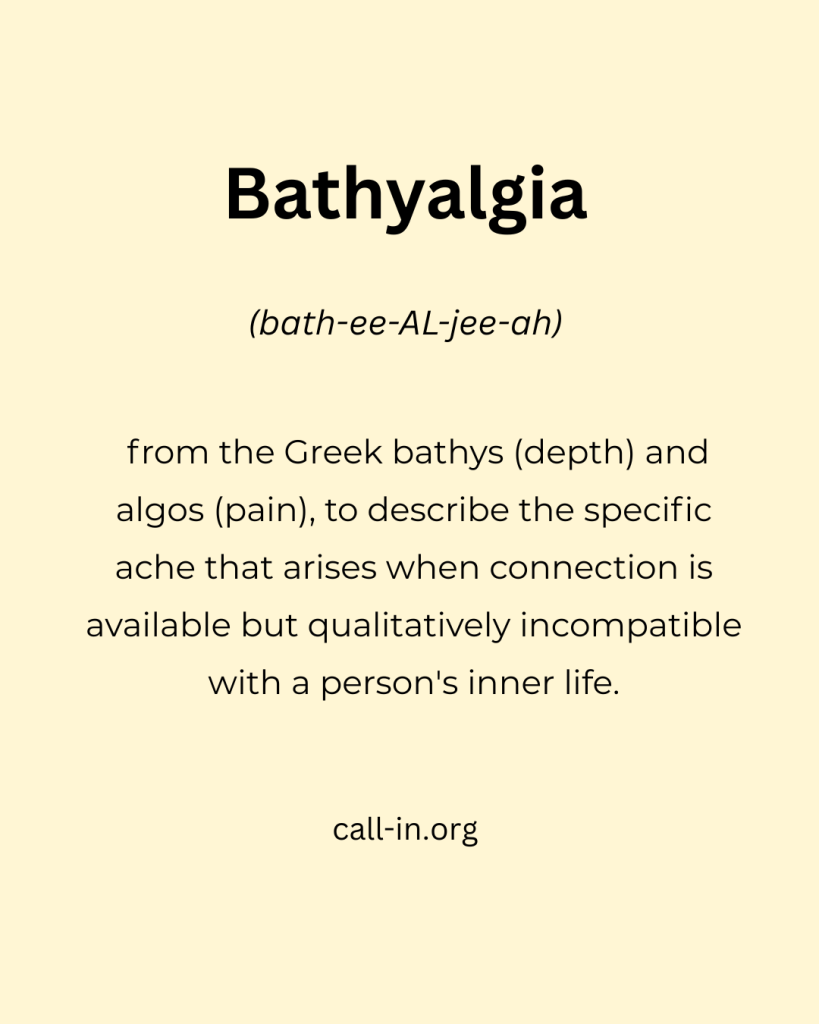
    This article proposes a new descriptive term, Bathyalgia (bath-ee-AL-jee-ah), from the Greek bathys (depth) and algos (pain), to describe the specific ache that arises when connection is available but qualitatively incompatible with a person’s inner life.

    Bathyalgia is not a psychiatric diagnosis, a medical condition, or a scientifically validated clinical construct. It is offered as a conceptual vocabulary for an experience that existing language inadequately captures.

    (more…)
  • Someone To Talk To When I Don’t Want to Burden My Friends

    Someone To Talk To When I Don’t Want to Burden My Friends

    burden my friends

    Quick Answer: You can talk to a warmline, an anonymous peer support space, or a professional active listening service. Each option gives you a place to speak openly without worrying about your friend’s schedule, mood, or emotional capacity. These options exist because friendship was never designed to carry every emotional load on its own. Choosing one is not a failure. It is a practical way to get support that fits the moment you are in right now.

    (more…)
  • It’s Okay To Ask for Help Without a Mental Health Diagnosis

    ask for help

    If you have asked, “Do I need a mental health diagnosis before asking for help?” the simple answer is NO. Millions of people benefit from everyday emotional support long before reaching a clinical threshold. You do not need a mental health diagnosis to deserve emotional support.

    The two are not the same thing. Waiting until a crisis before seeking support is not inevitable. Everyday emotional connection is preventative care.

    Licensed therapists, psychiatrists, and clinical psychologists play an essential and irreplaceable role for people experiencing mental health conditions. Everyday emotional support complements that care. It does not compete with it.

    (more…)
  • Someone to Talk To: 9 Real Options to Call Right Now

    Someone to Talk To: 9 Real Options to Call Right Now

    Someone to talk to when you need a safe space to vent

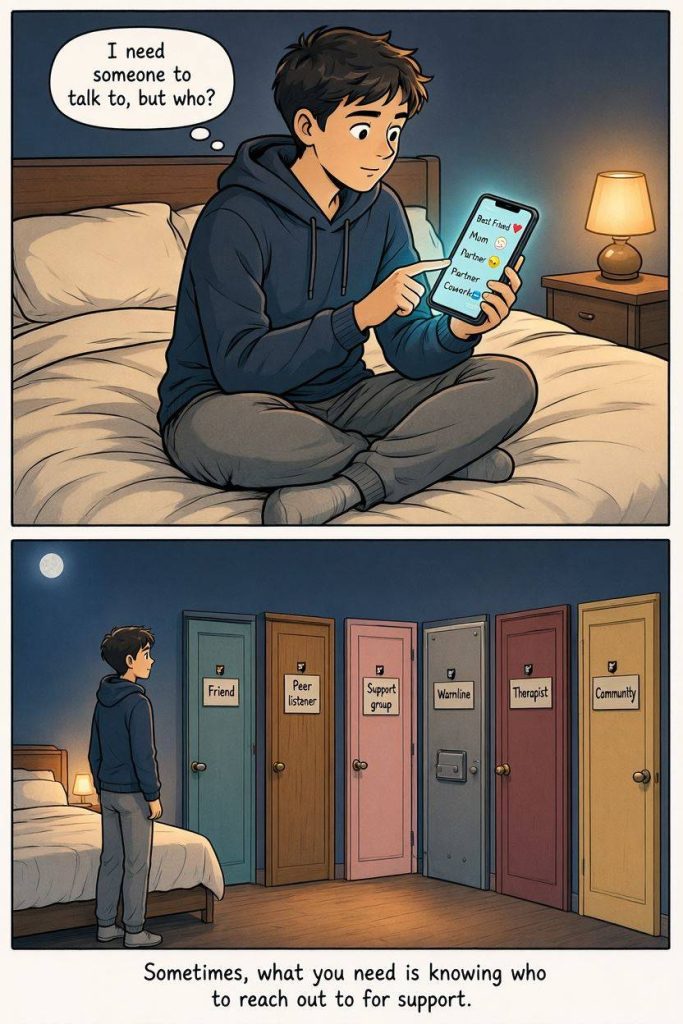
    When you need someone to talk to and no name comes to mind, that does not mean you have run out of options. It usually means the obvious people, a best friend, a parent, a partner, do not feel like the right fit for what you are carrying today. There are at least nine real, accessible ways to have an honest conversation right now, and this guide walks through each one.

    (more…)
  • Who Can I Talk to When I Feel Lonely? Real Options That Actually Help

    Who Can I Talk to When I Feel Lonely? Real Options That Actually Help

    feel lonely?
    feel lonely?

    If you are asking who you can talk to when you feel lonely, the honest answer is: more people and services exist to listen than you might realise. You can reach a trusted friend, a family member, a free warm line, an online community, or a compassionate human listener through services like Callin. You are not out of options. You are simply looking for the right one.

    (more…)
  • Capitalism-Induced Stress: 5 Ways to Cope with Busy Culture

    Capitalism-Induced Stress: 5 Ways to Cope with Busy Culture

    capitalism-induced stress at work

    In today’s fast-paced world, it’s easy to feel overwhelmed by the constant hustle and bustle driven by capitalism. Work culture often demands more from us than ever, leaving little room for downtime or self-care.

    To cope with this stress, it’s important to carve out moments just for yourself, whether that’s through a quick walk during lunch or indulging in a hobby after work.

    Finding ways to disconnect, even briefly, can help you recharge and regain perspective. Remember, it’s okay to prioritize your well-being over the endless grind; after all, you’re more than just a cog in the capitalist machine.

    (more…)
  • Why Do I Stop Talking About My Problems Even When People Care About Me?

    Why Do I Stop Talking About My Problems Even When People Care About Me?

    talking about my problems

    If you find yourself asking, “why do I stop talking about my problems even when people care about me?” the short answer is this: you have learned, consciously or not, that sharing carries a cost.

    It is not a sign of ingratitude, weakness, or emotional dysfunction. It is a deeply rational response to experiences that taught you that vulnerability is not always free. The good news is that understanding why this happens is the first step to finding better, more sustainable ways to feel genuinely heard.

    (more…)
  • Benefits of Consistent Emotional Support

    Benefits of Consistent Emotional Support

    emotional support

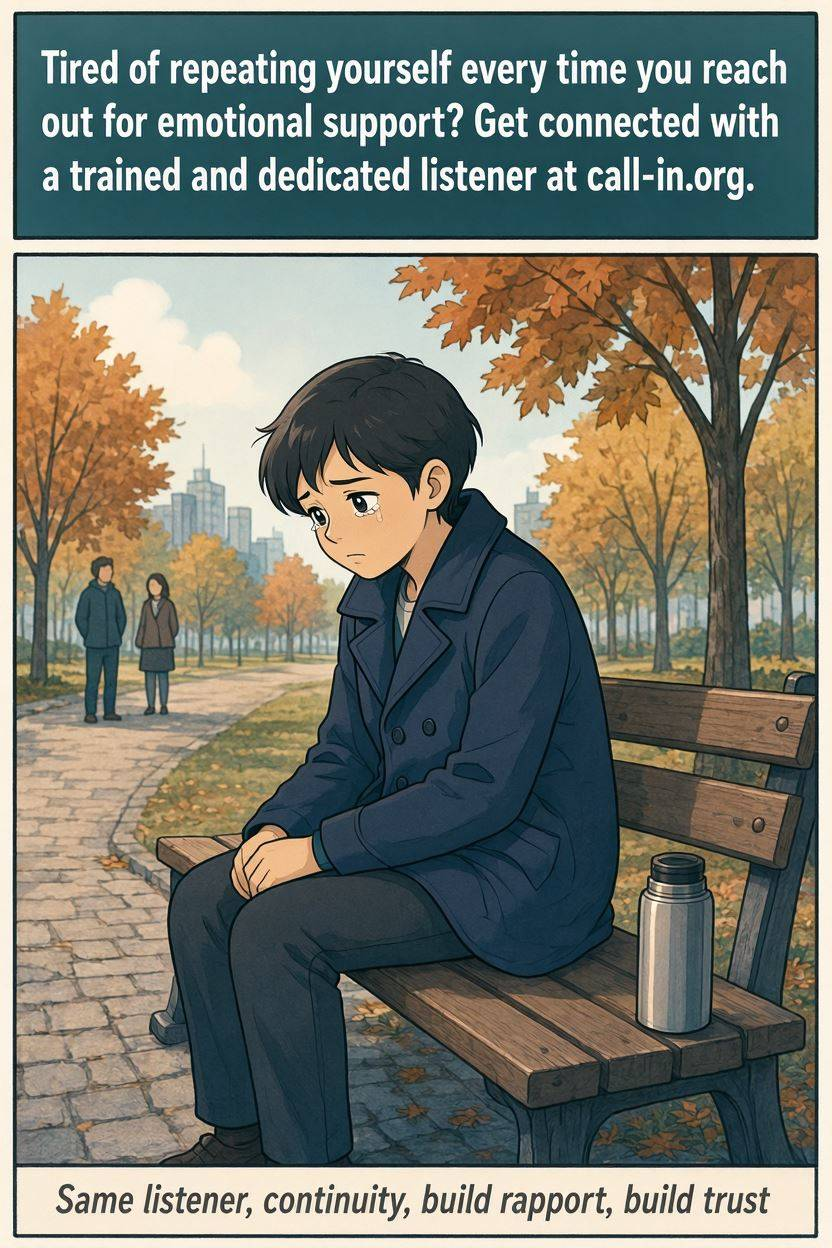
    Consistent emotional support restructures baseline stress rather than merely offering temporary relief. Rare, crisis-driven conversations provide a fleeting neurochemical high but exhaust cognitive capacity through heavy context reconstruction.

    When support remains volatile, the nervous system stays defensive, making vulnerability feel like a massive burden. Conversely, scheduled, routine listening creates predictable psychological safety, lowering cortisol before you even speak. True emotional wellbeing thrives as a maintained system, not an emergency intervention.

    (more…)
  • Why the Most Empathic AI Is Still Making Us Lonelier

    Why the Most Empathic AI Is Still Making Us Lonelier

    AI emotional support

    AI emotional support provides temporary comfort through costless validation and frictionless interaction, but it ultimately deepens loneliness. True empathy requires mutual vulnerability, shared social stakes, and finite attention. Because AI lacks consciousness and relational risk, interacting with it creates an empty room effect. Relying heavily on these tools displaces genuine human connection and reduces our tolerance for everyday social friction.

    (more…)
  • When Talking to Friends Doesn’t Feel Like Enough Anymore

    When Talking to Friends Doesn’t Feel Like Enough Anymore

    Talking to friends nowadays doesn’t feel enough, because it seems as though most of your friends don’t “get” you.

    You have people in your life. You can pick up the phone. You have a group chat, a standing catch-up, a friend who reliably asks how you’re doing. And yet, there is a specific kind of quiet that settles after those conversations end. A sense that something you needed was passed around the table but never quite handed to you.

    (more…)
  • What To Do When You Need To Vent, But Not Therapy

    What To Do When You Need To Vent, But Not Therapy

    emotional support
    emotional support

    When you need to vent but do not therapy? You can seek non-clinical emotional support. This includes peer support groups, warmlines, and structured listening services.

    These spaces offer dedicated time to process everyday stress and identity shifts without clinical labels. They rebuild lost informal support networks, providing a confidential environment for active listening and reflection. Using these platforms helps metabolize daily pressure effectively before it escalates into a crisis.

    (more…)
  • Connect with a Listening Service When You Feel Down

    Connect with a Listening Service When You Feel Down

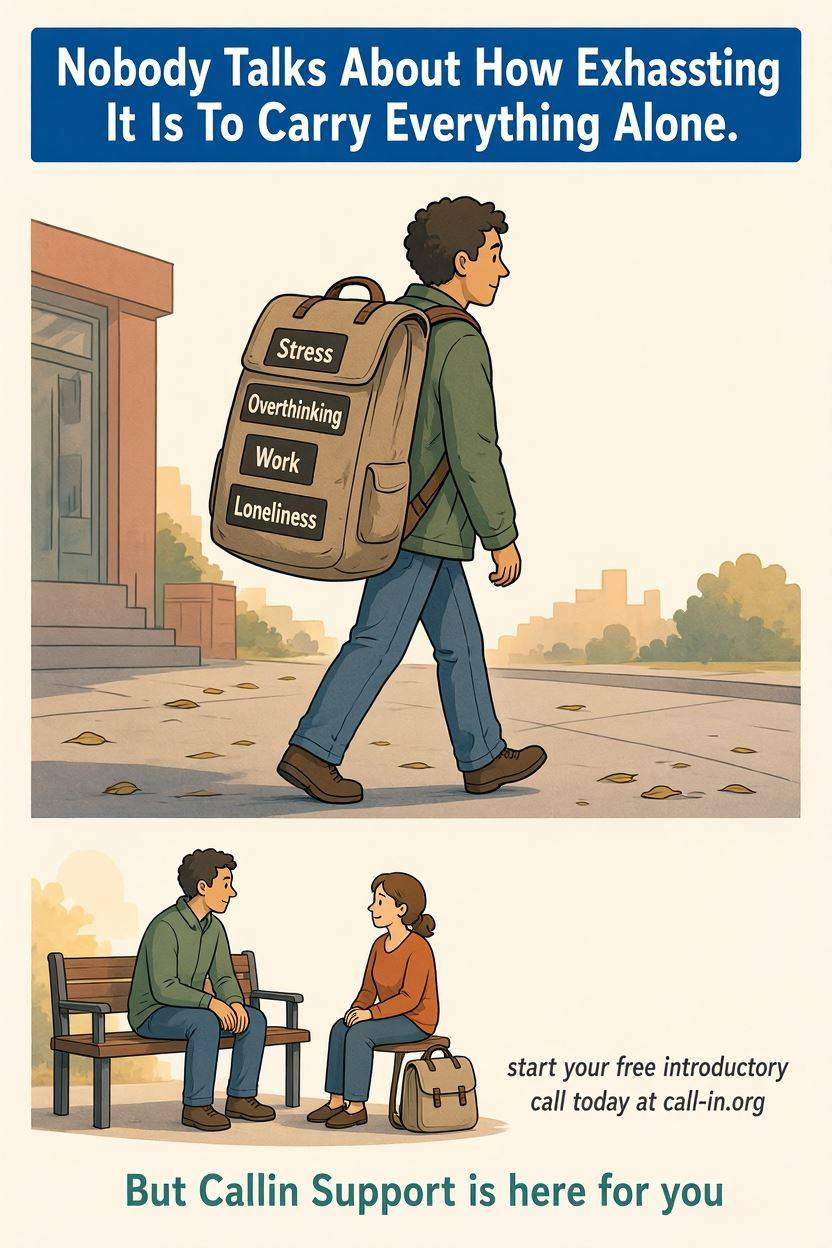
    Simple comic illustration. A person walks while carrying a huge backpack labelled "Stress," "Overthinking," "Work," and "Loneliness." In the next panel, they sit with a compassionate peer listener, and the backpack becomes much smaller. Simple, emotional comic style.

    Yes, and a growing number of people already do. Paid listening services connect you with a trained, dedicated listener on demand, without the inconsistency of free volunteer chat or the weight of unloading on a friend. The appeal is not the novelty of paying a stranger. It is the reliability of finally being heard.

    (more…)
  • Why You Crave Connection But Withdraw From Relationships

    Why You Crave Connection But Withdraw From Relationships

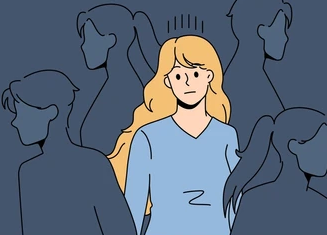
    You find that you crave connection, but still avoid it. This is not a psychological dysfunction. It is a rational response to how modern relationships are structured.

    Today, connection demands exhausting emotional disclosure, continuous digital availability, and constant identity maintenance.

    Furthermore, seamless technology has made us intolerant of ordinary social friction. Because the structural cost of vulnerability has skyrocketed, overwhelmed people withdraw. To combat this, we need bounded spaces that lower the burdens of socializing.

    (more…)