You check your phone before your feet hit the floor. By the time you’ve made coffee, there are messages waiting across three different apps, a news alert about something happening on the other side of the world, and a small red number on your email that somehow grew overnight.
None of it is urgent. All of it asks for a piece of your attention before the day has even properly started.
This is what it means to protect your emotional wellbeing in a hyperconnected world. Despite being more digitally connected than any generation before us, many people report feeling emotionally exhausted, distracted, overstimulated, lonely, and mentally drained, often all in the same week.
The question worth sitting with isn’t whether technology is good or bad. It’s a more useful one: how do we protect emotional wellbeing in a hyperconnected world without giving up the genuine benefits that connection brings?
What Does It Mean to Live in a Hyperconnected World?
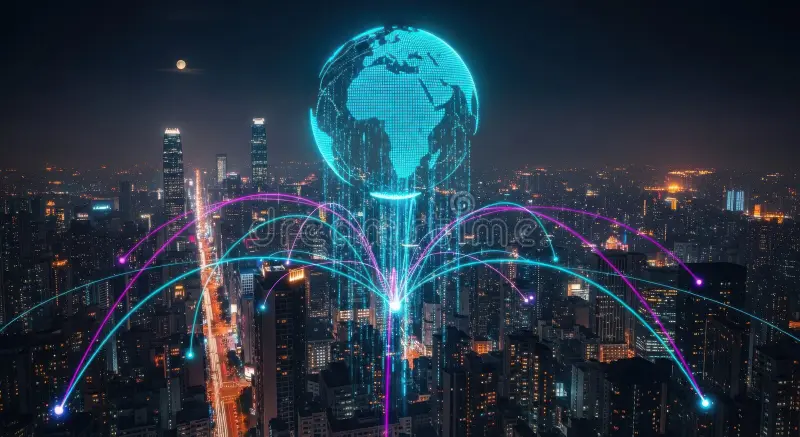
Hyperconnectivity describes a state where communication barriers have largely disappeared. Smartphones put every contact, app, and notification within reach at all times.
Social media keeps us updated on the lives of people we rarely see in person. Instant messaging has replaced the natural pause that used to exist between sending a message and expecting a reply.
Remote work has dissolved the line between the office and the living room. Streaming content fills every spare moment, and 24-hour news cycles mean there is always something new to know.
None of this is inherently negative. Hyperconnectivity has made it dramatically easier to stay in touch with loved ones far away, find communities built around shared interests, and access support and information that simply wasn’t available a generation ago.
The challenge isn’t the technology itself. It’s that this level of constant access was never designed with emotional recovery in mind, and our nervous systems are still catching up.
Why Emotional Wellbeing in a Hyperconnected World Looks Different Than It Used To
A generation ago, being unreachable for a few hours was the default, not something you had to plan for.
Today, the default has flipped. Reachability is constant, and stepping away from it requires deliberate effort. That single shift, from occasional contact to continuous contact, is at the heart of why emotional wellbeing in a hyperconnected world requires a different approach than it once did.
Why Constant Connection Can Feel Emotionally Draining
Information Overload Never Really Stops
The sheer volume of information available at any given moment is unlike anything previous generations encountered. Endless news coverage, constant social media updates, and a steady stream of content to consume all compete for the same limited resource: your attention.
Research consistently shows that the brain struggles when it never receives genuine downtime. Notifications interrupt focus even when they’re ignored, since simply knowing they exist creates a background pull on attention.
One widely cited study on smartphone notifications found that the mere presence of alerts, even unanswered ones, measurably affects cognitive control and task performance.
The American Psychological Association has similarly noted that the pace and volume of modern information consumption contributes to chronic stress when there’s no built-in recovery period between inputs.
Emotional Exposure at Scale
Hyperconnectivity doesn’t just expose us to more information. It exposes us to more suffering. Global crises, political conflict, and the personal struggles of people we’ve never met now arrive in our pockets in real time, often without any of the context or distance that used to soften the impact.
Psychologists describe the resulting depletion as compassion fatigue, a concept first identified in caregiving professions and since extended to anyone repeatedly exposed to others’ distress. Constant exposure to distressing content can paradoxically dull emotional sensitivity over time rather than sharpening it, leaving people feeling numb, irritable, or strangely detached even though they care deeply. This isn’t a character flaw or a sign of indifference. It’s a predictable response to an unprecedented volume of secondhand pain.
The Pressure to Always Be Available
Read receipts, instant messaging, and workplace chat tools have quietly created an expectation of immediate response that didn’t exist when communication required more effort. A short delay in replying can now feel like it requires an explanation.
This pressure extends well into the workday and often past it, especially for anyone whose work has blurred into the rest of their life, a pattern closely tied to professional burnout.
The constant low-level expectation to be reachable, even when nothing urgent is actually happening, is a hidden source of stress that rarely gets named directly. Getting more comfortable with setting healthy boundaries around your own availability is one of the most practical ways to push back against it.
More Connected, Yet Often More Lonely
Here is the paradox at the center of modern emotional life. We have more ways to communicate than at any point in history, and loneliness remains one of the most significant public health concerns of our time.
The U.S. Surgeon General’s 2023 advisory on loneliness and isolation described social connection as a critical, often underappreciated contributor to both mental and physical wellbeing, noting that roughly half of American adults reported experiencing loneliness regularly even before the pandemic accelerated the trend.
The APA’s research adds further detail, finding that a majority of adults report feeling lonely on a regular basis and that many say their closest relationships still aren’t providing enough emotional support. The UK’s Mental Health Foundation has documented similar patterns, linking persistent loneliness to higher rates of anxiety and depressive symptoms.
The explanation lies in the difference between quantity and quality of connection. A like, a quick reply, or a story view registers as contact, but it rarely carries the depth of a real conversation.
If you’ve ever felt surrounded by people online and still strangely alone, that gap is worth paying attention to rather than dismissing, since it often points to why you feel lonely even around people you technically interact with all the time.
This is especially common for people working remotely, where digital contact has effectively replaced the incidental, in-person interaction that used to happen naturally throughout the day.
If that sounds familiar, remote work loneliness deserves to be named and addressed directly. And if your circle of close relationships has quietly thinned out over the years, know that it’s genuinely possible to make new friends as an adult, even though it usually takes more intention than it once did.
Social Media and Emotional Wellbeing in a Hyperconnected World
Social media deserves a balanced look rather than a verdict. Mayo Clinic psychologist Dr. Craig Sawchuk has pointed out that one of the clearest benefits of social platforms is their ability to reduce isolation by maintaining a virtual bridge to family, friends, and broader support networks, something that proved especially valuable during the pandemic.
Used intentionally, social media can offer real community, access to support networks, opportunities to learn, and meaningful connection with people you wouldn’t otherwise stay in touch with.
The challenges are equally real. Comparison culture, where curated highlight reels become an unconscious benchmark for an ordinary life, can quietly erode self-esteem.
Validation-seeking behavior, refreshing a post to see how it’s being received, can turn sharing into a small, recurring source of anxiety. And doomscrolling, the compulsive consumption of distressing news, has been linked in published research to increased depression and stress symptoms, even after accounting for a person’s mental health before they started scrolling.
None of this means social media is inherently harmful. It means the same tool that connects you to a support group at midnight can also pull you into an hour of comparison you didn’t intend to engage in. The deciding factor is rarely the platform itself. It’s how intentionally you’re using it.
Emotional Wellbeing Requires More Than Connection
It’s tempting to assume that more connection automatically means better emotional health. In reality, connection alone does not guarantee emotional wellbeing.
What’s often missing isn’t contact, it’s space. Reflection time to actually process what you’ve taken in during the day. Genuine rest that isn’t just a different screen.
Boundaries that protect time and attention rather than giving both away by default. Presence, the ability to be fully where you are instead of half-engaged with a device. And emotional processing, the chance to actually work through a feeling rather than simply being exposed to one stimulus after another.
People need both connection and recovery, and modern life tends to supply the first in abundance while quietly squeezing out the second.
If you’ve noticed yourself going through the motions, technically present but not really engaged with your own life, it’s worth exploring what it looks like to move from feeling numb back toward something more meaningful.
And if part of what’s keeping you constantly available is a habit of putting everyone else’s needs ahead of your own, it may help to look at how people-pleasing patterns feed directly into the problem.
Why Being Heard Matters in a Hyperconnected World
Here’s the part that often gets overlooked. People today are surrounded by communication and still frequently report not feeling truly heard.
There’s solid research behind why this distinction matters so much. UCLA psychologist Matthew Lieberman and colleagues found, using brain imaging, that putting feelings into words measurably calms the brain’s threat response, an effect that depends on genuine articulation, not passive scrolling or skimming.
Decades of research building on psychologist James Pennebaker’s work on expressive writing point in the same direction, linking the act of processing emotion in words, spoken or written, to measurable improvements in stress and wellbeing.
Psychologist Carl Rogers, who pioneered the modern concept of active listening, argued that non-judgmental, attentive listening reduces the threat people feel when opening up, creating the safety needed for honest reflection.
More recent research backs this up, finding that people who experience high-quality listening report feeling less anxious and more clear-headed afterward than those met with distracted or evaluative attention.
This is exactly what a notification, a like, or a quick reply can’t replicate. Meaningful conversation, the kind where someone is genuinely listening rather than waiting for their turn to respond, remains one of the most effective tools we have for emotional processing. That support can come from many places:
- Friends and family who already know your story
- Peer support from people who understand a similar experience firsthand
- Community groups built around shared interests or identities
- Trained emotional support listeners for confidential, judgment-free conversation
None of these are meant to replace therapy when therapy is genuinely needed. But for the everyday emotional weight of a hyperconnected life, they fill a real and valuable gap.
If you’ve ever hesitated to reach out because some part of you felt like you shouldn’t need to, that feeling is common and worth questioning rather than accepting, since so many people carry unnecessary guilt about needing emotional support in the first place.
It also helps to know there’s a meaningful difference between a warmline and a crisis line, since support built specifically for non-crisis moments exists for people who simply want someone to talk to.
Active listening in particular is a learnable skill, which is exactly why a trained, practiced listener can offer something genuinely different from a quick text exchange, even with someone you love.
Practical Ways to Protect Emotional Wellbeing Online
Protecting your emotional wellbeing in a hyperconnected world doesn’t require disconnecting entirely. It requires a handful of intentional habits, practiced consistently.
Create notification boundaries. Turn off non-essential alerts and check messages in batches rather than reacting to every buzz. Even disabling badge numbers can reduce the constant pull to check.
Schedule screen-free time. Pick specific windows, like the first thirty minutes after waking or the hour before bed, where your phone stays in another room.
A recent study published in JAMA Network Open found that just one week away from social media led to measurable drops in anxiety, depression, and insomnia symptoms among participants, a meaningful result from a relatively small change.
Curate your digital environment intentionally. Unfollow or mute accounts that consistently leave you feeling worse rather than better. Your feed isn’t neutral, it’s something you have real influence over.
Prioritize real conversations over passive scrolling. A ten-minute call with someone who listens well will usually do more for your emotional state than an hour of scrolling through other people’s updates.
Make space for reflection. A few minutes of journaling, a quiet walk, or simply sitting without a screen gives your mind the chance to actually process what it’s absorbed throughout the day.
Limit unnecessary information consumption. You don’t need to know everything as it happens. Choosing specific times to catch up on news, rather than grazing on it constantly, meaningfully reduces overall cognitive load.
Invest in meaningful relationships. Depth matters more than reach. A smaller number of genuinely supportive relationships will do more for your wellbeing than a large network of surface-level contacts.
Reach out when you need support. Whether that’s a friend, a peer group, or a trained listener, asking for support is a sign of self-awareness, not weakness. A full overview of emotional support options can help you see what’s available beyond your immediate circle. These habits reinforce the broader principles of good stress management rather than replacing them.
Building Emotional Resilience in a Hyperconnected World
Resilience in this context isn’t about disconnecting completely or treating technology as the enemy. It’s about engaging with it intentionally rather than reactively.
That starts with self-awareness, noticing when scrolling shifts from enjoyable to compulsive, or when checking your phone becomes a way of avoiding a feeling rather than addressing it.
It continues with boundaries, deciding in advance when you’re reachable rather than letting every notification make that decision for you. It depends on real connection built through actual conversation, recovery time treated as a genuine priority, and emotional support networks put in place before you need them urgently, not scrambled together in a moment of crisis.
None of these pieces work in isolation. Together, they build the kind of resilience that lets you stay engaged with a connected world without being emotionally flattened by it.
Protecting Your Emotional Wellbeing in a Hyperconnected World
Technology is not the enemy here. Connection, even digital connection, is genuinely valuable, and no one needs to disconnect entirely to feel emotionally well.
What emotional wellbeing in a hyperconnected world actually requires is balance: enough connection to feel supported, and enough space to actually process what that connection brings.
If you take one thing from all of this, let it be this. Emotional wellbeing in a hyperconnected world isn’t about being available all the time. It’s about knowing when to connect, when to disconnect, and how to create space for the relationships and conversations that genuinely support your wellbeing.
If you’d like to explore this further, our related guides on what to do when you feel overwhelmed but don’t think you need therapy and finding someone to talk to without therapy are good places to continue.

Leave a Reply