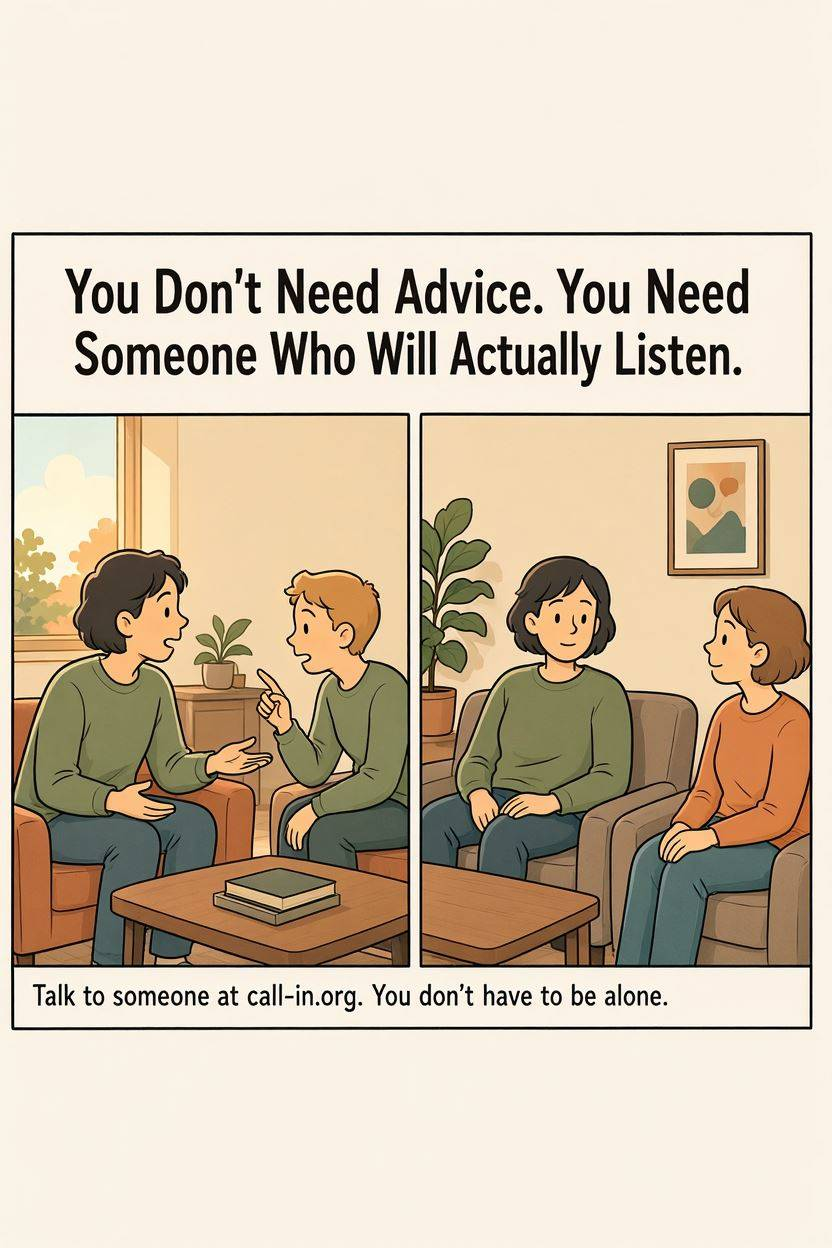
If you need to vent to someone right now, you have more options than it probably feels like in this moment. Free choices include warmlines, trained peer listener platforms, and the people already in your life.
Paid choices include non-clinical support platforms and licensed therapy. Each one solves a different problem, and knowing the difference can save you a disappointing conversation tonight.
Key Takeaways
- Free options like warmlines and listener platforms offer immediate, no-cost conversation, though availability and consistency vary by service.
- Paid non-clinical support and licensed therapy solve different problems: one is built for ongoing emotional processing, the other for clinical treatment.
- Not all venting helps. Research on co-rumination shows that unstructured venting, especially with friends, can deepen anxiety rather than relieve it.
- What makes a listener genuinely helpful isn’t warmth alone. It’s a trained habit of reflecting feelings back instead of jumping to advice or fixing.
- The right place to vent depends on whether you want anonymity, a recurring relationship, or simply to be heard once, tonight, without consequence.
Why the Urge to Vent Feels So Urgent
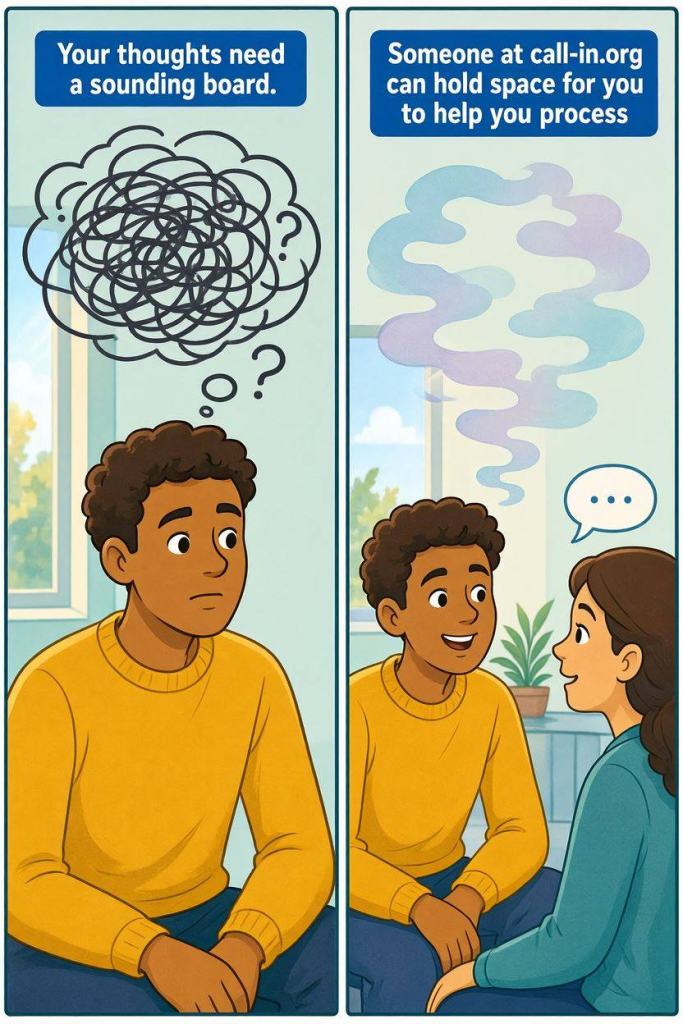
The urge to vent right now is not a character flaw or a sign of weakness. It usually means your emotional processing has fallen behind whatever just happened, whether that’s a hard conversation, a wave of overthinking, or weeks of quiet burnout finally catching up with you.
Psychologists sometimes describe this as emotional flooding, a state where feelings arrive faster than your mind can organize or make sense of them.
Talking is one of the fastest ways humans regulate that overflow, because putting an experience into words forces the brain to structure something that otherwise feels chaotic.
That said, urgency is information, not an emergency. It tells you that you need a release valve, not necessarily that something has gone wrong with you.
Understanding this distinction matters because it changes what you’re looking for. You are not looking for someone to solve your problem in the next ten minutes. You are looking for a container sturdy enough to hold what you’re feeling until it settles.
What Actually Makes Venting Helpful, Not Just Talking
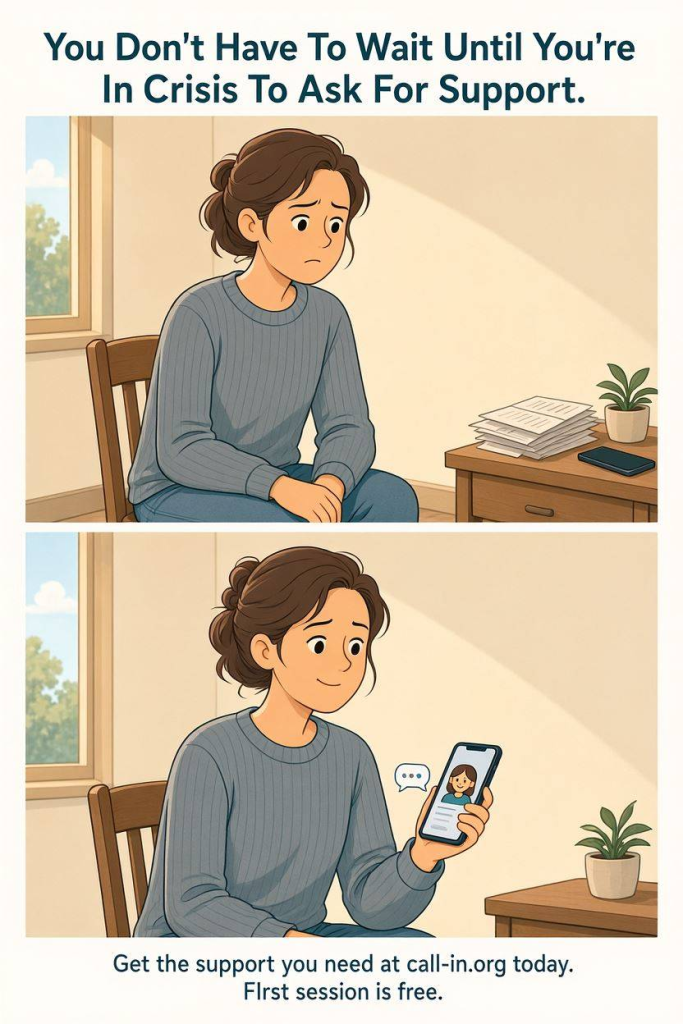
Here is something most advice about venting skips entirely: talking about a problem does not automatically make you feel better. Decades of research on emotional disclosure, going back to psychologist James Pennebaker’s work on expressive writing, show that putting feelings into words can genuinely improve emotional and even physical health. But the same body of research also found mixed results depending on how the disclosure happens and who receives it.
This is the part that surprises people. The value of venting depends less on how much you share and more on the quality of the container you’re sharing it into.
A listener who stays curious, reflects your feelings accurately, and resists the urge to fix or relate the conversation back to themselves creates space for real relief.
A listener who reacts with their own anxiety, jumps straight to solutions, or subtly steers the conversation toward their own experiences can leave you feeling more depleted than before you started talking.
This is why “just find someone to talk to” is incomplete advice. The skill that makes venting work is closer to active listening than it is to friendship or empathy alone.
It’s a learned practice of staying present with someone else’s feelings without needing to resolve them immediately, and it’s the reason trained peer listeners can sometimes offer a different kind of relief than even close friends.
Free Ways to Vent to Someone Right Now
Warmlines
Warmlines are peer-run phone lines staffed by volunteers with lived experience of mental health or emotional challenges.
Unlike crisis hotlines such as 988, which exist for emergencies, warmlines are built specifically for non-urgent emotional support before a crisis develops. Most are free, confidential, and available by state or region, though hours and out-of-state availability vary, so it’s worth checking a national warmline directory before calling.
Many callers report feeling calmer and less alone after a single conversation, even though warmlines are not designed for ongoing, relationship-based support.
Free Listener Platforms
Platforms built around trained volunteer listeners offer another no-cost path. These services connect you anonymously with someone who has completed active listening training, available around the clock in many cases, with no subscription required for the core conversation.
The tradeoff is consistency. Because listeners are volunteers, quality can vary from one conversation to the next, and you may not speak with the same person twice. For a one-time release of pressure, that tradeoff is often worth it. For ongoing support, it can start to feel unpredictable.
Online Communities and Forums
Public venting spaces, whether dedicated forums or social platforms, let you write out what you’re feeling and receive responses from strangers who relate.
These can genuinely help you feel less alone, especially late at night when other options are closed.
They come with real limits, though. Responses are unmoderated in most cases, advice can be unsolicited and unhelpful, and there’s no guarantee anyone trained in emotional support will see your post at all.
Trusted People in Your Life
Friends and family are often the first instinct, and for good reason. Someone who already knows your history can offer context a stranger never could.
The catch is that not everyone is equipped to just listen.
Research on co-rumination, the habit of excessively rehashing problems with a friend without moving toward resolution, has found that this pattern can increase closeness in the short term while also increasing anxiety and depressive symptoms over time, for both people in the conversation.
If you’ve ever left a venting session with a friend feeling more wound up than before, this is likely part of why.
Paid Ways to Get Support When You Need to Talk
Non-Clinical Peer Support Platforms
Between free listener apps and clinical therapy sits a category built specifically for people who want structured, reliable, non-clinical support.
These platforms pair you with trained active listeners for confidential conversations focused entirely on processing what you’re feeling, without a diagnosis, treatment plan, or clinical framing attached.
Because they operate on a paid model, the experience tends to be more consistent than free alternatives, and many people appreciate having a space that exists purely to be heard, not to be treated. If you’ve compared alternatives to BetterHelp, BuddyHelp, and 7 Cups, this is usually the gap they’re pointing to.
Licensed Online Therapy
Platforms like BetterHelp and Talkspace connect you with licensed therapists for actual clinical treatment. Pricing typically runs from around sixty dollars a week for messaging-based plans up into the hundreds per month for options that include live video sessions, with some providers now accepting select insurance plans that can lower the cost significantly.
These platforms are the right choice when you’re managing a diagnosable condition, working through trauma, or need a treatment plan rather than a conversation.
They are not designed for someone who simply needs to talk through a hard week, and using them that way can feel like overkill, both financially and clinically.
Venting Versus Trauma Dumping: Why the Difference Matters
People often use these terms interchangeably, but the real difference between venting and trauma dumping has less to do with content and more to do with consent.
Venting typically involves a brief, bounded share, often with some acknowledgment that you need to talk, and it leaves room for the other person to respond.
Trauma dumping tends to be unbounded, one-directional, and delivered without checking whether the other person has the capacity to receive it in that moment.
Neither is a moral failing. Understanding the difference simply helps you choose a setting that matches what you actually need, whether that’s a quick release or a longer, more careful conversation.
When Talking to Friends Isn’t Enough
If you’ve noticed friends changing the subject, offering advice you didn’t ask for, or seeming distracted when you try to vent, it’s worth reconsidering what’s actually happening.
Most people who give advice when you just want to vent aren’t doing it out of carelessness. Sitting with someone else’s unresolved pain is uncomfortable, and offering a solution is often an anxiety response, a way for the listener to relieve their own discomfort rather than yours.
This is not a flaw in your friendships. It’s a mismatch between what venting requires and what most casual relationships are built to provide.
It also explains why so many people quietly stop reaching out, worried about becoming a burden. If you’ve felt this way, you’re not alone, and there are ways to talk to someone without worrying about burdening your friends, including spaces built specifically to hold that weight without keeping score.
How to Choose the Right Option for You
Start with urgency. If you need to talk in the next few minutes, a warmline or free listener platform will get you there fastest.
If you’re looking for a recurring space where the same kind of support is available whenever you need it, a paid non-clinical platform offers more consistency than free alternatives typically can.
If what you’re carrying feels bigger than a single hard week, involving trauma, a diagnosable condition, or patterns you can’t seem to shift on your own, licensed therapy is worth exploring alongside, not instead of, these other options.
There’s no universal right answer here, and that’s the point. Free and paid options aren’t a ladder of quality, with paid always better. They’re different tools built for different moments, and the healthiest approach is usually knowing which one fits tonight.
You Deserve a Space That Isn’t Complicated
Needing to vent isn’t something to fix about yourself. It’s a normal response to being a person with a full emotional life and a limited number of hours in the day.
Some people find that having an objective, confidential, non-clinical space, one where they don’t have to worry about burdening a friend or explaining themselves twice, makes all the difference, and that’s the space Callin was built to offer through trained peer active listeners.
Whatever you choose tonight, the goal is the same: to be heard by someone who knows how to actually listen.
Frequently Asked Questions
Is it normal to need to vent to someone almost every day?
Yes, especially during stressful periods, career transitions, or seasons of high emotional load. Frequent venting becomes worth examining only if it consistently leaves you feeling worse afterward or if the same unresolved issue keeps resurfacing without any shift, which may signal a need for more structured support.
What is the difference between venting and trauma dumping?
Venting is typically brief and bounded, with some acknowledgment that you need to talk and room for the other person to respond. Trauma dumping tends to be unbounded and one-directional, shared without checking whether the listener has the capacity to receive it in that moment.
Are free listening services like warmlines actually confidential?
Most warmlines and listener platforms operate under confidentiality standards similar to other peer support services, though policies vary by provider. It’s worth reviewing a specific service’s privacy policy before a call, particularly if anonymity matters to you.
Can talking to an AI chatbot satisfy the need to vent?
AI chatbots can offer a low-stakes place to organize your thoughts, and some people find that helpful in the moment. Most research and clinical guidance still points to human connection as offering something AI cannot fully replicate, particularly the sense of being understood by another person.
How is non-clinical emotional support different from therapy?
Non-clinical support focuses on active listening and emotional processing without diagnosis, treatment plans, or clinical assessment. Therapy is a licensed clinical service designed to treat diagnosable conditions and often involves structured, goal-oriented work over time.
What if my friends seem tired of hearing me vent?
This is common and rarely means your friends care less. It often means the relationship has reached the edge of what casual friendship can hold, which is a good signal to add a dedicated outlet, rather than a sign to stop talking about what you’re feeling altogether.
How long should a venting conversation last?
There’s no fixed rule, but many peer support and warmline services find that fifteen to thirty minutes is often enough for someone to feel heard and regulated. Longer isn’t always better. What matters most is whether the conversation leaves you feeling lighter rather than more activated.

Leave a Reply