Talking to friends nowadays doesn’t feel enough, because it seems as though most of your friends don’t “get” you.
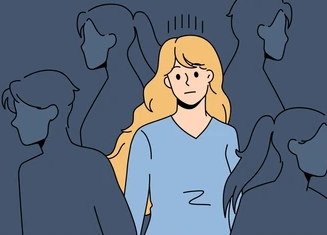
You have people in your life. You can pick up the phone. You have a group chat, a standing catch-up, a friend who reliably asks how you’re doing. And yet, there is a specific kind of quiet that settles after those conversations end. A sense that something you needed was passed around the table but never quite handed to you.
This is not a crisis. It is not ingratitude. It is not a character flaw, and it is almost certainly not about your friendships being bad. It is something that millions of adults are experiencing right now, and the mainstream conversation about it tends to get the diagnosis wrong.
We keep framing it as a loneliness problem, a social connection problem, a friendship quantity problem. But increasingly, the evidence points somewhere more unsettling: the problem is a structural mismatch between the kinds of emotional needs people carry today and what ordinary friendship was ever designed to provide.
The U.S. Surgeon General’s landmark 2023 advisory on loneliness described the condition not as the absence of company, but as “a subjective distressing experience that results from perceived isolation or inadequate meaningful connections, where inadequate refers to the discrepancy or unmet need between an individual’s preferred and actual experience.”
That word, discrepancy, is doing a lot of work. Read it again. The problem is not that people have no one around them. The problem is the gap between what people actually need from connection and what they are getting.
One survey respondent in Harvard’s Making Caring Common research described having plenty of family members around but not feeling appreciated by them. Another described being “surrounded” by people “who only are present in my life because I am useful to them.”
This is the hidden architecture of modern loneliness. People surrounded by others, talking to friends regularly, yet still feeling that something essential has not been met. Even in supportive communities, people can still feel isolated and hesitate to reach out to others. The question that rarely gets asked is: why? What is the mechanism?
U.S. Surgeon General Vivek Murthy put it plainly: “Whether we’re lonely or not has to do with the quality of connections in our life, not the quantity. We’ve moved from having confidants to contacts, from having friends to having followers.”
That shift from confidant to contact is not just a social media story. It is a story about what friendship has become, what it has been asked to carry, and where it quietly breaks under the weight.
Why Talking to Friends Doesn’t Feel Like Enough Anymore: The Structural Answer
Here is the part that is almost never discussed in articles about loneliness.
Modern friendship is being asked to do something it was never historically designed for. For most of human history, the emotional weight a person carried was distributed across extended family structures, community institutions, religious or spiritual communities, workplace relationships, and neighborhood networks.
The emotional support infrastructure was wide. No single relationship carried the full load.
Normative life events such as marriage, parenthood, and entering and exiting the labour force influence the likelihood of changes in a person’s friendship choices, for example by limiting time available to spend on friendship maintenance.
But what the research underemphasizes is how these same life events collapse a person’s social infrastructure at precisely the moment when emotional needs intensify.
A new parent, a person navigating a career transition, someone going through a breakup or a professional crisis, all of these circumstances narrow a person’s social world while expanding their emotional need for support. Friendship ends up holding more than it was built for.
This phenomenon can be described as Structural Overload: the process by which modern social contraction concentrates an individual’s entire emotional support need into a small number of close friendships, which cannot possibly meet the full range of that need without significant strain on all parties.
The numbers support this. Pew Research Center data from 2025 found that men and women are about equally likely to feel lonely, but that men don’t communicate with their close friends as often and are far less likely to get emotional support from them. Among men specifically, one in five single men report having no close friends.
The friendship recession is not evenly distributed, and its consequences are not merely social. They are physiological. Social isolation increases the risk of premature death by 29 percent, an impact equivalent to smoking 15 cigarettes per day, while loneliness increases the risk of heart disease, stroke, and dementia.
The Reciprocity Collapse: When Talking to Friends Doesn’t Feel Like Enough Because No One Is Asking About You
There is a specific and under-discussed dynamic at work in the friendships of many adults, particularly those who tend to be the emotionally capable, reliable, stable presence in their social circles: they are giving far more than they are receiving.
A 2024 survey from the American Friendship Project found that 37 percent of adults felt their friendships lacked reciprocity, a factor strongly tied to lower life satisfaction. Reciprocity in emotional relationships is not merely a politeness norm.
It is the mechanism by which both parties feel seen. Without it, one person in the relationship accumulates emotional debt while the other accumulates emotional withdrawal. Over time, the person giving more begins to feel the specific discomfort of being known as a support system rather than known as a person.
This experience is especially acute for those who habitually show up for others. If you find yourself always being the strong one for everyone around you, the experience of talking to friends not feeling like enough is particularly sharp, because it involves a specific irony.
You are good at supporting people, you are available, you are trusted, and yet when your own unmet needs surface, there is no one skilled enough in the room to hold them the way you hold others.
This is not selfishness. It is the natural arithmetic of unequal emotional exchange.
Psychology Today research has found that people who received more advice than they wanted from friends often felt less close to those friends, suggesting that even well-intentioned support, when it does not match what someone actually needs, can erode rather than strengthen connection.
This points to a concept worth naming: Support Mismatch. You are not failing to get emotional support because people do not care.
You are failing to get it because what you need and what the people around you know how to provide are not the same thing. Friendship is generous, but it is not always skilled.
The Meaning Deficit: Why Connection Is Not the Same As Being Understood
There is a third layer that almost no one addresses, and it is arguably the most important one for adults who find that talking to friends doesn’t feel like enough anymore.
Connection is not the same as comprehension. You can spend two hours with a close friend, laugh genuinely, share food, cover a dozen topics, and still walk away with a particular hollow ache. That ache is not loneliness in the conventional sense. It is the feeling of having been present without having been deeply witnessed.
Harvard’s Making Caring Common research documented what it described as “existential loneliness,” defined as “a fundamental sense of disconnection from others or the world.”
Among those who reported feeling lonely, 65 percent said they felt “fundamentally separate or disconnected from others or the world,” and 57 percent said they were unable to share what mattered most to them in their relationships.
This is a different problem from simply not having friends. It is the problem of having friends who know you but do not understand you in the ways you most need to be understood.
It is the problem of conversations that stay at the surface not because people are shallow, but because the contexts that encourage depth, shared purpose, shared meaning, shared effort toward something larger, have eroded.
This can be called the Witness Gap: the distance between being known in a factual sense and being understood in an existential one. It is what people gesture toward when they say they feel lonely even though they have people around them. The problem is not absence. It is the particular quality of presence that is missing.
If you recognize this, you are not alone. Feeling lonely even when you have friends is one of the most commonly reported but least publicly acknowledged emotional experiences of modern adulthood.
Why Talking to Friends Doesn’t Feel Like Enough: The Emotional Bandwidth Problem
There is also something happening at the level of the friendship itself that deserves direct acknowledgment.
Friends are not therapists. More importantly, they are not resourced the way therapists are. A therapist has professional distance, clinical training, and the structural boundary of a session that ends.
A friend has none of these things. When you bring a genuine emotional need to a friend, you are, without necessarily meaning to, asking them to use their own emotional reserves, which are themselves often depleted.
Friendship burnout, defined as a state of emotional, mental, and sometimes physical exhaustion resulting from the demands and pressures of maintaining friendships, is characterized by a growing sense of detachment, cynicism, and a decreased ability to engage meaningfully in social interactions.
What this means in practice is that the friends you most want to talk to are sometimes the ones most likely to be running on empty themselves.
Many people, particularly women, have internalized the belief that to be a “good friend” means being available constantly, dropping everything when someone needs them, or playing peacekeeper in every conflict, and over time that expectation, especially if not reciprocated, leads to burnout.
So the situation is this: you need more than your friendships are providing. Your friends are often giving more than they have available. The system is under strain from both ends simultaneously.
The answer is not to find better friends. The answer is to redistribute emotional weight more intelligently and to recognize that some kinds of support require a different kind of container altogether.
Some needs are better held outside of friendship, not because friendship is insufficient as a relationship, but because some specific functions require a context with more structure, more neutrality, and more capacity for sustained attention.
How Emotional Expression Gets Suppressed by the People Around You
One factor that almost never appears in mainstream discussions of friendship and connection is the role that social environments play in shaping what people feel they are allowed to express.
For many adults, the social environment they grew up in or currently inhabit has a relatively low tolerance for emotional complexity. The implicit instruction is: manage it, contain it, do not make others uncomfortable.
The result is that a person can have numerous close friends and still feel unable to bring their actual inner life into the room. The friendships are real. The affection is real. But there is an invisible ceiling on depth. And when talking to friends doesn’t feel like enough anymore, this ceiling is often part of the reason.
There is also the growing influence of therapy speak in relationships, where the vocabulary of emotional health, boundaries, attachment styles, and regulation has been absorbed into everyday conversation without always being accompanied by the underlying practice. The language of being seen is increasingly available. The experience of it is not.
This matters because it means the problem is not simply one of access. You can have active listening available to you and still not use it, if the social conditioning around you has trained you to believe that needing to be heard is itself a weakness. The work is not just finding the right people. It is sometimes unlearning the idea that needing emotional support in the first place is something to be ashamed of.
What Happens to the Body When Connection Consistently Falls Short
This is not simply a philosophical concern or a matter of personal preference. The body has a direct and measurable response to unmet connection needs.
The Surgeon General’s 2023 report found that the average time Americans spent alone increased from 285 minutes per day in 2003 to 333 minutes per day, while time spent with friends socially and in person declined from 60 minutes per day in 2003 to just 20 minutes per day.
That is a two-thirds reduction in face-to-face social time within a single generation. The physiological consequences are not abstract. Chronic emotional isolation activates the body’s stress response systems in ways that have direct effects on cardiovascular health, immune function, sleep quality, and cognitive performance.
Workplace stress that cannot be processed interpersonally accumulates in the body. Professional burnout that has no social container becomes chronic.
Remote workers who lack incidental human contact throughout the workday report disproportionate rates of emotional depletion, not because they are personally fragile, but because the structural conditions of their working lives have removed what were once automatic forms of low-level social contact.
The body does not distinguish between chosen solitude and imposed isolation. Both register as threat. And when an individual lacks the consistent experience of being genuinely heard and understood, that deficit accumulates.
What the Research Suggests Actually Helps
The mainstream response to feeling that talking to friends doesn’t feel like enough is either to encourage more socializing (which misunderstands the problem) or to suggest therapy (which is appropriate for clinical need but not designed for ordinary emotional processing that has nowhere to go).
Individuals who are randomly assigned social engagement tend to report lower stress when exposed to distressing stimuli, regulate their emotions better, and report more positive affect. But the key word here is quality. The structure of the interaction matters as much as its occurrence.
When going through tough times, people consider emotionally focused goals such as listening when someone wants to vent as more important than problem-focused goals such as offering advice or helping to solve issues.
In other words, what people most need when they are struggling is to be heard before they are helped. This is not a complicated insight, but it is one that ordinary friendship, under the pressure of its own social norms, frequently fails to deliver.
Several directions are genuinely supported by evidence:
Seeking structured, bounded spaces for emotional expression. This does not require clinical therapy. It requires contexts designed specifically for the function of being heard, without the social reciprocity obligations of friendship, without the fear of burdening someone you care about.
Peer support and warmline services offer this kind of structured, non-clinical emotional support. They are designed for the space between ordinary conversation and formal treatment, which is precisely where most unmet emotional need lives.
Naming the specific deficit rather than the general feeling. Not “I feel lonely” but “I need to be genuinely listened to, without advice, without this person worrying about what it means for our relationship.”
The specificity changes what you look for and where you look for it. Emotional support in the specific form of venting is a distinct need that is often conflated with general social connection, and they are not the same thing.
Reconsidering what you expect friends to carry. Friendship is one of the most valuable human relationships. It is also not designed to be a comprehensive emotional support system.
The people who manage this best are those who have developed what might be called an emotional support portfolio, multiple different contexts and relationships that each serve different functions, rather than expecting any single relationship to hold everything.
Recognizing when workplace stress or structural pressures are the root cause. Many people who feel emotionally isolated are not, in fact, disconnected from others. They are carrying institutional or professional weight that no personal relationship can adequately address, because the source of the problem is structural, not interpersonal.
For those living alone particularly, the challenge of having no natural conversational structure built into the day makes deliberate emotional scaffolding not a luxury but a genuine necessity.
The Uncomfortable Conclusion
When talking to friends doesn’t feel like enough anymore, the discomfort is pointing at something real. It is not pointing at the failure of your friendships. It is pointing at a structural gap between what modern adult emotional life requires and what informal social networks were designed to provide.
The paradox at the center of this is precise: people today have more ways to communicate than any generation in history, and many have genuine, caring friendships.
Yet feelings of loneliness for young adults have increased by an average of 0.22 percent per year for the past four decades, and the quality of social connection has decreased since 2006. More connection tools, less connection depth.
The answer is not to demand more from your friends. It is not to need less. It is to understand that some of what you need requires a different kind of container, one designed not for the social exchange of friendship but for the specific function of being genuinely, attentively heard.
Recognizing that distinction is not a concession. It is precision. And precision, when it comes to emotional need, is the beginning of actually getting what you need rather than settling for a version of it that leaves you still reaching.
Frequently Asked Questions
Why does talking to friends sometimes feel emotionally empty?
Talking to friends can feel emotionally empty when there is a mismatch between what you need and what the conversation is structured to provide.
Friends are not trained listeners, and they are navigating their own emotional reserves. Research from Psychology Today indicates that when support does not match what someone actually needs, such as receiving advice when they wanted validation, it can actively reduce closeness rather than increase it. The emptiness is often the gap between the form of connection you received and the form you needed.
Is it normal to feel lonely even when talking to friends regularly?
Yes, and it is more common than most people realize. Harvard’s Making Caring Common research found that 65 percent of people who reported feeling lonely described a sense of fundamental disconnection even when people were present in their lives. Feeling lonely while technically connected is a recognized psychological experience, often rooted in the quality and depth of exchange rather than its frequency.
Why doesn’t venting to friends help as much as I expect it to?
Several dynamics are at work here. Friends are not neutral parties. They have their own emotional responses to what you share, their own anxieties about saying the right thing, and the social weight of a friendship that will continue after the conversation ends. This means conversations that should function as emotional release often become socially managed rather than freely expressive. Additionally, friends often default to problem-solving when listening is what’s needed. Research shows that when going through difficult times, people prioritize emotionally focused goals like feeling heard over problem-focused ones, yet most informal support defaults to advice-giving.
When does it make sense to seek support outside of friendship?
When the need is specific and recurring, when you notice yourself holding back to protect the relationship, when you feel you are burdening people who care about you, or when the support you receive consistently does not match what you actually need. There are options that sit between friendship and formal therapy, designed specifically for the experience of needing to be heard without the clinical structure of therapy or the reciprocity obligations of friendship.
Why do some people crave connection but pull away from it at the same time?
This is one of the more psychologically complex patterns in modern social behavior. The research on friendship burnout suggests that people who have experienced repeated interactions where giving emotional support was not reciprocated, or where connection left them feeling depleted rather than nourished, begin to associate social contact itself with depletion. The withdrawal is not rejection of connection. It is a protective response to a history of connection that cost more than it gave. Understanding why you might crave connection but withdraw from people is often the first step in finding the kind of connection that does not trigger that response.
Does the way friendship works differ across cultures?
Significantly. Emotional expression varies across cultural contexts, and what is considered appropriate to share, how much is too much, and what forms of support are natural differ considerably. For people navigating between cultural norms, or living in contexts where the emotional expression norms of their upbringing clash with those of their current environment, this adds another layer of complexity to why ordinary friendship may not feel sufficient. The experience of being emotionally unsupported is sometimes less about the friendship and more about a mismatch in emotional communication norms.
What is the difference between a warmline and a crisis line?
A crisis line is designed for acute mental health emergencies and immediate risk of harm. A warmline is something different: a non-emergency service staffed by trained peer supporters, designed for everyday emotional distress, for moments when you need to be heard but are not in crisis. Understanding the distinction between warmline and crisis services is important because many people who could benefit from a warmline do not use one, either because they do not know it exists or because they assume their need is either too small or too large to qualify. The reality is that warmlines exist precisely for the middle ground, which is where most unmet emotional need lives.
We operate strictly as an independent lifestyle utility focused on unconditional human connection. What we offer is something many people find they need most: an objective sounding board who will listen without judgment, without offering unsolicited advice, and without trying to fix your situation.
For someone navigating a major transition or rebuilding a social life, when new friendships have not yet formed, or when everyday loneliness is present, a Callin session provides the gentle emotional grounding that makes moving forward possible.
There are no waitlists or complex sign-up forms. All sessions are completely confidential, available worldwide, and your first 20-minute call is free.
Amara (Amy) focuses her work on supporting individuals navigating the heavy weight of workplace burnout, difficult personal grief, and major life transitions. Grounded in the principles of the Johns Hopkins University Psychological First Aid (PFA) framework, she excels at providing compassionate peer validation during overwhelming moments. Amara specializes in helping individuals move mindfully from acute stress toward long-term personal resilience by building genuine, heart-centered rapport. At Callin, she is dedicated to holding a gentle, entirely non-clinical space where people can vent freely and feel truly heard. Amara provides peer-to-peer emotional support and does not offer clinical therapy, medical treatment, or emergency crisis intervention.

Leave a Reply