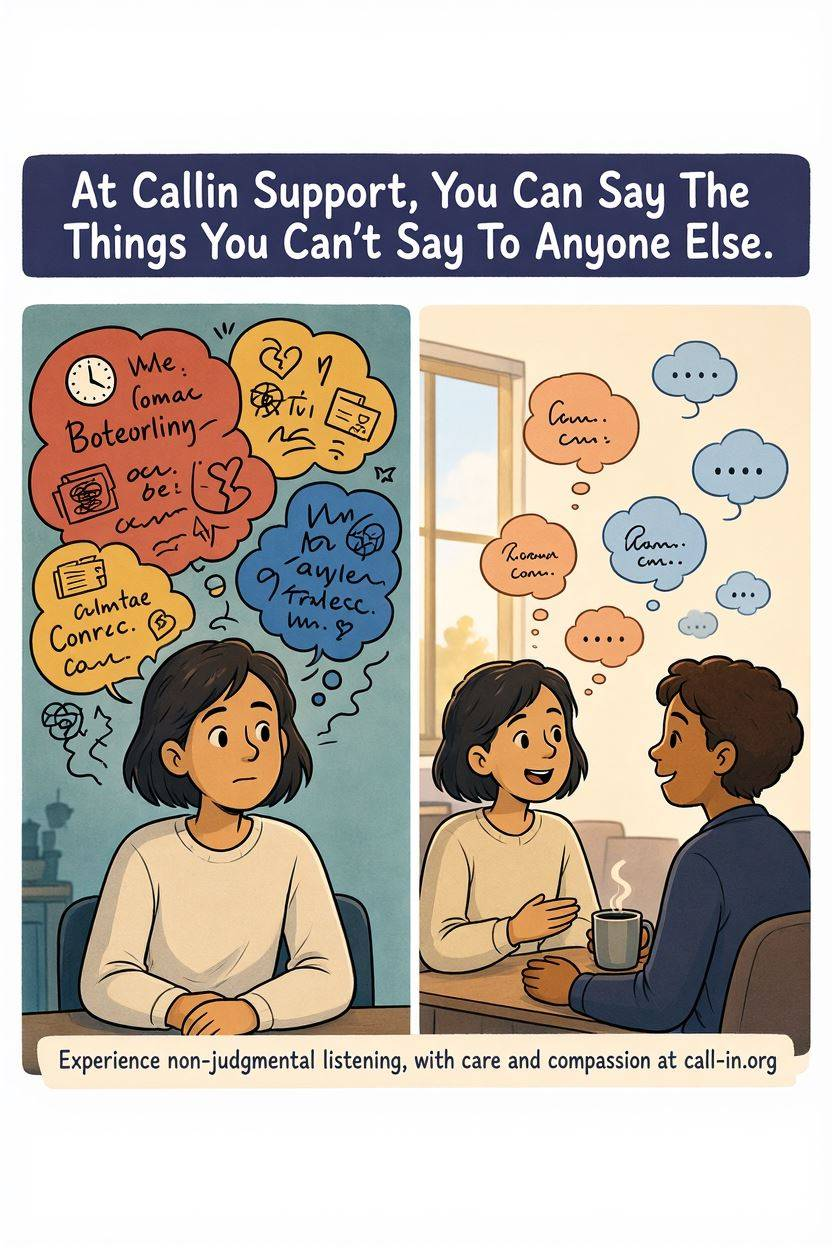
If you feel like a burden, the fastest relief usually comes from talking to a non-judgmental person who has no stake in your daily life, such as a trained peer listener, a warmline volunteer, or a confidential support service. These spaces exist specifically so you never have to worry about being “too much.”
That worry, the fear of being too much, is one of the loneliest feelings a person can carry. It convinces you to stay quiet even when you need connection the most.
Key Takeaways
- Feeling like a burden is a common thought pattern, not proof that you actually are one.
- Non-judgmental listening spaces exist outside of friendship and outside of therapy, and both matter.
- Peer support works because the listener has no history with you to protect.
- Warmlines and non-clinical platforms are built for exactly this kind of conversation.
- Asking for support is not weakness. It is how humans have always regulated stress.
Why “I Feel Like a Burden” Is So Common
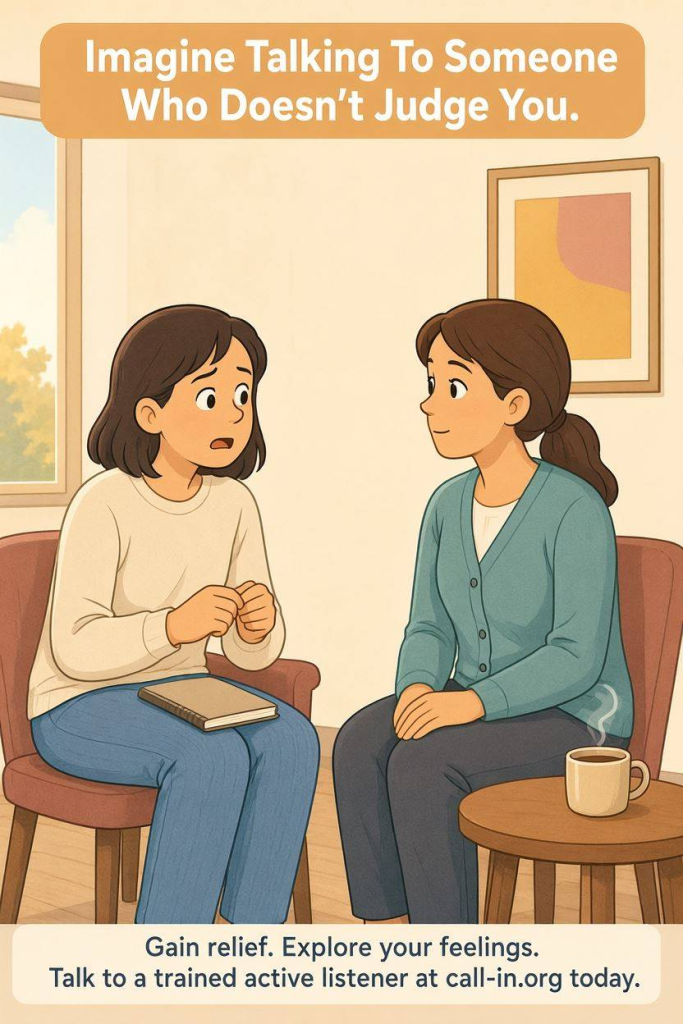
Almost everyone has had the thought at some point. You want to talk, but a quieter voice says your problem is not big enough, or that the other person is already tired, or that you brought this on yourself.
Psychologists sometimes call this perceived burdensomeness. It is the belief that your presence or your struggles cost other people more than they gain from helping you. Research on social support consistently shows this belief is usually inaccurate, yet it feels completely real in the moment.
The mind is protective in strange ways. Staying silent feels safer than risking rejection. But silence has a cost too. It slowly convinces you that you are alone with whatever you are carrying.
What “Non-Judgmental” Actually Means
People throw the word around a lot, so it helps to define it clearly. A non-judgmental listener does three things.
They let you finish your thought before responding. They do not rank your problem against someone else’s. And they do not quietly file away what you said to use later, in an argument or in their opinion of you.
This is different from advice-giving, which often comes from a good place but can feel like judgment in disguise. When someone jumps straight to “here’s what you should do,” it can imply your own instincts were wrong. A true non-judgmental listener holds space first and only offers direction if you ask for it.
The Difference Between Friends, Therapy, and a Third Option
Friends know your history. That closeness is valuable, but it also means every conversation carries weight. They remember what you said last time. They may worry about you after you hang up. Some people genuinely do not mind this, but many quietly do, even if they never say so.
Therapy is clinical, structured, and often necessary for diagnosable conditions or long-term patterns. It is also a commitment, both financially and emotionally, that not everyone needs for a hard week or a heavy thought.
There is a third option that gets overlooked. It sits between the two. Someone to talk to when you don’t want to burden your friends is not a compromise. It is a legitimate category of support built for people who need a real conversation without the weight of either extreme.
Where This Kind of Support Actually Exists
Warmlines
A warmline is a peer-staffed phone or chat line for people who are struggling but not in crisis. Unlike a crisis line, a warmline is meant for the everyday heaviness of life, the kind that does not need emergency intervention but still deserves attention. If you have never used one, learning what a warmline is can make the idea feel far less intimidating.
Trained Peer Listeners
Peer listening services connect you with someone trained specifically in active listening, not clinical diagnosis. They are taught to reflect, validate, and stay present without steering the conversation toward their own opinions. Online emotional support peer listeners exist for this exact reason, and many people are surprised by how different it feels to talk to someone with no personal stake in the outcome.
Non-Clinical Emotional Support Platforms
These platforms sit outside the medical system entirely. They are built around confidential, judgment-free conversation rather than treatment plans. This makes them a strong fit for stress, overthinking, grief that does not require clinical care, or simply the need to say something out loud.
Community and Peer Groups
Some people find non-judgmental connection in shared-experience groups, whether online or local. Talking to someone who has lived through something similar removes a layer of explanation and shame that often exists in other conversations.
An Idea Worth Sitting With
Most advice about loneliness focuses on building a bigger support system. Make more friends. Schedule more calls. Join more groups.
But volume is not the real problem for a lot of people. The real problem is that every relationship in their life comes with a role attached. Employee, partner, sibling, the reliable one, the strong one. A non-judgmental stranger removes the role entirely. For a short window of time, you get to just be a person with a feeling, nothing else.
That is not a lesser form of connection. For many people, it is the first honest conversation they have had in weeks.
Why Talking to a Stranger Can Feel Safer, Not Colder
It sounds counterintuitive. Shouldn’t the people who love you be the safest option?
Not always, and not because they do not care. It is because caring creates consequences. If you tell your partner you feel hopeless about work, they may worry all evening. If you tell a peer listener, the conversation ends and nothing follows you home. This is not avoidance. It is simply a different, valid form of processing.
Anonymity also lowers the instinct to perform. Many people soften their real feelings for the people closest to them, either to protect them or to avoid seeming dramatic. A neutral listener removes that filter, which is often when the most honest words finally come out.
Signs You Might Benefit From This Kind of Conversation
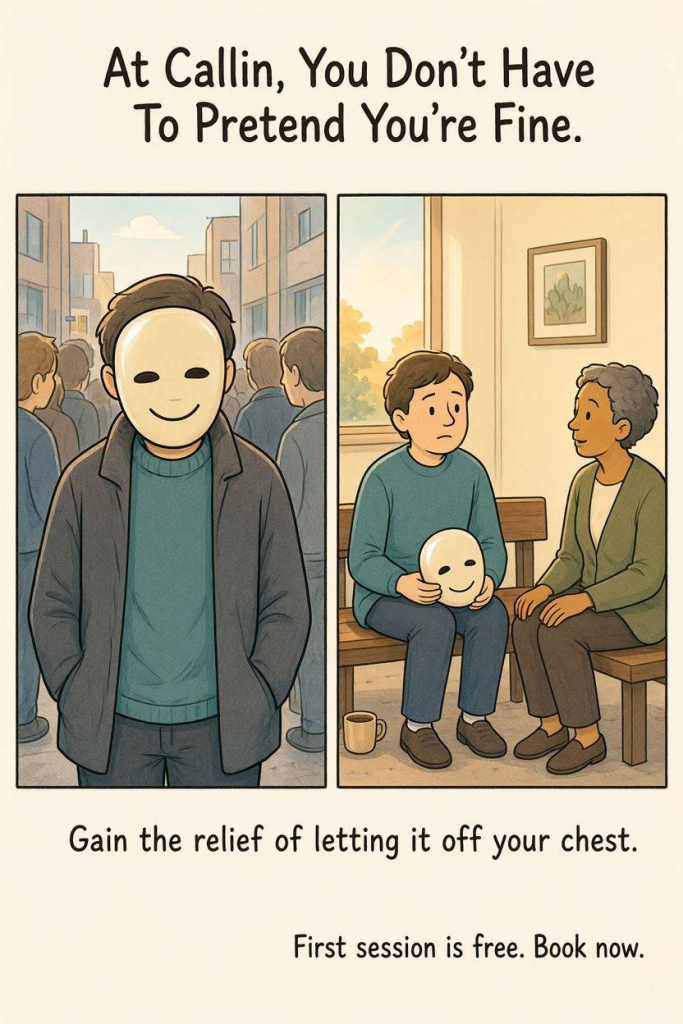
You keep rehearsing what you want to say to a friend but never actually send the message. You feel guilty even thinking about bringing up your problems. You find yourself saying “I’m fine” on repeat, even when you are not. You want to talk, but not to anyone who might treat you differently afterward.
None of these signs mean something is clinically wrong with you. They simply mean you are carrying something you have not had a safe place to put down yet.
How to Start, Even If You Feel Awkward About It
You do not need a perfect opening line. Most non-judgmental listening services are built for people who start with “I don’t really know where to begin” or “this might sound small, but.” Trained listeners hear this constantly, and it never reads as strange to them.
Give yourself permission to talk about something that feels minor. You do not need a crisis to justify reaching out. The threshold for deserving support is lower than most people believe.
Where Callin Fits Into This
This is exactly the space Callin was built for. Callin connects people with trained, confidential peer listeners for conversations that are not therapy but are still taken seriously, giving you somewhere to think out loud without wondering if you are asking too much of the person on the other end.
Frequently Asked Questions
Is it normal to feel like a burden even when nothing is technically wrong?
Yes. Perceived burdensomeness often has little to do with your actual circumstances. It is a thought pattern, and thought patterns can be worked through even without a major life event triggering them.
What is the difference between a warmline and a crisis line?
A crisis line is designed for emergencies and immediate safety concerns. A warmline is for everyday emotional support, offered by trained peers rather than clinicians, and it exists specifically for moments that do not require urgent intervention.
Can talking to a stranger really help more than talking to a friend?
It can, for different reasons than friendship offers. A stranger has no history with you to protect, which often makes it easier to speak honestly without worrying about the aftermath.
Is non-clinical emotional support the same as therapy?
No. Non-clinical support focuses on listening, validation, and everyday emotional processing. Therapy involves clinical training, diagnosis, and treatment planning. Both can be valuable, and they serve different needs.
How do I know if I need a peer listener or a therapist?
If you are dealing with a diagnosable condition, trauma, or patterns that significantly affect your daily functioning, a licensed therapist is the right fit. If you need to process everyday stress, loneliness, or overthinking without a clinical framework, non-clinical support may be enough.
What if I don’t know what to say when I reach out?
That is more common than you would think. Trained listeners are used to conversations that start without a clear direction, and part of their role is helping you find the words as you go.
Will the person judge me for needing to talk about something small?
No. Trained non-judgmental listeners are specifically taught not to rank or measure the size of a problem. If it matters to you, it is worth talking about.
Feeling like a burden is a thought, not a fact. Somewhere, there is a trained listener waiting for exactly the kind of conversation you have been avoiding, and reaching out does not cost the other person anything you need to feel guilty about.

Leave a Reply