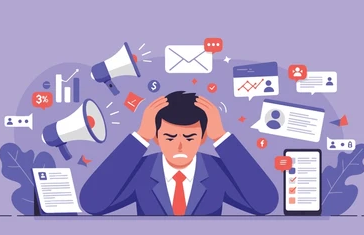
Are you feeling burnout at work? It’s 8:47 AM on a Tuesday. You haven’t even opened your laptop yet, and already your chest feels tight. The Slack notifications are piling up. Your inbox has 47 unread emails. Your manager wants a “quick sync” at 9.
And somewhere between your second coffee and your third deep sigh, a thought creeps in that you’ve been trying to ignore for weeks: I am completely burned out.
If that sounds familiar, you’re not imagining it. And you’re definitely not alone. Burnout at work is one of the most widespread, underreported, and misunderstood experiences of modern working life. It’s not laziness. It’s not weakness. It’s what happens when stress accumulates faster than it gets released, and when the emotional weight of work has nowhere to go.
This article covers 13 reasons why Callin is the safe space you’ve been looking for: a place to vent, process, and start breathing again.
What Is Burnout at Work and Why It Feels So Overwhelming
The World Health Organization officially classifies burnout at work as an occupational phenomenon, describing it as a syndrome resulting from chronic workplace stress that hasn’t been successfully managed. But most people don’t experience it as a clinical definition. They experience it as waking up exhausted, dreading a job they used to care about, and feeling like they’re running on empty no matter how much they sleep.
Burnout at work typically shows up as a combination of:
- Emotional exhaustion: You feel drained before the day begins
- Mental fatigue: Simple decisions feel overwhelming
- Detachment: You stop caring about work you once found meaningful
- Reduced performance: You’re trying hard but achieving less
- Physical symptoms: Headaches, disrupted sleep, muscle tension
The tricky part? Burnout at work builds slowly.

It rarely announces itself with a dramatic moment. It’s the accumulated weight of too many demands, too little recovery time, and too few opportunities to actually talk about how you’re feeling. That last part (the talking) turns out to be more important than most people realise.
13 Reasons Callin Is a Safe Space to Talk About Burnout at Work
Reason 1: You Don’t Want to Burden Your Coworkers or Friends
There’s a particular kind of loneliness that comes with burnout at work. The feeling that your stress is too much for other people. You’ve already vented to your partner three times this week. Your best friend is dealing with their own stuff. Your work colleagues? Well, they’re stressed too, and you don’t want to add to the pile.
So you go quiet. You say “I’m fine” when someone asks. You carry the weight alone, and it gets heavier.
There’s no guilt required, just honest conversation with someone who’s there to listen. When burnout at work leaves you feeling like you have nowhere to turn, having a dedicated outlet changes everything.
Reason 2: You Need to Vent Without Professional Pressure
Therapy is wonderful, but it’s not what everyone needs or wants in every moment. Sometimes you don’t want to sit in a structured session and explore your childhood relationship with achievement.
You just want to say, out loud, “My manager is driving me absolutely mad and I haven’t had a proper lunch break in three weeks.”
Callin fills the gap between saying nothing and formal therapy. It’s non-clinical, low-pressure, and conversational. You don’t need a diagnosis. You don’t need to have your thoughts perfectly organised. You can simply show up with your workplace stress and start talking.
Peer support at this level is powerful precisely because it’s human: not clinical, not transactional, just connection. For people experiencing burnout at work who aren’t ready for (or don’t need) professional intervention, that matters enormously.
Reason 3: Work Stress Builds Up Silently
One of the most insidious things about burnout at work is that it doesn’t arrive with a warning label. You don’t wake up one morning fully burned out. It sneaks up on you, one frustrating meeting at a time, one skipped lunch break at a time, one “I’ll deal with my feelings later” at a time.
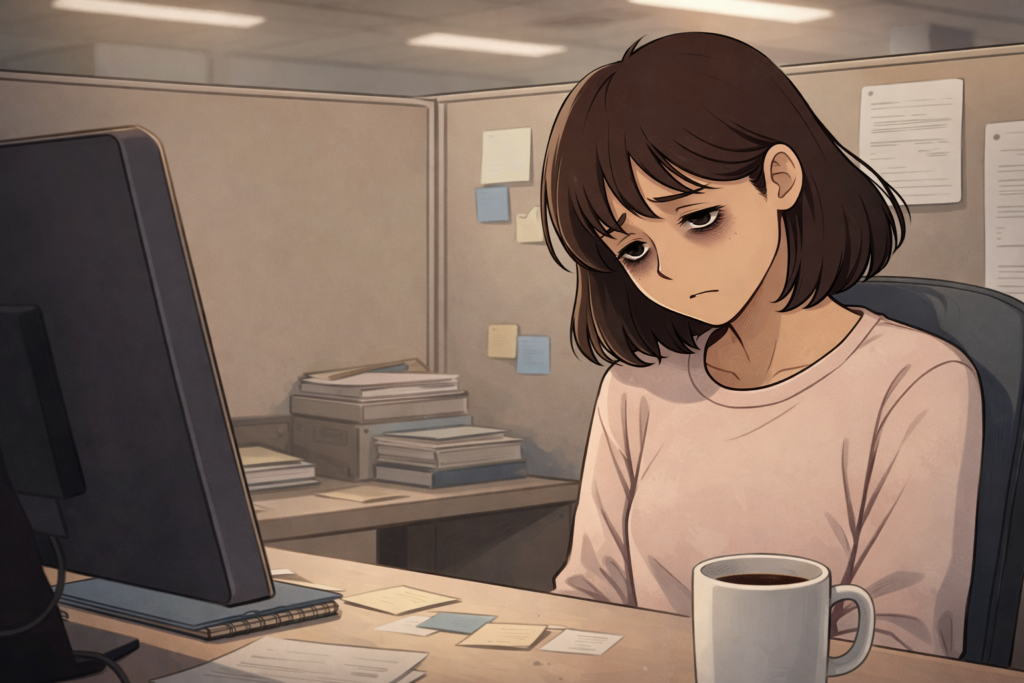
By the time most people recognise they’re experiencing burnout at work, the stress has been accumulating for months. The body keeps score, as they say, and so does the mind. Unprocessed work pressure turns into chronic tension, disrupted sleep, and that flat, grey feeling that used to be enthusiasm.
Regular conversations, even brief ones, give stress somewhere to go before it fossilises. Rather than waiting until you hit a wall, talking about workplace stress early gives you a healthy ongoing outlet. Think of it as emotional maintenance rather than emergency repair.
Reason 4: You Feel Emotionally Exhausted After Work
You close the laptop. In theory, work is over. In practice, work is absolutely not over. It’s moved from your screen into your head. You’re replaying the difficult conversation with your line manager. You’re stewing over that passive-aggressive email. You’re too tired to enjoy the evening but too wired to actually rest.
Emotional exhaustion is a core symptom of burnout at work, and it’s particularly brutal because it robs you of the recovery time you desperately need. The evenings and weekends that should restore you are instead colonised by work anxiety and mental fatigue.
Having a space to offload that emotional weight, to actually say what happened and how it made you feel, allows your nervous system to start the transition from “work mode” to “human being mode.” Callin offers that transition space. It’s a bridge between the stress of the working day and the rest you actually deserve.
Reason 5: You Don’t Want Advice. You Want to Be Heard
Well-meaning people have a tendency to leap straight into fix-it mode. You say you’re stressed at work, and suddenly you’re receiving a seven-step productivity framework and a recommendation for a mindfulness app. (Nothing against mindfulness apps. But sometimes they’re not the point.)

Research from the American Psychological Association consistently shows that emotional validation, being heard, acknowledged, and understood, is itself therapeutic. It reduces the physiological stress response. It restores a sense of connection. It reminds you that your feelings make sense.
Burnout at work often involves feeling like your emotional experience is being bypassed in favour of solutions. Callin’s approach centres on listening first. You can ask for perspective if you want it, but the primary offer is a human ear and genuine presence. For many people dealing with work pressure, that’s the thing they needed most and never knew how to ask for.
Reason 6: You’re Tired of “Just Push Through It” Culture
Workplace culture has a complicated relationship with burnout. On one hand, companies increasingly acknowledge it as a real problem. On the other, there remains a deeply embedded narrative that stress is a sign of commitment, and that struggling means you’re not resilient enough.
If you’ve ever been told to “just power through,” “focus on the positives,” or “everyone’s under pressure right now” when you tried to raise how you were feeling, you’ll know how quietly devastating that response can be. It doesn’t make the burnout at work go away. It makes you feel guilty for having it.
Finding community with others who understand workplace stress and navigating similar pressures can be genuinely countering to that culture. Callin provides a space where your experience is taken seriously, full stop. No performance required. No pressure to be resilient on demand.
Reason 7: You Need a Neutral Space to Process Work Emotions
There’s enormous value in having a space where no one has a stake in the outcome. A neutral listener doesn’t need you to make a particular decision, paint your manager in a certain light, or arrive at a specific conclusion. They just help you think out loud.
This is part of what makes peer support so effective for work anxiety and emotional exhaustion. It gives you room to arrive at your own understanding of a situation, to separate what actually happened from what you’re afraid it means, and to figure out how you genuinely feel rather than how you think you should feel. Callin offers exactly that kind of neutral ground.
Reason 8: You Feel Alone in Your Job Stress
Burnout at work has a particular way of making you feel like you’re the only one struggling. Everyone else seems to be coping. Everyone else seems fine. It must just be you.

(Spoiler: it’s not just you. The Mental Health Foundation reports that work is one of the most significant sources of stress in people’s lives, and the majority of adults have experienced it at levels that felt unmanageable.)
Loneliness compounds burnout at work significantly. When you feel isolated in your stress, you lose access to perspective, to reassurance, and to the basic human comfort of knowing you’re not alone.
Connecting with others who understand emotional exhaustion at work can be profoundly relieving, not because it changes the job, but because it changes the feeling of navigating it alone. Callin is a reminder that there’s a whole community of people who get it.
Reason 9: You Don’t Want to Mix Personal Life With Work Issues
There’s a sensible instinct, for many people, to keep work and personal life separated. You might not want your partner to fully absorb the politics of your office. You might feel protective of your friendships, not wanting every gathering to become a debrief of workplace stress. You might simply value having spaces in your life that are work-free.
That’s a healthy boundary, and it can leave you without anywhere to take the mental fatigue that work genuinely generates. Callin sits outside both worlds. It’s not your personal life, and it’s not your professional network.
It’s a purpose-built space for exactly this kind of conversation, which means you can process your burnout at work without importing it into every other area of your life.
Reason 10: You Replay Work Situations in Your Head
You know the loop. Something happened at work: a tense meeting, a critical comment, a situation that felt unfair. And now it’s playing on repeat. You’ve rehearsed what you should have said. You’ve imagined every possible interpretation. You’ve run the mental simulation approximately 47 times.
This rumination is a hallmark symptom of burnout at work and work anxiety. Mayo Clinic identifies rumination as both a cause and a consequence of chronic stress. It keeps the stress response activated long after the triggering event has passed.
Talking breaks the loop. When you verbalise what happened, even just once, to one person, you externalise it. It goes from being a private spiral inside your head to being a shared narrative that you can look at, make sense of, and start to release. For burnout at work driven by rumination, Callin can be surprisingly powerful.
Reason 11: You Struggle to Disconnect After Work
Remote work, in particular, has made the boundary between work and life genuinely difficult to maintain. When your office is your living room, the psychological commute home doesn’t happen. The physical signal that says “work is over now” doesn’t exist.
The NHS highlights poor work-life balance as a major contributing factor to both burnout at work and to burnout progression. Constantly “on” (checking emails at dinner, thinking about tomorrow’s deadline while watching TV) is a fast track to emotional exhaustion.
A dedicated conversation at the end of a hard work day, a real, human exchange where you get to download what happened and be heard, can function as that missing commute.
It’s a signal to your brain that the work day is over and processed. Creating healthy boundaries between work and personal wellbeing starts with having somewhere to put the day’s emotional content. Callin provides that landing zone.
Reason 12: You Feel Guilty for Struggling With Burnout at Work
This one is worth naming directly, because it’s so common and so counterproductive. Many people dealing with burnout at work carry a significant layer of guilt about it. They feel they should be coping better. They compare themselves to colleagues who seem fine. They worry that acknowledging the burnout is a sign of weakness, failure, or ingratitude.
That guilt makes everything worse. It prevents people from seeking support. It adds an emotional burden on top of the original stress. And it’s almost entirely unfounded.
Burnout at work isn’t a character flaw. It’s a recognised response to sustained, inadequately managed occupational stress. The WHO says so. The NHS says so. Harvard Health Publishing says so.
You are allowed to struggle. You are allowed to need support. And you are allowed to talk about what you’re going through without it meaning anything negative about you. Callin is a judgment-free space for exactly that. Leave the guilt at the door.
Reason 13: You Need Consistent Emotional Support
One conversation helps. But burnout at work isn’t solved in a single exchange. It builds over time and it recovers over time. Consistent access to emotional support, a place where you can regularly check in, vent when you need to, and process ongoing workplace stress, is significantly more effective than occasional crisis conversations.
The American Psychological Association’s research on stress management consistently highlights the value of regular social support, not as a luxury but as a genuine mental health resource. For people experiencing burnout at work or chronic work anxiety, having access to peer support on an ongoing basis can meaningfully change their relationship with work stress over time.
Callin isn’t a one-time fix. It’s an ongoing resource you can return to, on bad weeks and medium weeks and weeks when you just need to say how you’re feeling to someone who will actually listen.
Why Talking Helps With Burnout at Work
There’s real science behind the relief that comes from verbalising stress. Research from the National Institute for Occupational Safety and Health (NIOSH) identifies social support as one of the most significant protective factors against job burnout.
When people have access to emotional outlets, they experience lower cortisol levels, reduced cardiovascular stress responses, and greater resilience to ongoing workplace pressure.
According to Harvard Health Publishing, the act of putting feelings into words (what psychologists call “affect labelling”) reduces the intensity of emotional experiences by engaging the prefrontal cortex and quieting the amygdala’s threat response. In plain English: talking about your stress actually makes it physically less stressful.
The WHO emphasises that social connection is a fundamental component of mental wellbeing, not an optional add-on. And the NHS’s guidance on managing workplace stress specifically highlights the value of talking to someone, whether a friend, peer, or professional, as a first-line response to work pressure.
For burnout at work specifically, regular emotional processing prevents the accumulation that turns manageable stress into genuine crisis. Talking isn’t a weakness. It’s one of the most evidence-supported things you can do.
What a Safe Space to Vent About Work Actually Looks Like
Not every conversation is equally useful when you’re dealing with burnout at work. A safe space to vent isn’t just any space where talking is technically permitted. It has specific qualities that make it genuinely helpful:
Non-judgmental listening means your feelings are received without evaluation. You’re not assessed for how reasonable your stress is. You’re not told you’re overreacting or underreacting. You’re heard.
Emotional safety means you can say the honest, unfiltered version of how you’re feeling, including the parts that might seem “unprofessional” if you said them out loud at work. The frustration, the exhaustion, the moments of “I just can’t do this anymore.”
No performance required means you don’t have to present yourself as coping, as positive, or as having it together. You can show up with the actual experience of burnout at work rather than the curated version.
Freedom from hierarchy means the space has no stakes, no implications for your job, your reputation, or your professional relationships. What you say stays within the bounds of a conversation between peers, not colleagues with overlapping interests.
That’s what Callin provides. Not advice-giving, not diagnosis, not a substitute for professional mental health care when that’s needed, but a genuine, accessible, human safe space to process the real experience of work stress.
How Callin Supports People Experiencing Burnout at Work
Callin is a peer support platform built around the simple, research-backed idea that human connection is one of the most effective responses to emotional distress, including the distress of burnout at work.
It sits in an important space that’s currently underserved: between suffering in silence and formal clinical care. Most people dealing with workplace stress don’t need therapy every week, but they do need somewhere to talk. Callin is that place.
What makes it particularly well-suited to burnout at work:
- Accessibility: Available when you need it, without waiting lists or appointments
- Peer connection: Real conversations with real people who understand lived experience
- Non-clinical tone: No clinical framework, no diagnostic language, no performance pressure
- Emotional relief: The immediate relief of being heard, which science confirms is genuinely therapeutic
- Ongoing support: A resource you can return to consistently, not just in crisis
If you’re experiencing burnout at work and you’re not sure where to start, start here. You don’t need to have the right words. You just need to show up.
Frequently Asked Questions About Burnout at Work
What is burnout at work?
Burnout at work is a state of chronic occupational stress that leads to physical and emotional exhaustion, cynicism or detachment from work, and reduced professional effectiveness. The World Health Organization classifies it as an occupational phenomenon, not a medical condition, resulting from workplace stress that hasn’t been successfully managed over time.
How do I know if I’m experiencing job burnout?
Common signs of burnout at work include feeling emotionally drained most days, dreading going to work, a noticeable drop in motivation or productivity, increased cynicism about your job, difficulty concentrating, and physical symptoms like frequent headaches or disrupted sleep. If these have been present for several weeks and are affecting your daily functioning, it’s likely more than ordinary stress.
Can talking help with burnout at work?
Yes, significantly. Research from the APA and NIOSH shows that social support is one of the strongest protective factors against job burnout. Verbalising stress reduces the physiological stress response, provides cognitive clarity, and offers the emotional validation that helps people process rather than accumulate workplace pressure. Even informal peer conversations have measurable benefits.
Is burnout the same as stress?
Not quite. Stress at work usually involves too many demands but can ease when circumstances change. Burnout at work is what happens when stress is sustained over a long period without adequate relief or recovery. It’s characterised by emotional depletion, disengagement, and a feeling of helplessness that ordinary stress doesn’t typically produce.
What should I do if I feel emotionally exhausted from work?
Start by acknowledging it rather than pushing through. Talk to someone you trust: a friend, family member, or peer support resource like Callin. Consider whether your workload is sustainable and whether any boundaries need reinforcing. If symptoms are severe or persistent, speaking with a GP or mental health professional is worth exploring. Emotional exhaustion is a signal worth taking seriously.
Is it normal to feel burned out at work?
Extremely common, yes. The Mental Health Foundation identifies work as one of the top sources of stress in adult life, and burnout rates have risen significantly in recent years across most professional sectors. Feeling burned out doesn’t mean you’re unusual or weak. It means you’re human, and you’ve been carrying too much for too long.
Can peer support help with burnout at work?
Absolutely. Peer support (connecting with others who understand your experience) reduces isolation, provides emotional validation, and offers perspective that’s difficult to find when you’re deep in work anxiety. It’s not a replacement for professional mental health care in complex cases, but for the vast majority of people experiencing burnout at work, peer connection is a powerful and often underutilised resource.
In Summary…
Burnout at work is real. The exhaustion is real. The mental fatigue, the loss of motivation, the feeling that you’re running on fumes: all of it is real, and all of it deserves to be taken seriously.
What it doesn’t deserve is to be carried in silence.
Whether you’re in the early stages of work stress accumulation or you’ve been quietly experiencing burnout at work for months, the most important step is the same: find somewhere to talk. Not to fix everything. Not to make a grand plan. Just to say what’s actually going on, to someone who will actually listen.
That’s what Callin offers. A peer support space built for exactly this, for the work stress you can’t bring home, the emotional exhaustion you can’t shake, the burnout at work you’ve been pretending isn’t happening. A safe space to vent, process, and start feeling like yourself again.
You’ve been carrying enough. Put some of it down.
Sources:
World Health Organization (WHO)
- Burn-out an “occupational phenomenon”: Read the official entry on the WHO News Page. [1]
American Psychological Association (APA)
- Stress in America reports: Access the comprehensive survey index on the APA Stress Portal. [1, 2]
NHS
- Stress, anxiety and depression guidance: Find practical advice and steps on the NHS Mental Health Guide. [1, 2]
Mayo Clinic
- Job burnout: How to spot it and take action: Read the symptoms and coping strategies on the Mayo Clinic Healthy Lifestyle Section. [1, 2, 3]
Mental Health Foundation
- Work and mental health: Explore the resource archive on the Mental Health Foundation Programmes Hub. [1]
Harvard Health Publishing
- How simply talking about problems can help: Read the insights on emotional support on the Harvard Health Portal.
National Institute for Occupational Safety and Health (NIOSH)
- Occupational stress and burnout research: Access the institutional data via the CDC NIOSH Workplace Mental Health Bulletin. [1]

Leave a Reply