
When you need to vent but do not therapy? You can seek non-clinical emotional support. This includes peer support groups, warmlines, and structured listening services.
These spaces offer dedicated time to process everyday stress and identity shifts without clinical labels. They rebuild lost informal support networks, providing a confidential environment for active listening and reflection. Using these platforms helps metabolize daily pressure effectively before it escalates into a crisis.
Key Takeaways
- Most people are taught that emotional struggles belong in one of two places: a friend’s living room or a therapist’s office. This leaves a structural gap in the middle.
- Roughly half of U.S. adults report chronic loneliness, and workplace loneliness now affects more than half of employees. (U.S. Surgeon General, 2023; Managed Healthcare Executive, 2025)
- Therapy access is constrained by cost, provider shortages, and waiting lists. In the U.S., 51% of counties have no practicing psychiatrist. In the UK, people wait eight times longer for mental health care than for physical health care. (Rego Park Counseling, 2025; Rethink Mental Illness, 2025)
- Sociologist Mark Granovetter’s research on “weak ties” and Ray Oldenburg’s concept of the “third place” both describe informal social infrastructure that once absorbed everyday emotional load. Much of that infrastructure has thinned out.
- Not every difficult emotion is a clinical symptom. Some experiences need witnessing and articulation, not diagnosis or treatment.
- Non-clinical emotional support, such as peer listening, warmlines, and structured conversation services, is a distinct category. It is not a replacement for therapy or friendship.
- Research on peer support shows modest, measurable benefits for self-efficacy, recovery, and social connection, even though it does not replicate clinical treatment outcomes. (BMC Psychiatry, 2020)

Introduction
It is a Tuesday evening. Someone sits with a feeling they cannot quite name. It is not a crisis. It is not nothing either.
Their closest friend is busy with a newborn. Their second-closest friend is dealing with their own move across the country. A group chat exists, but it has gone quiet for weeks.
Therapy crosses their mind. But therapy feels like a large step for a feeling that has no diagnosis attached to it. There is no panic attack to report. No relationship is ending. No one has died. There is just the slow accumulation of a hard quarter at work, a strained family call, and a low hum of “is this just my life now.”
This person is left with a real question: where do ordinary human struggles belong?
That question sits at the center of what this article calls the support gap. Modern Western culture has organized emotional support into two main categories. Friends provide casual, reciprocal support. Therapists provide clinical, diagnostic support. Everything in between has been quietly assumed to not need its own infrastructure.
This is not a new observation. Articles such as I Need Someone To Talk To, Not Therapy and Why Modern Life is Emotionally Overwhelming have already named this experience from the inside. This piece steps back and asks a structural question: why does the gap exist, and what would it take to treat it as a legitimate category of social infrastructure, rather than a personal failing.
Section 1: How Everyday Listening Became Professionalised
Public understanding of mental health has improved substantially over the past two decades. Stigma around seeking help has declined. Workplaces talk openly about wellbeing. Schools run mental health curricula. This shift has saved lives.
It has also produced a side effect that gets less attention.
As mental health became a public health priority, listening itself began to shift toward professionals. Friends and family started redirecting emotional conversations toward “you should talk to someone,” meaning a licensed someone. Casual listening, once an ordinary part of friendship, started to feel like something only a trained specialist should attempt.
This shift can be described as clinical gentrification.
Clinical gentrification is the process by which an ordinary human function, listening to someone you care about, gets reclassified as a specialist service. Like gentrification of a neighborhood, the function does not disappear. It becomes harder to access without the right credentials, the right vocabulary, or the right price.
The effect is not malicious. Most people redirect friends to therapy out of genuine care, and often out of a fear of saying the wrong thing. But the cumulative result is a culture where people feel they need permission, or a clinical justification, before they can ask someone to simply listen.
This is part of why so many people report feeling guilty for needing emotional support in the first place: they have internalized the idea that ordinary listening is a scarce, specialist resource rather than a basic human one.
It also explains the popularity of a related but distinct idea: the warmline, a phone or chat service that exists specifically for non-crisis emotional support.
Warmlines exist because crisis lines and therapy waitlists were never designed to hold the broad middle ground of everyday emotional weight. Their existence is itself evidence that the two-category model (friend or therapist) was always incomplete.
None of this is an argument against therapy. Therapy remains essential, evidence-based, and underfunded relative to demand. For a closer look at how mental health systems are resourced and structured, see Secrets of the Mental Health Industry.
The argument here is narrower: when every emotional conversation gets funneled toward clinical channels, the channels become overloaded, and ordinary people lose practice at simply being present for one another.
Clinical gentrification, summarized:
- Mental health awareness growth has been a public good and has reduced stigma.
- A side effect is that casual listening increasingly gets redirected to professional channels.
- Ordinary support starts to feel like something that requires a credential or a diagnosis to justify.
- This contributes to guilt and hesitation around asking for non-clinical support.
- Warmlines and peer support models exist precisely because this gap was identified by mental health systems themselves.
Section 2: Why Modern Stress Does Not Fit Episodic Support Models

Most formal support systems, therapy included, are built around episodes. A person presents with a problem. The problem is assessed, treated, and ideally resolved. This model works well for acute crises: a panic disorder, a depressive episode, a traumatic event.
It works less well for the kind of stress that defines much of modern adult life: stress that does not arrive in episodes, but accumulates.
Work pressure is now close to constant for a large share of the workforce. Recent data shows that a majority of UK employees report some level of burnout, and almost half of U.S. employees say they feel burned out at work.
Nearly half of American workers report experiencing work-related stress every single day, according to Gallup research. Burnout itself is recognized by the World Health Organization as an occupational phenomenon caused by chronic, unmanaged workplace stress, not a single bad week.
Family responsibilities add another constant layer. So does digital overload: notifications, comparison, and a news cycle that rarely pauses. Add chronic financial or career uncertainty, and many adults are carrying a steady background load that never quite reaches crisis level, and never quite goes away either.
This matters because there is a meaningful difference between an acute crisis and ongoing emotional maintenance. A crisis is sudden, identifiable, and time-limited. Emotional maintenance is the slow, continuous work of metabolizing daily pressure before it becomes a crisis.
Most emotional experiences, for most people, emerge through accumulation rather than a single defining event. For deeper context on this kind of pressure, see Stress Management, Overcome Professional Burnout, and 13 Reasons You Feel Burnout at Work.
Remote workers face a related but distinct version of this problem, explored in Cope With Feeling Lonely as a Remote Worker.
This creates what can be called the emotional infrastructure bottleneck.
Most support systems, clinical and informal alike, are designed to activate once a problem becomes visible or severe. Therapy intake is typically triggered by a named symptom. Friends typically step in once someone is visibly struggling. Few systems exist to absorb the in-between: the ordinary, daily accumulation that precedes a crisis.
When the only entry points to support require a problem to be severe enough to notice, the system bottlenecks. People wait until they are in real trouble before reaching out, partly because they do not feel their accumulating stress “counts” as a legitimate reason to ask for help earlier.
Emotional infrastructure bottleneck, summarized:
- Modern stress is continuous: work, family, digital life, and uncertainty rarely let up.
- Support systems built for episodic crises struggle to address ongoing, low-grade accumulation.
- Acute crisis and emotional maintenance are different needs and call for different kinds of support.
- A model that only activates after severity is reached creates delay, and delay increases the eventual size of the problem.
Section 3: The Value of Spaces Without Diagnosis
There is a meaningful distinction between treatment and witnessing.
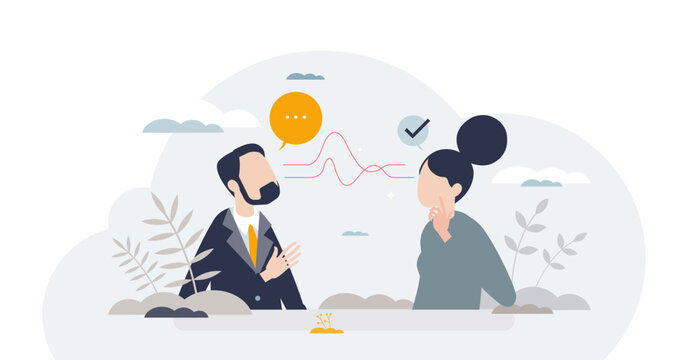
Treatment aims to reduce or resolve a clinical symptom. Witnessing is the act of having another person register what you are going through, without trying to fix, diagnose, or categorize it. Both have value. They are not the same thing, and one cannot fully substitute for the other.
A great deal of adult life involves experiences that call for witnessing rather than treatment.
A career change.
A friendship that quietly became one-sided.
The realization that you have spent years managing other people’s moods instead of your own, a pattern often described in writing about people-pleasing and boundaries.
A breakup that forces a second look at an old relationship pattern, the kind discussed in pieces on distinguishing a difficult relationship from narcissistic abuse or healing after it.
Becoming a parent.
Watching your own parents age.
Realizing your job title no longer matches who you have become.
None of these experiences automatically requires a diagnosis. None of them automatically requires treatment.
It is also worth noting that ordinary stress responses are often mistaken for deeper pathology; the piece on things commonly mistaken for trauma responses is a useful reference for anyone trying to sort out what they are actually dealing with, without assigning themselves a label they have not been given by a professional.
What many of these experiences require is understanding and articulation: the chance to say a thing out loud, to a person who is paying full attention, and to hear it land.
This is different from advice. It is different from problem-solving. It is closer to what people mean when they ask for a safe space to vent or simply emotional support rather than a treatment plan.
This is the function of what can be called the no-diagnosis space.
A no-diagnosis space is a setting in which a person can process an experience out loud without it being filtered through clinical categories. It does not require a presenting problem.
It does not produce a diagnosis or a treatment plan. Its value lies in the act of articulation itself: research across cognitive and clinical psychology has long shown that putting an experience into words changes how a person relates to it, independent of whether that experience meets any clinical threshold.
People who are working through identity-level questions, including the slow process of no longer identifying primarily with a past trauma or reparenting themselves after a difficult childhood, often need exactly this kind of space alongside, not instead of, any clinical work they may also be doing. The two are not in competition.
The no-diagnosis space, summarized:
- Treatment resolves clinical symptoms. Witnessing registers an experience without trying to fix it. Both matter.
- Identity transitions, relationship pattern shifts, and ordinary life changes often call for witnessing more than diagnosis.
- Articulating an experience out loud has value independent of whether it meets a clinical threshold.
- A no-diagnosis space can run alongside therapy. It is not a substitute for it.
Section 4: Rebuilding the Lost Middle Layer of Human Connection
In 1973, sociologist Mark Granovetter published a paper that reshaped how social scientists understand human networks. Its central finding: people rely on weak ties, casual acquaintances rather than close friends or family, for a surprising amount of practical and informational support.
Close relationships provide stability, while casual connections serve as bridges to new information, resources, and opportunities. The paper has since become one of the most cited works in the social sciences. It remains a foundational text in social network analysis, taught in introductory sociology courses around the world.
Weak ties were never just about job leads. Historically, they also carried a lighter form of emotional infrastructure: the neighbor who noticed if something seemed off, the shopkeeper who asked how you were doing and meant it, the regular at the same coffee counter who became a fixture in your week without ever becoming a close friend.
Urban sociologist Ray Oldenburg gave this kind of setting a name: the third place. A third place is a social space separate from home (the “first place”) and work (the “second place”), where people gather informally.
Oldenburg argued that third places matter for democracy, civic life, and a basic sense of belonging, and that their decline contributes directly to isolation. In these spaces, conversation is the central activity, and people encounter others outside their usual social circle.
Both concepts describe the same underlying structure: a layer of low-stakes, recurring human contact that sits between the deep intimacy of close relationships and the formality of institutional care.
That layer has thinned. Remote work has reduced incidental office contact. Suburban design has reduced walkable gathering spaces. Long commutes and digital entertainment have reduced the time available for unstructured social contact.
The result, documented at length in pieces such as Why You Feel Lonely Around People and Make Friends as an Adult, is a generation of adults who are not friendless, but are weak-tie poor.
Non-clinical emotional support can be understood as one modern attempt to reconstruct part of what weak ties and third places used to provide: low-stakes, recurring, attentive human contact that does not require deep history or ongoing obligation.
It does not replace the original, organic version. But as the organic version has eroded faster than it has been replaced, structured alternatives have emerged to fill part of the space.
The lost middle layer, summarized:
- Granovetter’s weak-tie research shows that casual relationships carry real social and practical value.
- Oldenburg’s third-place concept describes physical and social spaces where this kind of contact used to happen by default.
- Remote work, suburban design, and digital life have all reduced opportunities for this kind of incidental connection.
- Non-clinical emotional support functions as a partial, intentional reconstruction of what was once incidental and free.
Section 5: What Non-Clinical Emotional Support Actually Does
Non-clinical emotional support is not a single service. It is a category that includes peer support specialists, warmlines, structured listening services, support groups, and scheduled one-to-one conversations with a trained, non-clinical listener.
Research on this category is still developing, but the available evidence is consistent and modest rather than dramatic.
A 2020 systematic review and meta-analysis of one-to-one peer support published in BMC Psychiatry found that it had a relatively small but real positive impact on self-reported recovery and empowerment, with no measurable impact on clinical symptoms or service use.
A separate umbrella review found that peer support may improve clinical outcomes, self-efficacy, and recovery for some populations. The honest summary of this research is that non-clinical support does something real, but something different from what therapy is designed to do. It is not a weaker version of treatment. It is a different category of support, with its own outcomes.
In practice, non-clinical emotional support tends to share a few structural features.
Scheduled listening. Rather than waiting for a crisis or an opportunity to organically come up in conversation, the time is set aside in advance. This alone changes the dynamic: the listener is not interrupting their own day to help, and the speaker is not waiting for someone else to have bandwidth.
Dedicated, undivided time. A defined session, with one purpose: to be heard.
Human presence without clinical framing. The listener is present and attentive, but is not building a treatment plan, assigning a diagnosis, or assessing risk against clinical criteria. This is what people are often describing when they say they want active listening rather than therapy.
Clear, non-clinical boundaries. A good non-clinical support service is explicit about what it is and is not. It does not pretend to be therapy, and it should make clear, ahead of time, how it handles situations that go beyond its scope, including crisis situations, which is also why the distinction between warmlines and crisis lines matters so much in this space.
Structured reflection. Many of these services use light prompts or a loose conversational structure, enough to help someone move from a vague feeling to something they can actually articulate, without turning the conversation into an assessment.
Callin is one example of a service built around this model: a platform for scheduled, one-to-one conversations with a trained listener, structured around presence and reflection rather than diagnosis or treatment.
It sits alongside warmlines, peer support groups, and community-based listening services as part of a broader, still-developing category. A fuller overview of what this category includes, and how the options compare on cost and structure, is available in 8 Emotional Support Options and Online Emotional Support and Defining Success on Your Own Terms.
What non-clinical support does, summarized:
- It occupies a distinct category, not a weaker version of therapy.
- Research shows modest, real benefits for self-efficacy, empowerment, and social connection.
- It typically involves scheduled time, undivided attention, non-clinical boundaries, and structured reflection.
- Callin, warmlines, and peer support groups are different examples of the same underlying category.
Conclusion
Friendship remains one of the most protective forces in human life. Nothing in this article argues otherwise. Therapy remains an essential, evidence-based form of care, and access to it should expand, not shrink.
But a large number of people are living in the space between the two: not in crisis, not without people who love them, and still without anywhere that quite fits what they are going through. This is not evidence of a mass psychiatric emergency. It is evidence of a structural gap, one that has widened as weak ties thinned, third places closed, and everyday listening drifted toward professional channels.
Non-clinical emotional support will not solve loneliness on its own, and it should not be asked to. But naming it as a distinct category, rather than treating it as a watered-down version of either friendship or therapy, is a necessary first step.
Adulthood, for most people, is not made up of dramatic crises. It is made up of long stretches of ordinary difficulty: a hard year at work, a quiet shift in who you are, a slow loss of the people who used to check in.
What many adults are missing is not treatment. It is closer to what is described in Living vs. Existing and Feeling Overwhelmed but You Don’t Need Therapy: a place to think out loud, without needing a diagnosis to justify the conversation, and without needing a crisis to earn the time.
FAQ
What is non-clinical emotional support?
Non-clinical emotional support refers to structured listening that does not involve diagnosis, treatment, or clinical assessment. It includes peer support, warmlines, support groups, and scheduled listening services. The goal is to provide attentive human presence and a space for reflection, not to resolve a clinical condition. It is typically delivered by trained listeners rather than licensed clinicians, and it operates with clear boundaries about what it can and cannot address.
What is the difference between emotional support and therapy?
Therapy is a clinical service. It involves assessment, often a diagnosis, and a structured treatment approach delivered by a licensed professional, with the goal of addressing a mental health condition. Emotional support is broader and less formal. It focuses on being heard and understood in the moment, without assessment or treatment goals. Many people benefit from both at different times, or even at the same time, since the two serve different functions rather than competing ones.
Why do I need someone to talk to but not therapy?
This usually happens when a person’s distress is real but does not meet, or does not yet meet, a clinical threshold. Ongoing work stress, a major life transition, or everyday loneliness can be genuinely difficult without being a diagnosable condition. In these cases, what helps most is often a space to articulate what is happening, rather than a clinical intervention. Wanting someone to talk to, without wanting therapy, is a reasonable and common response to this kind of accumulating, non-acute strain.
Can peer listening replace therapy?
No, and it is not designed to. Research indicates that peer and non-clinical support can improve self-reported wellbeing, empowerment, and social connection, but it does not produce the same effects on clinical symptoms that therapy does. The two serve different functions. Peer listening is best understood as a complement to therapy for people who are in treatment, and as a standalone option for people whose needs fall outside a clinical threshold.
What is a support gap?
A support gap is the space between casual, informal support from friends and family, and formal, clinical support from licensed professionals. It exists because most social and clinical systems are built around two categories: a friend’s house or a therapist’s office. Experiences that fall in between, ongoing stress, identity transitions, or everyday loneliness, often have no clearly designated place to go, which is what creates the gap.
References
- U.S. Department of Health and Human Services, Office of the Surgeon General. Our Epidemic of Loneliness and Isolation (2023). hhs.gov
- The Cigna Group / Evernorth Research Institute. Loneliness in America 2025, reported via Managed Healthcare Executive. managedhealthcareexecutive.com
- Rethink Mental Illness. New analysis of NHS data on mental health waiting times (2025). rethink.org
- Rego Park Counseling. Barriers to Mental Health Treatment: Accessing Care in 2025. regoparkcounseling.com
- Granovetter, Mark S. “The Strength of Weak Ties.” American Journal of Sociology, Vol. 78, No. 6 (1973), pp. 1360 to 1380.
- Stanford Report. “The strength of weak ties” (2023 retrospective on Granovetter’s work). news.stanford.edu
- Oldenburg, Ray. The Great Good Place (1989), and “Third place,” Wikipedia summary. en.wikipedia.org
- Gallup. Workplace burnout and stress research, summarized via Wellhub. wellhub.com
- White, S. et al. “The effectiveness of one-to-one peer support in mental health services: a systematic review and meta-analysis.” BMC Psychiatry (2020). bmcpsychiatry.biomedcentral.com
- Systematic umbrella review on peer support effectiveness, implementation, and experiences. PMC (2024). pmc.ncbi.nlm.nih.gov
This article discusses emotional wellbeing, stress, and loneliness in a general, informational context. It is not a substitute for professional mental health advice. If you are in crisis or experiencing suicidal thoughts, please contact a crisis line or emergency services in your area.
Leave a Reply