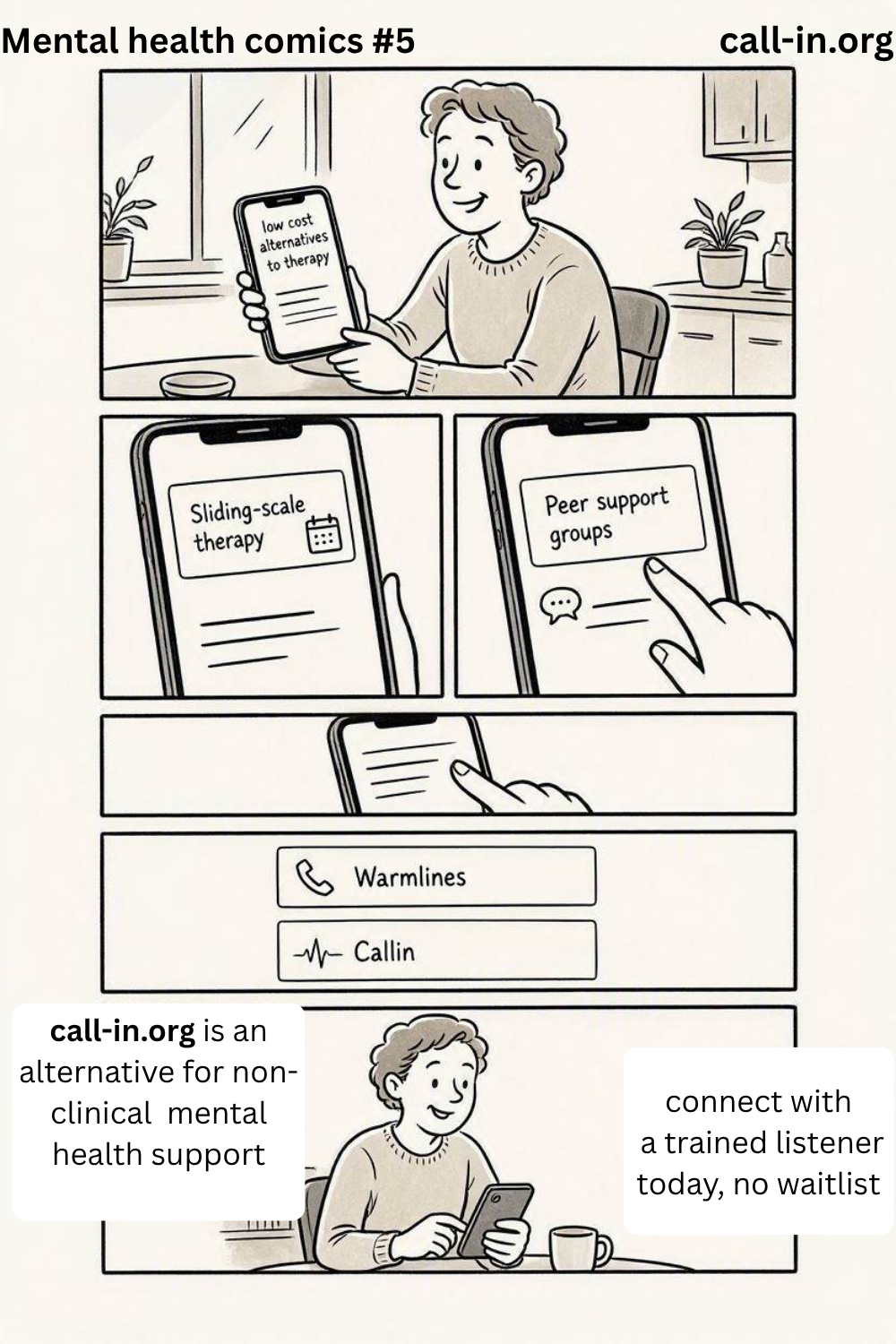
If you’re looking for low cost alternatives to therapy, Callin is one of the clearest answers: a confidential, non-clinical platform where you can talk through everyday stress, loneliness, or overwhelm with a trained peer listener, without needing a diagnosis or a long waiting list.
It isn’t a replacement for clinical treatment, but for the emotional weight most people carry day to day, it’s often exactly the support they need. This guide also maps out sliding-scale therapy, free peer lines, and other affordable options, so you can see where each type of support actually fits.
Key Takeaways
- Cost is one of the top reasons people delay or skip mental health care, but low cost does not mean lower quality. It usually means matching support to the size of the problem instead of defaulting to the most intensive option first.
- Sliding-scale therapy, community mental health centers, university training clinics, and nonprofit networks like Open Path Collective connect people with licensed professionals for a fraction of standard private-pay rates.
- Free, non-clinical peer support, including warmlines and trained peer specialists, is a distinct and evidence-informed category of care, not a watered-down version of therapy.
- Research on “affect labeling” shows that simply putting feelings into words changes how the brain processes distress, whether the person listening is a licensed clinician or a trained peer.
- Crisis lines like 988 in the US and Samaritans in the UK are always free, but they are built for acute crises. Everyday stress, loneliness, and overthinking usually call for a different, gentler kind of support.
Why So Many People Go Looking for Alternatives to Therapy
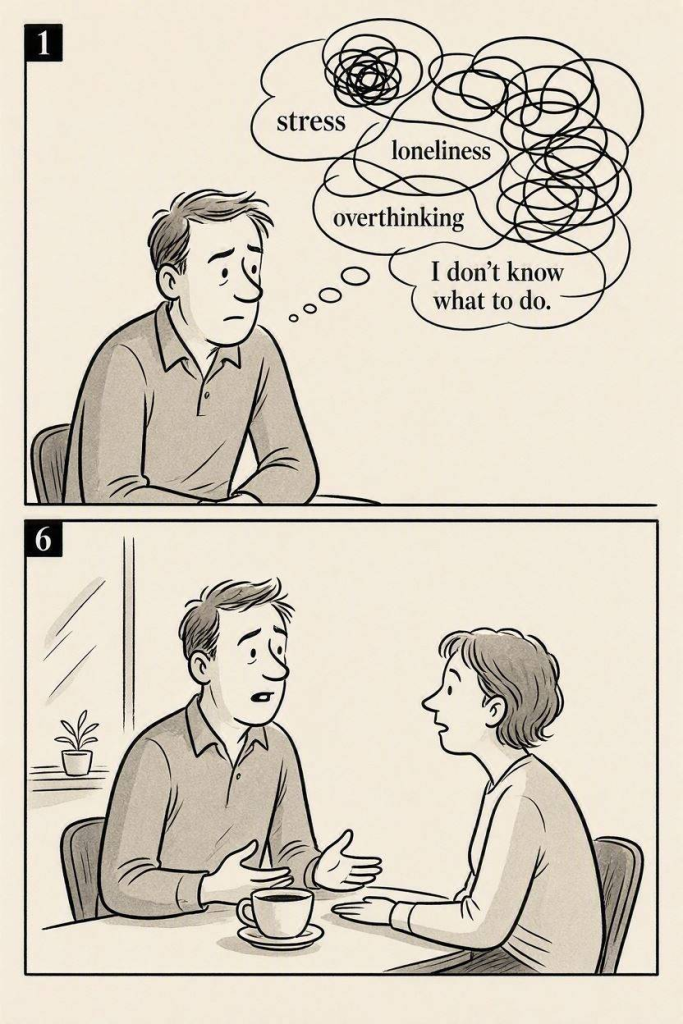
Interest in mental health care has grown steadily, but access has not kept pace with that interest.
National survey data collected by the Federal Reserve shows that a substantial share of American adults, often a quarter or more in any given year, delay or skip some type of care because of cost, and roughly one in ten specifically point to mental health counseling as the care they went without.
A single session with a private-pay therapist commonly runs well above $100, and many insurance plans still leave people with a short, hard-to-navigate list of in-network providers.
Even so, the picture is not entirely discouraging. A 2025 survey from LifeStance Health found that most respondents still consider mental health care just as important as physical health care, and people are returning to therapy faster after a cost-related pause than they did a year earlier.
Real financial strain sitting alongside a genuine desire for care is exactly why low cost alternatives to therapy matter so much right now. The demand for support has not shrunk; how creatively people need to look for it has.
There is also a hidden cost that rarely makes it into the conversation: time. Waiting lists for subsidized or in-network therapy can stretch for weeks or months, and that wait is its own kind of expense, paid in continued stress while an appointment slot opens up.
Low-Cost Ways to Reach a Licensed Professional
Not every affordable option means stepping outside the traditional therapy system. If you are searching for cheap alternatives to therapy near you, several established paths still connect you with a licensed clinician while dramatically reducing what you pay out of pocket.
Sliding-Scale and Reduced-Fee Therapy
Sliding-scale therapy adjusts the session fee to what a client can reasonably afford, usually based on income.
Open Path Psychotherapy Collective, a nonprofit that has become one of the most widely used gateways to this kind of care, charges a one-time membership fee of $65 and then connects members with licensed therapists offering individual sessions in the roughly $30 to $80 range, well below the $80 to $200 or more that many private-pay therapists charge per session.
The membership does not expire, and many independent local therapists offer a comparable sliding scale even outside a formal network, so it is always worth asking directly.
Community Mental Health Centers and Training Clinics
Community mental health centers, often funded through state and federal grants, exist specifically to serve people regardless of ability to pay, and most use an income-based sliding fee.
University psychology and counseling programs run low-cost training clinics for a related reason: graduate students working under close faculty supervision need supervised hours, so clients get sessions at a steep discount, sometimes free, in exchange.
Intake tends to take a little longer than with a private therapist, but these routes remain one of the most reliable ways to get free counseling without insurance.
Employee Assistance Programs
If you are employed, your workplace may already be paying for short-term counseling you have never used.
Employee Assistance Programs, a standard benefit at many companies, typically provide three to eight free, confidential counseling sessions per concern, by phone, video, or in person, with no notification to a manager about why the benefit was used.
It is a genuinely underused resource: most estimates suggest fewer than one in ten eligible employees ever use their EAP, often simply because they do not know it exists or assume it will not stay confidential.
Free, Non-Clinical Support: Peer Listening and Warmlines
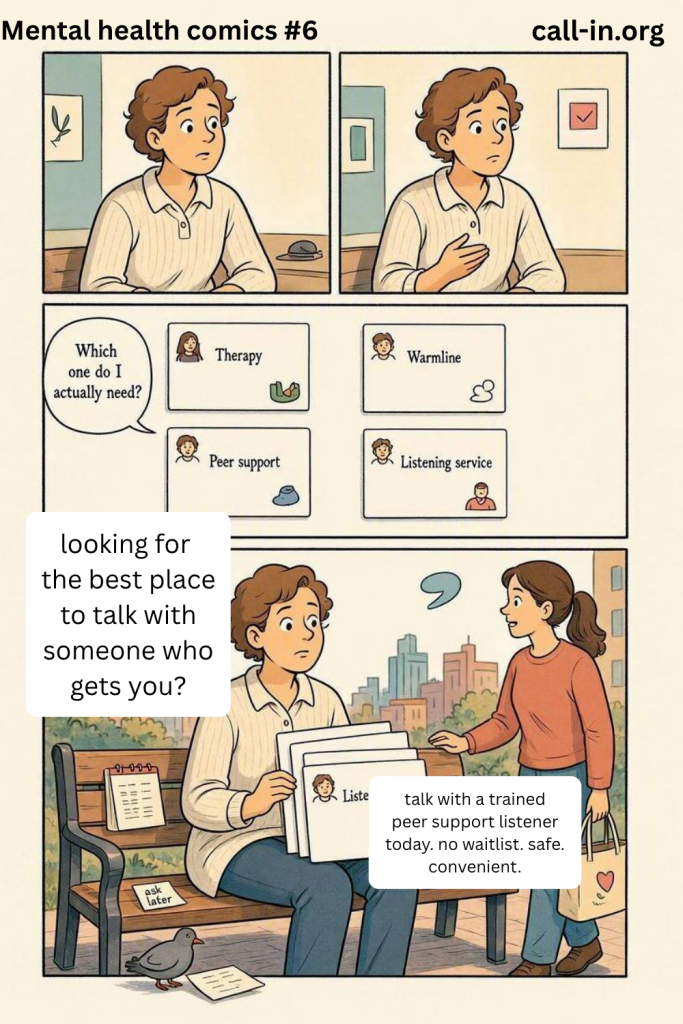
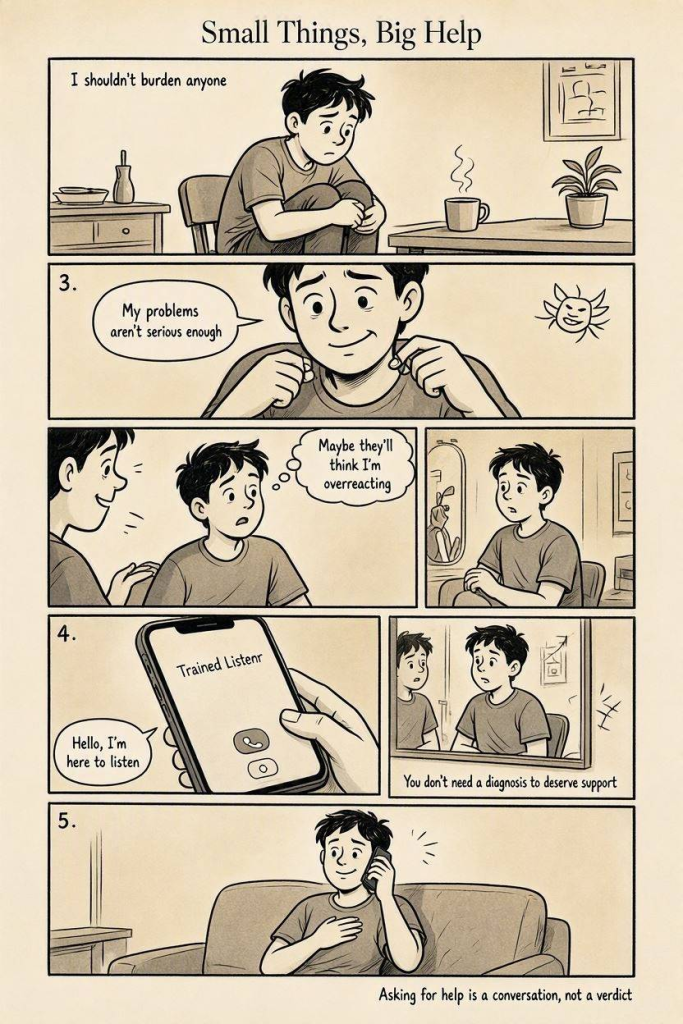
Some of the most valuable low cost alternatives to therapy are not therapy at all, and are not trying to be. They are built around a simple truth: most days, people do not need a diagnosis or a treatment plan. They need someone who will actually listen, which is exactly what makes free mental health support that isn’t therapy so valuable for everyday life.
Warmlines
A warmline is a phone, text, or chat line staffed by trained peers, often people with their own lived experience of mental health or life challenges, offering non-judgmental listening for everyday stress, loneliness, or a hard day, without requiring a crisis.
Unlike a crisis hotline, a warmline does not exist to intervene in an emergency; it exists for the ordinary, unglamorous, very real moments when you just need to talk something through with someone who will not rush you off the phone.
The NAMI HelpLine maintains a state-by-state warmline directory, and most warmlines are free, though hours vary by state and service.
Certified Peer Support Specialists
Peer support specialists are trained, often certified, individuals who draw on their own recovery experience to support others facing similar challenges.
The evidence is genuinely mixed and worth being honest about: research syntheses find consistent benefits for self-efficacy, empowerment, and personal recovery, plus lower rates of hospital readmission, but less consistent evidence that peer support shifts core clinical symptoms the way structured therapy can.
That makes it an excellent complement to clinical care, and a genuinely sufficient option on its own for the everyday emotional load that has not become a clinical concern.
Online Peer Support and the Limits of AI Chat
Online peer platforms extend the warmline model into text and chat, letting people reach a trained listener at almost any hour.
Two commonly compared platforms work differently enough that the choice matters: one leans toward licensed, paid therapy through an app, the other centers on free, volunteer-run peer listening with paid tiers for more structured support. Comparing BetterHelp and 7 Cups side by side is worth doing before committing to either.
A growing number of people also turn to AI chatbots as a free, always-available option, especially late at night. They can be a reasonable place to sort through thoughts in the moment, but AI emotional support has real limits worth understanding before it quietly becomes a habitual substitute for human connection.
Why Talking Still Works, With or Without a License
There is a reason non-clinical support helps even when it is not delivered by a licensed clinician: the benefit of talking through a feeling does not come only from expert advice.
UCLA psychologist Matthew Lieberman’s research on “affect labeling” found that the simple act of putting a feeling into words, saying “I’m anxious” instead of just feeling anxious, is associated with reduced activity in the amygdala, the brain’s threat-detection center. The nervous system responds to being named and witnessed, not only to being professionally treated.
This is worth sitting with, because it reframes the whole idea of “low cost.” Mental health systems in the UK and elsewhere increasingly organize care around a stepped care model, recommended by the National Institute for Health and Care Excellence, which deliberately starts people at the lowest-intensity support that fits their need and only steps up to more intensive treatment if that is not enough.
Under that logic, a free peer conversation is not a discount version of therapy you settle for because you cannot afford better. For a lot of everyday distress, it is the appropriately sized response, and stepping up to higher-intensity, higher-cost care is what happens next if the lower step genuinely is not enough.
Matching the Support to the Problem, Not the Other Way Around
The real question is rarely “can I afford therapy.” It is closer to “does what I’m feeling right now need a diagnosis-driven treatment plan, or does it need a witness.”
Confusing the two sends people either into an expensive, slow-moving system for something that never required it, or away from getting any support at all, as if emotional support without a diagnosis somehow does not count.
If you are unsure which side of that line you are on, figuring out whether you need emotional support or therapy is worth working through deliberately rather than guessing.
Ongoing symptoms that interfere with daily functioning, thoughts of self-harm, or patterns that have not shifted despite your own best efforts usually call for a licensed professional. Situational stress, loneliness, big transitions, and the accumulated weight of not having someone to talk to often respond very well to consistent, non-clinical support.
Options in the UK: NHS Talking Therapies and Charitable Helplines
In the UK, NHS Talking Therapies, the free service formerly known as IAPT, allows self-referral in most of England without needing to see a GP first.
National figures published by NHS England show most people are seen within six weeks of referral, though real waits vary by region. For people exploring low cost alternatives to therapy UK-wide while they wait, NHS alternatives for mental health support are worth having on hand.
Samaritans remains free, confidential, and available 24 hours a day at 116 123 for anyone who needs to talk, and Shout offers a free 24/7 text line for people who would rather not speak on the phone.
For those looking for an alternative to Samaritans for ongoing, non-crisis conversation rather than a single crisis-oriented call, several UK peer and community organizations, including Mind’s local branches, offer regular, low-cost or free listening support.
When Low-Cost Support Isn’t Enough
None of this replaces care for the situations it was never built to handle. If you are having thoughts of suicide or self-harm, or you are worried about someone else’s safety, call or text 988 in the US or Samaritans at 116 123 in the UK immediately; both are free, confidential 24/7 mental health helplines.
Warmlines, peer platforms, and general emotional support are genuinely valuable, but they do not substitute for crisis intervention or for licensed treatment of conditions like severe depression, active psychosis, or a substance use disorder that needs medical oversight.
For everything below that threshold, and that is most of what people are actually carrying day to day, low cost and non-clinical options are not a compromise. They are often exactly the right size for the problem.
Finding Support That Fits Where You Are
Most people are not looking for a diagnosis. They are looking for somewhere to put down what they have been carrying alone, without worrying about burdening a partner, a friend, or a coworker who already has enough on their plate.
That is the gap Callin, and options like it, exist to fill: a confidential, non-clinical space to talk things through with a trained peer listener, for the ordinary, everyday weight that does not need a treatment plan, just a real conversation.
Whichever option fits your situation, the most important step is the one that gets you talking to someone, rather than continuing to carry it by yourself. That, more than any price tag, is the cheapest way to get mental health support that actually works.
Frequently Asked Questions
What counts as a low cost alternative to therapy?
It generally means one of two things: a licensed professional at a reduced rate, such as sliding-scale therapy, a community mental health center, or a university training clinic, or free non-clinical peer support, such as a warmline, a certified peer specialist, or a peer listening platform. Both categories are legitimate; they simply serve different levels of need.
Is peer support actually as effective as therapy?
Not in every respect, and it is worth being honest about that rather than overselling it. Research reviews consistently find that peer support improves self-efficacy, empowerment, and personal recovery, and it is linked to fewer hospital readmissions, but the evidence for changing core clinical symptoms is weaker than it is for structured therapy. For everyday stress, loneliness, and emotional overwhelm that has not become a clinical concern, peer support is often genuinely sufficient on its own.
How much does Open Path Collective actually cost?
Open Path charges a one-time lifetime membership fee of $65, after which members can book sessions with a participating licensed therapist for roughly $30 to $80 per session, depending on the therapist and the type of session. There is no ongoing subscription fee beyond what you pay your therapist directly.
What is a warmline, and is it really free?
A warmline is a phone, text, or chat line staffed by trained peers who offer supportive listening for everyday stress and loneliness, not crisis intervention. Most warmlines are free to use, though hours and availability vary by state or region, and NAMI maintains a directory to help you find one that serves your area.
Can I get free therapy through my job?
Many employers offer an Employee Assistance Program as a standard benefit, typically providing three to eight free, confidential counseling sessions per concern with no cost to you and no report to your manager about why you used it. It is worth checking your employee handbook or asking HR directly, since EAPs are widely underused simply because people do not know they have one.
What are my options if I’m in the UK and can’t afford private therapy?
NHS Talking Therapies is free and allows self-referral in most of England without a GP visit, though waiting times vary by area. Charitable options like Samaritans (116 123) and Shout (text 85258) are free and available around the clock, and several community and peer organizations offer low-cost or free non-crisis support in the meantime.
How do I know if I need emotional support or actual therapy?
A useful marker is whether what you are feeling is interfering with daily functioning, has lasted a long time despite your own efforts, or involves thoughts of self-harm; those situations generally call for a licensed professional. Situational stress, loneliness, big life transitions, and simply not having anyone to talk to often respond well to non-clinical support first, with the option to step up to therapy if it turns out you need more.