
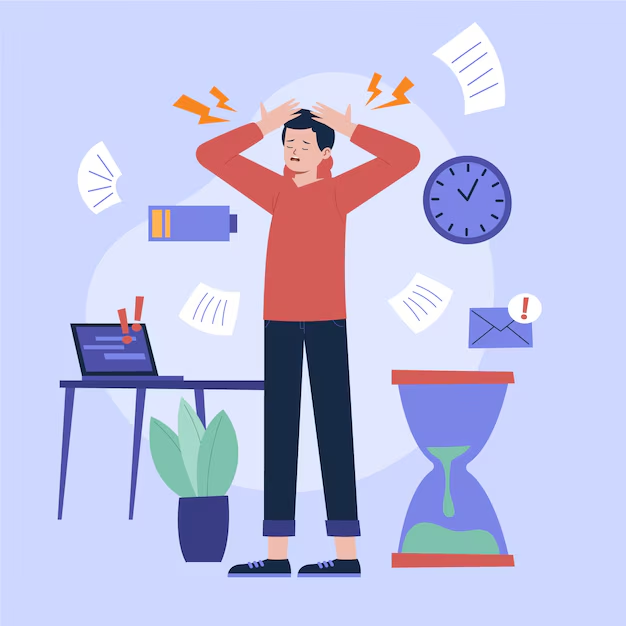
Really, what do you when you’re feeling overwhelmed, but you know therapy is not the answer? We’ve all been there at one point or the other in our lives.
Those moments you tell people you’re fine. But deep down, you’re not. You go through the motions – go to work, answer the emails, make dinner, show up for the people who need you.
From the outside, everything looks normal. But underneath it, you’re running on fumes. You’re not in crisis. You’re not depressed, at least not in any way you’d put a name to. You just feel heavier than you used to, like you’re carrying something you can’t quite put down.
If that sounds familiar, you’re not alone, and you’re not overreacting. So many people assume that support is only for people who are falling apart, that you have to hit some invisible breaking point before you’re “allowed” to ask for help. But emotional overwhelm exists on a spectrum.
You can be functioning and still be struggling. You can be coping and still need somewhere to put what you’re carrying. This article is for the in-between place: not a crisis, but not nothing either.
Understanding What Happens When We Are Feeling Overwhelmed

Honestly, feeling overwhelmed doesn’t always look dramatic. More often, it shows up in small, cumulative ways:
- A constant low hum of mental clutter, like too many browser tabs open at once
- Feeling emotionally drained even after a full night’s sleep
- Snapping at people over things that wouldn’t normally bother you
- Trouble concentrating or finishing simple tasks
- Feeling disconnected from people, or from yourself
- Lying awake replaying the day instead of resting
- A quiet sense that you’re holding everything together alone
None of this automatically means something is clinically wrong with you. It can simply mean that emotions, like anything else, accumulate when they aren’t processed.
Stress that doesn’t get released doesn’t just disappear. It stacks. The American Psychological Association’s most recent Stress in America survey found that more than half of adults report experiencing loneliness regularly, and roughly seven in ten say their closest relationships aren’t giving them enough emotional support.
That gap between what people need emotionally and what they’re actually getting is often exactly where overwhelm takes root.
If you’ve noticed this pulling you toward feeling numb or going through the motions rather than truly living, or if you work from home and the isolation is compounding things, remote work loneliness is a real and common contributor.
It’s also worth knowing that some things people assume are personality flaws, like chronic people-pleasing or always being “on,” are sometimes mistaken for something else entirely rather than just stress.
Why People Delay Getting Support
If emotional overwhelm is so common, why do so many people wait until they’re depleted before reaching out? A few beliefs tend to keep people stuck:
“Other people have it worse.” Comparing your pain to someone else’s doesn’t make yours disappear. It just makes you quieter about it.
“I should be able to handle this myself.” This belief often comes from a culture that rewards self-sufficiency and quietly punishes vulnerability, especially around professional burnout, where pushing through is treated as a virtue rather than a warning sign.
“It’s not serious enough.” This is one of the most common and most damaging beliefs out there. Support isn’t rationed for the worst cases. You feeling overwhelmed doesn’t have to take permission. That is the sad part. And as such, it makes sense that support should be there for anyone who’s struggling.
“I don’t want therapy.” Maybe you’ve tried it and it wasn’t the right fit. Maybe the cost, the waitlists, or the idea of being formally assessed feels like too much right now. Some of that hesitation is fair; there’s a reason people talk about the confusing and sometimes inaccessible side of the mental health system.
“I don’t have time.” Especially for people already stretched thin, the idea of adding a weekly appointment can feel impossible.
It also helps to understand why asking for support can feel so loaded in the first place. A lot of people carry quiet guilt around needing help at all, as though needing support is a personal failing rather than a normal part of being human.
None of these beliefs are character flaws. They’re just stories that keep people carrying more than they need to.
Practical Things to Do When You’re Overwhelmed

The good news is that you don’t have to wait for a diagnosis or a crisis to start feeling better. Here’s where to start.
Create emotional breathing room. Look honestly at your commitments and ask which ones are actually necessary right now. Saying no to one more obligation, even a small one, can free up real mental space.
This often means getting more comfortable setting boundaries, especially if you tend toward putting everyone else’s needs first. Build small recovery moments into your day too, even five quiet minutes between tasks can interrupt the buildup of stress before it compounds.
Get the thoughts out of your head. Overwhelm thrives in repetition, the same worries looping with nowhere to go. Journaling is one of the most studied tools for this.
Decades of research building on psychologist James Pennebaker’s work on expressive writing has found that simply writing about your thoughts and feelings for a short stretch of time is linked to measurable improvements in stress, mood, and even physical health.
Voice notes work the same way if writing isn’t your thing. The point isn’t to produce something polished. It’s to move what’s stuck in your head into a form you can actually look at.
Move your body. Movement isn’t just physical exercise, it’s emotional regulation. Harvard Medical School researchers note that regular aerobic activity helps the body’s stress response release fewer stress hormones over time, while also boosting endorphins and other brain chemicals that ease anxiety.
You don’t need an intense workout to benefit. A twenty-minute walk, some stretching, or even housework that gets you moving can measurably shift your mood.
Reconnect with simple pleasures. Time in nature, music, creative hobbies, anything that isn’t productive for productivity’s sake. These small pleasures matter because overwhelm narrows your world down to obligations. Simple joy widens it back out, even briefly.
Improve basic self-care. Sleep, hydration, nutrition, and boundaries sound almost too basic to mention, but they’re foundational.
Your nervous system regulates more easily when these basics are in place, which is part of why even modest stress management habits can have an outsized effect on how overwhelmed you feel day to day.
The Power of Being Heard
Sometimes what you need isn’t a solution. It’s just somewhere to release those feelings.
There’s real psychology behind this. Researchers describe “feeling heard” as the sense that another person genuinely understands your thoughts and feelings and receives them with attention and empathy, and studies link this experience to lower loneliness and greater wellbeing.
Separately, research on social support finds that nondirective support, simply being listened to without judgment or unsolicited advice, appears especially helpful for easing anxiety and low mood, particularly for people who feel isolated.
Saying something out loud, or writing it down for someone else to read, often helps organize thoughts that felt tangled when they were only in your head. That’s part of why having a safe space to vent matters so much, and why emotional support doesn’t have to come with a treatment plan attached to be valuable.
This can come from a trusted friend, a peer support community, or trained listeners who practice active listening specifically so the focus stays on you, not on fixing you. None of this replaces therapy when therapy is needed. But it fills a very real gap for people who just need to be heard.
Therapy Isn’t the Only Form of Support
Support isn’t all-or-nothing. It exists on a spectrum, and most people benefit from drawing on more than one point on it:
- Friends and family who know your history
- Mentors or coaches who help you think through decisions
- Support groups built around shared experience
- Emotional support listeners and warmlines, which exist specifically for people who aren’t in crisis but want someone to talk to
- Community groups and shared hobbies
- Wellness practices like movement, journaling, or time outdoors
If your social circle has thinned out over the years, know that it’s genuinely common, and genuinely fixable, to make new friends as an adult.
And if you’ve noticed that you can feel surrounded by people and still lonely, that’s worth paying attention to as well, since it often points to a mismatch between contact and connection rather than a lack of people in your life.
Looking across the full range of affordable emotional support options available today can help you figure out what actually fits your life, instead of assuming the only choices are therapy or nothing.
When Therapy May Be Worth Considering
None of this is meant to suggest therapy isn’t valuable. For a lot of people, it’s exactly what they need. It may be worth exploring professional support if:
- Difficult symptoms have persisted for weeks or months without easing
- Your ability to function at work, at home, or in relationships is significantly affected
- A past experience or trauma keeps resurfacing and interfering with daily life
- Anxiety or low mood has become severe or constant
- You ever have concerns about your safety or someone else’s
If any of that resonates, please consider reaching out to a licensed mental health professional or, if you’re in immediate distress, a crisis line in your area. There’s no shame in needing more support than friends, journaling, or a listening ear can offer. Recognizing that is a form of self-awareness, not failure.
You Don’t Have to Wait Until You’re Falling Apart
You don’t need a diagnosis to deserve support, and you don’t have to wait until you’re falling apart before you ask for it. Checking in with yourself, making space for what you’re feeling, and reaching out for connection when life feels heavy aren’t signs of weakness. They’re signs that you’re paying attention.
Being overwhelmed doesn’t mean something is wrong with you. It may simply mean you’ve been carrying too much, for too long, without enough support. That’s a solvable problem, and you don’t have to solve it alone.
Leave a Reply