
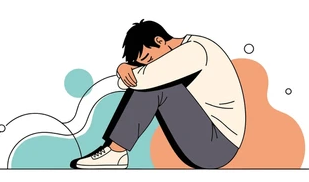
To make friends as an adult might be hard for a good number of us. And it’s not our fault. The reason being that structured social environments disappear after school and college. Life gets busier and more fragmented. Even workplace friends might be a no-go for some of us. Most adults feel this, silently. The good news: authentic connection is still possible at any age, in any country, with any schedule. These 7 practical steps will help you understand why friendship feels so difficult, and what you can actually do about it.
Key Takeaways
- Adult friendship requires deliberate effort because it no longer happens automatically through school or shared routines.
- Loneliness in adulthood is extremely common and carries no personal shame whatsoever.
- Small, repeated contact matters more than grand gestures when building new friendships.
- Shared activity is often the fastest route to genuine connection, you bond through doing, not just talking.
- If loneliness feels heavy right now, talking to someone can help before a long-term friendship forms.
What About Should I Know Now Right Loneliness and Making Friends As an Adult
Loneliness in adulthood is not a personal failing. It is structural. When school ends, the built-in mechanisms for meeting people, shared classes, proximity, repetition, quietly disappear. Nobody replaces them. Most adults simply find themselves with fewer close friends than they expected to have by this point in their lives.

Research from the Mental Health Foundation found that loneliness is one of the most commonly reported emotional experiences among adults in the UK. The Office for National Statistics data from 2020–2021 identified that around 3.7 million adults in England reported feeling lonely often or always. That figure likely underrepresents the reality, because many people do not admit loneliness, even to themselves. Loneliness carries quiet shame. And that shame makes it harder to do the one thing that would actually help: reach out.
What is striking is how many people are trying to make friends as an adult at exactly the same time, in exactly the same city, without knowing it. The person sitting across from you on the commute. The colleague who always eats lunch alone. The neighbour you have nodded at for two years. Most adults who want to make friends as an adult assume everyone else has already figured it out. They have not. The social confidence other people project is rarely the full picture.
The decision to make friends as an adult, to actually pursue it rather than hope it happens, is more significant than it sounds. It requires admitting a need. That is not a small thing. Society does not make much space for adults to say, openly, that they are lonely and want more connection. The pressure to appear self-sufficient is real. Which is precisely why so many people search quietly, privately, for guidance on how to make friends as an adult rather than saying it out loud to anyone they know.
If you are searching for how to make friends as an adult, something in your life has shifted. Maybe a friendship group dissolved. Maybe you moved to a new city. Maybe a relationship ended. Maybe you looked around one day and realised the people you thought you were close to have drifted. These are not unusual experiences. They are the ordinary disruptions of adult life, the kind that nobody warns you will leave such a noticeable gap.
To make friends as an adult after one of these shifts requires something specific: the willingness to start again without pretending the gap was not there. That honesty, with yourself first, then gradually with others, is what tends to make new connection feel real rather than performative.
Some people find it easier to make friends as an adult after a period of support. Not because they were broken before. But because carrying loneliness alone uses energy that connection actually requires. When the emotional weight has somewhere to go, the next step becomes easier to take.
The decision to make friends as an adult, at whatever age and from whatever starting point, is worth making. The research is clear on this. Social connection is one of the strongest predictors of long-term wellbeing, more reliable than income, status, or almost any other variable studied. That recognition takes courage to sit with. The fact that you are looking for a way forward matters.

Support Note
If loneliness is sitting heavy on you right now, not just as a concept but as a daily weight, you do not have to wait until you have built new friendships to feel less alone. Callin provides confidential emotional support and active listening from real people, worldwide, with no waitlists and no clinical process. Sometimes just being heard is enough to make the next step feel possible.
Why Making Friends As An Adult Feels So Hard
Friendship researchers, and yes, that is a field, have identified three conditions that are almost perfectly designed to produce friendship: proximity, repeated unplanned interaction, and a setting that encourages people to let their guard down.
School delivers all three without anyone having to try. Adulthood delivers almost none of them by default.
Beyond the structural problem, several other forces work against adult friendship:
Time scarcity. Work, caring responsibilities, and general exhaustion leave little room for the kind of unhurried time that friendship requires. A busy adult can go weeks without seeing anyone socially and barely notice, until they do.
Social anxiety. Many adults feel genuine apprehension about initiating contact, fearing they will seem desperate, annoying, or odd. This fear is almost universal and almost never accurate.
The vulnerability gap. Adult social norms often demand composure and competence. Friendship requires the opposite, willingness to be slightly uncertain, to admit you need company, to risk being a bit awkward. That gap is genuinely uncomfortable.
Life transitions. Relocation, career changes, relationship endings, parenthood, bereavement, each can quietly dismantle an existing social network with no automatic replacement.
Digital substitutes. Scrolling through other people’s friendships can create the illusion of social contact while providing none of its substance. This can suppress the motivation to seek real connection.
What Is Happening Beneath the Surface?
Loneliness is not simply the absence of people. It is the experience of feeling disconnected, from others, from a sense of belonging, sometimes from yourself.

Neuroscientist John Cacioppo, whose research on loneliness became foundational in social psychology, found that chronic loneliness activates the same stress response systems as physical pain. The body treats social disconnection as a genuine threat. That is why loneliness can feel so urgent, because biologically, it is.
The irony is that this very urgency often makes friendship harder. When loneliness intensifies, people sometimes become more guarded (not less), more self-conscious about how they come across, and more likely to interpret neutral social signals as rejection. It becomes a loop that feeds itself.
Understanding this is not just academic. It is useful. When you notice yourself pulling back from the very interactions you want, that is not weakness or weirdness. That is the loneliness loop in operation. Naming it is the first step to interrupting it.
Real-Life Scenarios
The person who moved cities.
Relocating for work is one of the most common triggers for adults who suddenly find themselves trying to make friends as an adult from scratch. They have a salary. They have a flat. They have colleagues who seem perfectly pleasant. But Friday evening arrives, and the phone sits quiet. Nobody to call. Nowhere obvious to be.
The loneliness is not dramatic, it is just a low, persistent hum. Research consistently shows that geographical relocation is one of the leading causes of social disconnection in adulthood. The environment changes overnight. The social network does not travel with you. What was effortless for years now requires deliberate effort, and most people have never had to learn how to do that before.
The parent who lost their pre-child friendships.
Parenthood rewrites your schedule, your energy levels, and your social world, often simultaneously. Old friends without children drift. Not out of cruelty. Simply out of incompatibility. The rhythms no longer match. Now there are plenty of parents at the school gate, and the conversations are warm enough. But they stay surface-level.
Nobody quite crosses the line into something real. This is one of the more painful ironies of trying to make friends as an adult after having children: you are surrounded by people in almost identical circumstances, and still the closeness does not come.
Proximity without vulnerability rarely produces friendship. And vulnerability, when you are exhausted, takes courage most parents do not feel they have spare.
The person whose long-term relationship ended.
A long-term relationship does not just end the relationship. It often dismantles the entire social architecture built around it. Mutual friends quietly recede. Invitations slow.
The social diary, once full, empties faster than expected. Suddenly, in their mid-thirties or forties, they are effectively starting again. Having to make friends as an adult at this stage carries its own particular weight, because it arrives alongside grief, disrupted identity, and the exhaustion of rebuilding a life.
Admitting that you are lonely after a breakup can feel like a second loss. But the research is clear: social reconnection after relationship dissolution is one of the most important factors in long-term emotional recovery.
The introvert who has always found socialising effortful.
University provided a structure that worked, even for introverts. The same people. The same buildings. Low-pressure repetition. Adulthood removes all of that, and replaces it with nothing.
For someone who has always found large social settings draining, the question of how to make friends as an adult is not just logistical, it is genuinely exhausting to contemplate. They do not want a large circle. They want one or two people who actually get them.
Deep over wide. But even building a single close friendship feels like an enormous undertaking when the structures are gone and the energy is limited.
What is important to understand, and what the research supports, is that introversion is not the obstacle. Introversion simply means the path looks different. Fewer interactions, more carefully chosen. Quality over quantity. That is a legitimate strategy, not a compromise.
7 Steps To Make Friends As An Adult

Step 1: Get Clear on What You Actually Want
Before doing anything practical, it helps to understand what kind of connection you are actually seeking. A casual friend to do activities with. Someone to have deep conversations with. A sense of community belonging. People who share a specific interest.
These are different things and they are found in different places. Clarity saves enormous amounts of wasted effort and disappointment.
Ask yourself: If I had what I am looking for, what would that look and feel like on an ordinary Tuesday?
Step 2: Start With Existing Acquaintances
The most efficient route to a new friendship is almost always through someone you already know slightly. A work colleague you enjoy. A neighbour you have spoken to twice. Someone from a class or group you have attended.
Most friendships do not arrive ready-made. They begin with small repeated contact and gradually deepen. Think about who is already at the edges of your social world and identify one or two people who might be worth pursuing.
A practical approach: invite one person for a single low-stakes activity. A coffee. A walk. A specific event rather than an open-ended “we should hang out.” Specific invitations are far easier to say yes to.
Step 3: Put Yourself in Proximity to People Regularly
Since proximity plus repetition equals friendship opportunity, the task is to engineer both.
Join something with a recurring schedule. A running club. A book group. A community choir. A photography class. A board game night. A local volunteering project. A climbing wall. A creative writing group.
The specific activity matters less than whether it repeats, whether it involves the same people each time, and whether it gives you something to do together rather than just talk about yourselves. Activity removes the pressure of pure socialisation and lets connection develop naturally at its own pace.
Step 4: Be the One Who Follows Up
Most potential friendships die quietly because nobody follows up. Both people enjoyed the interaction. Neither wants to seem keen. So both wait. And the moment passes.
Adult friendship requires someone to go first. That person may as well be you. A simple message after seeing someone, That was good, we should do it again, is not desperate. It is the basic social maintenance that every friendship requires.
Step 5: Deepen Gradually Through Honest Conversation
Friendships deepen not through more time together but through more honest conversation. The shift from acquaintance to actual friend usually happens in a specific kind of moment, when one person shares something real and the other receives it without deflecting.
This does not require dramatic revelation. It might simply be admitting that work has been stressful, or that you have found the move lonelier than you expected, or that you genuinely do not know what you are doing with your life right now. Small honesty creates the space for reciprocal honesty.
Step 6: Be Patient Without Being Passive
Research by communication scientist Jeffrey Hall suggested it can take between 50 and 200 hours of time together before a casual acquaintance becomes a close friend. This is not a discouraging figure, it is a liberating one. It means friendship is a cumulative process, not an event.
The practical implication: keep showing up. Keep following up. Keep attending the group, the class, the activity. Friendship is built in the accumulation of small moments, most of which feel unremarkable at the time.
Step 7: Tend to Your Emotional State Along the Way
Building friendships takes energy. That energy is harder to access when you are emotionally depleted, overwhelmed, or carrying loneliness without any support at all.
Attending to your emotional wellbeing is not separate from the project of making friends, it is part of it. When you are in a better emotional state, you are more present, more open, more naturally yourself. And those qualities are what draw people in.
If the weight of loneliness is making all of this feel impossible right now, getting some support, before the friendships have formed, can make the difference between starting and not starting.
Different Types of Support When You Feel Lonely
There is no single right source of connection. Different kinds of support serve different needs, and most people find their way through a combination.
Friends and family. When available, these relationships offer depth and history. But existing relationships cannot always meet every need, family dynamics are complicated, old friends may have drifted, and sometimes what you need is to talk to someone outside your existing circle.
Community groups and clubs. Local groups offer repeated proximity and shared purpose, two of the strongest predictors of friendship formation. The limitation is that it takes time. Community connection rarely feels immediately close.
Support groups. These offer something specific: a room (or online space) full of people who understand a particular experience. They can be genuinely powerful for specific kinds of loneliness, after loss, through illness, following a relationship breakdown.
Warmlines. Warmlines are non-crisis telephone support lines, staffed by trained volunteers or peers, for when you want to talk to someone but are not in crisis. Many operate in the UK and US.
Therapy and counselling. A therapist provides a clinical, structured space to understand patterns, process emotion, and develop skills. It is not a friendship substitute, but it can be a meaningful form of relational support with significant evidence behind it.
Peer support platforms. Services like Callin offer something distinct: the experience of being heard by a real human being, in a confidential setting, without clinical structure or waitlists. Not therapy. Not crisis intervention. Just human connection, available when you need it.
In Summary…
Learning how to make friends as an adult can feel surprisingly difficult because the built-in social structures that existed during school and university gradually disappear.
In this article, I highlighted that navigating adult loneliness is often a structural challenge rather than a personal failure. You’re not failing in life, best believe this. As career obligations, family responsibilities, and relocations take center stage, opportunities for repeated, natural social interaction become far less common.
I also talked about how many people looking for connection mistakenly believe everyone else already has a thriving social life, when in reality millions of adults experience the same sense of disconnection and are quietly looking for meaningful relationships.
The main point here is that building a social circle requires intentionality rather than passivity. I mentioned seven practical steps: clarify what kind of friendships you want, reconnect with existing acquaintances, place yourself in environments with recurring contact, follow up after positive interactions, gradually deepen conversations through honesty, remain patient, and take care of your emotional wellbeing throughout the process.
Adult friendships grow through repeated exposure and shared experiences, not instant chemistry. Research cited in the post suggests that meaningful bonds require dozens or even hundreds of hours of shared time, reinforcing that finding your community is a gradual process built through consistency.
Ultimately, I’m gently encouraging you to see friendship-building as a skill and a long-term investment in overall wellbeing. Whether someone has moved to a new city, become a parent, or drifted from old social circles, the path to authentic connection remains available. The key is creating opportunities for regular interaction, being willing to show vulnerability, and continuing to reach out even when progress feels slow.
Social connection is one of the strongest predictors of long-term happiness, making the decision to expand your social network both worthwhile and transformative. For anyone wondering how to break the cycle of isolation, the message is hopeful: genuine connection is completely possible through deliberate action and patience.
People Also Ask
Adult life removes the automatic structures, proximity, repetition, shared environment, that made childhood friendship relatively effortless. Without those structures, friendship requires deliberate, sustained effort that most adults have not had to apply before. Add in social anxiety, time pressure, and the vulnerability required to initiate connection, and the difficulty becomes entirely understandable. It is not a personal failure. It is a structural one.
How long does it take to make friends as an adult?
Research by Jeffrey Hall at the University of Kansas found that it takes around 50 hours of shared time to move from acquaintance to casual friend, and up to 200 hours to develop a close friendship. In practical terms, this suggests consistent, repeated contact over months rather than weeks. The process is gradual, and the expectation of quick connection is itself one of the reasons adults feel discouraged.
Is it normal to have no friends as an adult?
It is far more common than most people realise. Office for National Statistics data indicates that millions of adults in the UK report chronic loneliness. Globally, the WHO has identified social isolation as a significant public health concern. What feels like an intensely private experience is actually one of the most widely shared. That does not make it easier, but it may make it slightly less heavy.
How do I meet people as an adult if I have social anxiety?
Start with low-pressure, activity-based settings where conversation is secondary to the shared task. Running clubs, craft groups, or volunteering are examples where being there is the point, and socialising happens around the edges. Consider also building confidence through lower-stakes interactions, a regular conversation with a barista, a neighbour, a gym acquaintance, before attempting deeper connection. Many people find that learning how to make friends as an adult with social anxiety starts not with friendship at all, but with simply practising being around people without pressure.
Can online friendships be as meaningful as in-person ones?
Research suggests that online friendships can be genuinely meaningful, particularly when they involve real, sustained, honest communication rather than performative interaction. The limitation is that online connection can sometimes substitute for in-person connection without delivering the same physical and emotional benefits. Both have value. Neither completely replaces the other. For many people trying to make friends as an adult, online communities offer a useful starting point, especially when geography, disability, or anxiety makes in-person settings harder to access.
What is the best place to make friends as an adult?
There is no single best place, the most effective is wherever you can create repeated, relaxed contact with the same people over time. Classes, clubs, volunteer groups, faith communities, sports teams, and local interest groups all create this environment. The specific setting matters less than whether it repeats regularly and involves the same people each time. If you are actively trying to make friends as an adult, the most important variable is not the venue, it is your consistency within it.
How do I know if someone wants to be friends?
Adults rarely signal friendship desire explicitly, it feels too vulnerable. What to look for instead: they remember things you have said, they initiate contact or are reliably enthusiastic when you initiate, they share things that go slightly beyond surface conversation, and they make time when you suggest it. These are the quiet indicators that someone is open to a closer connection. One of the less discussed challenges of trying to make friends as an adult is learning to read these understated signals, because nobody is going to pass you a note asking if you want to hang out.
What should I do if I feel too lonely to even try?
When loneliness is heavy, motivation to seek connection can drop, which is the cruel paradox of the condition. The most useful thing, before attempting to make friends as an adult, may be to give the loneliness somewhere to go first. Talk to someone. A trusted person, a warmline, or a peer support service like Callin. Being heard can reduce the emotional weight enough to make action feel possible again.
Frequently Asked Questions
Is it normal to have no friends as an adult?
Yes, far more common than most people realise. Research consistently shows that millions of adults across the US, UK, and globally experience significant loneliness. Many feel this way quietly, assuming everyone else is doing fine. If you have few or no close friends right now, you are not unusual. You are navigating a very real structural gap in modern adult life.
What if I feel too anxious to reach out to people?
Social anxiety makes the already-difficult process of adult friendship feel close to impossible. That is valid. Start with extremely low-stakes contact, online communities, groups with a shared activity, or warm, non-pressured interactions. Professional support, including therapy and peer support, can also help you understand and gently work with the anxiety, rather than through it.
Can online friendships be as meaningful as in-person ones?
Yes. The mechanism of connection, being known, feeling safe, experiencing reciprocal care, can occur in digital spaces as well as physical ones. Many people, particularly those in rural areas, with disabilities, or in periods of transition, form genuine friendships entirely online. What matters is the quality of presence, not the medium.
What if I’ve moved to a new city and know nobody?
This is one of the most acute forms of adult loneliness. It is also temporary. Start with structured environments, classes, clubs, co-working spaces, that provide repeated contact. Be patient with yourself. Building a social life in a new city takes months, not weeks. And in the meantime, talking to someone at Callin can help you process the transition.
What is the difference between a warmline and a crisis line?
A crisis line is designed for people in immediate danger, suicidal thoughts, self-harm, or acute mental health crises. A warmline is for emotional support when you are struggling but not in crisis. Warmlines offer a space to talk, be heard, and feel less alone. Callin provides a similar function: peer-based, non-clinical emotional support for everyday emotional difficulty.
Sources
• Cigna U.S. Loneliness Index (2018 & 2020 editions)
• Office for National Statistics (ONS), Measures of National Wellbeing: Loneliness (UK)
• PLOS Medicine, “Loneliness and Social Isolation as Risk Factors for Mortality” (Holt-Lunstad et al., 2015)
• Harvard Making Caring Common Project, “Loneliness in America” (2021)
• Jeffrey Hall, University of Kansas, “How Many Hours Does It Take to Make a Friend?” (Journal of Social and Personal Relationships, 2018)
• World Health Organization (WHO), Social Determinants of Health
• NHS England, Community Mental Health and Social Prescribing guidance
Leave a Reply