If you are comparing BetterHelp and 7 Cups, the honest answer is that neither one is universally better, and neither is your only option. BetterHelp is licensed therapy built around clinical treatment, 7 Cups is free peer listening with real trade-offs in consistency, and Callin offers a paid, non-clinical alternative built around one dedicated listener. The real question is which kind of support matches what you need to talk through now.
Key takeaways
- BetterHelp pairs you with a licensed therapist for structured treatment. Expect to pay roughly $240 to $400 a month, with sessions built around clinical goals rather than casual venting.
- 7 Cups’ listener chat is free, but that free access comes from a rotating pool of volunteers with only basic training. Listener quality is one of the most consistently repeated criticisms in independent reviews and on the platform’s own forums.
- Neither service guarantees you will speak with the same person twice, which means you may end up re-explaining your situation every time you reach out.
- The real decision is not “BetterHelp or 7 Cups.” It is whether you need clinical treatment, free anonymous venting, or a consistent, non-clinical person who actually remembers your story.
- A paid, non-clinical support option built around a dedicated listener sits between those two choices for people who need neither full therapy nor a rotation of strangers.
What “I Need Someone to Talk To” Actually Means
Search “I need someone to talk to” and you will land on therapy platforms, crisis lines, peer support apps, and forums, often grouped together as though they solve the same problem. They do not.
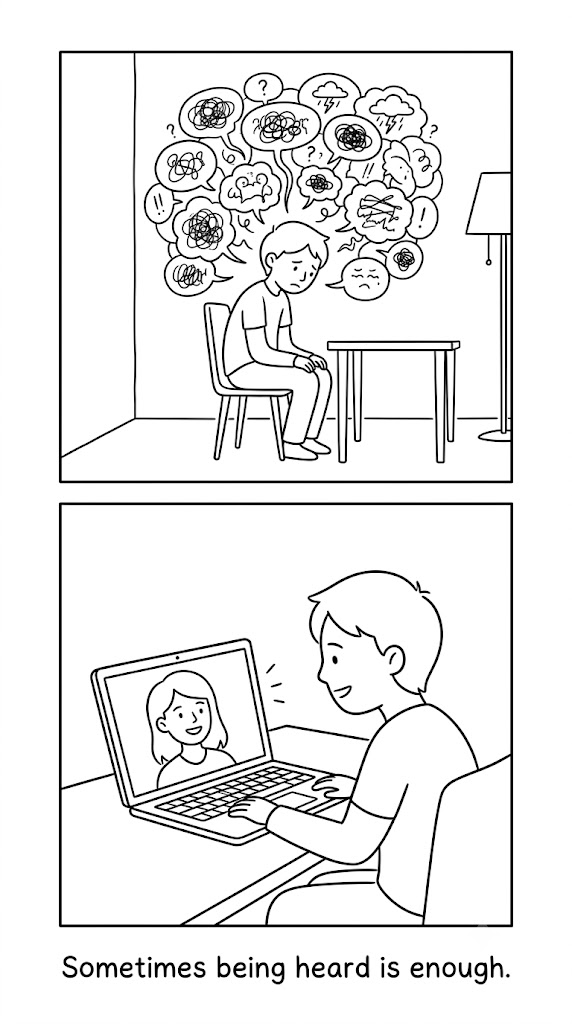
Someone managing a diagnosable anxiety disorder needs a different kind of support than someone who is simply exhausted after a hard week and wants to say it out loud to a person who will not judge them for it.
That distinction matters more than most comparison pages admit. Confusing a clinical need with a need to vent is part of why people bounce between apps without finding relief.
It helps to separate the two before picking a platform, and our breakdown of non-clinical mental health support versus therapy goes deeper into where that line actually sits.
BetterHelp and 7 Cups sit on opposite ends of that spectrum. One is clinical. The other is peer support stretched across millions of users. Here is what each one actually offers.
BetterHelp: Licensed Therapy Built for Treatment
How BetterHelp Works
BetterHelp is the largest online therapy platform in the world, connecting users with a network of therapists holding an LCSW, LPC, LMFT, or equivalent psychology license. After a short intake questionnaire, you are typically matched with a therapist within one to two days. From there, sessions happen through video, phone, or live chat, with unlimited messaging available between appointments.
This structure works well for people who want continuity with a credentialed clinician and do not mind a matching process that occasionally takes a try or two to get right. It is talk therapy, delivered remotely, aimed at treatment goals rather than an open-ended conversation.
What BetterHelp Costs
Pricing generally runs from about $60 to $100 a week, billed every four weeks, which puts most users somewhere between $240 and $400 a month depending on location and therapist availability. Financial aid can lower that by roughly 10 to 40 percent for people who qualify, and BetterHelp has begun piloting insurance coverage with select providers in a limited number of states as of early 2026, with an average copay of around $19 where it applies.
It is also worth knowing that BetterHelp settled with the FTC in 2023 over how user data had been shared for advertising in earlier years. The company has since changed those practices, and its current privacy policy reflects that shift, but it is a detail worth knowing if data privacy weighs heavily in your decision.
Who BetterHelp Fits
BetterHelp makes the most sense if you suspect you are dealing with something that benefits from clinical treatment: ongoing anxiety, depression, trauma, or a pattern that has not improved on its own. It is a reasonable starting point if cost is a concern relative to in-person therapy, since traditional sessions often run $150 to $300 out of pocket. If you are weighing a BetterHelp alternative because you want support without a clinical framework, that is a signal worth paying attention to.
7 Cups: Free Peer Listening, With Real Trade-offs
How 7 Cups Works
7 Cups connects users anonymously with trained volunteer “listeners” through text chat, alongside community forums organized by topic and an AI chatbot for additional support between conversations. Listeners are not licensed. They complete a short training module, typically under an hour, followed by a screening exam, and volunteer their time for free. A paid tier exists for users who want messaging access to a licensed therapist, generally priced between $150 and $200 a month.
The appeal is obvious: no cost, no waitlist, and a person available right now, at any hour, anywhere in the world.
The Real Cost of “Free”
Free access has a trade-off, and it shows up consistently across independent reviews, user complaints, and 7 Cups’ own community forums: listener quality varies widely. Some volunteers are genuinely skilled and compassionate. Others provide responses that reviewers and long-time users have described as unhelpful or poorly matched to what the person actually needed. Moderation exists, but at the scale 7 Cups operates, it does not catch every problem.
There is also no guarantee of continuity. You are typically matched with whoever is available, which means the person you talk to tonight may not be the person you talk to next week. If your situation has any complexity to it, that often means starting over from the beginning each time.
Who 7 Cups Fits
7 Cups works best as a pressure valve rather than a steady relationship: a free, anonymous place to talk through a rough night without spending money or repeating a long history. If you have tried it and found the inconsistency frustrating, our guide to finding the right 7 Cups alternative walks through what to look for instead, and our piece on AI chat versus human emotional support is worth reading if you have found yourself leaning on 7 Cups’ built-in AI counselor more than its human listeners.
The Real Gap Between BetterHelp and 7 Cups
Most comparisons stop at price and credentials: one costs money and is licensed, the other is free and is not. That framing misses the variable that actually determines how a conversation feels over time, which is continuity.
Continuity is the thing both platforms structurally struggle to guarantee. On 7 Cups, you are matched with whoever happens to be online. On BetterHelp, therapists sometimes change too, whether through your own choice to switch or through availability, and even when they do not, the relationship is built around treatment milestones rather than an ongoing, low-stakes place to think out loud.
Here is the part that rarely gets said directly: free peer support is not actually free of cost. It shifts the cost away from your wallet and onto your own effort, since you become the one vetting a stranger’s competence in real time, repeating your context, and absorbing whatever quality shows up that day. Paying for a non-clinical listener, by contrast, is not paying to be fixed. It is paying for the one thing that is genuinely hard to get for free: a person who already knows your story before you start talking. For a broader look at how these platforms stack up against newer alternatives, see the best options when you just need someone to talk to.
Where a Non-Clinical, Dedicated Listener Fits Best
This is the gap Callin was built to sit in. It is a paid, non-clinical service that pairs you with the same trained listener every time, so conversations pick up where they left off instead of restarting from zero. Sessions happen over Google Meet or Zoom, the first 20 minutes are free with no obligation, and there is no diagnosis, treatment plan, or clinical label attached to any of it.
It will not replace therapy for a diagnosable condition, and it is not a crisis line. What it offers is the middle ground both BetterHelp and 7 Cups tend to miss: affordability without anonymity, and structure without a clinical framework.
If you are not sure yet whether what you are feeling calls for treatment or simply needs an outlet, a quick, honest check-in with yourself can help. Try the loneliness quiz or the “how fine are you, really” quiz to get a clearer read before you choose a path.
How to Decide Between BetterHelp, 7 Cups, or Something Else
Start with what you actually suspect is going on. If you believe you are dealing with a condition that needs structured treatment, ongoing anxiety that interferes with daily life, depression that has lasted weeks, or trauma you have not processed, licensed therapy through BetterHelp or a local provider is the right starting point, not a workaround.
If what you need tonight is simply an anonymous, free ear and you can tolerate inconsistent quality and a new listener each time, 7 Cups can serve as an emergency outlet. It is not designed to be a long-term relationship, and treating it as one tends to disappoint people.
If neither of those fits, if you are not in crisis, you are not seeking a diagnosis, but you also do not want to gamble on a stranger’s training every time you open up, a paid, non-clinical option built around a consistent listener is worth trying. That is the space Callin occupies, and it is worth testing with a free session before deciding whether it is right for you.
Pricing and features on any of these platforms can change. The figures above reflect publicly available information as of 2026, so it is worth checking each provider’s own site for current rates before you commit.
Frequently Asked Questions
Is 7 Cups actually free?
The peer listener chat is free, and it always has been. What costs money is the optional professional therapy tier, which connects you with a licensed therapist for messaging and roughly one live session a week, generally priced between $150 and $200 a month.
How much does BetterHelp cost per month in 2026?
Most users pay between $240 and $400 a month, based on a weekly rate of roughly $60 to $100 billed every four weeks. Financial aid can reduce that for people who qualify, and a small number of insurance plans are now accepted in select states.
Will I talk to the same person every time on BetterHelp or 7 Cups?
On 7 Cups, generally no. You are matched with whichever listener happens to be available, so continuity is not guaranteed. On BetterHelp, you keep the same therapist unless you or your therapist changes, but the relationship is structured around treatment rather than casual, ongoing conversation.
Is peer support as effective as therapy?
Peer support and therapy do different jobs. Peer support offers a compassionate, non-judgmental ear and can genuinely ease the weight of stress, loneliness, or a hard week. It does not diagnose, treat, or manage clinical conditions, and it should not substitute for treatment when treatment is actually needed.
What if I do not think I need therapy, I just want someone to talk to?
That is a common and legitimate need, and it sits in the gap between friendship and formal treatment. A non-clinical peer support service with vetted, trained listeners and enough structure to offer continuity is generally built for exactly this. It is worth trying before assuming full therapy is the only option.
Is Callin cheaper than BetterHelp or 7 Cups?
Callin’s paid sessions are structured to be more affordable than BetterHelp’s monthly clinical subscription, and generally in line with or below 7 Cups’ paid therapist tier. The first 20-minute session is always free with no obligation, and current rates are listed on Callin’s pricing page.
What should I do if I am in a mental health crisis right now?
None of the services discussed here, including Callin, BetterHelp, or 7 Cups, are built for immediate crisis intervention. If you are in crisis, contact your local emergency services or a crisis line right away: in the UK, Samaritans at 116 123; in the US, the 988 Lifeline; in Australia, Lifeline at 13 11 14.
The Bottom Line
BetterHelp and 7 Cups are not competing for the same job. One treats. The other listens for free, with no promises attached. Most people typing “I need someone to talk to” into a search bar are not actually asking which app is superior. They are asking where they can be heard without either a clinical label or a stranger who will not remember them tomorrow.
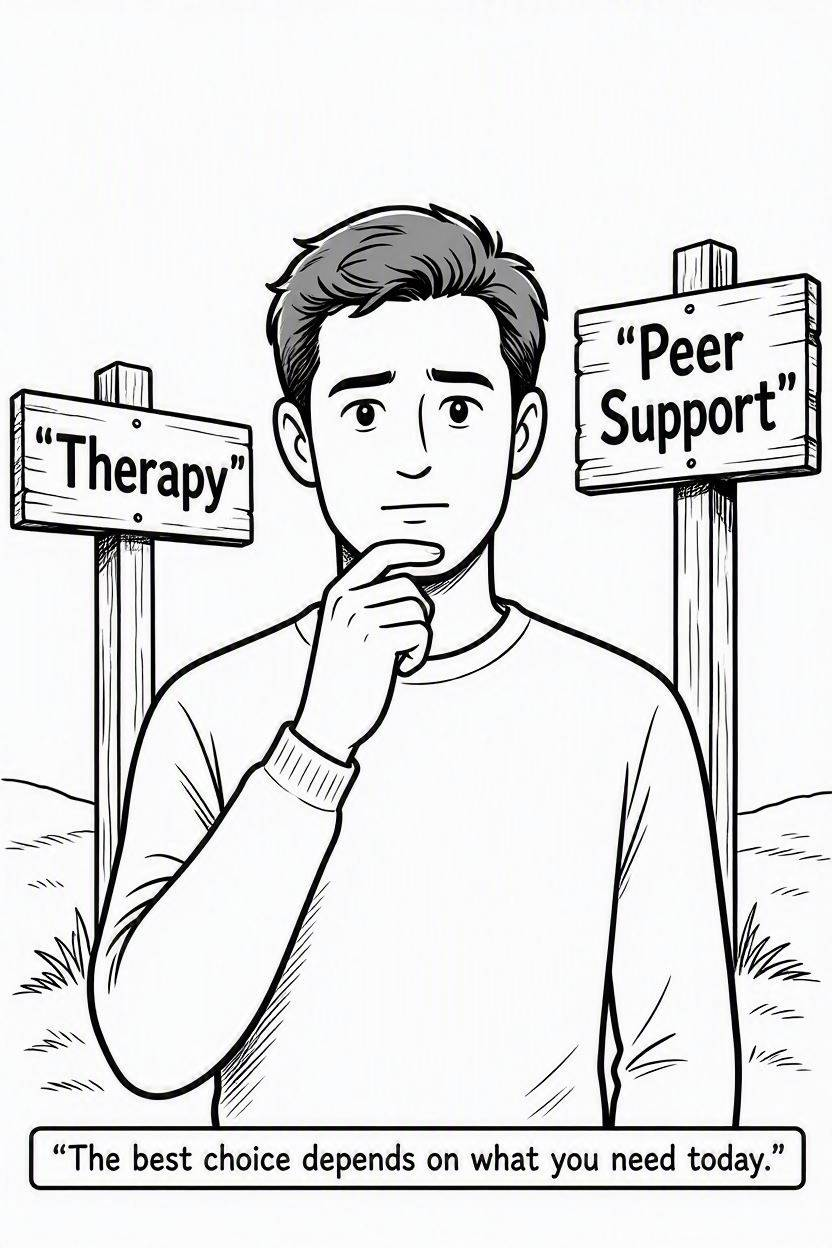
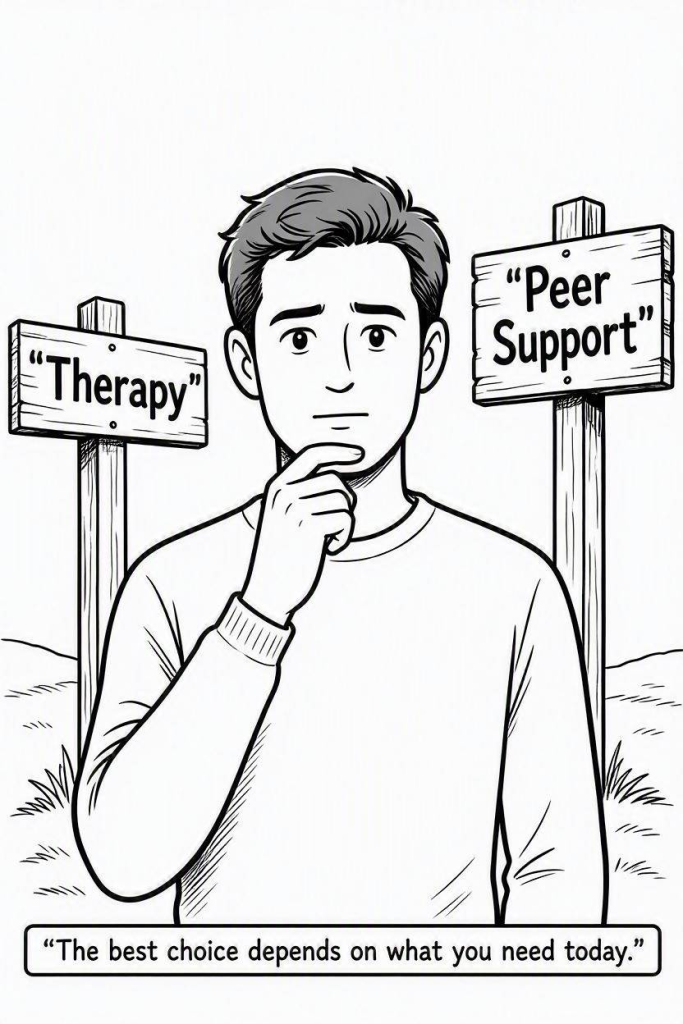
That answer is different for everyone, and it can change from one week to the next. What matters is picking the option that matches what you need today, not the one with the biggest name attached to it.