Someone searching for a BuddyHelp alternative is often looking for the same thing that first brought them to peer support: somewhere to talk that doesn’t feel clinical. What’s usually different is timing.
A lot of people start out needing support for a single hard moment, and then realise, weeks or months later, that what they actually want is somewhere to talk regularly, not just in a crisis.
That shift is worth paying attention to. Needing ongoing support isn’t a bigger problem than needing occasional support. It’s just a different shape of need, and it’s fine to go looking for something that matches it.
Table of Contents
- Why People Look for a BuddyHelp Alternative
- How BuddyHelp Works
- Where Callin Takes a Different Approach
- Which Option May Fit Different People
- Who Non-Clinical Emotional Support May Be Good For
- Who May Need a Different Type of Support
- Real-Life Scenarios
- Frequently Asked Questions
Why People Look for a BuddyHelp Alternative
The reasons someone searches for a different option tend to come down to a change in what they need, rather than anything going wrong.
Some people start out wanting help for a specific bad day, and later find they want something they can return to regularly, a consistent presence rather than a one-off conversation. Someone to talk to regularly is often the exact phrase people search for once they notice that pattern in themselves.
Others notice that even after a supportive chat, the feeling of being unheard creeps back in within a day or two, because nothing about the situation actually changed, just the moment passed. What to do when you need to vent, but not therapy speaks to that gap, wanting more than a single release valve, without wanting a clinical process either.
Some people are tired of saying “I’m fine” to the people around them and want a space where that doesn’t have to be the answer. The dangers of I’m fine, cost of surface level interactions looks closely at how much that small, automatic phrase can cost us over time.
And some are simply looking for a more preventive approach, somewhere to check in before things build up, rather than only reaching out once they’re overwhelmed. What is preventive emotional care is a useful read if that idea resonates.
How BuddyHelp Works
BuddyHelp is a peer support platform that connects users with trained volunteer listeners for anonymous, one-on-one chat. It’s designed to give people quick access to a supportive conversation, typically through text, without requiring an appointment or ongoing commitment. Listeners are trained in active listening rather than clinical practice, and the platform is generally free to use.
BuddyHelp is not affiliated with or endorsed by Callin. Any trademarks belong to their respective owners.
This model works well for people who need to talk in the moment and don’t necessarily need the same person again afterwards. It’s accessible, low-friction, and doesn’t require a long-term commitment to get something useful out of it. Where it can feel limited is for people who want that continuity, a person who remembers the last conversation and can pick up where things left off.
Where Callin Takes a Different Approach
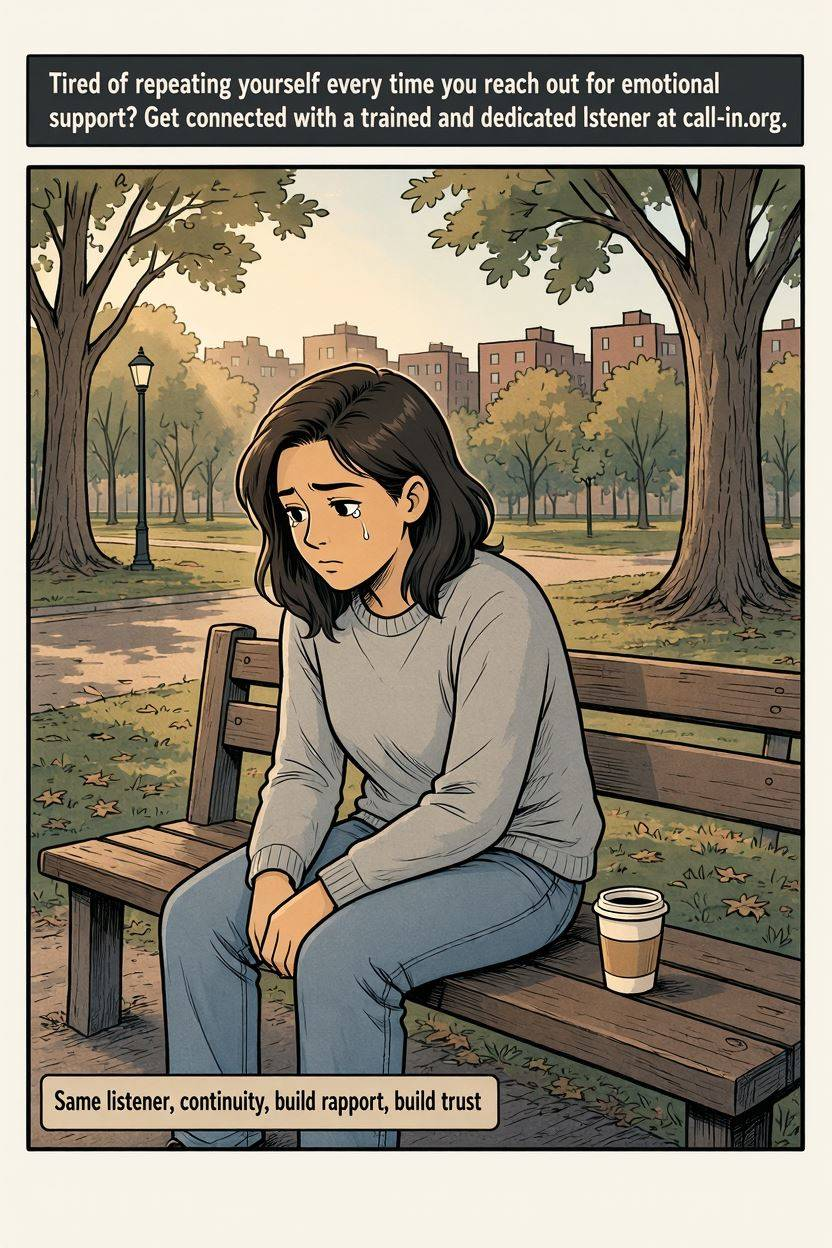
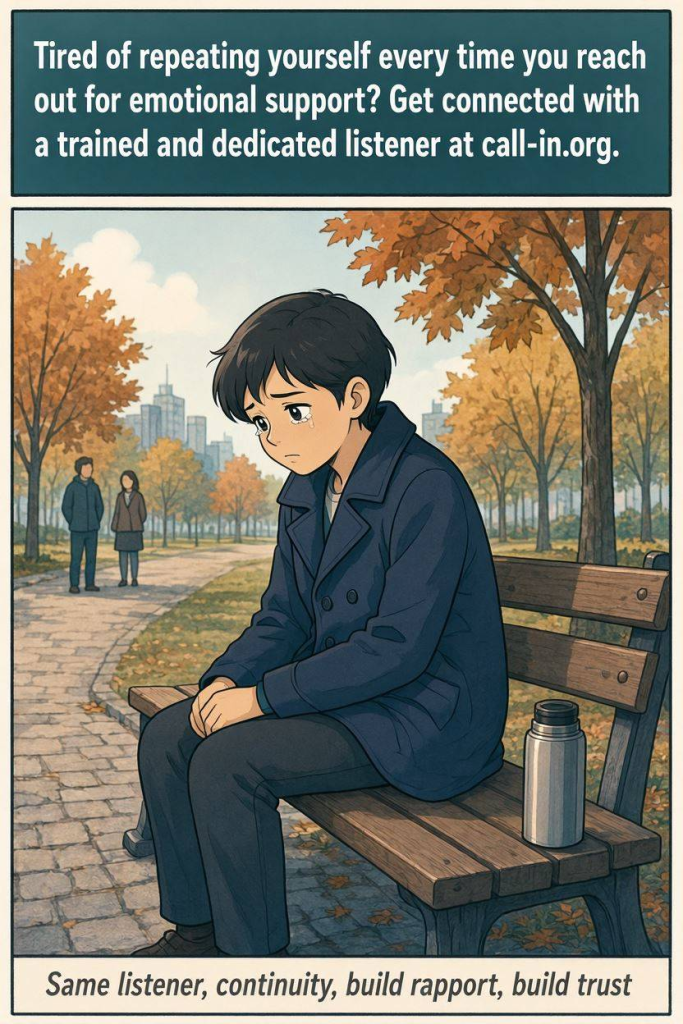
Callin is built specifically around that idea of ongoing support. Instead of a fresh, anonymous listener each time, the goal is a consistent relationship, so the conversation you have today builds on the one you had last week, rather than starting again from nothing.
That distinction matters more than it might seem. Explaining your situation from scratch every time you reach out for support is its own quiet form of exhaustion. It means part of your energy goes into context-setting before you’ve even gotten to how you actually feel. Why does texting feel emotionally draining captures a similar kind of fatigue, the effort it takes to keep re-explaining yourself.
There’s also something to be said for why two people who are both stressed can still genuinely support each other, and why that dynamic looks different from a single anonymous chat. Can 2 stressed friends support each other explores this, and it points at something Callin tries to offer more consistently: a relationship, not just a transaction.
Callin provides non-clinical emotional support and is not therapy, counselling, diagnosis, or crisis intervention. If you are experiencing a mental health crisis, contact appropriate crisis support services such as Samaritans (UK: 116 123), 988 Suicide & Crisis Lifeline (US), or Lifeline (Australia: 13 11 14).
Which Option May Fit Different People
The right choice depends on what kind of support actually matches your situation.
Someone who mainly needs support during acute, occasional moments, a bad day, a hard conversation, a spike of anxiety, may find that BuddyHelp’s immediate, anonymous chat model fits well. It’s built for exactly that kind of quick access.
If your priority is a consistent person to talk to, someone who already understands your situation and doesn’t need it re-explained, an approach built around continuity may suit you better. This tends to matter most for people managing something ongoing, like chronic stress, loneliness, or a slow-burning life change.
Someone who values preventive check-ins, talking before things pile up rather than only after, may also prefer a model designed around regular contact rather than one-off sessions. Stress management is worth a read if you’re trying to figure out where regular emotional support fits into that picture.
A different approach may suit you if you’ve noticed that a single supportive chat helps in the moment but doesn’t carry you through the following week.
Who Non-Clinical Emotional Support May Be Good For
Non-clinical, ongoing support tends to suit people managing sustained stress rather than a single crisis point.
That includes someone working remotely who has noticed how quiet their days have become, with fewer casual, in-person conversations than they used to have. Remote worker loneliness speaks directly to that particular, modern kind of isolation.
It also fits someone under ongoing pressure at work who has already tried the usual wellness resources and found they don’t quite reach the actual problem. Workplace stress support looks at why generic programmes often fall short of what people actually need.
It suits someone who feels disconnected in group settings, even when surrounded by people who care about them. Why group chats leave me feeling lonely captures that specific, modern kind of isolation, being included but still feeling unseen.
And it fits someone who simply wants somewhere to vent regularly, without turning every conversation into a clinical assessment of what’s wrong with them. Emotional support is a good place to start if that’s closer to what you’re looking for.
Who May Need a Different Type of Support
It’s worth being honest about where non-clinical, ongoing support has its limits, both for Callin and for peer platforms like BuddyHelp.
If you are experiencing a mental health crisis, thoughts of self-harm, or an emergency, please contact crisis services immediately: Samaritans (UK: 116 123), 988 Suicide & Crisis Lifeline (US), or Lifeline (Australia: 13 11 14).
If you’re managing a diagnosed condition, working through trauma, or need clinical assessment, a licensed therapist or counsellor is the more appropriate option. Peer and non-clinical support can sit alongside professional care, offering a place to talk between sessions or on ordinary days, but neither is designed to replace it.
Real-Life Scenarios
It can help to picture what ongoing, non-clinical support actually looks like in practice.
Someone notices their phone buzzing constantly with notifications all day, and by evening feels wired and unable to settle, without quite knowing why they’re so on edge. Why notifications are emotionally draining captures that low-grade, constant drain.
Someone has been managing their own stress well enough for years, until one ordinary week, nothing dramatic, just accumulation, and they realise they don’t actually have anyone they check in with regularly.
Someone has been told by well-meaning friends that they “seem fine,” when really they’ve just gotten good at saying so. They want somewhere that doesn’t take “I’m fine” as the full answer.
Someone works from home and has started to notice that entire days pass without a real conversation, just messages and meetings, and they’re craving something that feels more like actual connection than communication.
These are illustrations of common situations, not testimonials, and they are not presented as real Callin users.
Frequently Asked Questions
Is there a free alternative to BuddyHelp? Callin offers a free 20-minute session, giving people a chance to try non-clinical emotional support before deciding whether to continue. It’s built more around ongoing, consistent conversations than a single anonymous chat.
What’s the difference between BuddyHelp and Callin? BuddyHelp connects users with trained volunteer listeners for anonymous, one-off chats, which is well suited to in-the-moment support. Callin is built around continuity, so you speak with the same person over time, rather than starting fresh with someone new each time.
Can peer support help with ongoing stress, not just crisis moments? Peer support can help with both, but platforms built for quick, anonymous chats are often better suited to occasional or in-the-moment needs. If you’re managing ongoing stress, a model built around a consistent relationship may be more effective over time.
Is BuddyHelp a substitute for therapy? No, BuddyHelp is a peer support platform staffed by trained volunteer listeners, not licensed mental health professionals. It can be a helpful supplement to professional care, but it isn’t designed to replace therapy or clinical treatment.
How do I know if I need ongoing support instead of a one-off chat? If you notice the same stress, loneliness, or overwhelm returning again and again, even after a helpful conversation, that’s often a sign ongoing support would serve you better than occasional check-ins. How do I know if I need emotional support, not therapy can help you think through what kind of support actually fits your situation.
A Space to Start the Conversation
If you’ve been looking for somewhere consistent to return to, not just for one hard day but for the ordinary weeks in between, Callin offers a space to start that conversation. It begins with a free 20-minute session, no pressure, no commitment, just a chance to talk to someone who’s actually listening, and who’ll still be there next time.