
$410 BILLION. That’s what the US wellness industry was worth in 2023, and it’s growing faster than the entire economy. Here’s what they won’t tell you: that number doesn’t stay massive unless they keep us confused, dependent, and coming back for more.
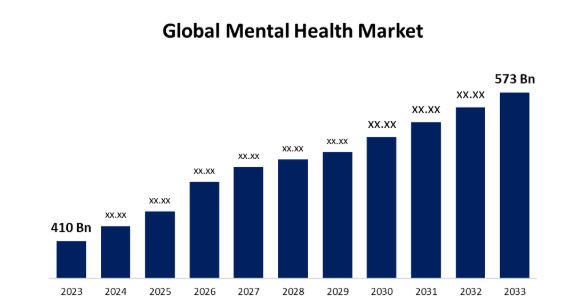
Image credit: Spherical Insights, 2023
Why Everything Gets Labelled

One of the biggest secrets of the mental health industry is how quickly normal human experiences can become something that sounds clinical.
Feeling overwhelmed after a stressful month is often presented as a symptom.
Feeling exhausted after years of pressure can suddenly become a condition.
Feeling sad after loss, rejection, or disappointment may be framed as a problem that needs immediate intervention.
These are some of the secrets of the mental health industry that many people never stop to question.
That’s not to say mental health conditions aren’t real.
They absolutely are.
Professional treatment changes lives every day.
But one of the less discussed secrets of the mental health industry is that not every difficult feeling automatically requires a diagnosis.
Many people have been taught to look at themselves through a clinical lens.
Instead of asking, “What happened to me?” they ask, “What’s wrong with me?”
That shift matters.
One of the most important secrets of the mental health industry is that language shapes identity.
The labels we use can help us understand ourselves.
But they can also make us feel trapped.
The more content people consume online, the more they encounter new terms, new diagnoses, and new explanations for why they feel the way they do.
This is one of the modern secrets of the mental health industry.
Social media rewards content that feels urgent.
It rewards content that promises answers.
It rewards content that suggests there may be something hidden beneath your everyday emotions.
As a result, many people spend years searching for explanations.
One of the overlooked secrets of the mental health industry is that understanding yourself and constantly analyzing yourself are not the same thing.
At some point, endless self-analysis can become another source of stress.
Another one of the secrets of the mental health industry is that complexity often feels more valuable than simplicity.
A complicated explanation sounds important.
A simple explanation sounds ordinary.
Yet sometimes the truth is simple.
You’re tired because you’ve been doing too much.
You’re lonely because you need more connection.
You’re overwhelmed because life has been overwhelming.
These simple truths are often missing from conversations about the secrets of the mental health industry.
The reality is that not every emotional struggle needs a complicated framework.
Sometimes people need understanding more than interpretation.
Sometimes they need support more than labels.
And that’s one of the most liberating secrets of the mental health industry to understand.
The Clinical Trap: When Your Feelings Become a Business Model
It feels validating to finally have words for what you’re experiencing. That moment when someone names your pain? It’s powerful. But here’s one of the secrets of the mental health industry: One diagnosis becomes a lifetime subscription.
The pattern is devastatingly simple and incredibly profitable:
You feel exhausted.
System response: “You have nervous system dysregulation.”
Their solution: $200 per month in therapy sessions, plus supplements, plus specialized treatments. Forever.
You feel sad after a breakup.
System response: “You’re experiencing attachment trauma.”
Their solution: $150 per week in therapy, trauma-informed yoga, somatic healing workshops. Ongoing.
You need a break from people.
System response: “You have social anxiety disorder.”
Their solution: Medication management, cognitive behavioral therapy, exposure therapy. Long-term.
Your therapist isn’t necessarily lying to you. They’re working inside a system that makes more money when you believe you’re more broken. The industry doesn’t profit from “You’re stressed and need rest.” It profits from “You have a complex condition requiring specialized, ongoing care.”
Think about it: When was the last time a wellness professional told you, “Actually, you’re fine. You just need to vent and sleep more”? Exactly.
This is why finding truly affordable emotional support services feels impossible. The entire model is built on complexity, not clarity. On dependency, not empowerment.
When Being Human Became a Diagnosis
Remember when feeling sad was just… feeling sad? When having a bad day didn’t require a clinical framework to process? When disagreeing with your partner was just a disagreement, not an “attachment injury requiring therapeutic intervention”?

The wellness industry has weaponized language against us. They take completely normal human experiences and wrap them in such complex jargon that you start believing only a certified professional can decode your own feelings.
The translation game looks like this:
– You’re tired from working too much → “Chronic fatigue and burnout syndrome”
– You’re sad because life is hard right now → “Major depressive episode”
– You need space from an exhausting friend → “Avoidant attachment pattern”
– You’re anxious before a big presentation → “Generalized anxiety disorder”
– You cried during a sad movie → “Emotional dysregulation”
Here’s what they’re not telling you: Your nervous system isn’t broken. It’s responding exactly as designed to an overwhelming, overstimulating, financially stressful modern world.
You’re not too sensitive. You’re not fundamentally damaged. You’re not defective. You’re a human being experiencing human emotions in an inhumane system, and that system wants you to believe you need expensive intervention to survive it.
The truth is simpler and far less profitable: Most of the time, you don’t need a diagnosis. You need someone to listen without immediately trying to categorize, pathologize, or fix you.
The Secrets of the Mental Health Industry Number 1: Why More People Feel Worse After Consuming Mental Health Content
Here’s one of the biggest secrets of the mental health industry: not all mental health content is designed to help you feel better.
Some of it is designed to keep you focused on what’s wrong with you.
Think about how often social media encourages you to search for symptoms, disorders, attachment styles, trauma responses, and personality flaws.
Every scroll seems to reveal another reason you might be broken.
Another label.
Another diagnosis.
Another problem to solve.
One of the lesser-known secrets of the mental health industry is that fear captures attention far more effectively than reassurance.
A post saying, “You may have unresolved trauma” gets more engagement than a post saying, “You’re having a normal reaction to a stressful situation.”
A video warning you about toxic relationships gets more clicks than one reminding you that healthy relationships are built through communication and patience.
Over time, this creates a subtle but powerful shift.
Instead of asking, “What do I need right now?”
People start asking, “What’s wrong with me?”
That’s a very different question.
And it’s one that often leads people deeper into confusion.
The secrets of the mental health industry aren’t always about intentional manipulation.
Sometimes they’re about incentives.
Content creators, coaches, influencers, therapists, and wellness brands all operate within systems that reward attention.
Attention often comes from urgency.
Urgency often comes from fear.
Fear often comes from convincing people they have a problem they didn’t know they had.
The result?
Many people spend years analyzing themselves without actually feeling better.
They become experts in psychological terminology.
They can explain their attachment style.
They know their trauma responses.
They’ve memorized dozens of coping strategies.
Yet they still feel lonely.
They still feel overwhelmed.
They still feel disconnected.
That’s because information isn’t the same thing as support.
One of the most overlooked secrets of the mental health industry is that awareness alone doesn’t heal people.
Human connection does.
Feeling understood does.
Having a safe place to process emotions does.
Sometimes the answer isn’t another article.
It’s another conversation.
And that’s a distinction that can change everything.
Secrets of the Mental Health Industry Number 2: Why Loneliness Gets Ignored
Among all the secrets of the mental health industry, this may be one of the most important.
Many people don’t actually need another diagnosis.
They need connection.
Modern life has become increasingly isolated.
People work remotely.
Families live further apart.
Friendships often compete with busy schedules, financial pressure, and constant digital distractions.
Yet loneliness rarely receives the same attention as clinical conditions.
Why?
Because loneliness is difficult to monetize.
A prescription can’t create close friendships.
A diagnosis can’t replace meaningful conversation.
A workbook can’t fully substitute for human connection.
One of the biggest secrets of the mental health industry is that some emotional pain is social, not clinical.
You can spend years trying to optimize your mindset while still feeling lonely.
You can complete therapy exercises and still crave connection.
You can understand every coping skill in the world and still need someone who genuinely cares how your day went.
Human beings evolved in groups.
We evolved through relationships.
We evolved through community.
When those needs go unmet, emotional suffering often follows.
That doesn’t automatically mean something is wrong with you.
It may simply mean you’re missing something every human being needs.
This distinction matters.
Because when loneliness is treated as a personal defect instead of a social problem, people often blame themselves.
They assume they’re broken.
They assume they’re failing.
They assume they need fixing.
But one of the most powerful secrets of the mental health industry is that many struggles make perfect sense when viewed through the lens of isolation.
Of course you’re exhausted if you’re carrying everything alone.
Of course you’re overwhelmed if you never feel understood.
Of course your emotions feel heavier when there’s nobody to share them with.
This is why emotional support matters.
Not because it diagnoses problems.
But because it reminds people they don’t have to face life by themselves.
A simple conversation won’t solve every challenge.
But it can make those challenges feel significantly more manageable.
Sometimes healing starts when someone finally says:
“That sounds really difficult.”
“I’m glad you told me.”
“You’re not alone.”
Those words may seem simple.
Yet they’re often more powerful than people realize.
The Secrets of the Mental Health Industry Number 3: What Empowerment Actually Looks Like
One of the final secrets of the mental health industry is that true empowerment isn’t dependency.
It’s self-trust.
Unfortunately, many people have been taught to doubt themselves.
They’ve been taught to outsource every emotion to an expert.
To question every instinct.
To analyze every reaction.
To search for hidden meanings behind every feeling.
The problem is that this can slowly disconnect people from their own wisdom.
Instead of trusting themselves, they start looking outside themselves for answers.
One of the most transformative secrets of the mental health industry is that many people already know what they need.
They’re just afraid to trust it.
Maybe they know they’re burned out.
Maybe they know they need rest.
Maybe they know a relationship isn’t healthy.
Maybe they know they’re grieving.
Maybe they know they’re lonely.
Yet instead of listening to those signals, they continue searching for a more complicated explanation.
Sometimes the simplest explanation is the correct one.
You’re overwhelmed because life has been overwhelming.
You’re sad because something painful happened.
You’re exhausted because you’ve been carrying too much for too long.
The secrets of the mental health industry often revolve around complexity.
But healing frequently revolves around clarity.
Clarity allows people to stop fighting themselves.
It creates space for self-compassion.
It helps people separate genuine mental health concerns from the ordinary difficulties of being human.
None of this means therapy isn’t valuable.
For many people, therapy is life-changing.
For some, it’s absolutely essential.
But another one of the important secrets of the mental health industry is that support exists on a spectrum.
Not every difficult emotion requires clinical intervention.
Not every challenge requires diagnosis.
Not every stressful season requires treatment.
Sometimes what people need most is a supportive conversation.
A trusted listener.
A place to process what they’re experiencing without judgment.
A place where they can think out loud.
A place where they can breathe.
A place where they can reconnect with themselves.
That’s where peer support can make a meaningful difference.
It fills the gap between isolation and therapy.
It provides emotional support without turning every feeling into a clinical issue.
And perhaps most importantly, it helps people rebuild trust in their own experiences.
Because one of the most liberating secrets of the mental health industry is this:
You are allowed to feel human without believing you’re broken.
You are allowed to struggle without assuming there’s something fundamentally wrong with you.
You are allowed to seek support without accepting a label.
And you are allowed to choose connection, clarity, and conversation as part of your healing journey.
That’s not avoidance.
That’s not denial.
That’s being human.
What Actually Heals: The Simple Truth They’re Hiding
Want to know what research actually shows helps people move from “stuck in anxiety” to “I can breathe again”? It’s not another diagnosis. It’s not a 12-week program. It’s not trauma-informed breathwork certification.
It’s devastatingly simple:
Being heard without being diagnosed. Someone listening to your story without immediately pulling out the DSM-5 to label what you’re experiencing.
Connection without clinical distance. A warm, real human conversation where you feel believed, not studied.
Context over symptoms. Understanding why the anxiety started (toxic job, financial stress, grief) instead of just treating the panic attacks in isolation.
Validation over pathology. Hearing “Yeah, that situation would make anyone feel terrible” instead of “You have a chronic condition that requires ongoing management.”
This is what your nervous system actually needs to shift from fight-or-flight mode into rest-and-repair mode. Not more labels. Not more complexity. Just simple, compassionate human connection.
The $410 billion industry doesn’t want you to know this because it can’t monetize simplicity. They can’t charge $200 an hour for someone to just… listen to you. They can’t build a subscription model around validation. They can’t create lifetime customers from people who just needed to be heard.
What People Actually Need
When discussing the secrets of the mental health industry, one question matters more than almost any other:
What actually helps people feel better?
Many assume the answer is more information.
More books.
More content.
More diagnoses.
More techniques.
But one of the surprising secrets of the mental health industry is that information alone rarely creates lasting change.
Most people already know they’re stressed.
They already know they’re anxious.
They already know they’re struggling.
What they often lack is support.
This is one of the biggest secrets of the mental health industry that gets overlooked.
Human beings are wired for connection.
We need conversation.
We need understanding.
We need relationships.
Yet modern life often leaves people feeling isolated.
One of the most important secrets of the mental health industry is that loneliness can look like many different things.
It can look like anxiety.
It can look like burnout.
It can look like emotional exhaustion.
It can even look like low self-esteem.
Many people don’t need another explanation.
They need someone who will genuinely listen.
This is where some of the most powerful secrets of the mental health industry begin to emerge.
Support doesn’t always have to be clinical.
Not every difficult season requires a treatment plan.
Not every challenge requires years of intervention.
One of the practical secrets of the mental health industry is that emotional support exists on a spectrum.
Therapy plays an important role.
Professional treatment can be life-changing.
But there is also value in peer support, meaningful conversations, and non-clinical emotional support.
Another of the overlooked secrets of the mental health industry is that people often feel better when they feel understood.
Validation reduces emotional pressure.
Connection reduces isolation.
Being heard creates clarity.
These simple experiences can have a powerful impact on wellbeing.
The final lesson hidden within the secrets of the mental health industry is that healing doesn’t always start with a diagnosis.
Sometimes it starts with a conversation.
Sometimes it starts with honesty.
Sometimes it starts with admitting you’re struggling and allowing someone to sit with you in that struggle.
When people understand the secrets of the mental health industry, they begin to see that support doesn’t always need to be complicated.
Sometimes the most meaningful step forward is also the simplest.
Finding someone who will listen.
Finding someone who understands.
And remembering that being human is not the same thing as being broken.
Your Way Out: Affordable Support Without the System’s Agenda

Here’s what you actually need: A space between cold isolation and clinical diagnosis. Somewhere you can process your feelings without them being immediately converted into a billable condition.
That’s exactly what Call-In.org was built for.
No intake forms asking about your childhood trauma. No clinical assessments turning your bad week into a chronic condition. No pressure to commit to months of sessions. Just a real human who will listen without judgment, validate your experience, and help you find clarity.
This is affordable emotional support that prioritizes your healing over their profit.
Think of us as your release valve. The place you go when you need to vent at 2am without being told you have a disorder. The space where “I’m just overwhelmed” is enough, and no one tries to convince you it’s more complicated than that.
The final truth: Clarity is your power. When you get clear on what you actually feel and need, you stop buying what the $410 billion system is selling. You stop believing you’re broken. You start trusting yourself again.
And that? That’s the outcome the industry fears most.
Choose Clarity Over Complexity
Your feelings aren’t a disorder. Your sadness isn’t a syndrome. Your need for rest isn’t a diagnosis. You’re a human being navigating an overwhelming world, and you deserve support that treats you like one.
Stop trying to decode complex clinical frameworks for normal human emotions. Start finding the simple peace that comes from being truly heard.
Your peace isn’t a luxury. It’s your birthright. And it shouldn’t cost you hundreds of dollars or your sense of self to access it.
If this resonated with something deep in your chest, if you felt seen by these words, don’t carry the weight alone anymore.
Book a call with one of our listeners at Call-In.org. Your clarity and healing journey starts with one conversation.
Sources
Johann Hari — Lost Connections (2018)

Leave a Reply