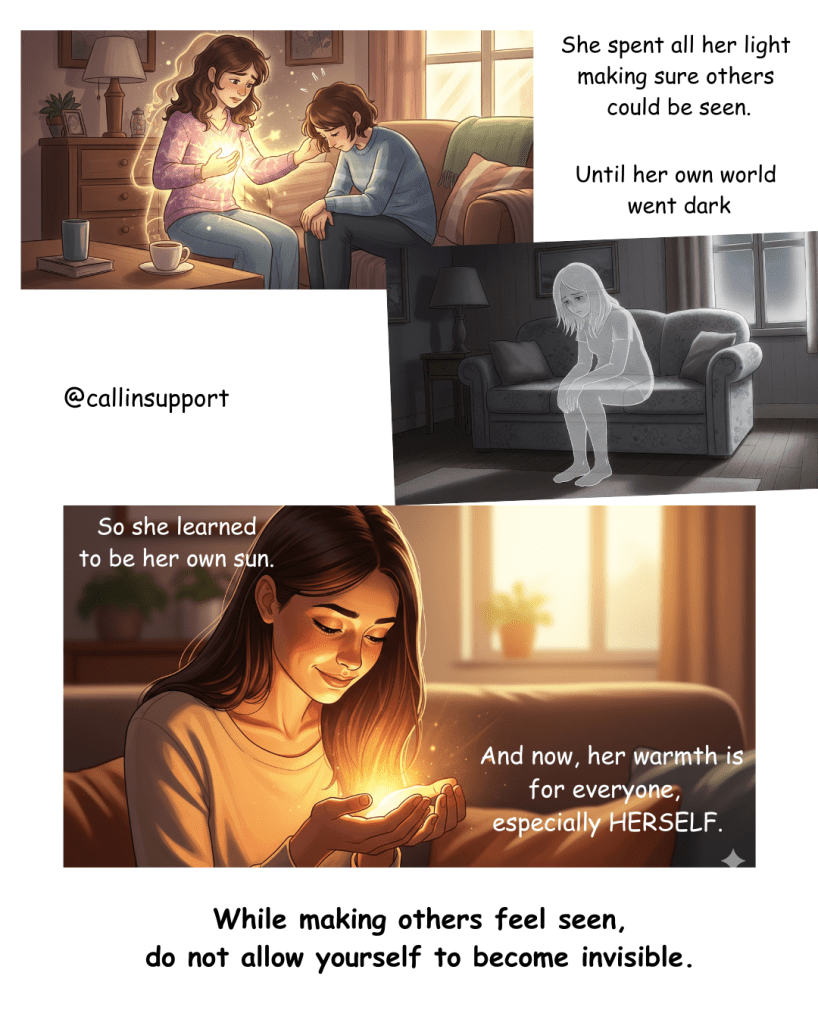
Are you the person everyone calls when they’re falling apart?
You’re the healer, the nurturer, and the one whose empathy is a lifeline for others. Well, your compassion is a gift. But it comes with a hidden cost.
What happens when the caregiver has no one to care for them? You feel no one can even listen to you and understand you.
You get this unspoken truth:
“Watering everyone’s garden while yours turns to dust isn’t kindness – it’s self-abandonment.”
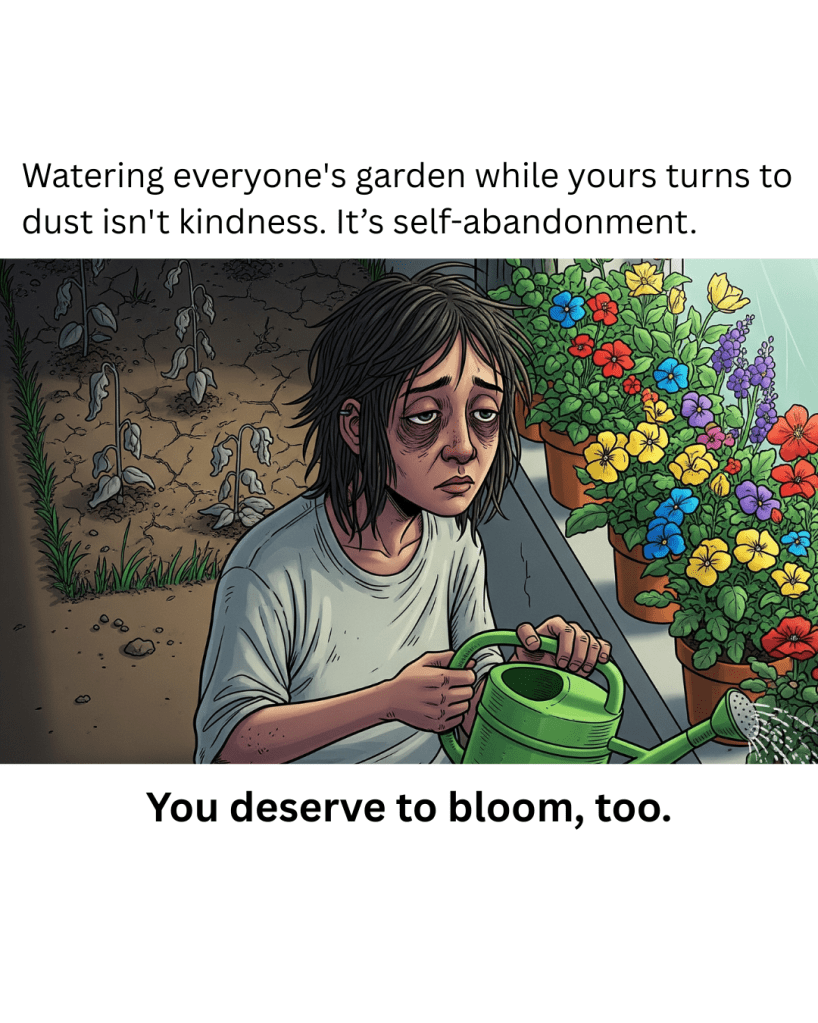
If that sentence lands with a thud in your chest, you’re not alone. This is the silent reality for countless empaths and caregivers. But recognizing the drought is the first step to making it rain again.
Why Is This So Hard? The Caregiver’s Dilemma
Before we talk about solutions, let’s honour the struggle, because it ain’t easy on these streets.
For many of us, our sense of worth gets tangled up in our usefulness to others. We’re taught that self-sacrifice is noble and our needs are a burden.
Your worth is not measured by your level of exhaustion.
Re-learning this is the hardest, most important work you will ever do.
The Signs of a Silent Emotional Drought: This Is More Than ‘Just Tired’
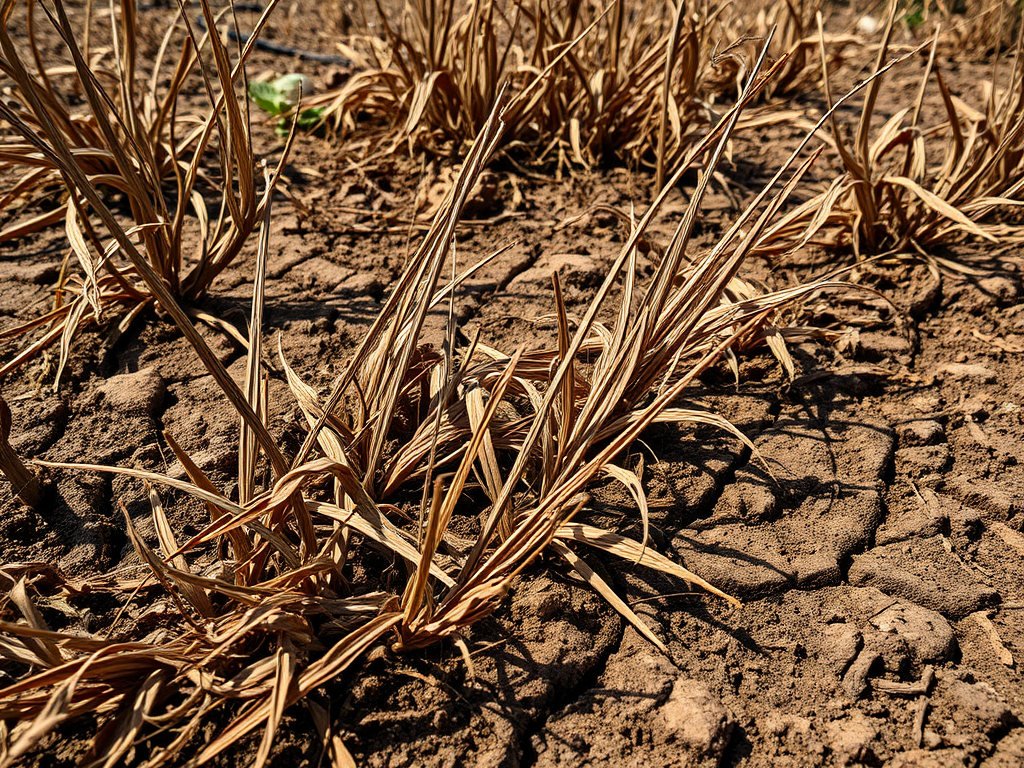
Burnout doesn’t roar; it whispers.
Your body sends signals long before your mind is ready to listen. This is what a silent drought feels like:
- Bone-deep exhaustion that a full night’s sleep won’t touch.
- Feeling lonely or invisible, even in a room full of people you care for.
- A quiet, simmering resentment when asked for “just one more thing.”
- A loss of connection to the hobbies, passions, or joy that once defined you.
- An automatic reflex to manage everyone else’s emotions before you even consider your own.
This is the emotional exhaustion that comes from always being “the strong one.”
You Deserve to Bloom, Too!
This is your gentle, but firm reminder: you are not a bottomless well.
You are a garden, and you deserve the same tender care you give so freely to others.
Watering your own garden is not selfish. It is an act of survival.
A thriving, nourished garden has infinitely more to offer the world than a dry, dusty one ever could.
How to Start Watering Your Garden (Starting Now)
This isn’t about adding more to your to-do list. This is about giving yourself back to yourself, one small drop at a time.
1. Practice the “Gentle No” with Confidence
A boundary is not a rejection; it’s a redirection of your precious energy.
- What it sounds like with friends: “I’m so glad you thought of me, but I don’t have the social energy for that this week. I’m cheering you on from home!”
- What it sounds like at work: “Thanks for this opportunity. My plate is full right now, but I can take a look after [date] if the timeline is flexible.”
- What it sounds like with family: “I love you, but I don’t have the capacity to discuss that topic right now. Can we talk about something else?”
2. Schedule “Me” Like It’s a Meeting with Your CEO
Burnt out will make you think you don’t have time. But this is a lie.
What it looks like: Block 15 minutes in your calendar today. Label it “DO NOT SCHEDULE.”
Use it to sit with tea, listen to one song without distractions, or just stare out the window. Or anything that calms you.
This is non-negotiable time to let your nervous system reset.
3. Perform a “Body Check-In”
Your body holds the truth. Four times today, stop and ask it one question.
- How to do it: Pause. Close your eyes. Place a hand on your heart. Ask, “What do you need in this moment?”The answer might be a glass of water, a deep breath, or just acknowledging, “I see that you are tired. It is okay to rest.” Validation is the first drop of healing water.
Your Own Garden Deserves a Someone to Tend to It
Your kindness is a superpower. But even superheroes must rest. This work is not easy. Setting boundaries can feel terrifying, and the guilt can be overwhelming. You do not have to do it alone.
At Call-In Support, we provide compassionate, non-judgmental emotional support. We are here to be the people you can call when you’re feeling overwhelmed. Sometimes, the most powerful act of self-care is simply having a safe space to finally be heard.
You deserve to bloom.
24/7 Support Advice for when you're feeling sad and overwhelmed Affordable Alternatives to Therapy Affordable Counselling Affordable Emotional Support affordable mental health support Affordable Online Counselling UK Affordable Online Counselling USA Affordable Therapy Alternatives alternatives to Betterhelp Astrology-Based Guidance astrology for emotional healing Astrology for Emotional Support Astrology Guidance Online Call-In Support call lines during depression Compassionate Listening compassionate listening services Easy Alternatives to Therapy Emotional Support Emotional Support Call Services Late-Night Emotional Support Listening Service Meditation for Stress Relief mental-health mental-health-support Mental Health Support Online Mental Health That Uses Spirituality non-judgmental calls Online Emotional Support Online Listening Service Protect Your Energy Psychic guidance Put Yourself First Self-Care Self-Love Setting Healthy Boundaries spirituality and psychology Stop Being a People Pleaser Talk Without Being Judged Tarot Insights Venting at 2am Venting Support who to call when feeling anxiety who to talk to when feeling depressed

 Call-in
Leave a reply to 7 Science-Backed Reasons Why Highly Sensitive People Are Actually Stronger (Not Weaker) Than Everyone Else – Call-in Cancel reply