Have you ever gotten to the end of the day and felt like a ghost in your own life?
You’ve poured your time, energy, and empathy into your job, your family, and your friends. You’ve been the dependable one. And then, when the quiet of the evening arrives, you realise there is nothing left for you.
If that feeling is familiar, hear this: you are not a renewable resource. Your energy is finite, and learning how to set boundaries is one of the most crucial skills for protecting your mental health and building a life where you thrive.
Read more: How to Set Healthy Boundaries: A Guide to Protecting Your Mental HealthWhy Setting Boundaries Feels Selfish (and Why It’s Not)
Many people struggle with the idea of setting boundaries because it feels selfish or even unkind. We’re taught that saying “no” means we’re rejecting others or letting people down.
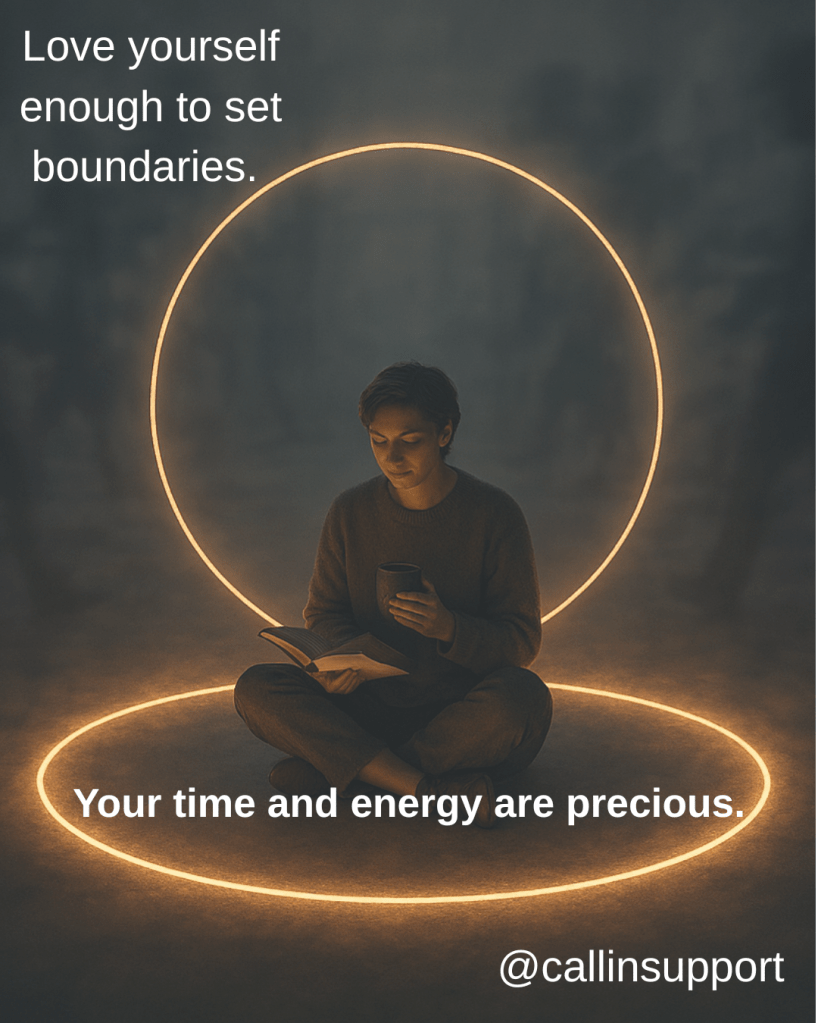
But here’s the truth: a boundary isn’t a wall—it’s a velvet rope. It’s a soft but clear line that says:
“This space right here – my peace, my energy, my heart – is sacred. I am the one who lovingly decides what comes in and what stays out.”
Setting boundaries is not a rejection of others. It’s a declaration of self-worth, self-care, and emotional health.
3 Reasons Boundaries Feel Selfish (But Aren’t)
- We’re conditioned to please others
Many of us grew up believing that being “good” means always being available. Saying no feels like we’re disappointing people, even when it’s necessary. - We confuse boundaries with rejection
A boundary doesn’t push someone away—it protects your energy so you can stay present and loving. When you say no, you’re actually saying yes to your well-being. - We undervalue our own needs
It’s easy to prioritize others over ourselves. But your energy is not limitless. Protecting it ensures you can show up with clarity, compassion, and strength.
Are You a Garden or a Well? Signs You Need to Set Boundaries
Many of us are conditioned to act like a bottomless well. We are constantly giving, endlessly available, and always pouring energy into others. But here’s the truth: you are not a well—you are a garden.
And a garden cannot thrive without care. It needs sunlight, water, nourishment, and protection. If you spend all your time watering everyone else’s plants, your own will wither.
That’s where boundaries come in. Boundaries are the fence that protects your garden, ensuring that your energy, time, and emotional health remain strong enough to sustain you—and others.
Signs You Need to Set Boundaries
If you notice these patterns in your daily life, it may be time to create healthier boundaries:
- You frequently feel resentful or taken for granted.
- You say “yes” automatically—even when you truly want to say no.
- You feel constantly exhausted, drained, or close to burnout.
- You dread checking your phone, email, or messages because of the demands waiting for you.
- You feel responsible for other people’s emotions and try to “fix” how they feel.
If several of these resonate with you, it’s a clear sign that your garden needs tending—and that it’s time to start setting boundaries.
How to Set Healthy Boundaries: A 4-Step Practical Guide
Setting healthy boundaries is not just a mindset shift—it’s a skill. And like any skill, it becomes easier the more you practice.
Here’s a simple, step-by-step framework to help you start protecting your energy and building stronger, healthier relationships.
Step 1: Identify Your Limits
You can’t protect a boundary you haven’t defined. Get clear on what you truly need in order to feel balanced, respected, and at peace.
Ask yourself:
- Do I need more alone time?
- Do I want less work talk after hours?
- Do I crave more reciprocity in friendships?
Pro tip: Write it down. Example: “I need at least one hour of uninterrupted quiet time in the evening.”
Step 2: Communicate Clearly & Kindly (With Scripts)
This is often the hardest step in setting boundaries. The key is to keep your communication simple, firm, and kind. You don’t need to over-explain or apologise for having needs.
Here are scripts for setting boundaries you can adapt. They just might be helpful:
- At Work: “I’m at capacity right now, but I can look at this next week.”
- With Friends: “I’ve only got the energy for a quiet chat tonight, so I’m going to miss the party. Let’s catch up soon.”
- With Family: “I love you, but I’m not available to discuss that topic right now. Let’s talk about something else.”
Step 3: Start Small
You don’t need to set every boundary overnight. Begin with something low-stakes and manageable:
- Say no to a minor request.
- Let a non-urgent call go to voicemail.
- Protect 15 minutes of your lunch break for yourself.
Each small win builds confidence and shows you that boundaries are possible—and powerful.
Step 4: Prepare for Pushback
When you first start setting healthy boundaries, not everyone will celebrate your shift. Some may resist or push back. That’s okay. Their reaction is their responsibility, not yours.
Stay calm. Repeat your boundary gently but firmly if needed. And remember: having supportive people around you makes this process much easier.
Boundaries are not about shutting people out; they’re about letting yourself in. With practice, this 4-step process will help you set limits that protect your peace while strengthening your relationships.
Coping with Boundaries: Finding the Emotional Support You Need
For many people, the hardest part of setting healthy boundaries isn’t identifying them—it’s coping with the fear of how others might react. The thought of disappointing someone, being misunderstood, or facing conflict can feel overwhelming.
That fear often keeps us stuck in old patterns of over-giving and people-pleasing. And when you do begin to set boundaries, it can sometimes feel lonely, scary, or even guilt-inducing.
This is why having emotional support is a game-changer.
At Call-In Support, our trained listeners provide a safe, compassionate, and non-judgmental space where you can:
- Practice boundary-setting scripts with confidence.
- Process the guilt or fear that often comes with saying “no.”
- Receive gentle reinforcement that your needs and peace matter.
You don’t have to learn this skill alone.
Remember: setting boundaries isn’t about shutting others out. Rather, it’s about finally inviting yourself in. It’s choosing to tend your own garden so your life blooms with energy, peace, and love.
And whenever you need someone to walk alongside you in that process, we’re here to listen.
24/7 Support Advice for when you're feeling sad and overwhelmed Affordable Alternatives to Therapy Affordable Counselling Affordable Emotional Support affordable mental health support Affordable Online Counselling UK Affordable Online Counselling USA Affordable Therapy Alternatives alternatives to Betterhelp Astrology-Based Guidance astrology for emotional healing Astrology for Emotional Support Astrology Guidance Online Call-In Support call lines during depression Compassionate Listening compassionate listening services Easy Alternatives to Therapy Emotional Support Emotional Support Call Services Late-Night Emotional Support Listening Service Meditation for Stress Relief mental-health mental-health-support Mental Health Support Online Mental Health That Uses Spirituality non-judgmental calls Online Emotional Support Online Listening Service Protect Your Energy Psychic guidance Put Yourself First Self-Care Self-Love Setting Healthy Boundaries spirituality and psychology Stop Being a People Pleaser Talk Without Being Judged Tarot Insights Venting at 2am Venting Support who to call when feeling anxiety who to talk to when feeling depressed
Call In, Breathe Out, Feel Heard

 Call-in
Leave a comment