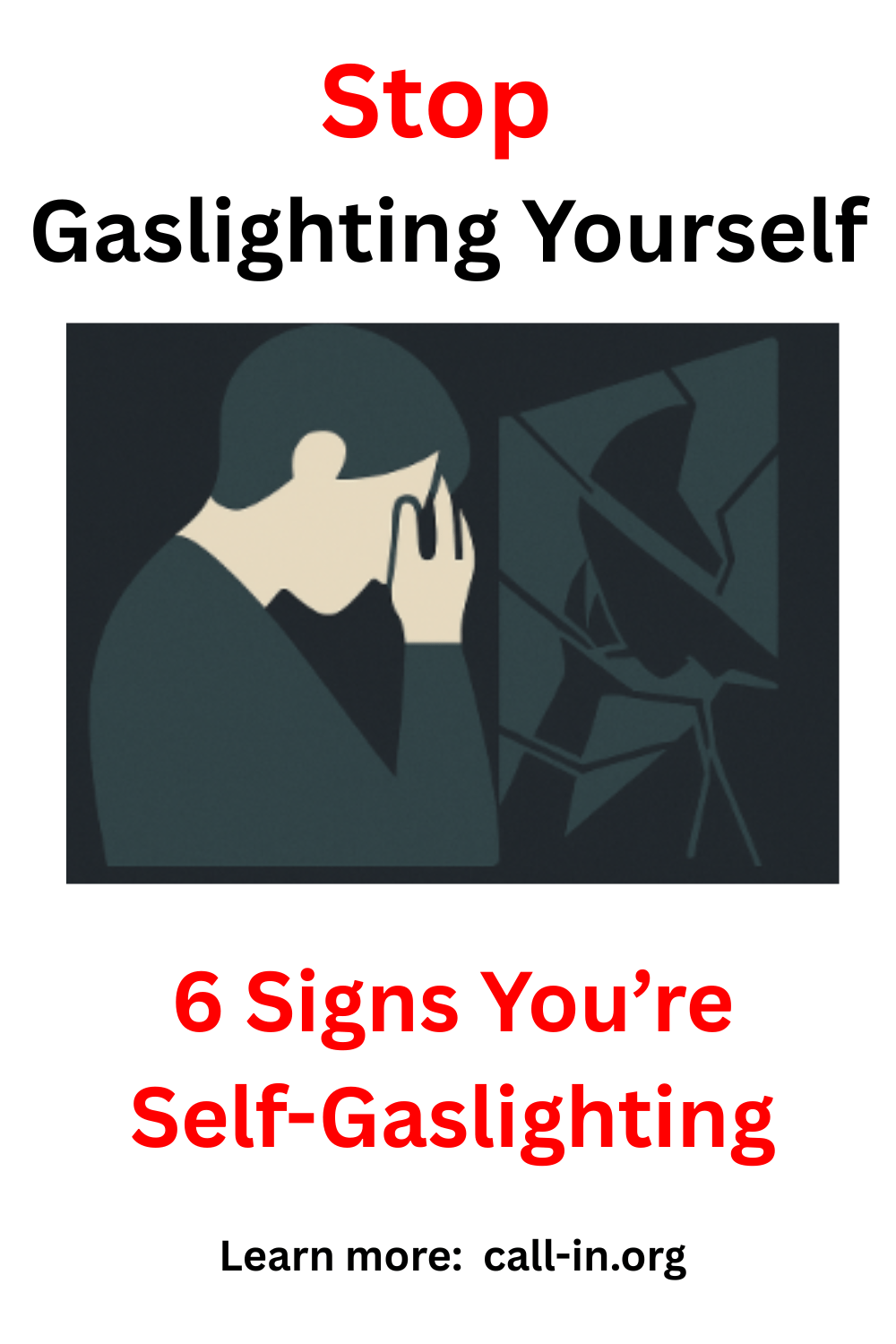
Can’t tell if it’s abuse or a rough patch? Learn the 6 signs you’re gaslighting yourself, reclaim your clarity, and find emotional support here.
The Question That Won’t Leave You Alone
You replay the conversation for the hundredth time. She said that, didn’t she? Or… did she? And suddenly, that tiny voice in your head whispers: Am I overreacting? Maybe I’m just too sensitive. That voice isn’t you. It might be gaslighting, literally.
The worst part? The gaslighting might not be coming from your partner alone. It might be coming from you.
If you’ve ever questioned your own memory, minimized your pain, or apologized for feeling hurt, this article is for you. Because the line between a bad relationship and narcissistic abuse is thinner than you think, and the way you gaslight yourself keeps you stuck in the fog.
Let’s find your way back to clarity. And to yourself.
When Your Reality Becomes a Battleground: Living in Self-Doubt
The first sign of narcissistic abuse is subtle but devastating: you stop trusting your own mind.
You remember an event clearly. Your partner insists it happened differently. You push back once, twice. But eventually, the exhaustion wins. You start wondering: What if I’m wrong? Neuroscience confirms this isn’t weakness; it’s wiring. Our brains are literally designed to seek social harmony. When someone we love consistently challenges our reality, our minds bend (sometimes breaking) to accommodate theirs.
Over time, this creates a fog so thick you can’t see your own hand in front of your face.
The Micro-Healing Practice: Start a private journal. Not to obsess, but to anchor. Each evening, write one interaction that confused you. Don’t judge it. Just record it. Your brain will start to separate what actually happened from the story you’ve been told.
Real-Life Echo: Emma kept “misremembering” fights with her partner. When she journaled for two weeks, a pattern emerged, not in her memory, but in his responses. Her instincts weren’t faulty. They were screaming. That clarity gave her the courage to reach out for support.
The “They Were Just Stressed” Trap: When You Become a Professional Excuse-Maker
Every relationship has bad days. But do you find yourself doing emotional gymnastics to justify cruelty?
“He only said that because work was brutal.” “She didn’t mean it. I probably provoked her.” “If I had just been more understanding, they wouldn’t have snapped.”
If these sentences live in your head rent-free, you’re gaslighting yourself into accepting unacceptable behavior.
Here’s the tea: your intuition is sacred. Every time you rationalize a red flag away, you’re dimming your inner compass. And an inner compass that doesn’t work is a compass that keeps you lost.
The Micro-Healing Practice: Before you defend their behavior, pause. Ask yourself one honest question: “Would I accept this from my closest friend?” Your gut will answer before your mind catches up. Listen to it.
Caught Between Love and Chaos: The Emotional Rollercoaster of Narcissistic Abuse
Narcissistic relationships feel like psychological whiplash.
One moment, you’re their everything – praised, desired, seen. The next, you’re criticized for how you breathe. And somehow, inexplicably, you end up apologizing for feeling hurt. This emotional ping-pong creates chronic self-doubt. You start to believe the voice that says: “I must be the problem.”
This isn’t a rough patch. This is a pattern.
The Micro-Healing Practice: Ground yourself in the present moment using the 5-4-3-2-1 Technique. Name five things you see, four things you touch, three things you hear, two things you smell, one thing you taste. This simple anchor reconnects you to reality, and to yourself.
Narcissistic Abuse vs. Bad Relationship: How to Tell the Difference
Here’s the distinction that matters:
In a challenging but healthy relationship: Conflicts happen, yes, but you still feel safe expressing yourself. Disagreements are temporary. Both partners reflect and grow afterward. You feel tired sometimes, but not perpetually drained.
One is a relationship with rough edges. The other is slowly erasing your sense of self.
The difference isn’t subtle, but recognizing it requires you to trust yourself again.
Six Signs You’re Gaslighting Yourself Into Staying
You might be self-gaslighting if you recognize these patterns:
Minimizing your own feelings: “I’m probably just too sensitive” becomes your mantra.
Apologizing for your needs: You say sorry for wanting respect, time, or emotional safety.
Confusing love with control: You mistake jealousy for passion, isolation for intimacy.
Rationalizing the irrational: You’ve become fluent in explaining away abuse.
Feeling exhausted but unable to leave: You’re drained, but something keeps you stuck — shame, fear, or a hope that feels more like a prison.
Seeking reassurance from the person hurting you: You ask them repeatedly if they love you, then believe their answer even when their actions say otherwise.
When these patterns persist and multiply, it’s not a rough patch. It’s your wellbeing being compromised, and your intuition begging you to listen.
Reclaiming Your Voice: A Roadmap From Fog to Clarity
The path back to yourself begins with one word: validation. Your feelings are real. Your experience matters. Your instincts were never broken. They were just drowned out.
Practical Steps to Reclaim Clarity:
Start with one journaled moment per day where you felt gaslit. Don’t overthink it. Just record it.
Reach out to a trusted friend, listener, or therapist who can offer perspective without judgment. Sometimes an outside voice can see what we’re too close to notice.
Engage in self-care rituals that ground you: meditation, grounding walks, energy work, or journaling with intention.
You may want to explore spiritual tools like a tarot reflection on boundaries, an astrology insight on your relational patterns. These aren’t escapes; they’re mirrors that reflect your inner wisdom back to you.
The Path Forward: Trust Yourself Again
If something in this article made your chest flutter with recognition, you’re not alone. And you don’t have to figure this out by yourself.
Here, our listeners are trained to help you untangle self-doubt from reality. Whether it’s a midnight conversation, a tarot reflection for clarity, or an astrology insight into your relational patterns, we’re here to help you reclaim your voice, and your peace.
Book a call with one of our compassionate listeners today. Your clarity starts here. Your journey back to yourself starts now.

 Call-in
Leave a comment