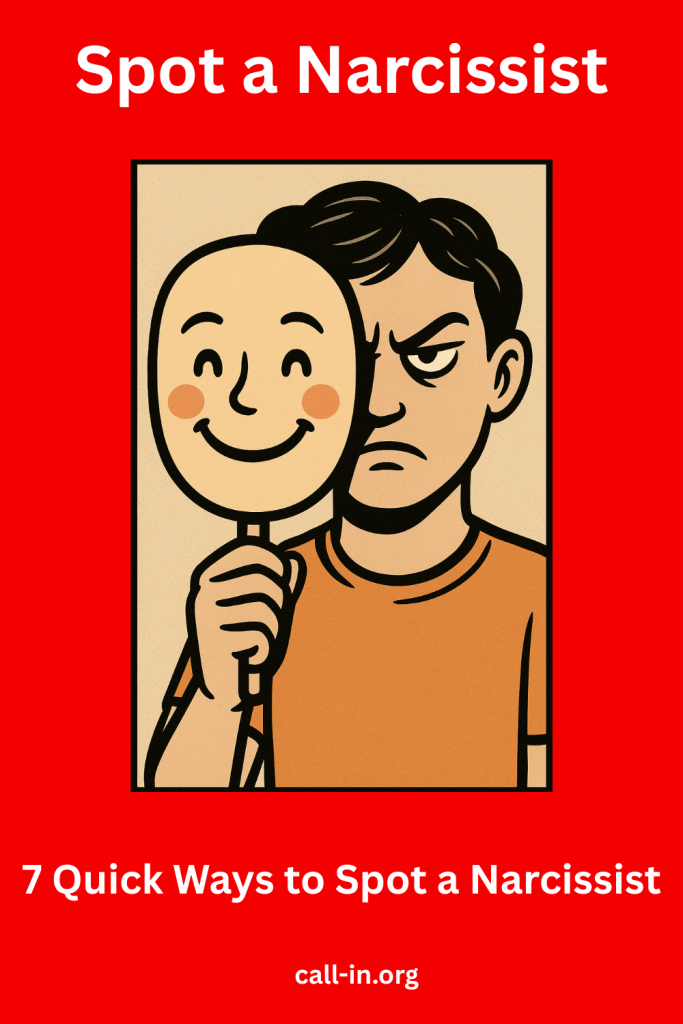
Your body always knows first. If you’ve ever felt uneasy around someone but couldn’t explain why, keep reading. Here, you’ll read the 7 early red flags your nervous system picks up in the first 10 minutes of meeting a narcissist. From subtle body language cues to the gut-level discomfort you can’t quite name. So, learn how to spot manipulation before it starts. Trust your instincts. Read the room. Protect your energy.
That Tight Feeling in Your Chest: How Your Gut Warns You About Emotional Danger in the First 10 Minutes
Ever met someone and felt an instant twist in your gut. It’s like your body hit the brakes before your brain caught up? That’s not anxiety. That’s ancient wisdom kicking in.
So, you’re chatting casually, but something just feels off. Their smile doesn’t reach their eyes. The conversation loops endlessly back to them. They make it about themselves easily. And worst of all, your energy drains like a phone hitting 1%.
Here’s the truth: Your gut instinct isn’t wrong. It’s wired to detect incongruence: the mismatch between someone’s words and their energy or the mismatch between their words and actions. Spotting a narcissist in 10 minutes isn’t about playing detective. It’s about honoring the seven red flags your intuition already waves.
In a world of polished facades, your nervous system is the ultimate truth-teller. This guide arms you with the exact narcissistic red flags, body language cues, and grounding rituals to confirm what you sense. Because ignoring that whisper? It turns into a scream later. Better to trust it now and protect your peace.
Red Flag #1: Conversation Hijack: When “We” Becomes “Me, Me, Me”
The Red Flag: Narcissists turn every chat into their solo show. You share a snippet of your day AND THEY ONE UP IT, interrupt, or redirect faster than a plot twist.
Picture this: You say, “I just wrapped a tough project.”
They fire back: “That’s cute. Mine nearly killed me. Let me tell you…”
No questions. No pause. Just spotlight theft.
It’s like trying to dance with someone who keeps stepping on your toes, then blames the music. Your attempt at connection becomes their stage. This one-sided dynamic is exhausting, and it’s a core sign you’re dealing with someone who lacks genuine empathy.
Body Language Clue: Watch for their eyes. Do they light up when you talk, or glaze over? Do they lean in to listen, or lean back while talking about themselves? Narcissists’ bodies literally turn away from you during your stories.
Quick Grounding Tip: Press your thumb into your palm (discreetly). Feel the pressure anchor you. This micro-pause lets you observe without reacting. You get to spot the red flag without feeding the monologue.
Red Flag #2: Charm Bomb with Hidden Hooks a.k.a The Conditional Glow
The Red Flag: Their charisma hits like a love potion: compliments rain, laughter flows, eyes lock. But peek closer: it’s laced with pressure. Adore me or the magic vanishes.
It’s enchanting… until it becomes exhausting. Like a fireworks show that demands applause mid-burst. This conditional charm is different from authentic connection. It’s a calculated tool designed to keep you hooked and indebted.
Body Language Clue: Notice if their smile reaches their eyes or stays frozen on their face. Narcissists often have a plastered smile that doesn’t match the rest of their facial expressions. Also watch: do they maintain eye contact to intimidate or to genuinely connect? Narcissistic stares feel predatory, not warm.
Real-Life Spark: Sarah met “charming” Alex at a networking event. He mirrored her dreams, called her “brilliant.” By coffee date two, the hooks emerged: “You’re amazing, if you ditch that ‘safe’ job like I did.” Her glow faded; his control tightened. She trusted the unease and walked, saving her spark.
3-Breath Protection Ritual: Inhale gold light (protection). Hold, envision it shielding your aura. Exhale doubt. Repeat thrice. This mystical shield lets charm bounce off, keeping your energy yours.
Protecting your emotional energy is essential when navigating unclear relationships. If you need support untangling a confusing dynamic, read our guide on emotional energy audits to understand where your energy is actually flowing.
Red Flag #3: Empathy Vacuum (Your Vulnerability Echoes in Silence)
The Red Flag: Share something raw: they glaze over, pivot to their saga, or offer “advice” that screams fix yourself.
Healthy exchange: “That sounds heavy, tell me more.”
Narcissist version: “Yeah, but my ex was worse…” or “Well, if you just did X, it wouldn’t be a problem.”
Body language betrays it too: Eyes dart. Posture shifts away. It’s not connection; it’s a mirror with no reflection for you. This empathy deficit is one of the most painful aspects of narcissistic relationships, your feelings become irrelevant noise they must escape from.
Body Language Clue: When you’re sharing something vulnerable, a narcissist will often fidget, check their phone, or look toward exits. Their body literally rejects your emotional truth. A genuine listener leans in, maintains soft eye contact, and nods. Narcissists do the opposite.
Healing Whisper Affirmation: Silently affirm: “My emotions are sacred soil. I plant them where they grow.” This validates you internally, starving their emotional void.
Real-Life Spark: During a support session, a client recalled opening up about loss to a “friend.” The response? “Reminds me of my promotion drama.” She felt erased. Honoring that hollow echo? It freed her to seek real listeners.
When you’ve been on the receiving end of this kind of emotional dismissal, reconnecting with your feelings takes intentional work. That’s where Callin’s trained listeners come in, a safe space designed specifically to validate your experience without redirecting it back to their story.
Red Flag #4: Praise Hunger Games (Fishing for Your Supply Constantly)
The Red Flag: Constant validation quests, exaggerated tales, humblebrags, or sly put-downs of others to shine brighter.
Listen for phrases like: “Aren’t I hilarious?” or “She’s nice, but clueless compared to me.” or “Everyone says I should go into modeling, but I’m too humble.”
You’re not conversing; you’re dispensing ego fuel. They’re operating from a deep well of insecurity masked as superiority.
Body Language Clue: Watch how they position themselves in the room: do they unconsciously center themselves? Stand taller? Gesticulate dramatically to command attention? Narcissists can’t help but make themselves the gravitational center of every space. Also notice: do they fish for compliments with self-deprecating jokes, then visibly light up when you validate them?
Think of it this way: They’re a bottomless well echoing “More!”, and you’re the bucket. The supply never ends. The satisfaction never arrives. Eventually, you realize you’re pouring from your own reserves to fill theirs.
Heart-Touch Mantra: Tap your chest three times, whisper: “I am whole. No transaction required.” This blocks becoming their emotional vending machine.
This exhausting dynamic is what makes many empaths vulnerable to narcissistic entanglement. Learn more about the empath-narcissist dynamic and how to protect your nurturing nature without burning out.
Red Flag #5: Body Language Invasion (The Unspoken Dominance Play)
The Red Flag: Nonverbals scream control: invading your personal space (standing too close, unsolicited touching), unblinking stares (predatory, not present), or grand gestures that dominate the room.
Your body reacts: shoulders tense, breath shortens, you instinctively step back. It’s evolutionary radar pinging “threat.” This is your nervous system doing its job, and it’s worth listening to immediately.
Body Language Cue Deep Dive:
- Space invasion: Notice if they lean in unnecessarily or touch your arm/shoulder without permission early on. Narcissists don’t respect boundaries: they’re testing yours.
- The unblinking stare: A genuine person blinks naturally and looks away occasionally. A narcissist maintains an intense, unwavering gaze designed to intimidate or hypnotize you into compliance.
- Posture dominance: Do they take up more physical space than necessary? Splayed legs, expansive arm gestures, chest puffed out? This is territorial behavior.
- Mirroring insincerity: They might mirror your body language, but it feels off—like a robot mimicking human behavior. It’s deliberate, not intuitive.
Energy Reset Hack: Subtly cross your ankles, imagine roots plunging earthward. Like a tree in a storm, you stay rooted while their wind howls.
Real-Life Spark: At a party, Mia sensed “off” vibes from a suave stranger, leaning in uninvited, finishing her sentences, standing too close. Her gut said flee. She did. Later? Stories of his manipulations surfaced. Her body language read saved the night.
Your physical boundaries are just as sacred as your emotional ones. If you’re struggling to honor your own space and needs, “How to Set Healthy Boundaries: A Guide to Protecting Your Mental Health” offers practical strategies to reclaim your autonomy.
Red Flag #6: Lack of Genuine Curiosity (The One-Way Mirror)
The Red Flag: A truly interested person asks follow-up questions. A narcissist asks one surface-level question, then pivots back to themselves, or worse, never asks at all.
In a 10-minute conversation with a narcissist, count how many questions they ask you. If it’s zero or one, that’s your answer. Healthy people are naturally curious about others. Narcissists are only curious about how you can serve them.
Body Language Clue: Watch their eyes when you’re talking. Do they soften with genuine interest, or stay hard and calculating? Do they take notes mentally (repeating back details), or do they look bored/impatient? Narcissists often tap their fingers, check their watch, or glance at their phone, signals of disengagement.
The Gut Test: Ask yourself: “Did they ask me anything about my life?” If the answer is no, that’s a 10-minute neon sign flashing “narcissist.”
Real-Life Application: You mention you’re job hunting. A healthy person says: “Oh, that’s exciting! What kind of role are you looking for?” A narcissist says: “Yeah, job hunting is rough. I once had to job hunt too, and let me tell you…” They center themselves, not you.
Red Flag #7: Intuition’s Soft Siren (The Gut Instinct That Never Lies)
The Red Flag: That vague unease? It’s data from your soul’s archive. Narcissists mask well, but your nervous system sniffs the self-centered core underneath the charm.
This is perhaps the most important red flag of all: your gut feeling is not wrong. Science backs this up. Your nervous system processes micro-expressions, tone shifts, and incongruencies faster than your conscious mind. When something feels “off,” it usually is.
Ignore it, and months vanish in gaslighting fog. Trust it, like one client who bailed on a “dream” partner after minute-one chills. “Best decision,” she says now, boundaries intact.
Body Language Clue: Your own body is the instrument. Notice: Do your shoulders relax or tense around this person? Does your breathing deepen or become shallow? Do you feel expansive or contractive? Do you smile genuinely or force it?
Gut-Check Question: “Does this feel expansive or contractive?”
- Expansive = safe, nourishing, authentic = Green light
- Contractive = draining, off, unsafe = Red flag, trust it
Your intuition isn’t irrational; it’s your accumulated wisdom speaking. Honoring these whispers is the first step toward living authentically rather than merely existing. If you’re feeling numb to your own instincts, “Living vs. Existing: How to Stop Feeling Numb and Start Creating a Life of Meaning” might illuminate what’s been silenced within you.
Your 10-Minute Narcissist Detector: Quick-Scan Checklist
In those first moments, scan these vital signs:
The 7-Point Red Flag Scanner:
Energy Shift: Do I feel drained or charged?
Conversation Balance: Did they ask one genuine question about me?
Vulnerability Test: Does this feel safe to share, or guarded?
Charm Quality: Freely given or laced with pressure/conditions?
Listening Mode: Attentive or just waiting for their turn to talk?
Body Language Comfort: Do I feel respected physically, or intruded upon?
Gut Feeling: Does my body say “yes” or “no”?
Scoring: If you’re marking 4 or more as red flags, exit gracefully. RUN!!! Your intuition just gifted you freedom.
FAQs: Your Burning Questions Answered
Q: How quickly can I really spot a narcissist?
A: The first 10 minutes reveal A LOT if you know what to look for. Most narcissists can’t maintain the mask that long—their need for control and validation breaks through quickly. However, covert narcissists are more subtle; they may take 2-3 interactions to reveal their true nature. Trust your gut over the timeline.
Q: What if I’m wrong and being too judgmental?
A: Your intuition isn’t judgment—it’s data. Your nervous system picks up on incongruencies between words and body language that your conscious mind hasn’t processed yet. If someone’s energy feels draining after 10 minutes, that’s real information. You’re not labeling them; you’re protecting yourself.
Q: Can narcissists change?
A: Narcissistic Personality Disorder (NPD) is deeply ingrained. While some seek therapy, genuine change is rare without consistent professional help and real self-awareness. Your role isn’t to fix them, it’s to protect your energy and peace.
Q: What do I do if I’ve already fallen into a narcissist’s trap?
A: First, validate your experience, you’re not “too sensitive” or “dramatic.” Second, seek support from trusted friends, therapists, or empathetic listeners who understand emotional trauma. Callin’s confidential sessions can help you untangle patterns and rebuild trust in a judgment-free space.
Q: Is narcissism the same as being selfish?
A: Not quite. Selfish people can learn empathy and adjust their behavior. Narcissists lack the neurological capacity for genuine empathy, their charm is a calculated tool, not authentic connection.
Q: How do I protect my energy around a narcissist I can’t avoid?
A: Use grounding rituals (like the ones in this guide), set firm boundaries, limit emotional sharing, and practice detachment. Understanding your own emotional patterns helps too, many people who attract narcissists are generous, empathic souls. Protecting that generosity means knowing when not to give.
Q: What if the narcissist is a family member or boss I see regularly?
A: This is where boundaries become non-negotiable. Keep conversations surface-level, don’t share vulnerabilities, use neutral body language (don’t lean in), and create distance whenever possible. Professional support can help you navigate this ongoing situation without losing your sanity.
Rise Above the Fog: Heal, Trust, Thrive
You’ve got the seven red flags to spot a narcissist in 10 minutes, and you’ve got your gut instinct, which has never lied. But knowledge alone doesn’t heal scars or rebuild trust. That’s where deeper magic unfolds: untangling patterns, validating your whispers, and crafting unbreakable boundaries.
You’re not “too sensitive”, you’re brilliantly attuned. Imagine relationships where your energy expands, not evaporates. It starts with one honored gut feeling.
Ready to amplify that inner voice and process what you’ve experienced? Book a soul-nourishing call with Callin. Our empathetic listeners hold space for your story, and optional tarot or astrology insights help you gain deeper clarity about your relationships and patterns. Your first 20 minutes are free, no credit card, no commitment, just genuine care. Claim your confidential call now, your peace is waiting.
A Compassionate Disclaimer: Context Matters
Important note: Not every red flag in isolation means someone is a narcissist. Context is everything.
A person who dominates the conversation once might simply be excited to connect with you or share something they’re passionate about. Someone who asks fewer questions might be introverted, anxious, or unfamiliar with healthy communication. A person who invades your space might come from a culture where physical proximity is normal. A lack of follow-up questions could reflect ADHD, social anxiety, or simply being distracted.
Narcissism isn’t diagnosed by one red flag, it’s a pattern of multiple behaviors over time. The 7 red flags in this article are most telling when they appear together and consistently. One instance of interrupting doesn’t make someone a narcissist. But a pattern of interruption + zero curiosity + charm that vanishes when they don’t get their way + body language that dominates every room? That’s a clearer picture.
Your gut instinct matters most. If something feels off repeatedly, that’s worth paying attention to. But if someone shows one or two of these traits occasionally, give them grace, and yourself permission to stay curious rather than jump to conclusions.
When in doubt, talk it through with a trained listener who can help you discern patterns from isolated incidents. Sometimes our intuition needs a compassionate sounding board.
 Call-in
Leave a comment